Food on a Tour Bus: What the Galley Can Handle
A tour bus galley usually has a refrigerator, a microwave, a sink, counter space and often a coffee maker, all running on limited generator or inverter power. Simple microwave and cold meals work well; open flames and personal high-draw appliances usually do not.
Knights Coaches
Knights Coaches
- Published
- Reading time
- 5 min read
Eating well on tour is hard. Venue catering, gas station snacks and 2:00 AM drive-throughs add up fast, both in cost and in how the band feels by week three. The galley on an entertainer coach is the tool that fixes that, as long as everyone knows what it can and cannot do.
A coach galley is not a home kitchen. It runs on limited power from the generator or inverter, shares a small fresh water tank, and has to stay clean in a space 12 people walk through. This guide covers what a typical galley includes, what you can cook, power limits, stocking the fridge, food safety, riders and catering, and kitchen house rules.
What a Tour Bus Galley Includes
Galleys vary by coach, but most entertainer coaches have:
- A refrigerator, usually larger than a dorm fridge and smaller than a home unit, sometimes with a small freezer.
- A microwave, the main cooking tool on most coaches.
- A sink fed by the fresh water tank, draining to the grey tank.
- Counter and prep space, usually a few feet of it.
- Cabinets and drawers for dry food, plates and utensils.
- A coffee maker on many coaches.
Few coaches have a full stove or oven, and open-flame cooking is not allowed. Our guide to bunk layouts shows where the galley sits in the floor plan.
Power: The Real Limit
Everything in the galley runs on electricity. When the coach is parked without shore power, that power comes from the generator. When it is moving, it comes from the engine and an inverter. Either way, the supply is limited and shared with the air conditioning, heating, lights, outlets and entertainment.
That is why high-draw appliances cause trouble. A microwave, a coffee maker and the air conditioning running at once can trip a breaker. Common rules:
- One heating appliance at a time. Wait for the microwave before starting the coffee maker.
- No personal appliances like air fryers, hot plates, rice cookers or kettles unless the driver approves them.
- Ask the driver before plugging in anything new.
Some cities restrict how long a parked coach may idle or run its generator. Our guide to tour bus idling laws explains where that matters, and bus parking and venue load-in covers shore power at venues.
What You Can Cook on a Tour Bus
With a microwave, a fridge and a little planning, a lot is possible:
- Breakfast: overnight oats, yogurt and granola, boiled eggs made ahead, microwave oatmeal, fruit.
- Lunch: wraps, salads in jars, deli sandwiches, hummus and vegetables.
- Dinner: microwave rice and pre-cooked proteins, leftover catering, soups, ready meals.
- Snacks: nuts, cheese, crackers, fruit, protein bars, jerky.
Avoid anything that smokes, splatters or leaves a strong smell. Fish, burnt popcorn and heavy spices stay in a sealed coach for hours. Cook simple and keep the galley clean.
Stocking the Fridge and Pantry
Fridge space is the most fought-over real estate on a tour bus. A simple system avoids arguments:
- Label everything. Name and date on every container.
- Shared shelves and personal shelves. Agree on which is which at the first load.
- Clear it out weekly. Anything old or unlabeled goes.
- Restock on off days at a grocery store near the hotel or venue.
- Keep drinks out of the fridge if space is short. Use a cooler in the bay for extras, if the driver allows it.
Dry goods like coffee, oats, rice, nuts, bars and peanut butter keep well in cabinets. Secure everything before the coach moves. Drawers and cabinets latch for a reason.
Food Safety on the Road
A coach is a warm, moving space, and food safety is easy to get wrong:
- Keep the fridge cold. If the generator or power goes off for long, check what has warmed up.
- Do not leave catering out. Leftovers go in the fridge within two hours, or in the trash.
- Use bottled water for drinking and cooking. Most riders do not drink tank water.
- Wash hands before handling shared food. Sanitizer helps when water is limited.
- Know the allergies on board. A severe nut allergy changes what the shared shelves can hold.
One sick crew member can spread an illness through a whole coach in a few days. Clean food habits protect the tour.
Riders, Catering and Buyouts
Most food on tour comes from the venue. The rider, the document an act sends to promoters, usually spells out catering and a "bus stock" list: drinks, snacks and basics delivered to the coach. Some venues give a meal buyout in cash instead.
Good bus stock lists are short and realistic. Bottled water, a few sports drinks, fruit, bread, peanut butter, coffee and a couple of snacks go a long way. Long lists of perishables often end up in the trash. Our guide to tour budgeting shows how food fits next to transport costs, and tour bus vs flying and hotels explains why eating on the coach saves money.
Galley House Rules
- Clean as you go. Wipe the counter, wash your dish, put it away.
- Do not leave dishes in the sink, especially before a drive.
- Take out the trash at every stop.
- No cooking during sleep hours unless it is quiet and quick.
- Grease and food scraps never go down the sink. They clog the grey water lines.
See our full guide to tour bus etiquette.
Eating Well Over a Long Tour
On a long tour, a few habits keep the band healthy: drink water all day, eat breakfast on the coach before load-in, use catering for the main meal, and keep late-night food light. Many tours assign one person to restock the coach on off days, which saves money and stops the fridge from turning into a science project.
The Galley on a Knights Coaches Coach
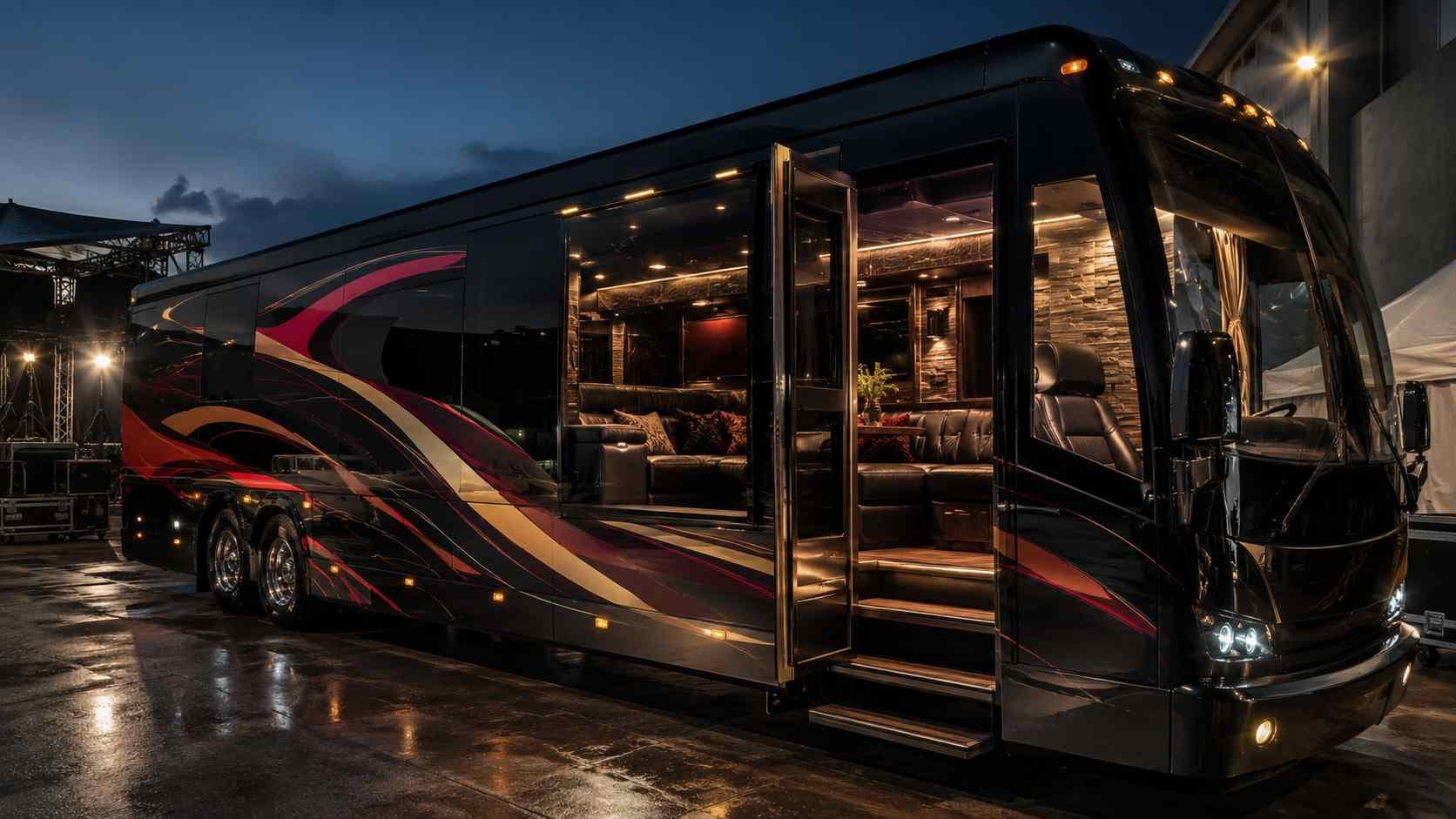
Every Knights Coaches entertainer coach includes a full galley with refrigeration and prep space, plus front and rear lounges, 12 bunks, a stand-up bathroom with shower and a CDL driver who knows the coach's power limits. The driver will brief your party on galley rules at the first load. Check the fleet or request a quote on the reservation page.
Frequently Asked Questions
Do tour buses have kitchens?
Most entertainer coaches have a galley with a fridge, microwave, sink and counter space. Few have a full stove or oven.
Can you cook on a tour bus?
Yes, simple cooking. Most meals are made in the microwave or prepared cold. Open flames and personal high-power appliances are usually not allowed.
Why can't I use my air fryer on the bus?
The coach has limited power from its generator or inverter. A high-draw appliance on top of the air conditioning can trip breakers. Always ask the driver first.
What should go on a bus stock list?
Keep it short: water, a few drinks, fruit, bread, peanut butter, coffee and some snacks. Long lists of perishables often go to waste.