
Tour Bus vs Flying and Hotels: Which Costs Less and Works Better on Tour?
Tour bus versus flying and hotels is the core transport decision for any touring act: move the party on an entertainer coach that doubles as a rolling hotel, or fly between cities and book hotel rooms each night. The bus bundles transport and lodging into one daily cost. Flying splits them into airfare, hotel rooms,…
Knights Coaches
Knights Coaches
- Published
- Reading time
- 9 min read
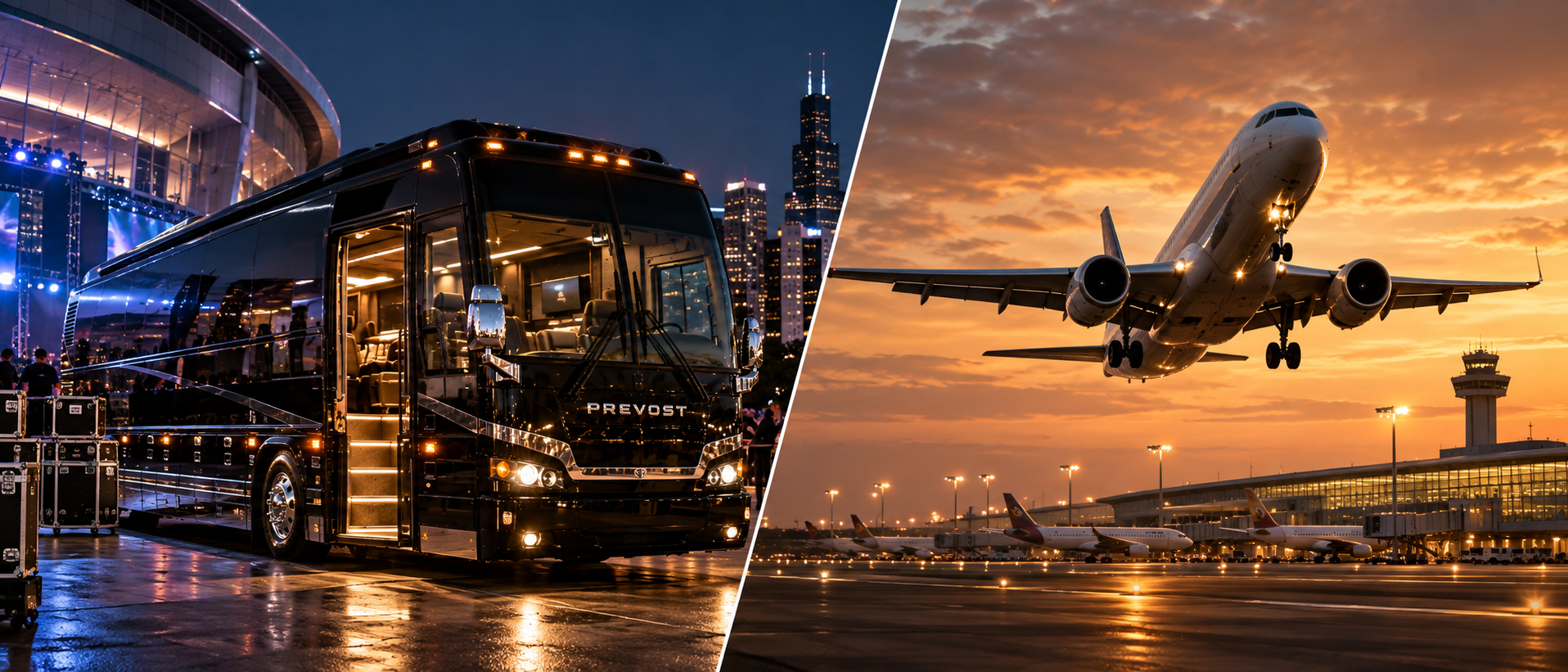
Tour bus versus flying and hotels is the core transport decision for any touring act: move the party on an entertainer coach that doubles as a rolling hotel, or fly between cities and book hotel rooms each night. The bus bundles transport and lodging into one daily cost. Flying splits them into airfare, hotel rooms, ground transport, and separate gear shipping.
The numbers in 2026 make the comparison sharper. The average U.S. domestic airfare reached $428 in the first quarter of 2026, with one-way tickets averaging $305, according to the Bureau of Transportation Statistics (BTS). U.S. hotel rates averaged $171.74 per night in July 2026, per CoStar. An entertainer coach runs roughly $1,900 to $2,500 per day all in by industry estimates, before 2026's record diesel prices.
Other entities shape the answer. Airlines charge bag and oversize fees for instruments. Trucking companies move backline when bands fly. Federal hours of service rules cap how far a bus can go overnight. And the tour's routing, whether cities sit 300 miles apart or 2,000, often decides the winner before any math starts.
This guide compares what each option includes, cost per person, a worked example, time, sleep, gear, reliability, comfort, flexibility, health, when flying wins, and how hybrid setups work.
What Each Option Includes
Each approach covers different pieces:
Tour bus: vehicle, driver, fuel, beds, lounge, kitchen, bathroom, and gear storage in one package.
Flying and hotels: airfare, checked bags, instrument fees, hotel rooms, airport transfers, local vans, and a separate truck or shipper for gear.
The bus looks expensive as one number. Flying looks cheap per ticket. The real comparison adds up every piece on both sides.
Cost Per Person
Cost per person shows the difference clearly. A coach carrying 10 people at about $2,000 per day works out to roughly $200 per person per day, and that covers both travel and a bed.
Flying on a travel day stacks up fast. A one-way fare near $305, a shared hotel room at about $86 per person (half of $172), plus bag fees and airport transfers easily passes $425 per person for one travel day. And the hotel cost repeats every night, not just on flight days.
Worked Example: A 30-Day Tour

Consider 10 people on a 30-day tour with 25 travel days. These figures are illustrative:
Bus: one coach at about $2,005 per day for 30 days comes to roughly $60,000, plus a few off-day hotel nights.
Flying: 25 travel days times 10 people times $305 comes to $76,250 in airfare. Add 30 nights of 5 double rooms at $172, about $25,800, before bag fees, ground transport, and trucking for gear.
In this example, flying costs more than $100,000 against about $60,000 for the bus. Advance fare deals, shorter tours, or wider gaps between cities shift the numbers, but dense routing strongly favors the bus.
Time and Schedule
Time works differently in each model. A bus leaves after load-out and arrives by morning, so travel happens while people sleep. Flying adds hours of airport time: getting to the airport, security, boarding, flight time, baggage claim, and the ride to the hotel.
After a 1:00 AM load-out, a 6:00 AM flight means almost no sleep. The bus avoids that squeeze. On the other hand, flying turns a 2,000-mile gap into a few hours, which a bus can't match.
Sleep and Rest
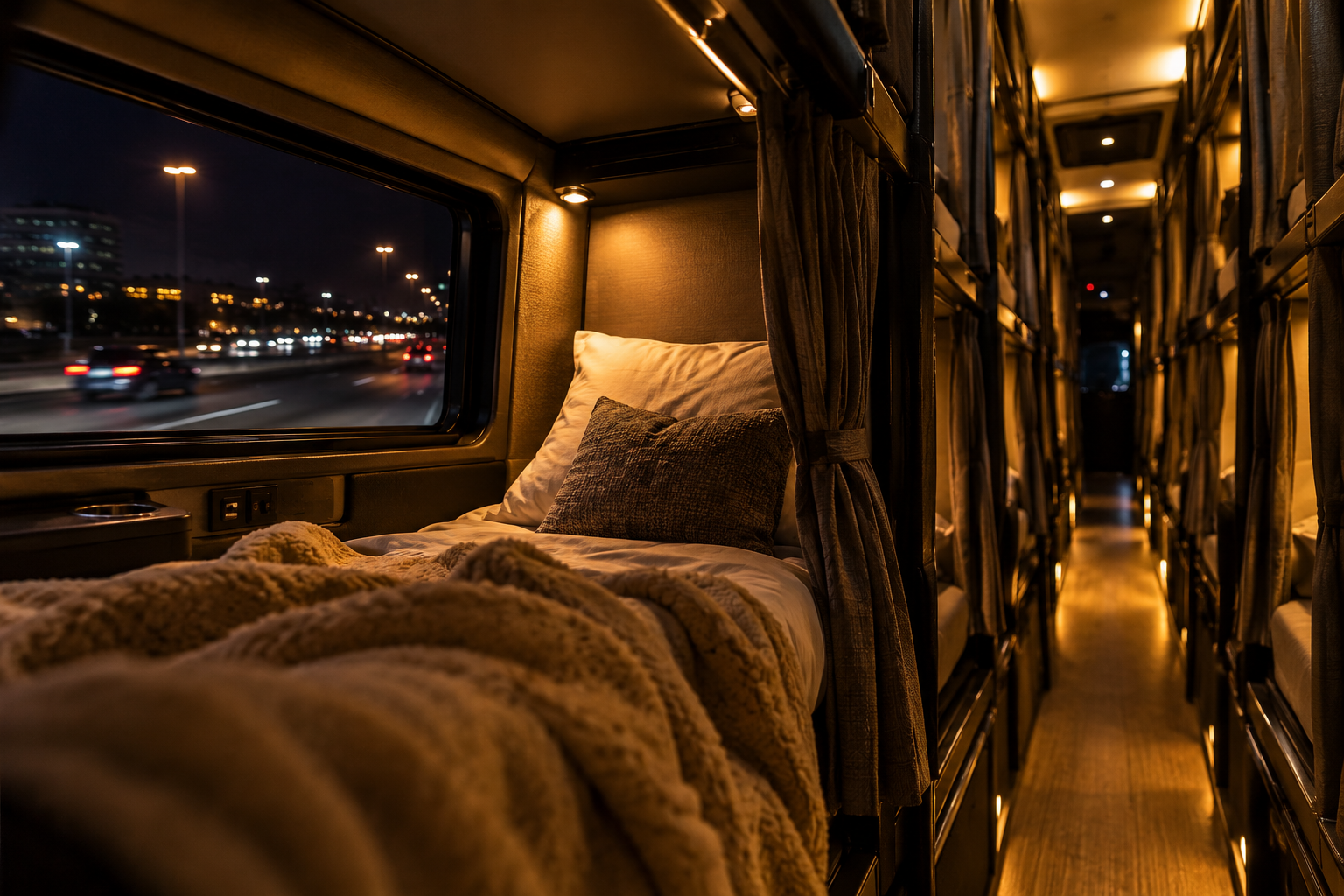
Sleep quality drives tour health. Bus bunks let the party sleep through the overnight drive and wake up at the next venue. Most people adapt to bunk life within a few nights.
Flying offers a real bed every night but often shorter sleep, since early flights and hotel check-ins fragment the night. Many touring professionals say they sleep more total hours on a bus tour, even if each bed is smaller.
Gear and Backline
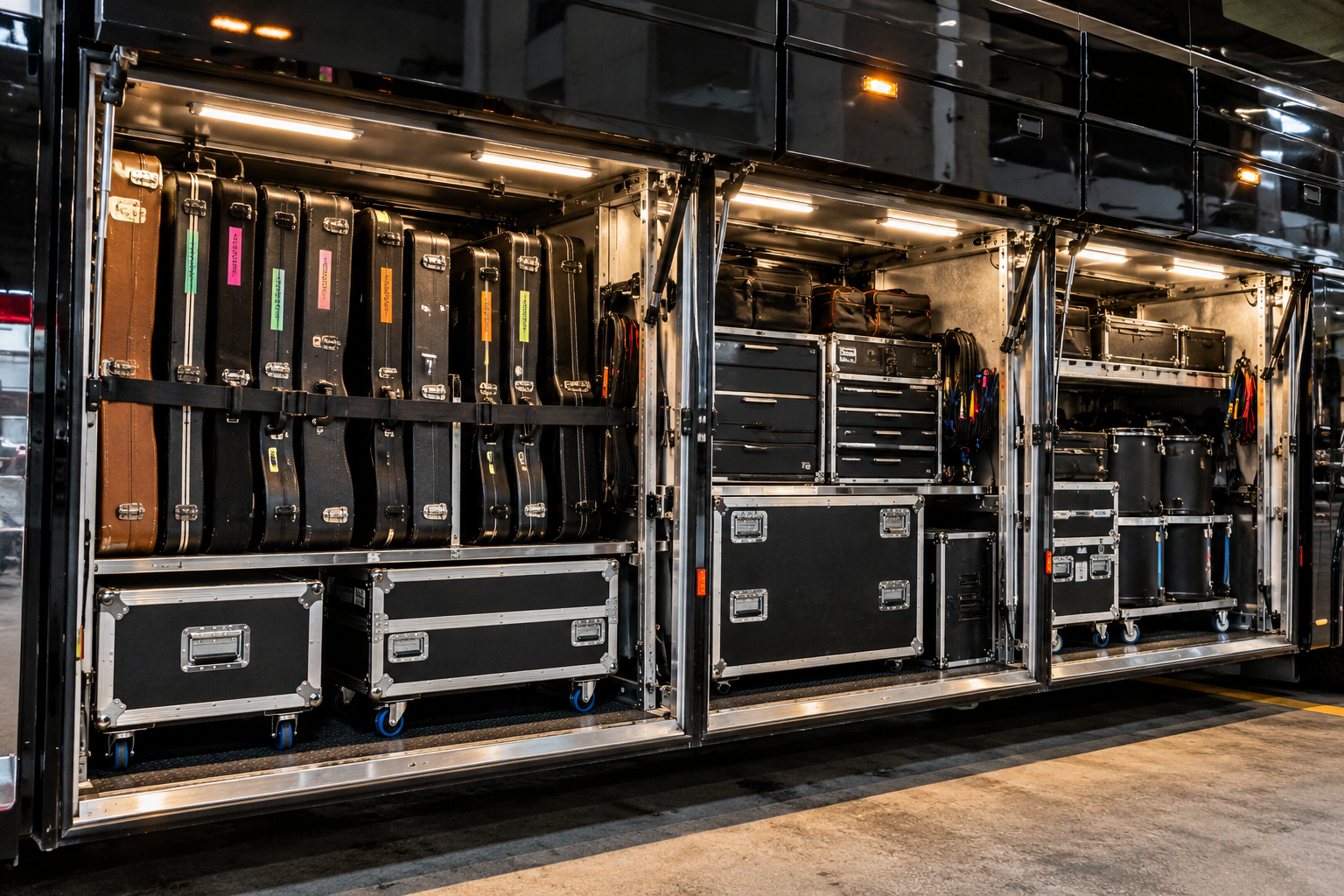
Gear often settles the question. On a bus tour, instruments and backline ride in the bays or a trailer and stay under the tour's control. Nothing gets lost, and nothing waits at baggage claim.
Flying tours need a plan for gear: oversize baggage fees, instrument cases in the cabin, backline rentals in each city, or a truck driving the route anyway. Each option adds cost and risk, especially for vintage or custom instruments.
Reliability
Reliability differs by type of risk. Flights face delays, cancellations, missed connections, and lost bags, and one cancellation can wipe out a show. Buses face breakdowns and weather, but well-maintained coaches break down rarely, and coach companies can send a replacement.
A bus also keeps the whole party together. When one flight on a split itinerary goes wrong, half the band ends up in the wrong city.
Comfort and Privacy
Comfort splits along personal lines. Hotels give private rooms, full bathrooms, and space to spread out. Buses give bunks, shared lounges, and a liquids-only toilet.
For artists who need privacy, a star coach with a rear bedroom closes much of the gap. And the bus offers something hotels can't: the same bed, the same pillow, and the same setup every night.
Flexibility on Show Days
Flexibility favors the bus on most show days. The coach waits at the venue as a green room, a nap space, and a storage room. Late load-outs don't threaten a flight. Last-minute routing changes only need a new route, not a stack of rebooked tickets.
Flying locks the schedule to airline timetables. Missing a flight after a long load-out can cost a day.
Health and Fatigue
Health depends on rest and routine. Bus tours keep a steadier routine: same bed, same galley, fewer airport crowds. Flying tours bring more exposure to crowded terminals and more disrupted sleep.
Still, weeks on a bus can wear people down in other ways. Off days in hotels, real meals, and fresh air matter on either model.
When Flying Wins
Flying wins in specific situations:
Long gaps between shows, like East Coast to West Coast with no dates between.
Fly-in dates such as a single festival or TV appearance.
Small parties of two or three people with minimal gear.
International legs where the coach can't follow.
Short runs of a few scattered shows.
In those cases, the bus would spend more time deadheading than working.
Hybrid Setups
Hybrid setups combine both. The band and crew ride the bus on dense regional routing, then fly across the country while the bus deadheads or a second coach waits on the other coast. Artists sometimes fly to select dates while the rest of the party stays on the bus.
Hybrids take careful planning, but they often deliver the best cost and rest balance on national tours. The key is timing the coach's deadhead so it arrives before the party lands.
Hidden Costs on Each Side
Both options carry costs that don't appear on the first quote. Bus tours add overdrives, driver hotels, positioning, parking permits, and generator fuel. Flying tours add checked and oversize bag fees, seat fees, airport transfers, local van rentals, early hotel check-in charges, and backline rentals when gear can't fly.
Flying also carries a time cost that rarely makes the budget: the hours people spend in airports instead of resting. Over a long tour, that time adds up to days.
Questions to Help Decide
A few questions usually settle the choice:
How far apart are most shows?
How many people travel full time?
How much gear must travel with the party?
Does the artist need a private space on show days?
How many days off fall between shows?
What happens if one flight gets canceled?
Dense routing, a larger party, and plenty of gear point to a bus. Wide gaps and a tiny party point to flights.
Rest Days and Recovery
Recovery looks different in each model. On a bus tour, days off usually include a hotel night, laundry, and a break from the bunk. On a flying tour, days off are often spent traveling to the next region, which cuts into real rest.
That difference compounds over a long tour. A crew that gets consistent sleep and genuine off days performs better in week eight than one that spent its free time in airports.
How Knights Coaches Supports Bus Touring
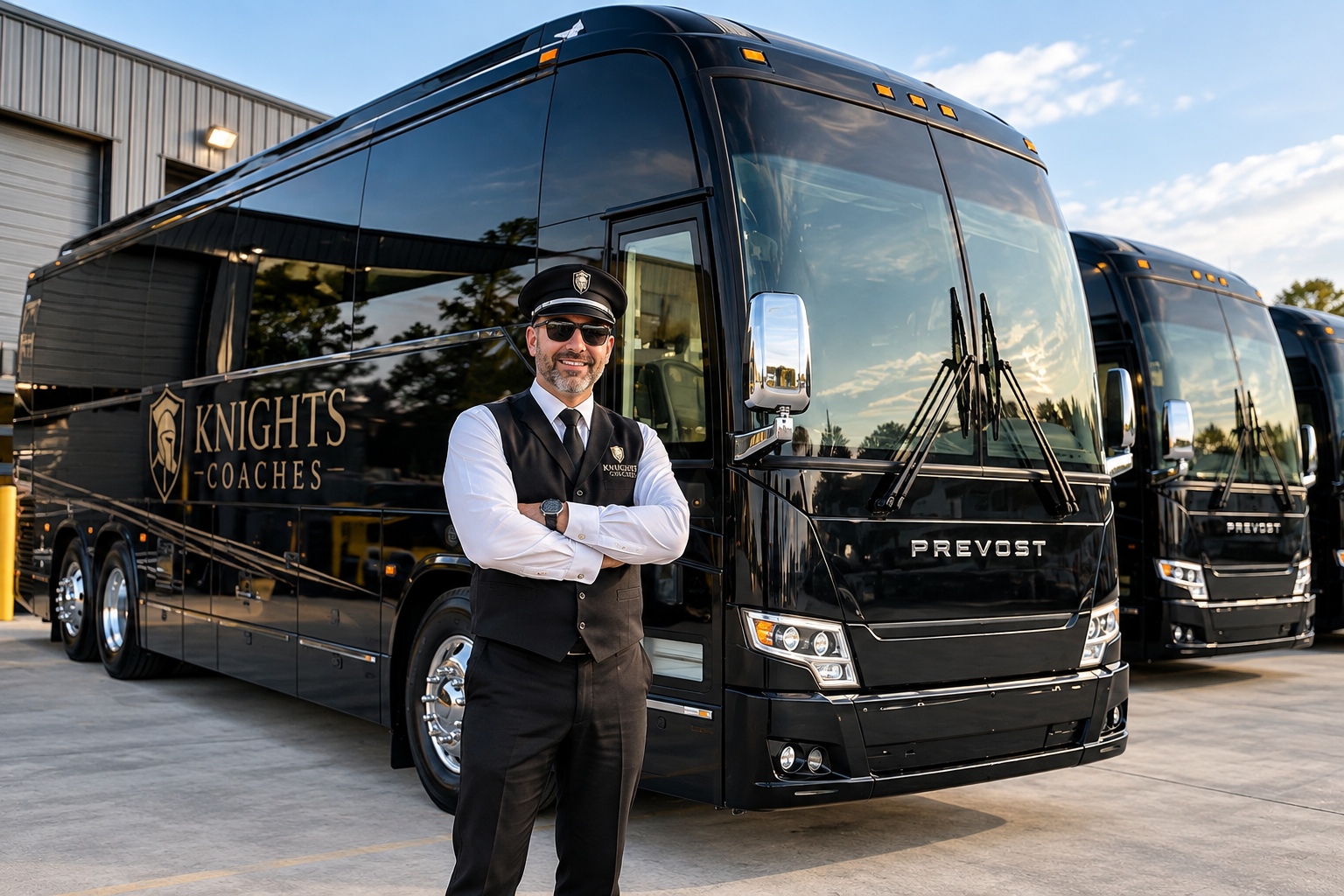
Knights Coaches operates Prevost entertainer coaches with 12 bunks, full galleys, rear lounges, and onboard showers, each with a CDL driver and 24/7 dispatch. Pickup is available in major cities across all 48 contiguous states, which helps hybrid tours start a bus leg wherever the routing requires.
Tour managers can compare bus costs against flying on the Knights Coaches or check pickup cities on the tour bus rental page.
Is it cheaper to tour by bus or to fly?
For dense routing, a tour bus is usually cheaper because it replaces both flights and most hotel nights.
How much does flying cost per person on tour?
A travel day often passes $425 per person with a $305 average one-way fare, a shared hotel room, and fees.
What is the average U.S. domestic airfare in 2026?
BTS reported $428 in the first quarter of 2026, with one-way tickets averaging $305.
Do bands sleep better on a bus or in hotels?
Many touring professionals get more total sleep on a bus, since travel happens overnight.
When is flying better than a tour bus?
Flying is better for long gaps between shows, fly-in dates, small parties, and international legs.
How do bands move gear when they fly?
They use oversize baggage, cabin cases, backline rentals, or a truck driving the route.
Is a tour bus more reliable than flights?
Often, yes. A bus avoids cancellations and missed connections, and coach companies can replace a broken-down coach.
Can you combine bus touring and flying?
Yes. Hybrid tours use buses on regional routing and flights on long gaps.
How much does a hotel room cost on tour in 2026?
U.S. hotels averaged $171.74 per night in July 2026, with downtown rooms often higher.
Does a tour bus replace hotels entirely?
Mostly. Tours still book driver day rooms and off-day hotels.
Which option is better for artist privacy?
Hotels offer more privacy by default, but a star coach with a rear bedroom closes most of the gap.
What hidden costs come with flying on tour?
Flying adds bag and oversize fees, seat fees, airport transfers, local vans, and backline rentals.
What hidden costs come with a tour bus?
A bus adds overdrives, driver hotels, positioning, parking permits, and generator fuel.
Do bus tours still include hotel nights?
Yes. Most bus tours book hotels on off days, plus day rooms for drivers.
Does flying save time compared to a tour bus?
Only on long gaps. For jumps under about 500 miles, a bus saves time because travel happens overnight while people sleep, with no airport hours.
Which option keeps gear safer?
A tour bus keeps gear safer, since instruments ride in the bays or trailer under the tour's control instead of through airline baggage systems.
Conclusion
Tour bus versus flying and hotels comes down to what each option includes and how the routing looks. The bus bundles vehicle, driver, beds, and gear storage, while flying splits airfare, hotels, transfers, and gear shipping. Per person and in the worked 30-day example, the bus costs less on dense routing. It also saves time, protects sleep, keeps gear close, and holds up better against cancellations, while hotels win on privacy and flights win on long gaps. Hybrid setups combine the strengths of both.
Ready to price a bus tour against flying? Get a quote from Knights Coaches for a Prevost coach with a CDL driver.