
Entertainer Coach Fleet
Entertainer Coach Fleet: Floor Plans and Bunk Counts
An entertainer coach floor plan is the arrangement of berths, lounges, galley and bathroom inside a 45-foot shell that measures 102 inches across. Every US touring coach starts from the same box.
Every layout carries twelve berths. Twelve is the touring standard, stacked three high in an alley between a front and rear lounge. Wisdom, Brookland and Chief can be run with an optional star conversion, which trades half that capacity for a private stateroom and leaves roughly six berths.
Three other choices sit alongside the berth count. Whether the back of the coach is a shared lounge or a closed bedroom. Whether the coach carries a slide-out, which pushes the wall out 18 inches when parked. And how the bunks themselves are built, since a condo bunk merges two berths into one wider space.
The shells come from Prevost, almost always the flat-floor X3-45 or the raised-floor H3-45. Converters such as Featherlite, Liberty and Millennium build the interiors, which is why two coaches on identical chassis can feel nothing alike.
This page covers the four zones of a coach, rear lounge against stateroom, the star conversion, slides, bunk types, and how to match a layout to a tour.
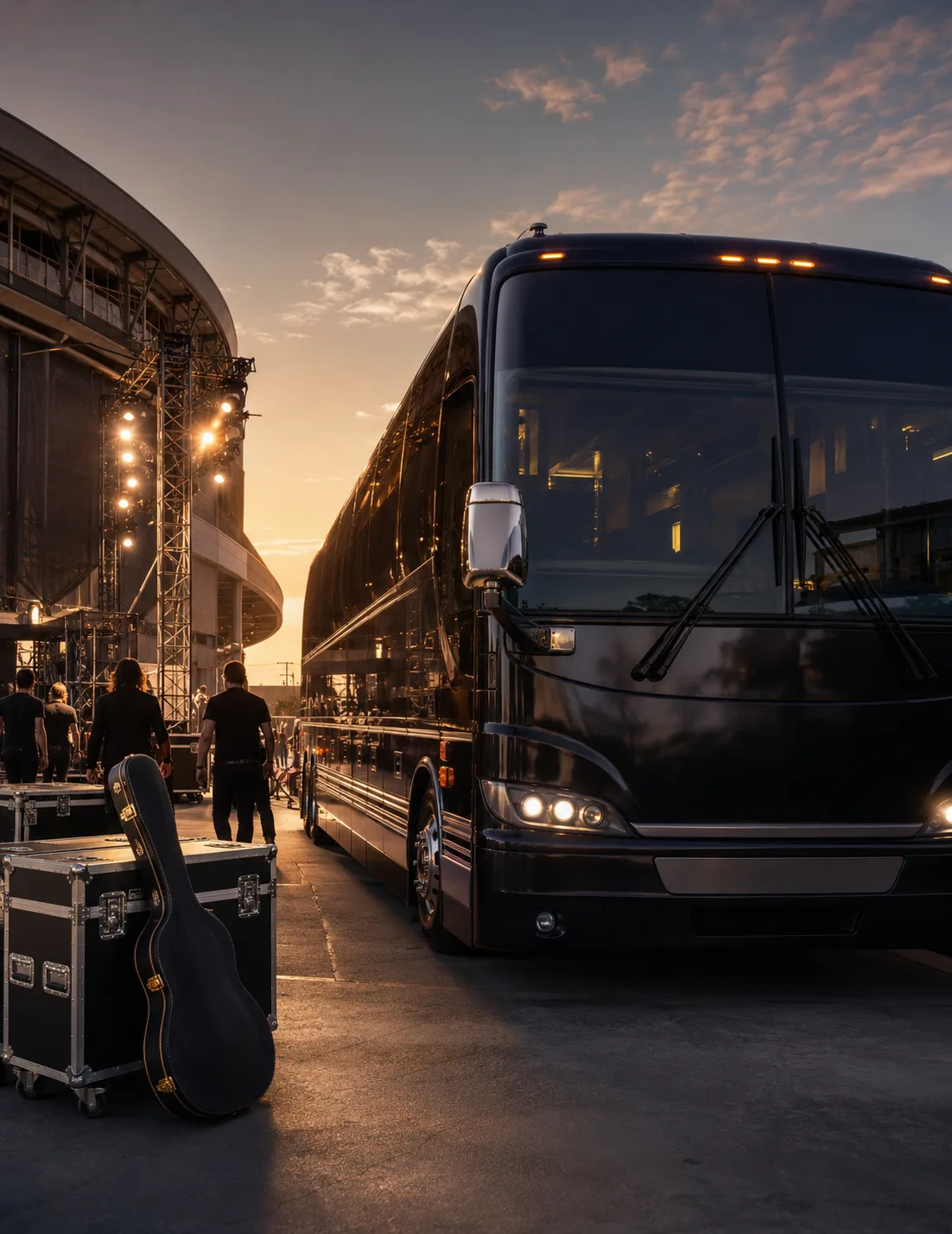
The four zones of an entertainer coach
Zones run front to back in the same order on almost every build. The driver's area sits ahead of a front lounge with seating and a table, where people spend the waking hours. Behind it come the galley and bathroom, placed mid-coach because plumbing and weight both want to sit near the axles.
The bunk alley occupies the middle third, curtained on both sides. Then the rear space, the one genuinely variable zone, and the reason two coaches with matching berth counts can suit completely different tours.
Berth count is where most people start, so take that first.
The bunk layout and who it suits
Every coach is built the same way, with one option on three of them:
- Twelve berths. The touring standard, stacked three high in an alley between a front and a rear lounge. Sleeps a band and its crew together.
- The star conversion. Offered on Wisdom, Brookland and Chief. Half the sleeping capacity, roughly six berths, traded for a private rear suite. A headliner plus a small team.
Count one berth per person, then look at what is left over. A party of ten in a 12-berth coach gains two spare berths that become shared storage, which the industry calls a junk bunk. A party of twelve in the same coach has nowhere to put anything.
What sits at the back of the coach matters as much as how many berths are in the middle.
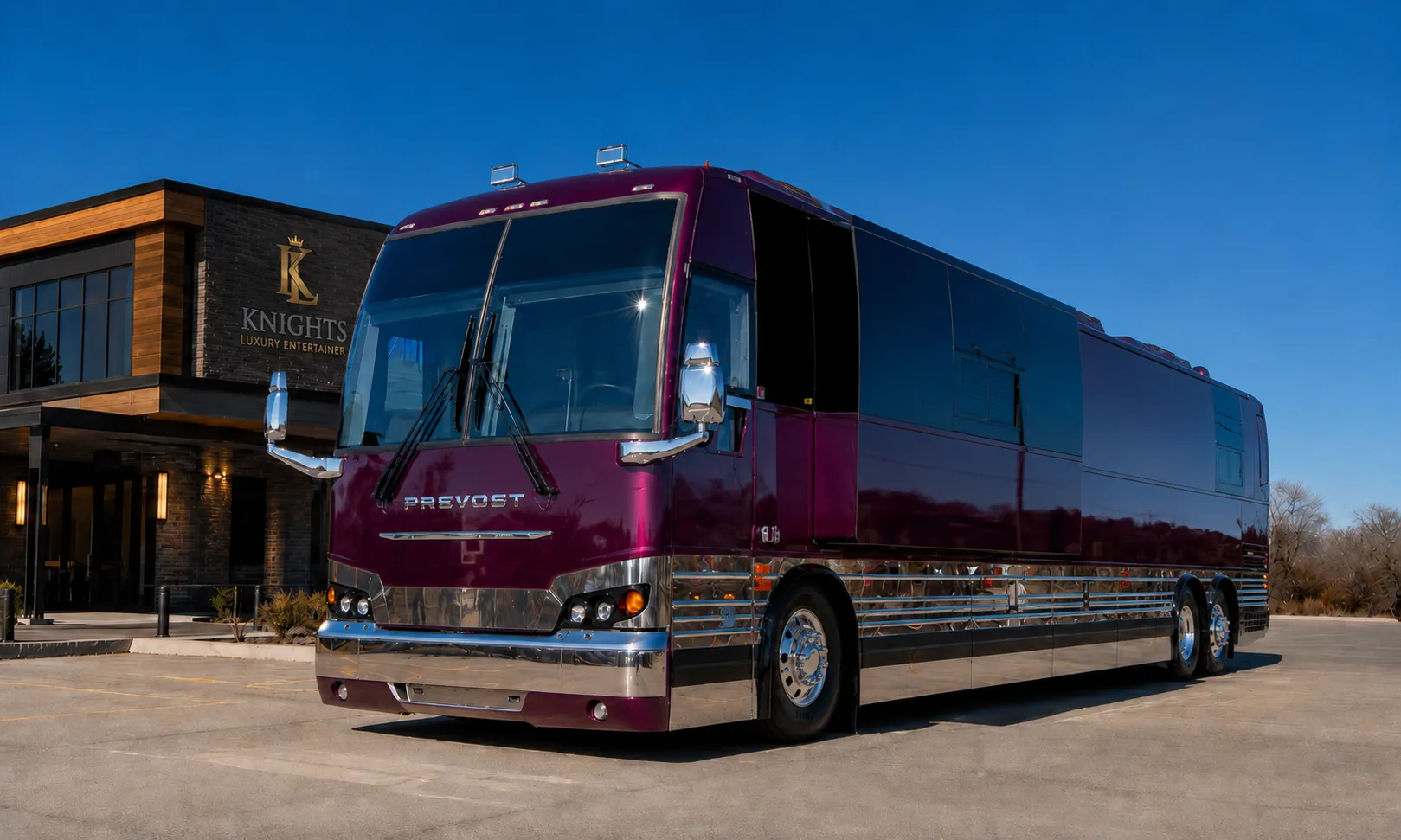
Rear lounge or stateroom
Rear configuration splits the market in two. A rear lounge keeps that space as a second shared room with seating, a screen and usually the better sound system. It is where the tour decompresses after a show, and it is the reason most bands choose it.
A stateroom converts that same footage into a private bedroom, normally with an en-suite bathroom and a queen berth. One person gets a door that closes. Everybody else loses the second lounge.
The trade is straightforward. A band traveling together wants the lounge. A headliner keeping different hours from the crew wants the stateroom. Which is the difference the industry labels star and crew.
Star coach, band coach and crew coach
Naming follows use rather than chassis. A star coach carries the stateroom build: fewer berths, private rear suite, specced for one principal artist. A band coach runs 12 berths with lounges at both ends, carrying the performers together. A crew coach is the same shell specced for headcount over comfort, often with the bed kit fitted and less attention paid to the front lounge.
Large tours run several at once, typically one star coach, one or two band coaches and a crew coach, which is why operators quote packages rather than single units.
Whichever type a tour takes, the slide decision applies to all of them.
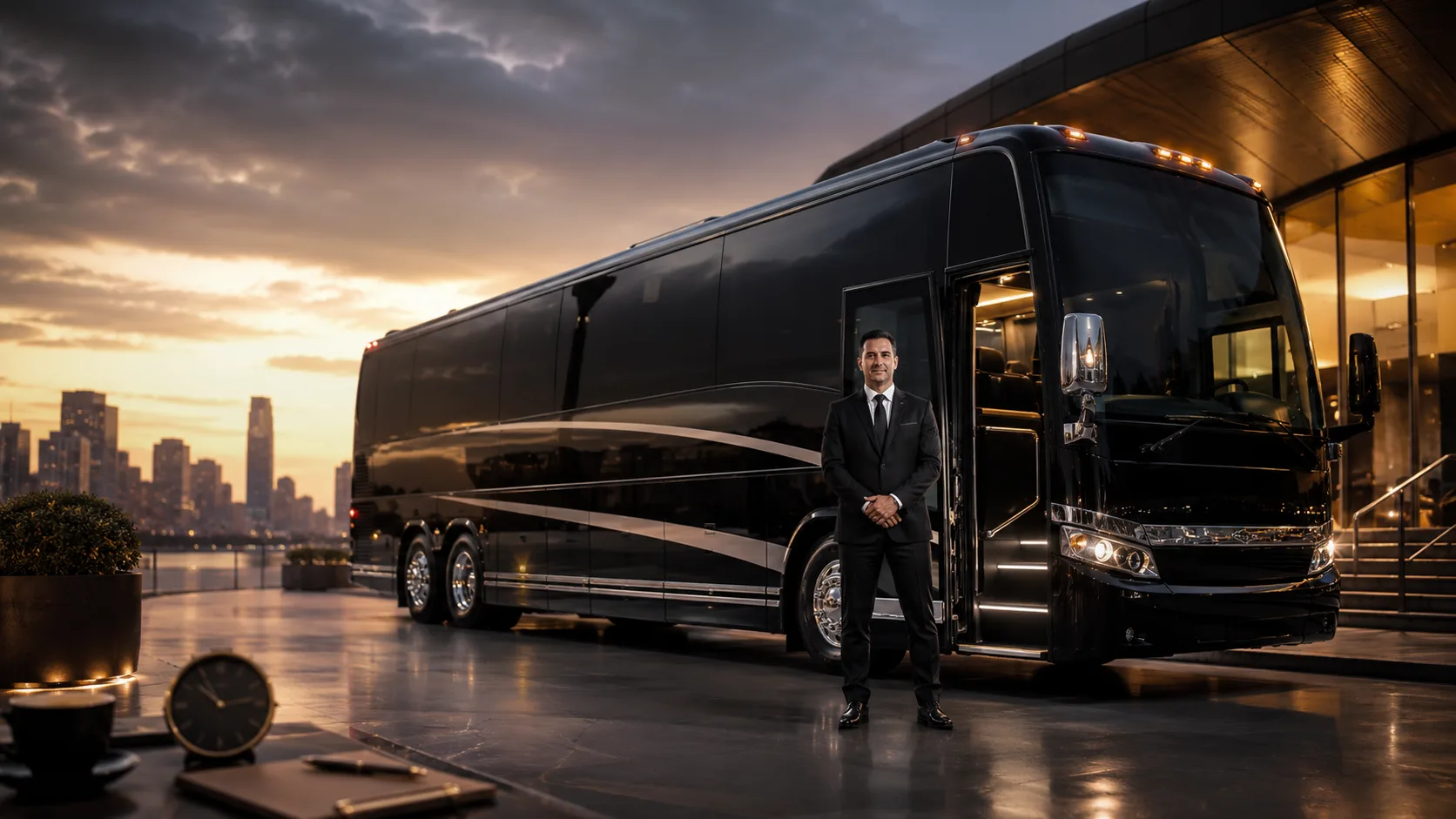
Slide-outs and non-slide coaches
Slide-outs extend a section of wall outward once the coach is parked, adding about 18 inches of floor width to whichever lounge they serve. A single slide-out does it on both sides or at both ends. The difference inside a parked coach is significant: a lounge that seats six comfortably instead of four.
Non-slide coaches cost less per day and park anywhere. That matters more than it sounds on club runs, where load-in lots are tight, and in winter, where a slide should not be deployed in freezing rain.
The honest guidance is that slides earn their money on long stays and cost you flexibility on tight ones. Bunk construction follows a similar logic.
Bunk types: standard, condo and the junk bunk
Bunks stack three high in a standard alley, each with a curtain, a reading light and a 110V outlet. Sleeping is feet-forward, which matters under braking rather than for comfort.
A condo bunk merges two berths into one wider and taller space, trading capacity for room to sit up. A coach with condo bunks sleeps fewer people but sleeps them better, and the configuration has spread as tours have got smaller.
A junk bunk is not a build at all. It is whatever berth nobody claimed, repurposed as shared storage for bags, shoes and merch. Booking one berth more than your headcount is the cheapest comfort upgrade available.
All of which reduces to a single practical question.
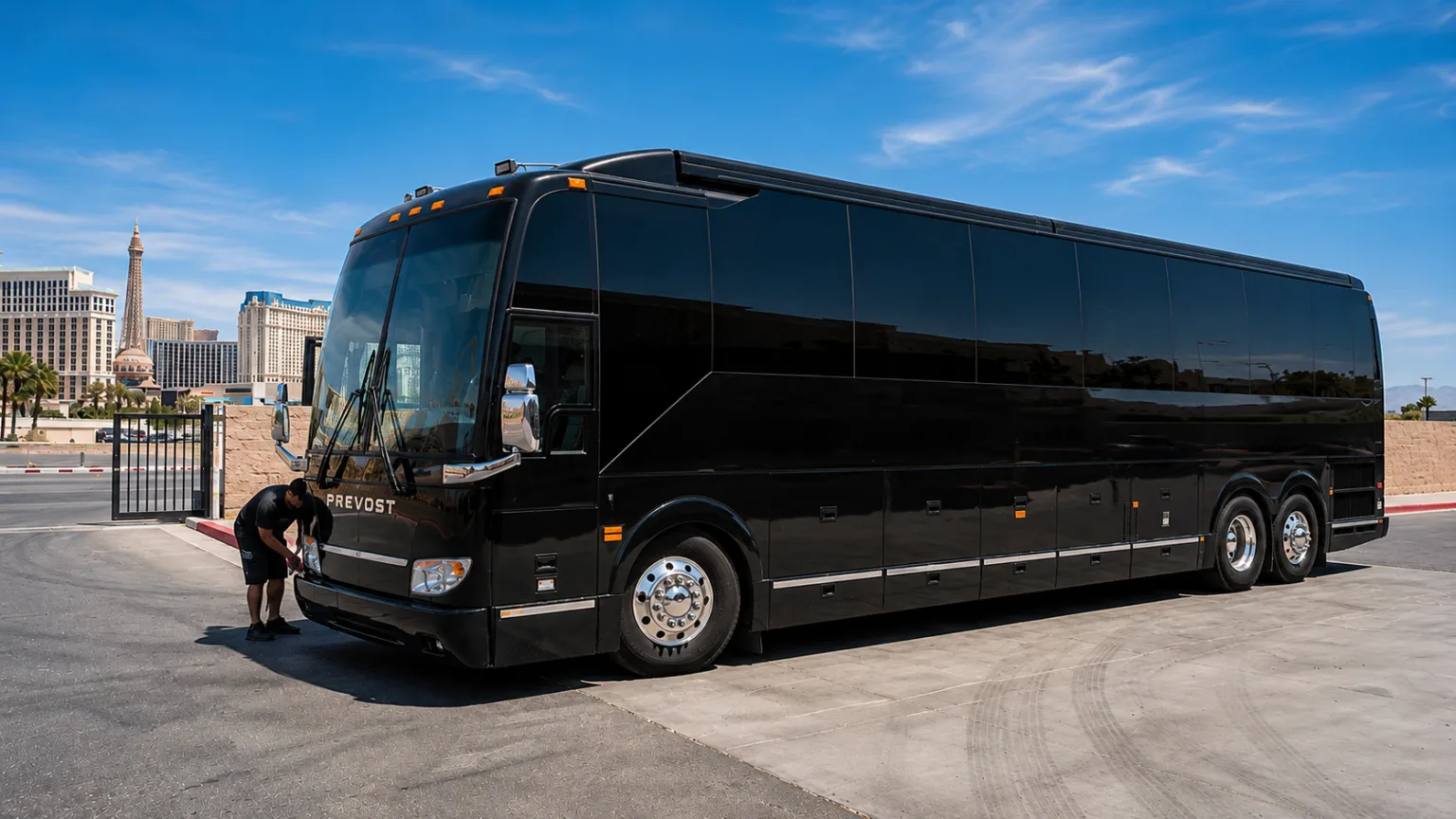
Matching a layout to your tour
Matching works through four questions in order. The headcount sleeping on board, which sets the berth count. Does one person need to sleep on a different schedule, which decides stateroom against rear lounge. How long does the coach sit parked at each stop, which decides whether a slide pays. And does backline travel with you, which decides whether a trailer joins the specification.
Answer those four and the shortlist is usually two or three coaches rather than a fleet. Knights Coaches runs Prevost units across those configurations, and the live inventory with current availability sits on the fleet page.
Got questions?
Frequently asked questions
A star coach is an entertainer coach built with a private rear stateroom instead of a second lounge. In this fleet the conversion leaves roughly six berths plus a queen bedroom with its own bathroom. Headliners take them to keep a schedule the rest of the party does not.
Twelve, on every coach in the fleet. Wisdom, Brookland and Chief can be run with an optional star conversion instead, which trades berths for a private rear stateroom and leaves roughly six.
Take the rear lounge for a group traveling together and the stateroom for one principal who needs privacy. The lounge gives everybody a second room after the show. The stateroom gives one person a door, at the cost of that room for everyone else.
No, and it is worth confirming per unit rather than assuming. Most modern touring builds include a stand-up bathroom with a shower, but older conversions and some crew specs do not. Operators list it as a feature because it genuinely varies.
It is a single berth built to the footprint of two, wide enough and tall enough to sit upright in. A standard three-high stack does not allow that. Capacity falls as a result, which is the trade every condo build makes.
Worth it when the coach parks for long stretches, not when it moves every night. The extra width genuinely changes how a lounge feels. On a tight club routing that space sits unusable half the time and the unit still costs more.
It sleeps twelve, but it stores gear for about ten. Filling every berth leaves nowhere for bags beyond the undercarriage bays. Most touring parties of ten to twelve book the spare berths deliberately.
A refrigerator, microwave, coffee maker, sink and pantry storage. It handles reheating, breakfast and coffee rather than cooking for a crew. Tours stock it at the start of a leg and top it up at truck stops.
About 102 inches closed, and roughly 18 inches wider per slide once deployed. That extension only happens parked. Venue lots and overnight stops need to be advanced with the deployed width in mind, not the driving width.
Detail pages
The parts of a booking that come up most often, each answered on its own page.
12-Bunk Entertainer Coach
The touring workhorse: 12 bunks, front and rear lounges, galley and full bath. Sleeps a band plus crew on one bus. Check availability.
Read 12-bunk entertainer coachCrew Size and Bunks
How crew size maps to a twelve-bunk entertainer coach, who to count, why the driver is counted separately, and when two coaches beat one.
Read crew size and bunksSlide-Out Layouts
What a slide-out does on a tour bus, why it changes the lounge and not the bunk count, and how the Prevost fleet is configured.
Read slide-out layoutsStar Coach Conversion
What a star conversion changes at the rear of an entertainer coach, who it suits, and which three coaches in the fleet are built for it.
Read star coach conversion
See the coaches
An entertainer coach floor plan divides a 45-foot shell into a front lounge, a galley and bathroom, a bunk alley and a rear space, and the rear space is what defines the coach. Every coach carries twelve berths, and the three with the optional star conversion sleep one or two more in the rear suite. Star coaches trade berths for a private stateroom. Band and crew coaches keep the rear lounge. Slides add about 18 inches of width when parked and cost flexibility when the lot is tight. Condo bunks trade capacity for headroom, and one unclaimed berth becomes the storage nobody plans for but everybody uses. Browse the current fleet for availability by configuration, or call 1-855-838-5542 with your headcount and routing and dispatch will shortlist the coaches that fit.