
Entertainer Coach Rental
Entertainer Coach Rental: Prevost Sleeper Coaches for US Tours
An entertainer coach (called a sleeper bus in the US and a nightliner in Europe) is a 45-foot motorcoach converted into sleeping and living quarters for touring artists and crew. It replaces the hotel room, the van and the overnight drive with one vehicle.
The conversion is what separates a coach from a bus. A finished unit carries twelve bunks stacked three high, a galley, a stand-up bathroom with a shower, and a lounge at each end. It measures 102 inches across, returns roughly 6 miles per gallon, and gains 18 inches of floor width per slide-out once parked.
Almost every US touring coach sits on one of two Prevost platforms: the flat-floor X3-45 or the raised-floor H3-45. Converters build the interiors, and that's where layouts split into rear lounge plans, star coaches with a private stateroom, and crew buses built for headcount over comfort. Around those choices sit the line items nobody prints on a homepage. Deadhead days. Overdrive mileage. Driver hotels. Gear trailers.
Two bodies govern the work. The FMCSA caps passenger-carrying drivers at 10 hours of driving after 8 consecutive hours off duty, which fixes how far a coach legally moves overnight. The Entertainer Motorcoach Council sets the safety standard operators are measured against, and Knights Coaches holds membership.
This page covers what's on board, the two Prevost platforms, how floor plans map to headcount, what a lease bills you for, where coaches stage, trucking, and how to get a routing quoted.
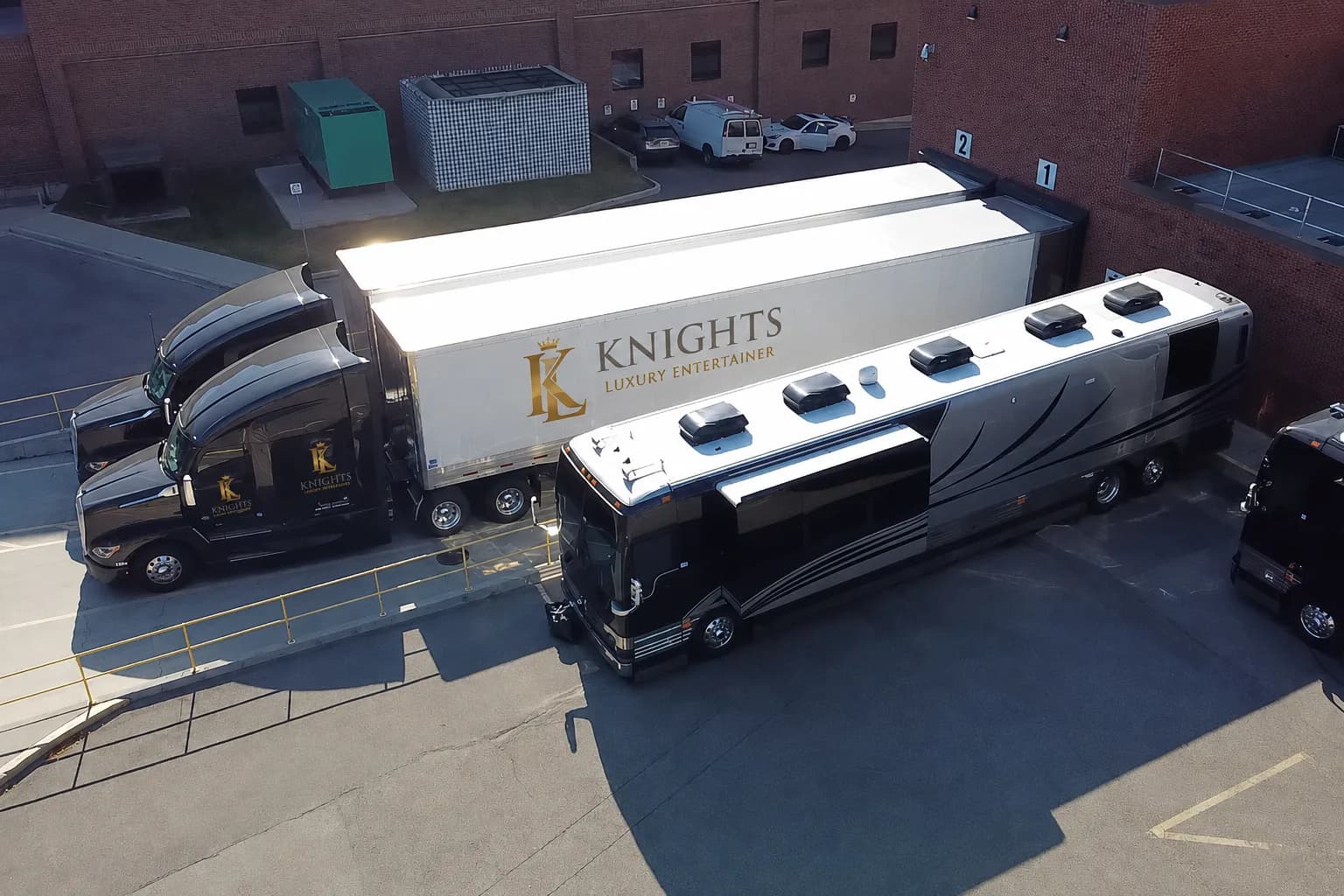
Why touring acts book Knights Coaches
Touring punishes operators who cut corners, so credentials matter more than paint. Every Knights driver holds a commercial license with a passenger endorsement, a current DOT medical card and FMCSA Clearinghouse enrollment. Each carries at least three years on entertainer coaches, a different job from charter work: late load-outs, tight venue lots, a bus call that doesn't move.
Dispatch answers around the clock, with a live person on routing changes and breakdowns rather than a ticket queue. On long leases one driver stays with the unit, so nobody briefs a stranger every leg.
The fleet is Prevost only. That decision shapes what sits inside each unit.
What's on board every coach
On board, the fit-out stays consistent across the fleet whatever the class or lease length:
- Galley with refrigerator, microwave, coffee maker and dishwashing sink
- Full bathroom with a working shower
- Bunks with privacy curtains, reading lights and a 110V outlet at each berth
- Satellite TV in the front and rear lounges
- WiFi backed by cellular boosters for weak-signal routings
- Climate control zoned separately for the bunk alley and the lounges
- Undercarriage bays for luggage, personal gear and small production cases
Bunk alleys run cold on purpose and lounges run warm, which is why the zones split. All of it rides on a Prevost chassis.
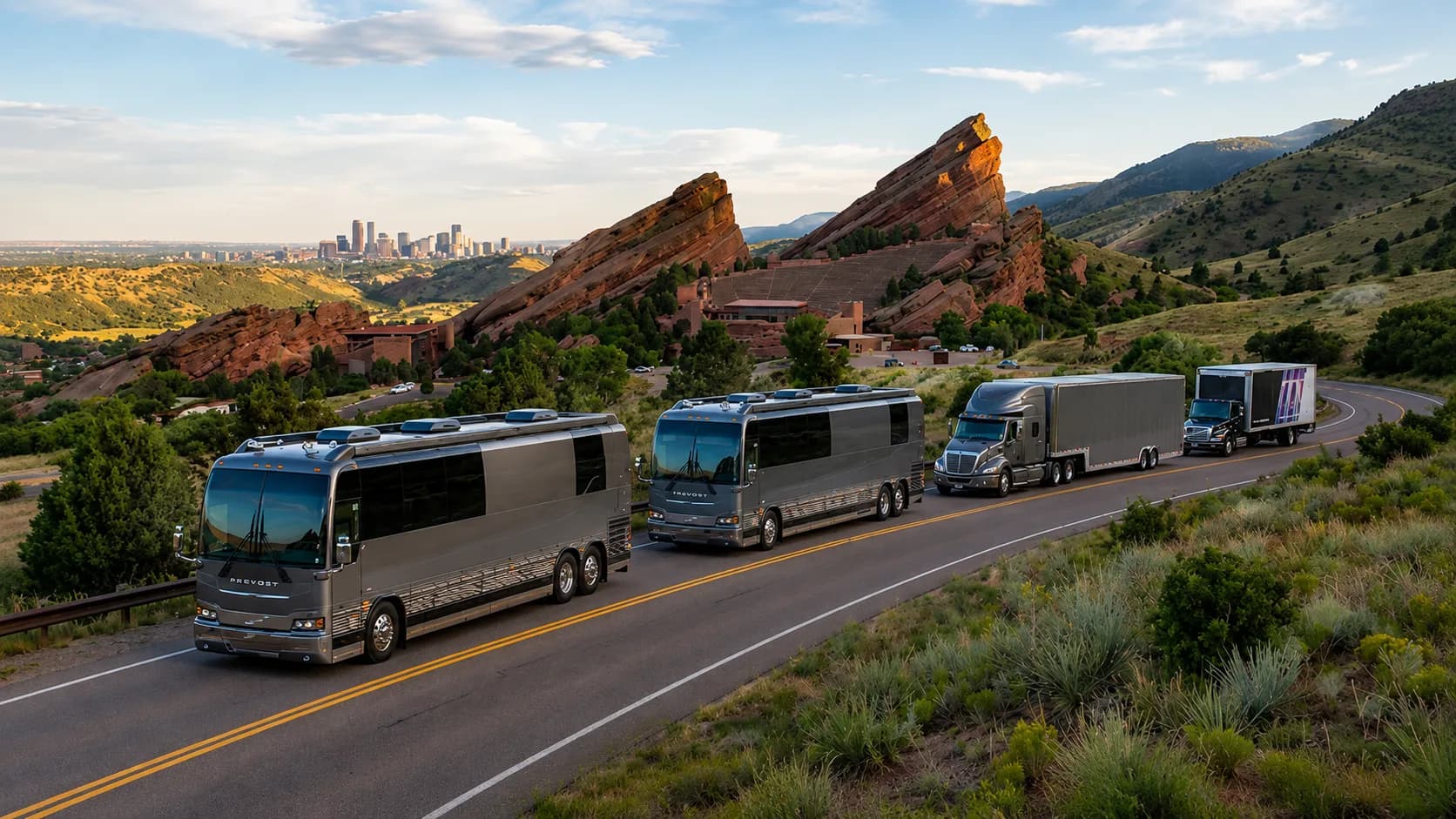
The Prevost H3-45 and X3-45 platforms
Prevost builds the shell; a converter builds the coach. The X3-45 uses a flat floor, giving converters an uninterrupted run for bunk alleys, and most US touring interiors start there. The H3-45 raises the deck over the drivetrain, so it gains bay volume underneath and a higher sightline.
Both pair modern diesel powertrains to Allison automatic transmissions. Service coverage is why the industry standardized here: a Prevost that fails in a strange city can be worked on almost anywhere in North America.
What differs between two coaches on one chassis is the layout inside.
Floor plans and bunk counts
Floor plans should be picked off headcount first, comfort second:
- The star conversion: offered on Wisdom, Brookland and Chief, leaving roughly six berths plus a private rear stateroom with an en-suite. Headliner and a small team.
- 12-bunk coach: the touring standard. Sleeps a band plus crew on one unit, lounges at both ends.
- twelve-bunk configuration: a rear bed kit converts the back lounge into extra berths. Production and lighting crews take these.
The trade never changes. Every berth added takes lounge space away, and a crew living on the bus 14 hours a day feels it.
Once the layout settles, the proposal numbers come into focus.
What an entertainer coach lease bills you for
Lease proposals are built from components, not one day rate, which is why two quotes for the same tour can look nothing alike. A complete one accounts for:
- Coach day rate, set by class, age and slide configuration
- Driver day rate, plus a hotel room each night out and a daily per diem
- Fuel, calculated from route miles against roughly 6 MPG, or nearer 5 MPG pulling a trailer
- Deadhead, the empty run from the yard to your first city and back from the last
- Overdrive, extra driver pay once a day passes the industry threshold near 451 miles
- Tolls, permits, parking and exterior washes between legs
Knights Coaches quotes per routing rather than a flat figure, because deadhead and overdrive move the total more than the coach rate does. A tight regional run and a coast-to-coast routing on the same unit are not the same job.
Deadhead depends on where the coach starts.
Where coaches pick up and drop off
Pickup and drop-off cover the continental US, with staging concentrated where tours start: Los Angeles, Atlanta, New York, Chicago, Austin, Las Vegas and Miami. Alaska and Hawaii sit outside the operating area, since no commercial route takes a 45-foot coach to either.
Legs crossing into Canada are quoted case by case, since driver eligibility and coach paperwork change at the border. One-way routings ending far from the origin yard carry a drop charge, quoted up front.
Coaches move people and bags. Backline needs its own answer.
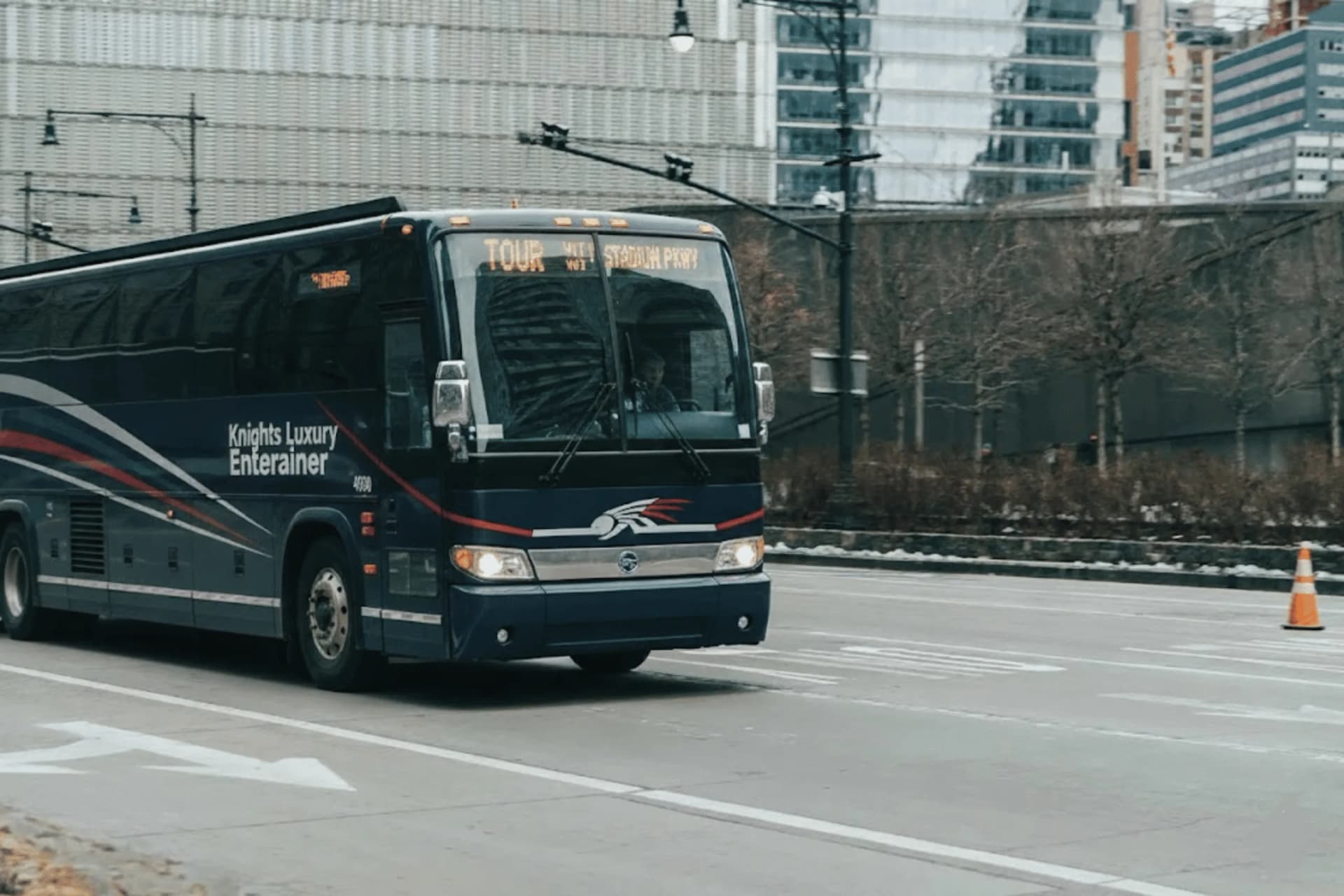
Tour trucking and gear trailers
Trucking covers what the bays can't. A gear trailer pulled behind the coach handles backline, merch and small production on club runs, at less per day than a separate truck. Tours moving staging, lighting or audio step up to dedicated trucking, coordinated alongside the lease on one contract. Pulling a trailer changes the fuel figure and parking options, so raise it at quote stage.
How to book an entertainer coach
Booking runs in four steps. Call 1-855-838-5542 or send the routing through the contact form with your dates, pickup and drop cities, crew headcount, floor-plan preference and any trucking needs. Dispatch returns three coaches matching the dates and layout, each priced line by line. A deposit and signed contract confirm the unit. On tour day the coach arrives fueled and inspected, and the driver walks the tour manager through it.
Two lead times matter: wraps and interior customization need at least 30 days, and bookings placed 60 or more days out get first pick of the fleet.
Got questions?
Frequently asked questions
Yes, every coach leases with its driver included. No US entertainer coach operator rents a unit bare, because the coach runs under the operator's DOT authority and insurance. Leases beyond a few weeks keep one driver on the unit throughout.
Deadhead is the empty mileage between the coach yard and your first pickup city, plus the return after your last date. It bills as drive days at the standard rate even though nobody is on board. Starting in a market where coaches already stage cuts it substantially.
Every coach carries twelve bunks, which is the layout most tours book because it sleeps a band and its crew together. Wisdom, Brookland and Chief can be run as star coaches instead, trading berths for a private rear suite with its own bathroom.
A coach usually wins once a tour passes roughly ten dates with short drives between them, because it removes hotel rooms, checked-bag fees and airport transfers at once. Flying stays cheaper for scattered dates with long gaps. Run the comparison per person per day, not per trip.
No, drivers come from Knights Coaches. Insurance and operating authority both sit with the operator, and an outside driver voids them. It also means the person at the wheel already knows the coach's height, weight and service history.
Book one berth per person traveling, then check the lounge space left over. A 12-bunk unit carrying twelve people has no spare storage, so parties of ten often take one anyway and use the spare berths for bags. That spare berth is called a junk bunk.
All 48 continental states plus the District of Columbia. Staging is heaviest around Atlanta, Los Angeles, New York and Chicago, which keeps deadhead down for tours starting in those regions. Canadian legs are priced individually.
Take the rear lounge for a band traveling together and the stateroom for a headliner sleeping on a different clock. A rear lounge keeps a shared room for after the show. A stateroom converts that space into a private bedroom with a door, at the cost of the seating.
Detail pages
The parts of a booking that come up most often, each answered on its own page.
How to Book an Entertainer Coach
Booking a tour bus takes five steps: itinerary, headcount, coach spec, quote, contract. See exactly what a coach company needs from you.
Read how to book an entertainer coachChanges and Cancellations
How a confirmed entertainer coach booking handles a routing change, which changes move the price, and what to ask about cancellation before signing.
Read changes and cancellationsEntertainer Coach Rental Cost
Entertainer coach day rates typically run several hundred to a few thousand dollars plus driver and fuel. See the full cost breakdown.
Read entertainer coach rental costDeadhead Miles
What deadhead means on an entertainer coach quote, why a one-night booking costs more per day, and which routing changes actually reduce it.
Read deadhead milesDeposit and Payment
What confirms an entertainer coach booking, what the deposit holds, and which terms should be in writing before any money moves.
Read deposit and paymentDrivers and Hours
Federal hours-of-service limits explained, what they mean for an overnight leg, and how the one-driver-or-two decision is made before departure.
Read drivers and hoursTour Bus Fuel and Mileage
How mileage is counted on an entertainer coach rental, what the fuel basis on your quote means, and why two runs of the same length price differently.
Read tour bus fuel and mileageEntertainer Coach Insurance
What a motorcoach operator carries, how to get a certificate of insurance for a venue, and why your instruments belong on your own policy.
Read entertainer coach insuranceEntertainer Coach Leasing
Lease an entertainer coach for a full tour leg, season or year. Fixed monthly rates, dedicated driver and maintenance included. Request terms.
Read entertainer coach leasingNashville Entertainer Coach Rental
Nashville is the center of the US touring coach industry. Lease a Prevost entertainer coach out of Music City for any national routing.
Read nashville entertainer coach rentalTour Bus Pricing Models
Compare day-rate, weekly and full-tour entertainer coach pricing to see which structure costs least for your routing and number of shows.
Read tour bus pricing modelsEntertainer Coach Rental Agreement
What a tour bus lease contract covers: term, mileage, fuel, driver, damage, indemnity and insurance clauses. Read before you sign.
Read entertainer coach rental agreementVenue Access and Load-In
What a venue needs to take a full-size tour coach, where it waits between load-in and departure, and what to tell dispatch in advance.
Read venue access and load-in
By who is touring
Who we serve
The same fleet and the same drivers, written for the way each of these tours actually runs.
Band Tour Bus Rental
Band tour bus rental for nationwide concert tours. Sleeper coaches, CDL drivers, gear trailers, everything bands need to tour in comfort.
Read band tour bus rentalChristian and Gospel Music Tour Bus Rental
Tour bus rental for Christian, gospel, and worship artists. Family-friendly drivers, ministry routing experience, EMC member.
Read christian and gospel music tour bus rentalCountry Music Tour Bus Rental
Country music tour bus rental for Nashville dates and national runs. The fleet trusted by indie country artists and rising Music Row acts on national runs.
Read country music tour bus rentalCustom Tour Bus Wraps and Branding
Custom tour bus wraps with your artist branding, campaign logo, or production graphics. Submit artwork, we handle installation.
Read custom tour bus wraps and brandingDJ Tour Bus Rental
DJ tour bus rental for festival circuits and club tours. Quick turnarounds between cities, gear bays for decks and controllers, full lounges.
Read dj tour bus rentalEntertainer Coach Leasing & Tour Bus Rentals
Book Entertainer Coach Leasing and tour bus rentals with Knights Coaches for safe, stylish USA travel for artists, crews, events, and tours.
Read entertainer coach leasing & tour bus rentalsHip-Hop Artist Tour Bus Rental
Hip-hop tour bus rental for rappers, DJs, and crews. Discreet pickup, blackout windows, sound systems, CDL drivers who understand the lifestyle.
Read hip-hop artist tour bus rentalLatin Music Tour Bus Rental
Latin music tour bus rental for reggaeton, banda, and tropical tours. Bilingual drivers available, routing for US Latin market hubs.
Read latin music tour bus rentalLong-Term Tour Bus Lease
Long-term tour bus lease programs from Knights Coaches offer 1, 6, and 12 month Prevost coaches with CDL drivers, fleet priority, and nationwide tour
Read long-term tour bus leaseMusician Tour Bus Rental
Tour bus rental built for musicians, solo artists, full bands, DJs. Comfortable bunks, road-ready amenities, professional CDL driver.
Read musician tour bus rentalPop Artist Tour Bus Rental
Pop artist tour bus rental for arena and theater tours. Luxury Prevost coaches with everything a pop production needs on the road.
Read pop artist tour bus rentalRock Band Tour Bus Rental
Rock band tour bus rental, durable Prevost coaches built for back-to-back arena runs. Crew drivers used to late load-outs and early lobby calls.
Read rock band tour bus rentalShort-Term Tour Bus Rental
Reserve a short-term tour bus rental for one-day events, weekend festivals, or productions. Luxury Prevost coaches, driver included, nationwide.
Read short-term tour bus rentalSolo Artist Tour Bus Rental
Solo artist tour bus rental. Whether you're a singer-songwriter or rising artist, we'll match you with the right coach for your tour and budget.
Read solo artist tour bus rentalVIP Charter Coach Service
VIP charter coach for executives, celebrities, and private groups. Same star-coach amenities as our headliner clients.
Read vip charter coach service
Get your routing quoted
An entertainer coach turns the overnight drive into sleeping and living quarters, and a good lease is one where everything gets specified before signing. Knights Coaches runs a Prevost-only fleet on the X3-45 and H3-45 platforms, with CDL drivers holding current medical cards, round-the-clock dispatch and Entertainer Motorcoach Council membership. Every coach carries twelve bunks, with an optional star conversion on Wisdom, Brookland and Chief, quoted per routing so deadhead, overdrive, driver costs and fuel stay visible line by line. Pickup reaches every continental market, with gear trailers or full trucking on the same contract. Call 1-855-838-5542 with your dates, cities and headcount, and dispatch will come back with three coaches that fit.