
Bus Parking and Venue Load-In: How to Advance, Park, and Power a Tour Bus
Bus parking and venue load-in are the show-day steps that place a touring coach at the venue, connect it to power, and move the touring party and gear into the building. Both depend on the advance: the calls and emails a tour manager exchanges with each venue days or weeks earlier to confirm where the bus goes, when it…
Knights Coaches
Knights Coaches
- Published
- Reading time
- 9 min read
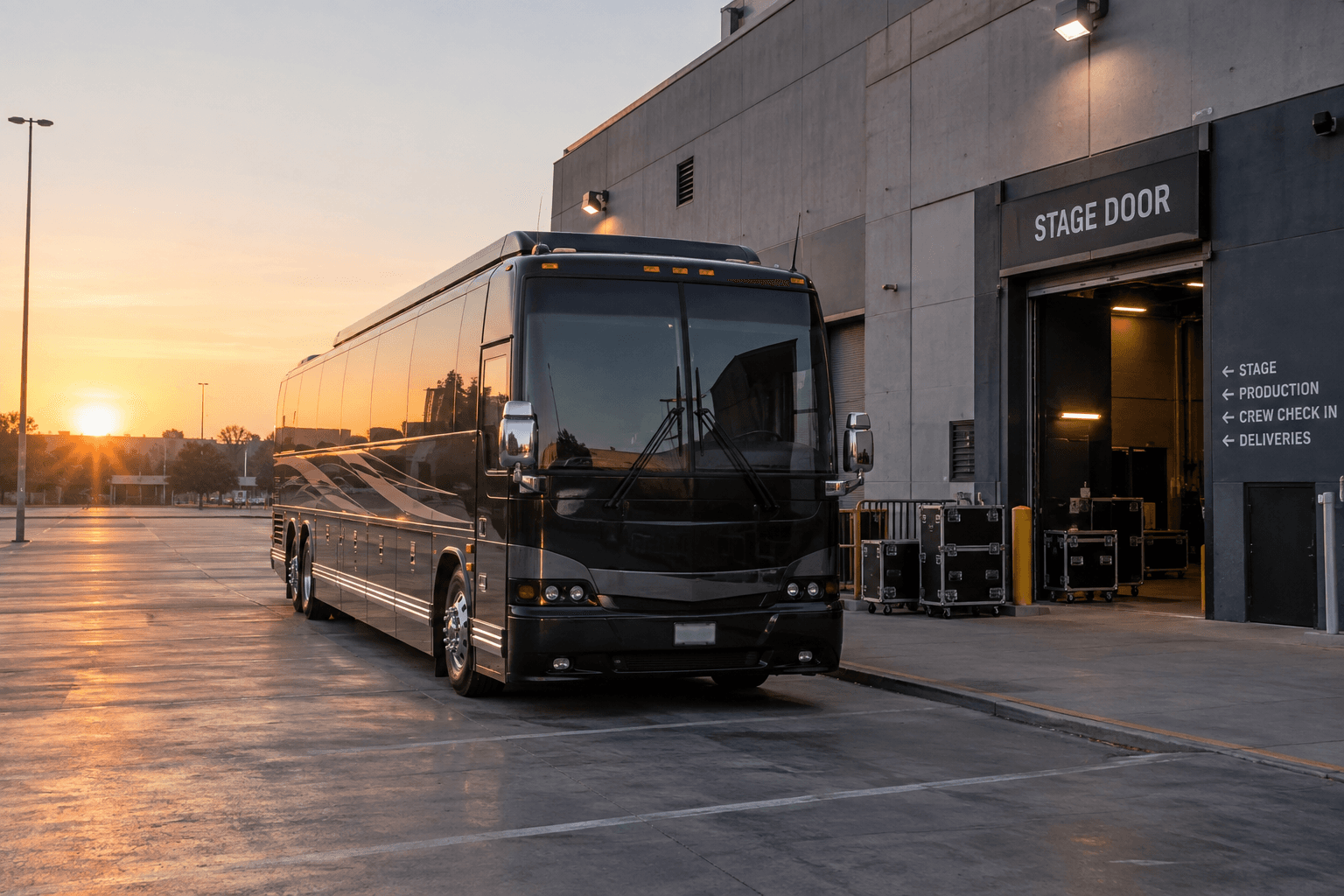
Bus parking and venue load-in are the show-day steps that place a touring coach at the venue, connect it to power, and move the touring party and gear into the building. Both depend on the advance: the calls and emails a tour manager exchanges with each venue days or weeks earlier to confirm where the bus goes, when it arrives, and what power waits for it.
The numbers drive every decision. A Prevost H3-45 entertainer coach runs 45 feet long, 102 inches wide, and about 146 inches (roughly 12 feet 2 inches) tall, with a turning radius in the low-to-mid 40-foot range. A gear trailer adds length and cuts maneuverability. Most tour riders ask for 50-amp shore power within 30 to 50 feet of the parking spot and parking access from early morning until after load-out.
Several parties share responsibility. The tour manager handles the advance. The venue's production manager assigns parking and power. The house electrician connects shore power. City transportation departments issue street parking permits. And the driver, working under federal hours of service limits, decides what's safe to attempt at 4:00 AM.
This guide covers advancing bus parking, coach dimensions, shore power, arrival timing, the load-in sequence, street permits, idling and generator rules, cross-loading, festival compounds, off-day parking, and load-out.
Advancing Bus Parking
Advancing starts with a short, specific list. Send the venue:
Vehicle count and type: one coach, one coach plus trailer, or buses plus trucks.
Dimensions: length including trailer, width, and height.
Arrival time: the realistic time after the overnight drive, not the scheduled load-in.
Power request: number of 50-amp shore power connections.
Departure window: when the bus plans to leave after load-out.
Ask for a parking map and photos of the lot entrance if the venue hasn't hosted buses often. A tight turn off a narrow street can stop a 45-foot coach cold.
Coach Dimensions to Know
Dimensions decide where a coach fits. Height matters most for parking garages, drive-through canopies, overpasses, and loading dock overhangs. At roughly 12 feet 2 inches, a coach clears most roads but not many urban garages.
Length decides turning and spot size. A coach needs roughly two to three standard parking spaces end to end, and more with a trailer. Turning radius decides whether the driver can enter a lot at all. When in doubt, the driver will want to walk the route or see satellite imagery before committing.
Shore Power
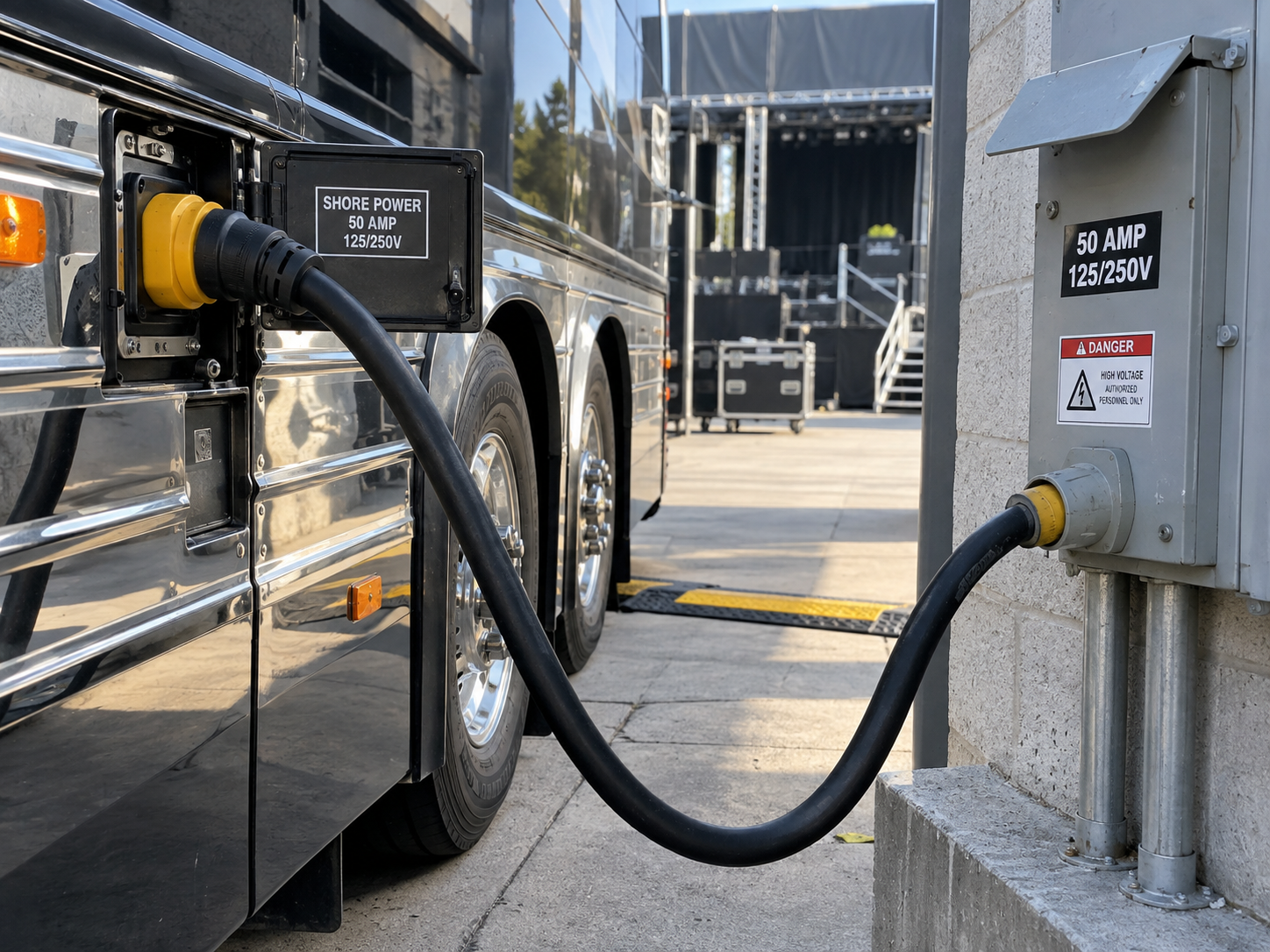
Shore power lets the bus run its air conditioning, fridge, and outlets without the generator. Venues that host tours often install dedicated 50-amp RV-style receptacles along the back wall or near the stage door.
Three things go into the advance: how many 50-amp circuits exist, how far they sit from the parking spots, and whether a house electrician must connect them. If the venue has no shore power, the coach runs its generator, which uses fuel and brings noise and exhaust rules into play.
Arrival Timing and Early Arrivals
Arrival rarely matches load-in. An overnight drive usually puts the bus at the venue between 4:00 and 8:00 AM, while the building might not open until 10:00 AM. The advance must answer where the bus waits.
Venues handle early arrivals differently. Some leave the lot open. Some ask buses to wait at a nearby truck stop. And sometimes the driver has reached his hours of service limit and must park immediately wherever it's safe. Build that reality into the plan so nobody is negotiating with a security guard at dawn.
The Load-In Sequence
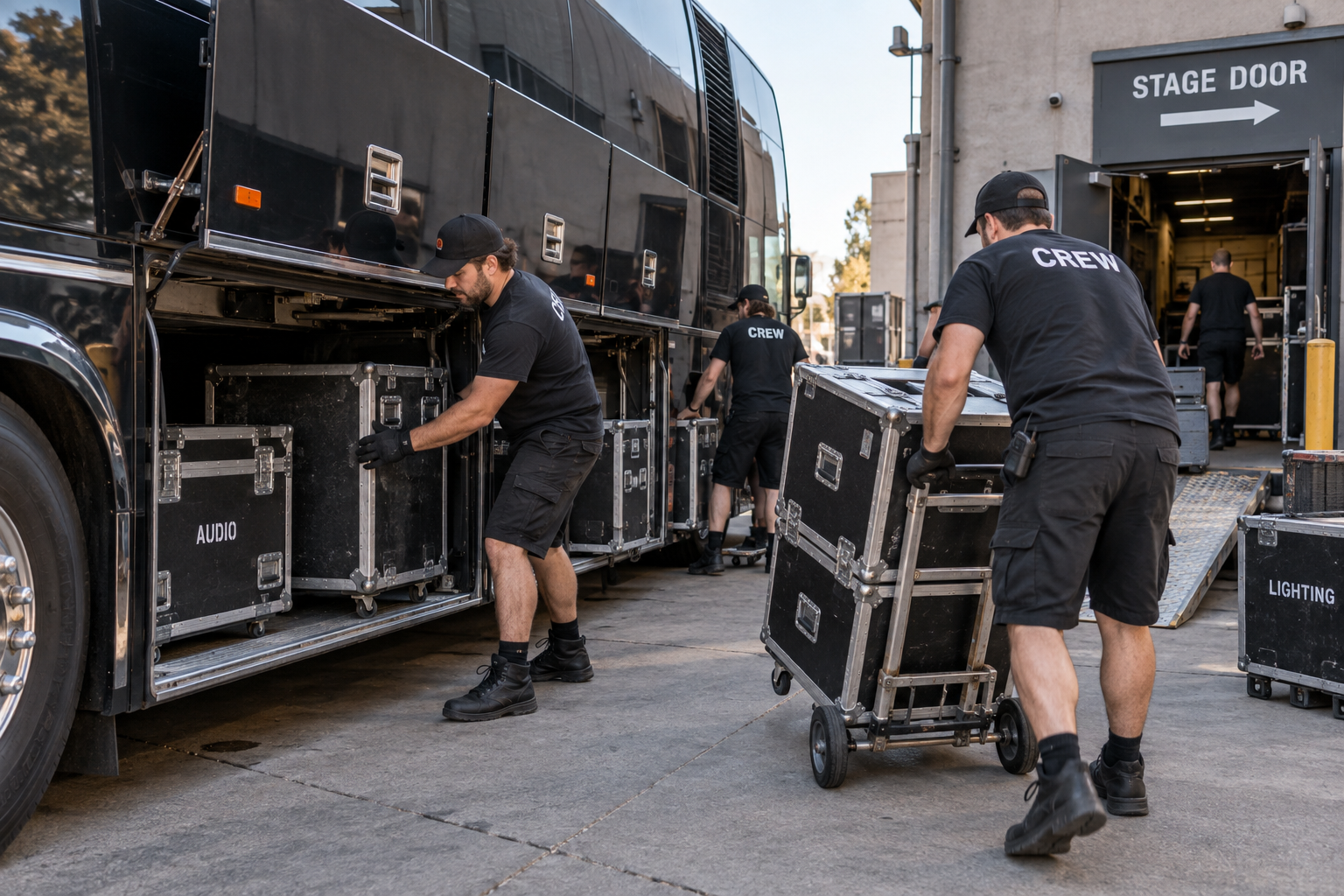
Load-in follows a rough order on most show days:
Trucks back to the dock first, since production gear needs the most time.
Crew enter the building about an hour before load-in to find bathrooms, showers, and the production office.
Local stagehands arrive for the call, often 30 minutes before load-in.
Band gear moves from the bus bays or trailer to the stage.
A typical theater day might run: into building at 10:00 AM, load-in at 11:00 AM, soundcheck from 4:00 to 5:00 PM, doors at 7:00 PM. The bus stays parked out of the dock's way the entire time.
Street Parking and Permits
Street parking brings city rules. Many urban venues can't fit a coach on site, so buses park on the street with permits from the city's transportation department. Permits often require weeks of lead time, reserved signage, and fees.
Read venue tech packs carefully. Some state plainly that the venue isn't responsible for parking tickets or tow fees on the street. Others require all tour vehicles to leave the lot by a set hour, like 2:00 AM. Missing that detail can mean a ticket, a tow, or a driver forced to move the bus when he should be sleeping.
Idling and Generator Rules
Idling laws limit how long a diesel engine can run while parked. New York City, for example, caps idling at 3 minutes in most situations. Many other cities and states set their own limits.
Generators bring separate rules. Some venues ban generator use near residential neighbors or during quiet hours. Shore power solves both problems, which is one more reason to confirm it early.
Cross-Loading When a Bus Can't Park
Cross-loading moves people and gear from the coach into smaller vehicles when the bus can't reach the venue. The bus parks at a truck stop, lot, or hotel, and vans or box trucks shuttle everything to the stage door.
It works but costs time and money. Budget for vans, drivers, and extra crew hours. Advance the cross-load point and timing with the same care as a normal parking plan, including where the shuttle vans park near the stage door.
Festival Bus Compounds
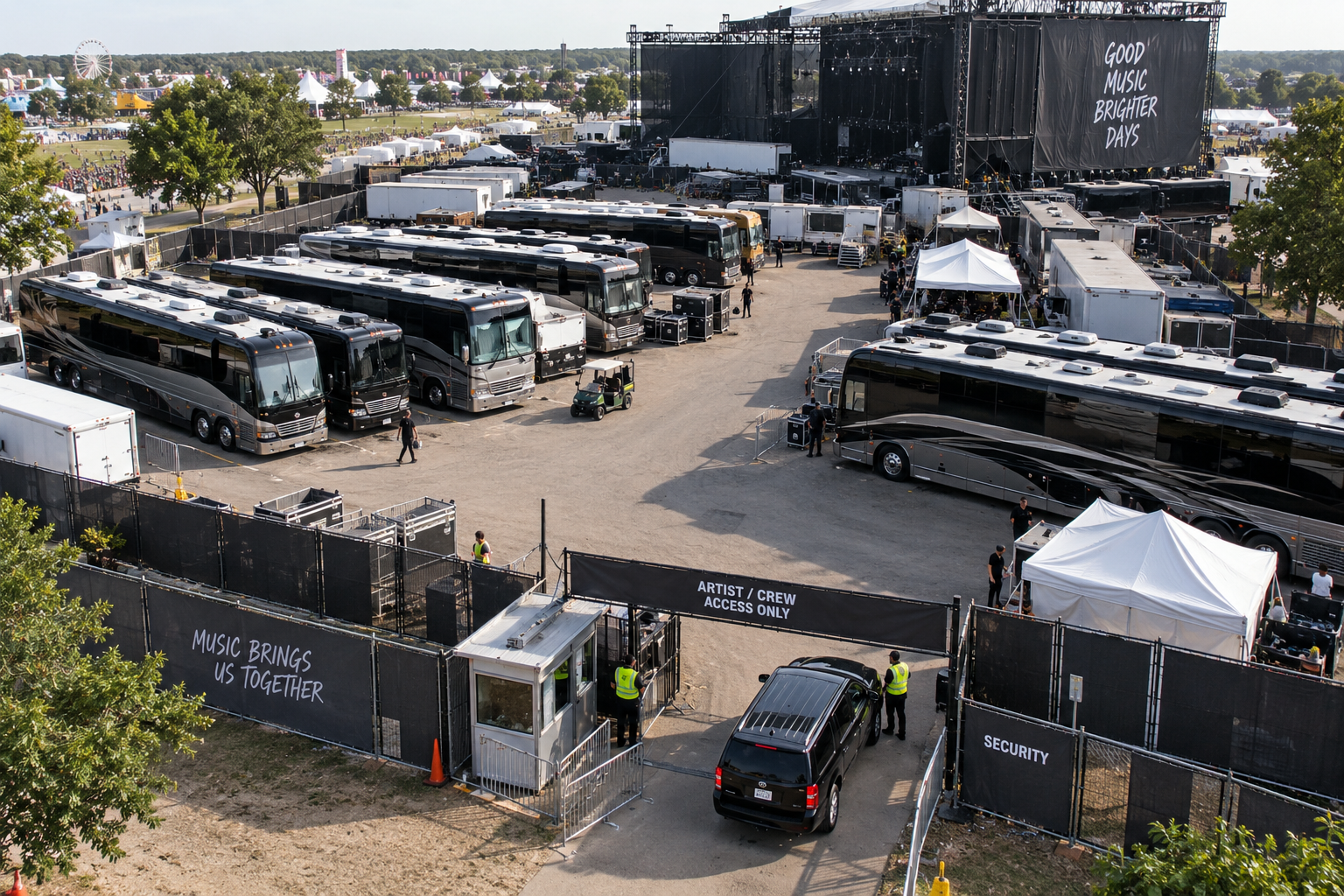
Festivals run bus parking differently. Large events set up a bus compound, a fenced area behind the stages with assigned spots, shared power, credential checks, and a compound manager. Arrival windows are tight, since dozens of coaches rotate through in a day.
Advance the festival early. Ask for the compound map, arrival window, power availability, credential requirements, and departure rules. Festivals often require buses to leave within a set time after the set ends.
Parking on Off Days
Off days still need a parking plan. Options include asking the previous venue to let the bus stay an extra night, asking the next venue for an early arrival, parking at an RV resort with 50-amp hookups, or using a hotel with a bus-friendly lot.
Hours of service matter here too. If the driver needs rest, the bus stays put, so pick a spot with power, showers, and food within walking distance.
Load-Out and Departure
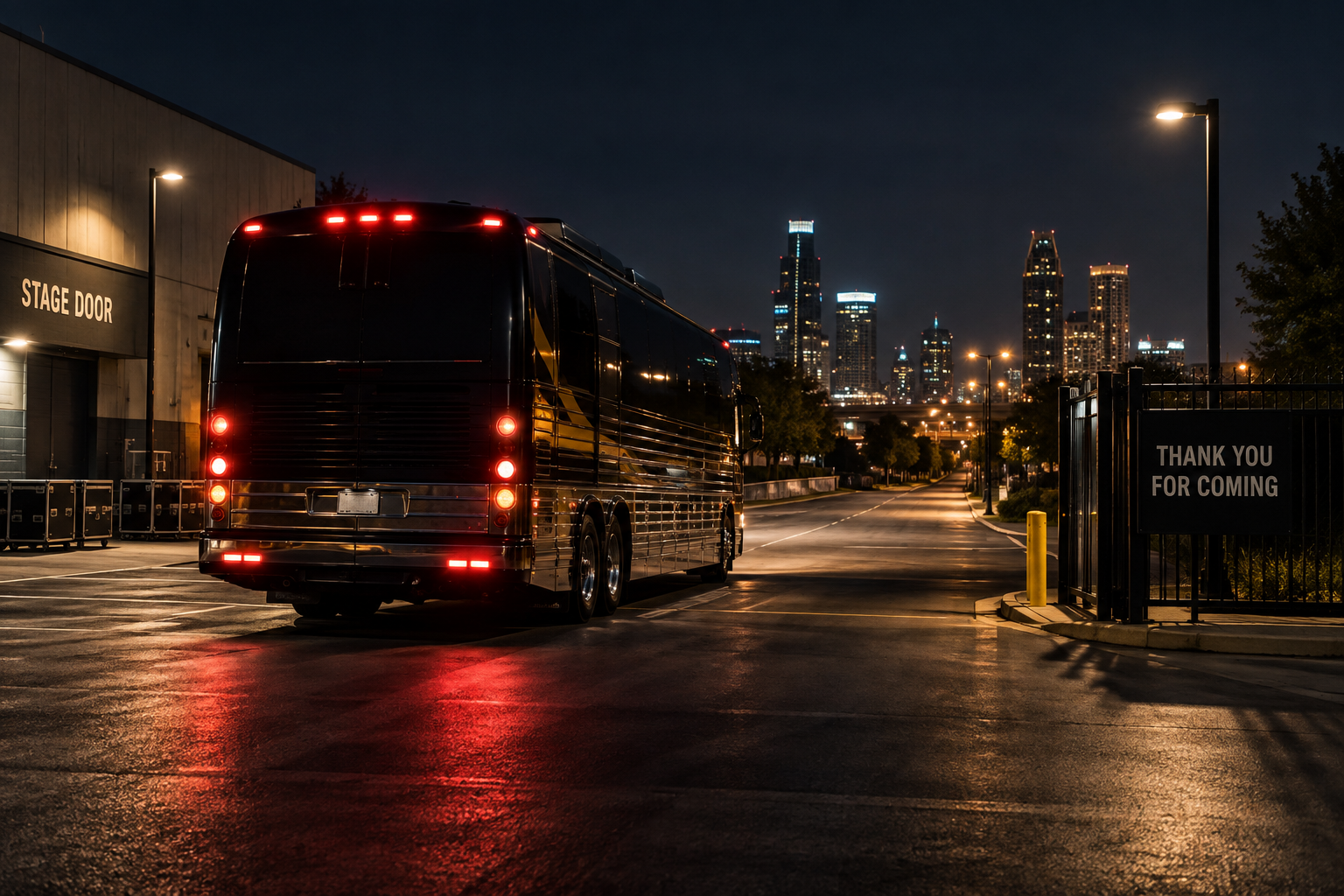
Load-out reverses the day. Gear returns to the bus bays, trailer, or trucks. The tour manager sets a bus call, the time everyone must be aboard. The driver does a walk-around and pre-trip inspection while the party loads.
Headcount comes before the bus moves. Leaving someone behind at a venue at 1:00 AM happens more often than tours like to admit. The driver shouldn't roll until the tour manager confirms everyone is aboard.
Security and Fan Management at the Bus
Security around the bus matters, especially on artist coaches. Fans sometimes find the bus through social posts, license plates, or a quick look at the venue lot. Keep the door locked whenever the driver or a crew member isn't nearby.
Advance security with the venue. Ask whether the lot is fenced, whether venue staff patrol it, and where fans gather after the show. Some tours park the artist bus inside a secured dock or a separate lot and walk the artist in through a private entrance.
Lot Conditions and Weather
Lot conditions affect where a 45-foot coach can safely park. Grass lots at fairgrounds and festivals turn soft after rain, and a coach weighing well over 40,000 pounds can sink. Steep slopes make leveling the coach hard, which affects sleep and fridge doors.
Ask the venue whether the lot is paved, level, and lit. Drivers will often refuse soft or sloped ground, and that's a call the tour should back.
Working With the Venue Production Manager
The venue's production manager is the tour's best ally for parking. That person knows which corners are tight, which neighbors complain about generators, and where the shore power works. A friendly advance call often surfaces details that never make it into a tech pack.
Share the driver's phone number with the venue ahead of time. When the bus arrives at 5:00 AM, the driver can reach the right person directly instead of waking the tour manager.
How Knights Coaches Handles Parking and Load-In
Knights Coaches drivers work directly with tour managers on venue advances, and its 24/7 dispatch helps find truck stops, RV resorts, and off-day parking with power along the route. The fleet runs on Prevost H3-45 and X3-45 chassis, so dimensions stay consistent across coaches, which simplifies advancing.
Tour managers can review coach details on the Knights Coaches website.
How much space does a tour bus need to park?
A 45-foot coach needs roughly two to three standard spaces end to end, plus turning room. A trailer adds more.
How tall is a tour bus?
A Prevost H3-45 stands about 146 inches, or roughly 12 feet 2 inches. Converted coaches can run slightly taller.
What is shore power for a tour bus?
Shore power is a venue electrical connection, usually 50 amps, that runs the parked bus without the generator.
What should a tour manager advance about bus parking?
Advance vehicle count, dimensions, arrival time, shore power, and departure window.
Where does a tour bus park if it arrives early?
It parks in the venue lot if allowed, a nearby truck stop, or wherever the driver can safely stop if he's out of hours.
What is cross-loading?
Cross-loading means moving people and gear from the parked bus to smaller vehicles that can reach the venue.
Do tour buses need permits for street parking?
Often, yes. Cities usually require permits for coaches parked on the street near a venue.
Can a tour bus idle while parked?
Only briefly in many cities. New York City limits idling to 3 minutes in most cases.
Which is better at a venue, shore power or the generator?
Shore power is better, since it's quieter, avoids exhaust, and saves fuel.
Where do tour buses park on off days?
Common options are the previous or next venue, RV resorts with 50-amp hookups, and bus-friendly hotels.
What is a bus call?
A bus call is the set time when everyone must be aboard before the coach departs.
How do tours keep fans away from the bus?
Tours lock the coach, advance lot security, and park the artist bus in a secured area when possible.
Can a tour bus park on grass?
Only on firm, dry ground. Wet grass can trap a heavy coach, so drivers often refuse soft lots.
Should the venue have the driver's phone number?
Yes. Share the driver's number during the advance so he can reach venue staff directly when the bus arrives early, without waking the tour manager.
Conclusion
Bus parking and venue load-in start with a clear advance: vehicle count, coach dimensions, arrival time, shore power, and departure window. A 45-foot, 12-foot-tall coach needs the right lot and a realistic plan for early arrivals. The load-in sequence keeps the dock clear, while street permits, idling limits, and generator rules shape where the bus waits. Cross-loading, festival compounds, and off-day parking cover the exceptions, and a proper bus call closes the day.
Want a driver and dispatch team that help with every advance? Book with Knights Coaches for your next tour.