
Tour Bus Fuel Economy: MPG, Range, and How to Budget Diesel on Tour
Tour bus fuel economy is the distance a diesel entertainer coach covers per gallon, and on a converted Prevost it typically runs 5 to 8 miles per gallon . Most tour managers plan at 6 mpg , which leaves a cushion for mountain grades, headwinds, and generator use. A Prevost X3-45 conversion shell carries a 203-gallon…
Knights Coaches
Knights Coaches
- Published
- Reading time
- 9 min read
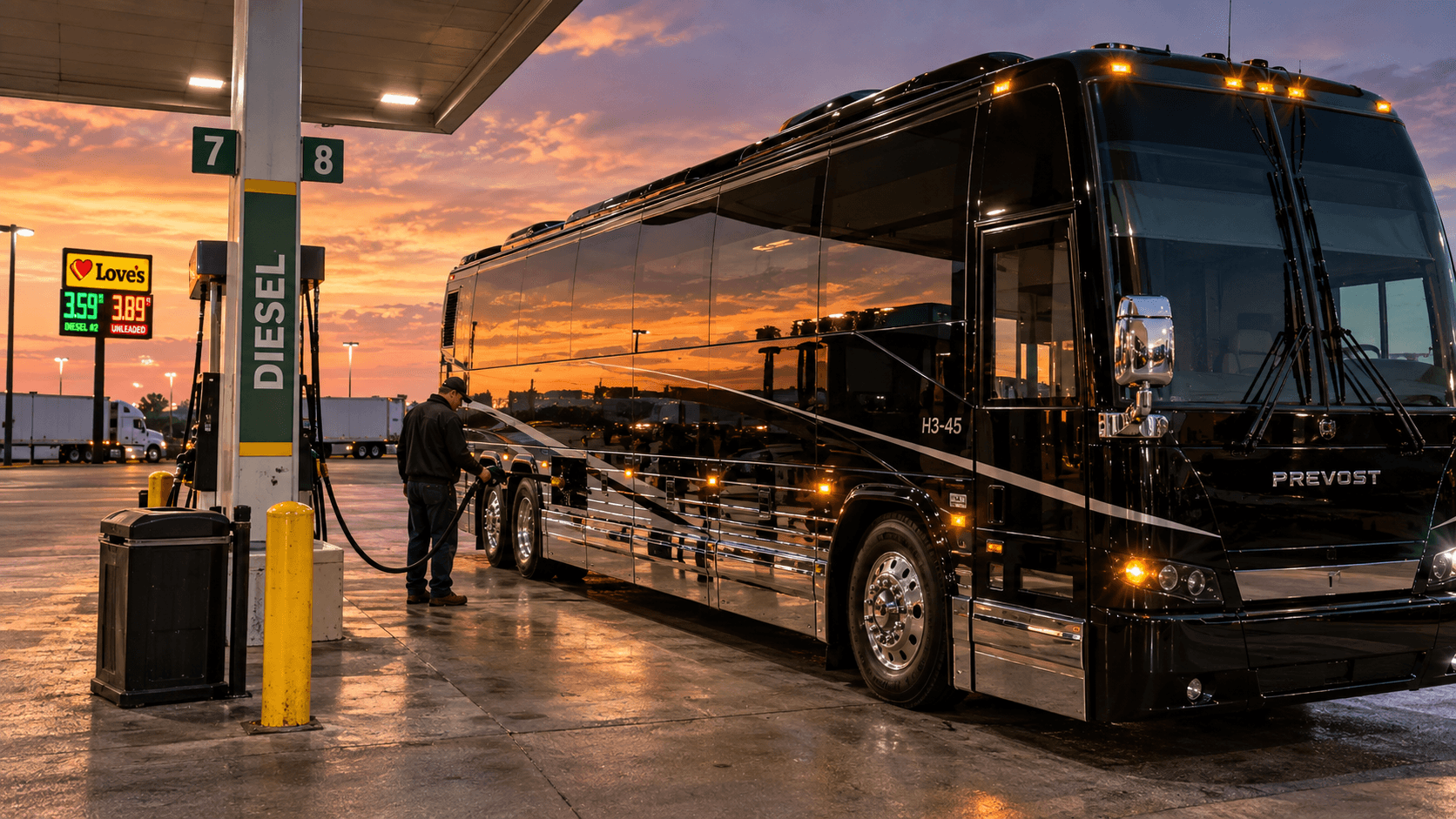
Tour bus fuel economy is the distance a diesel entertainer coach covers per gallon, and on a converted Prevost it typically runs 5 to 8 miles per gallon. Most tour managers plan at 6 mpg, which leaves a cushion for mountain grades, headwinds, and generator use. A Prevost X3-45 conversion shell carries a 203-gallon tank, good for roughly 1,000 to 1,400 miles between fills.
Fuel economy on an entertainer coach depends on five attributes: vehicle weight, cruising speed, terrain, trailer drag, and generator load. The Volvo D13 engine and Allison automatic transmission in current Prevost shells burn ultra-low sulfur diesel and use diesel exhaust fluid (DEF) to meet EPA emissions standards. Driver habits matter as much as hardware; engine makers attribute up to a 20% spread in mpg to driving style alone.
Comparisons put the number in context. A full 56-seat charter coach moves about 200 passenger miles per gallon, according to charter industry figures, while a 12-bunk tour bus spreads its fuel across far fewer riders. Even so, one coach burns less than a van, two SUVs, and a string of hotel shuttles combined.
This guide covers average mpg by vehicle type, what lowers or raises tour bus mileage, tank size and range, generator fuel burn, the trailer penalty, fuel cost math for a full tour, and ways drivers save diesel. The comparison table below gives the quick benchmarks.
Average Tour Bus MPG Compared With Other Vehicles
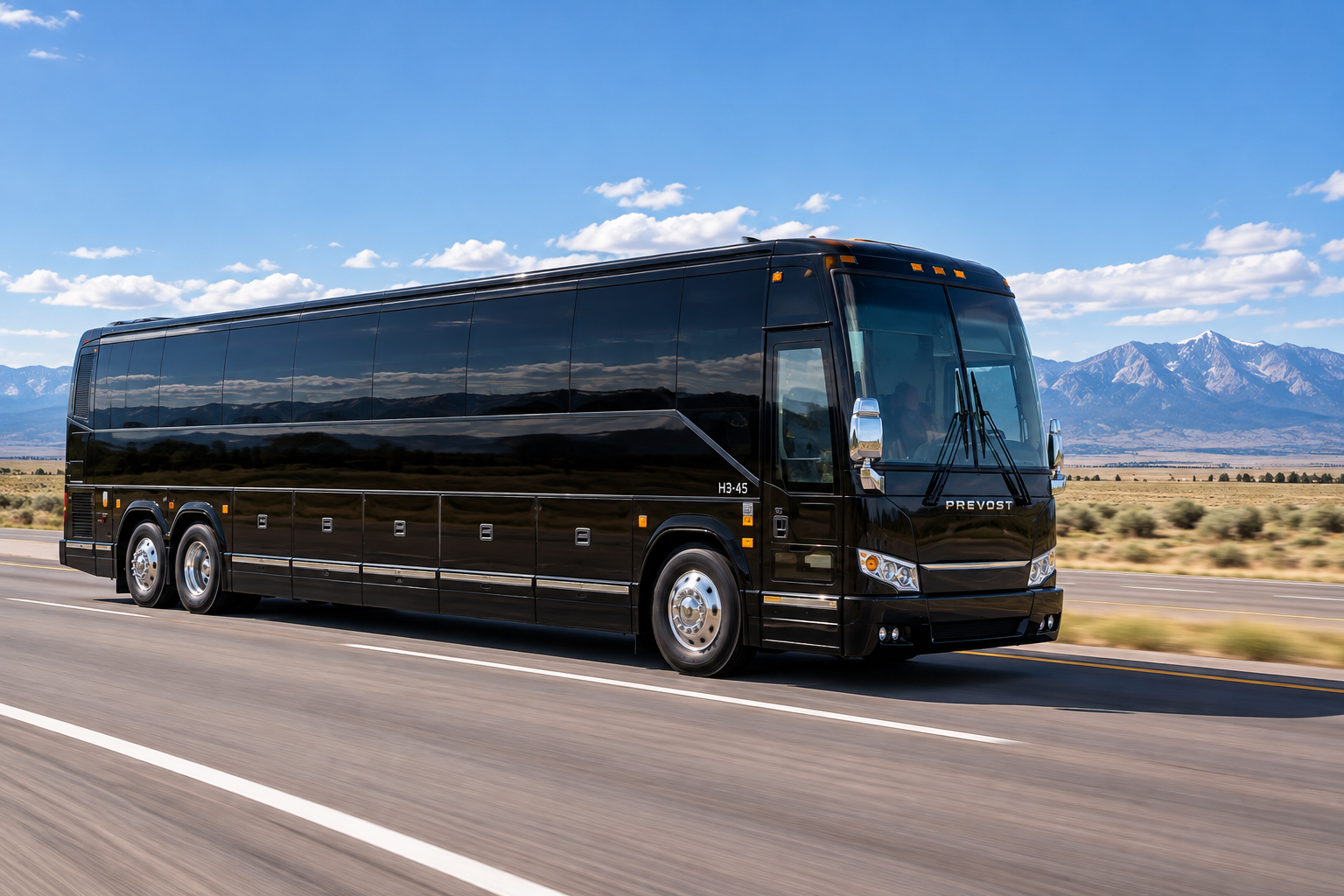
Diesel motorcoaches share a narrow mpg band. Fleet data puts coach buses and tour buses at 6 to 8 mpg, with charter buses slightly wider at 5 to 8.
Vehicle | Typical mpg | Fuel |
Tour bus (entertainer coach) | 5 to 8 | Diesel |
56-seat charter coach | 6 to 8 | Diesel |
Diesel pusher RV, 40 to 45 ft | 7 to 10 | Diesel |
Sprinter van (touring or shuttle) | 15 to 20 | Diesel |
City transit bus | 3.5 to 6.5 | Diesel or CNG |
Entertainer coaches sit at the low end of the coach band because conversions add weight. Bunks, cabinetry, slide mechanisms, water tanks, and a generator push operating weight well past a seated charter coach. That extra mass shows up at the pump, and it's one of several factors a driver can't change once the tour starts rolling.
Fuel Use Per Passenger
Per-rider math tells a different story than raw mpg. A coach averaging 6 mpg with 12 riders delivers about 72 passenger miles per gallon. Two 15-passenger vans at 14 mpg each, carrying six riders apiece, deliver about 84, but they add a second driver, a second insurance policy, and hotel rooms every night.
So the coach loses slightly on fuel alone and wins on total trip cost. Tours that fill every bunk get the most out of each gallon; a half-empty coach burns the same diesel for fewer people.
What Affects Tour Bus Fuel Economy
Five variables move mpg on a converted coach, and each has a rough size.
Speed is the biggest lever; aerodynamic drag rises sharply above 65 mph, and a coach cruising at 75 burns noticeably more than one holding 62
Weight from passengers, merch, water, and gear raises rolling resistance and hill-climbing effort
Terrain such as the Rockies or Appalachians drops mileage on the climb, and engine braking recovers little of it
Wind on open plains routes like I-80 through Wyoming can cut a full mile per gallon on a headwind day
Idling at venues and truck stops burns fuel with zero miles gained
Tire pressure and alignment add smaller effects. An underinflated steer tire increases drag and wears unevenly, so drivers check pressures during the pre-trip inspection each day.
Weather plays a part too. Cold mornings mean longer warm-ups, and winter-blend diesel carries slightly less energy per gallon. Speed, weight, terrain, wind, and idling all feed into one practical question: how far can the coach go on a tank?
Tour Bus Fuel Tank Size and Range
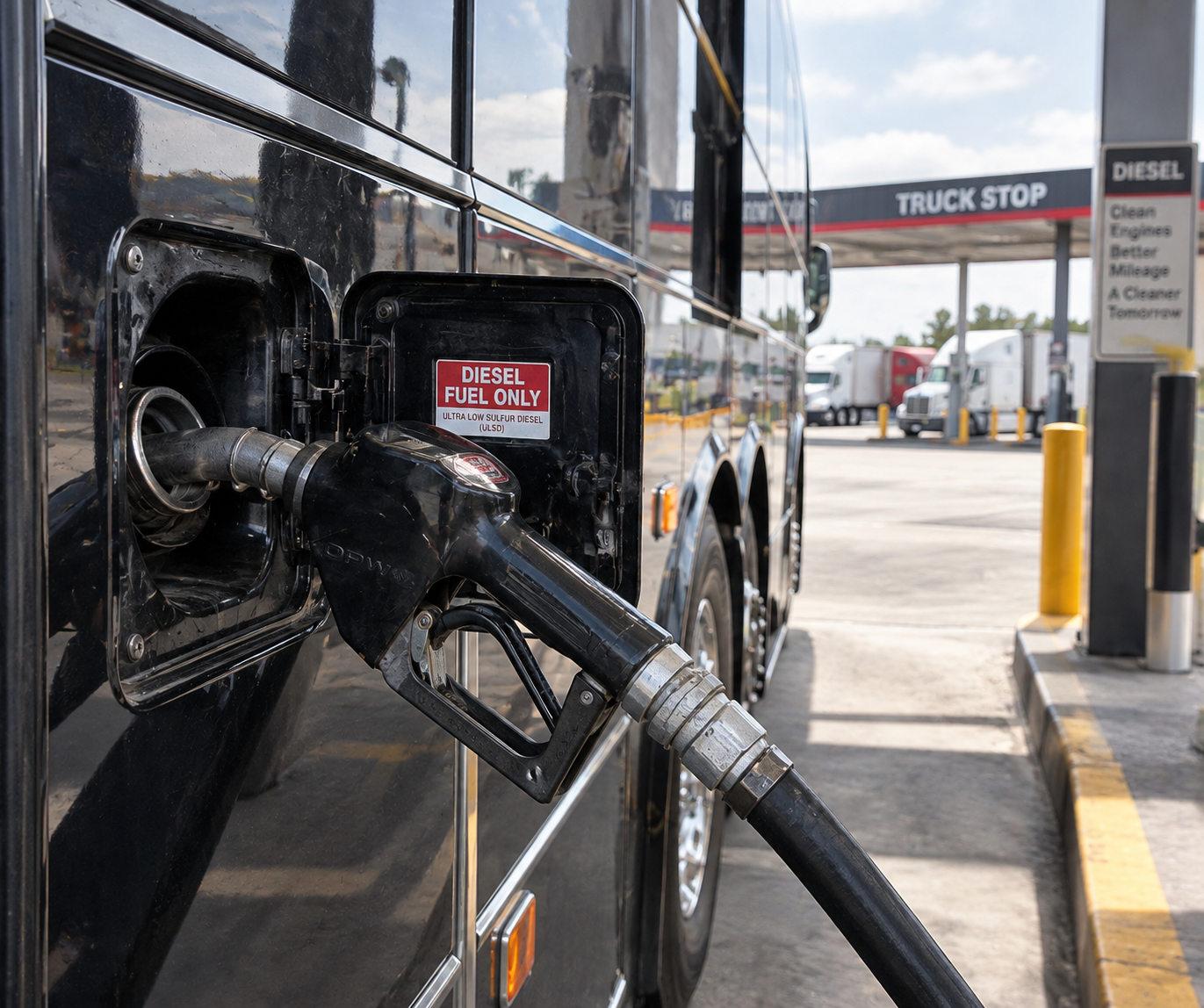
Prevost lists a 203-gallon fuel tank on its X3-45 VIP conversion shell, with filler necks on both sides. Seated commuter versions carry similar volumes, with legal capacity set at 95% of gross tank volume.
Range at common mpg figures:
Average mpg | Usable range on 190 gallons |
5 mpg | about 950 miles |
6 mpg | about 1,140 miles |
7 mpg | about 1,330 miles |
Drivers rarely run the tank low. Most refuel every 500 to 700 miles, often at the same truck stop where they take a mandated break. Topping off at a known diesel lane also avoids hunting for a pump with 13-foot clearance in an unfamiliar city.
That range shrinks on days the coach sits at a venue running its generator, which draws from the same main tank.
Generator Fuel Burn on a Parked Coach
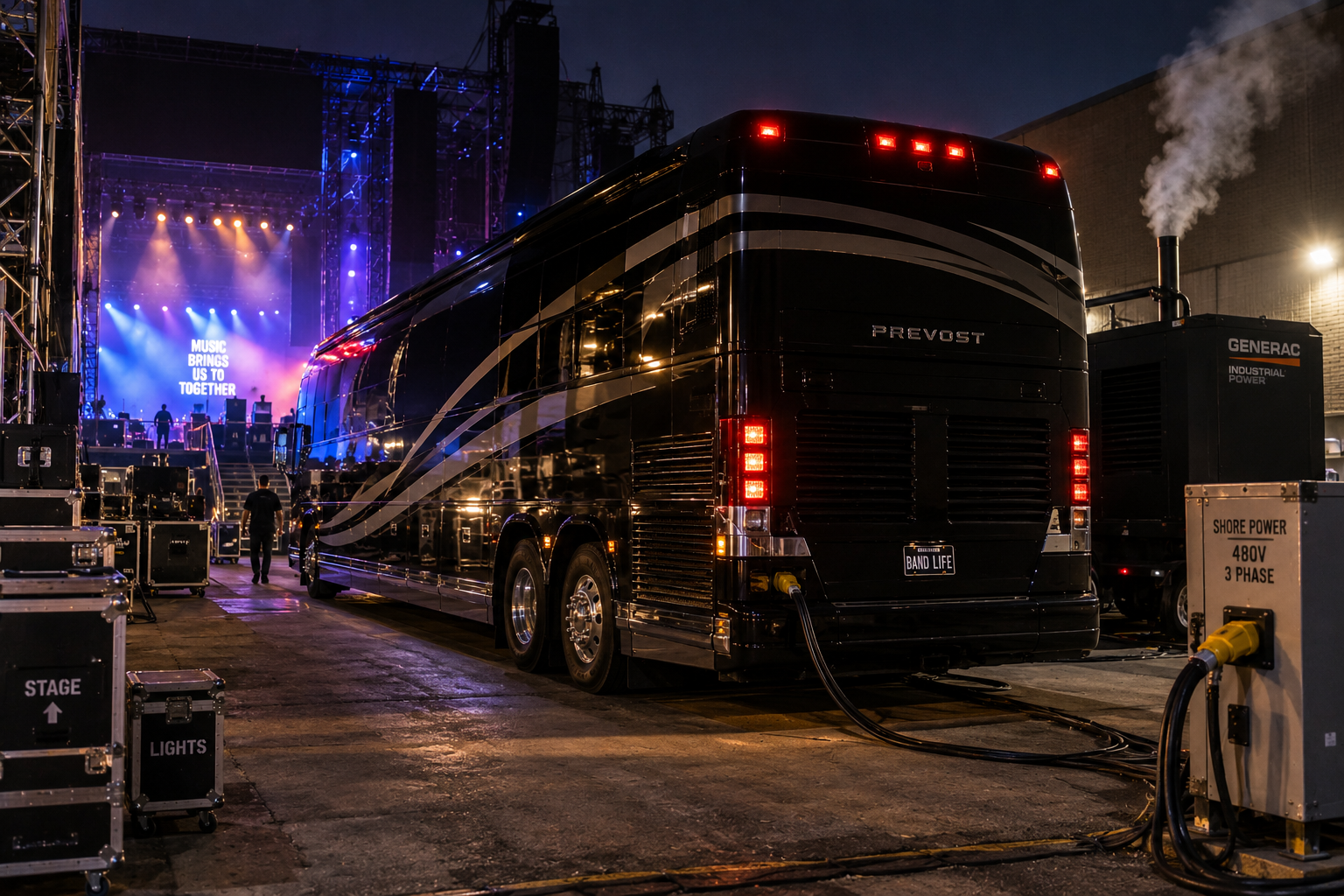
Entertainer coaches carry an onboard diesel generator, typically in the 20 to 25 kilowatt class, plumbed into the main fuel tank. It powers air conditioning, bunk lighting, galley appliances, and outlets whenever the coach isn't on shore power.
Generator burn usually runs about 0.5 to 1 gallon per hour, depending on load. Summer air conditioning pushes it toward the high end. A coach parked 12 hours behind a festival stage in July can burn 10 gallons without moving an inch.
Shore power cuts that to zero. Venues with a 50-amp pedestal let the driver shut the generator off, which saves fuel, lowers noise for crew sleeping in the bunks, and reduces exhaust near the loading dock. Tour advance sheets should ask each venue whether shore power is available.
Generator load is steady and predictable. Trailer drag is different, since it rides along every mile of the route.
How a Trailer Changes Fuel Economy
A loaded gear trailer typically costs 0.5 to 1 mpg. On a coach averaging 6.5 mpg alone, that means planning at 5.5 to 6 once the trailer hooks up.
The penalty comes from added weight, extra tire rolling resistance, and turbulence behind the coach. A 14 to 16 foot enclosed trailer with backline, merch, and wardrobe weighs several thousand pounds. Hills magnify the effect.
Tours sometimes drop the trailer when the production can fit gear in the coach's underfloor bays, which on a Prevost range from about 350 to 460 cubic feet. That saves fuel and parking headaches, though it limits merch stock. Whichever way the tour runs, the mpg figure feeds straight into the fuel budget.
How to Budget Fuel for a Tour
Fuel math uses one formula: total miles divided by mpg, multiplied by the price per gallon. Everything else is getting the inputs right.
A worked example:
Mileage from the routing: 12,000 miles over 40 days, including positioning legs
Economy at a planning figure: 6 mpg with a trailer
Gallons needed: 12,000 divided by 6 equals 2,000 gallons
Price assumed at $4.00 per gallon diesel: 2,000 times $4.00 equals $8,000
Generator allowance: add 5% to 10% for idle and venue power
That puts the fuel line near $8,400 to $8,800 for the run. Diesel prices vary by region, with California and the Northeast usually highest, so budgets built from national averages should carry a buffer.
Most US tour bus leases list fuel as a separate line from the daily coach rate, billed at cost or on receipts. Ask any operator how fuel gets billed before signing. Budgets are only half the job, though; the other half happens behind the wheel.
How Tour Bus Drivers Save Fuel
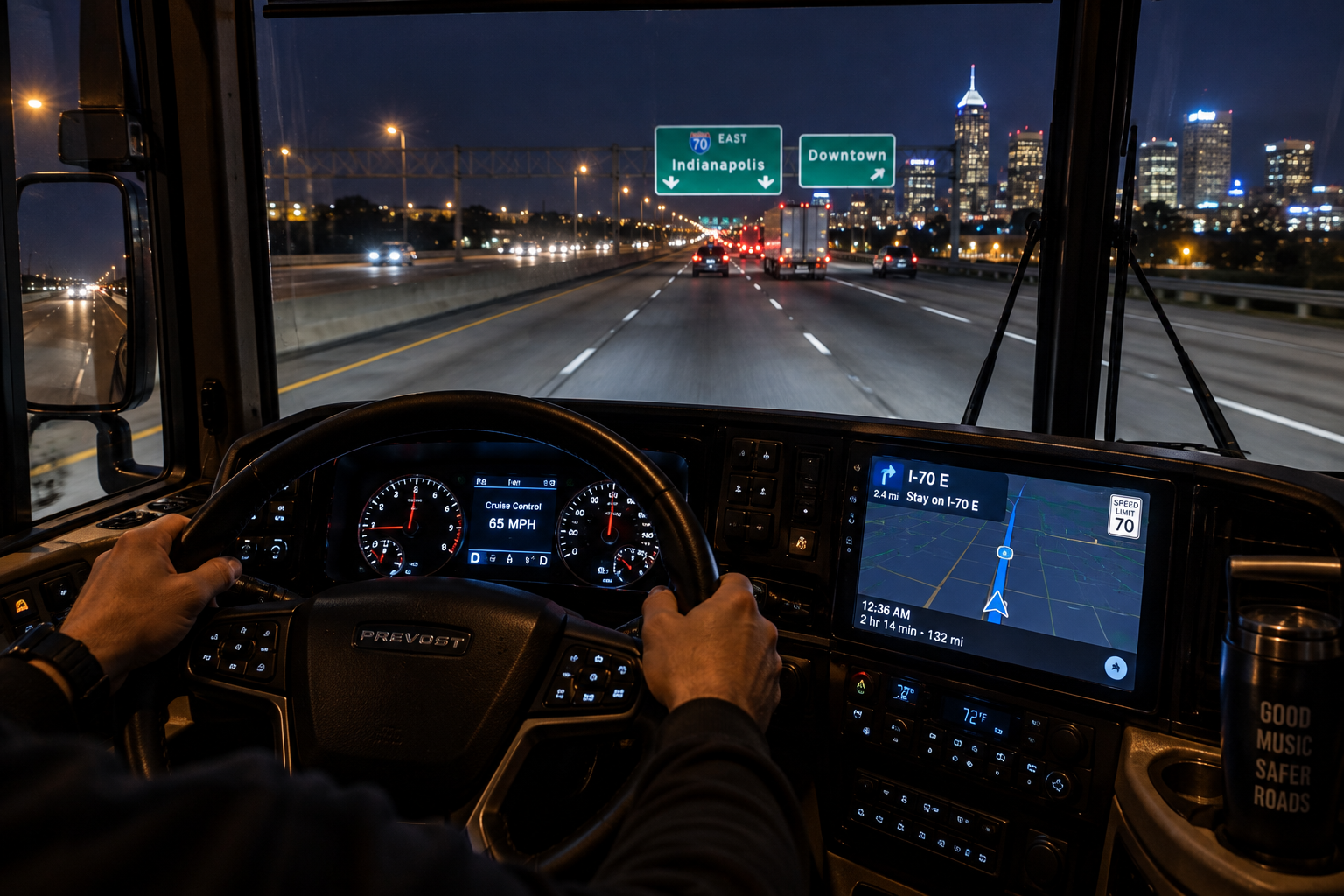
Experienced drivers treat fuel as a controllable cost. Their habits add up across a 40-date run.
Hold cruise speed near 62 to 65 mph on open Interstate
Plan fuel stops at high-volume truck stops with competitive diesel pricing
Limit idling by using shore power at venues and hotels
Check tire pressures daily during the pre-trip inspection
Load heavy road cases low and centered in the bays
Anticipate traffic so the coach coasts instead of braking hard
These habits also reduce wear on brakes and tires, so maintenance costs drop alongside fuel. It's part of what separates an entertainer-coach specialist from a general charter driver.
Fuel Planning With Knights Coaches
Knights Coaches runs more than 20 converted Prevost coaches on H3-45 and X3-45 shells, all using the Volvo D13 diesel platform. Drivers bring at least three years on entertainer coaches and plan routes around truck stops that can fuel and park a 45-foot coach.
Dispatch runs 24/7, so fuel stops, weather detours, and shore power arrangements get handled while the party sleeps. Rates and coach options sit on the tour bus rental page, the company background is on the about page, and you can send your routing for a fuel estimate through the contact page.
How many miles per gallon does a tour bus get?
A tour bus gets 5 to 8 miles per gallon on diesel. Most tour managers budget at 6 mpg to cover hills, wind, and generator use.
How big is a tour bus fuel tank?
A Prevost X3-45 conversion shell carries a 203-gallon tank. Legal usable capacity is set at 95% of gross volume.
How far can a tour bus go on one tank?
A tour bus can travel about 1,000 to 1,400 miles on a full tank. Drivers usually refuel every 500 to 700 miles to avoid running low in unfamiliar areas.
Does a tour bus use diesel or gasoline?
Tour buses use diesel. Current Prevost shells run the Volvo D13 engine with diesel exhaust fluid for EPA emissions compliance.
Does the generator use the same fuel as the engine?
Yes, the generator draws from the main diesel tank. It burns roughly 0.5 to 1 gallon per hour depending on air conditioning and electrical load.
How much does a trailer reduce tour bus mpg?
A loaded trailer reduces mileage by about 0.5 to 1 mpg. The loss grows on steep grades and in strong crosswinds.
What affects tour bus fuel economy the most?
Speed affects tour bus fuel economy the most. Weight, terrain, wind, and idling time follow close behind.
How much does fuel cost for a tour?
A 12,000-mile tour at 6 mpg and $4.00 per gallon costs about $8,000 in diesel, plus 5% to 10% for generator use. Actual cost depends on routing and regional prices.
Is fuel included in a tour bus rental price?
Usually not. Most US tour bus leases bill fuel separately from the daily rate, either at cost or on receipts.
Is a tour bus more fuel efficient than vans and hotels?
Yes, for most touring parties one coach burns less fuel than two vans plus hotel shuttles. It also removes nightly hotel costs for 10 to 12 riders.
Does a full tour bus burn more fuel than an empty one?
Yes, but the difference is small. Twelve riders and their luggage add roughly 2,500 to 3,000 pounds, which trims mileage modestly compared with the conversion's own weight.
Which states have the highest diesel prices for touring?
California and the Northeast typically carry the highest diesel prices. Fuel budgets should add a buffer for routings that spend weeks in those regions.
Does driving at night improve tour bus fuel economy?
Yes, night driving often improves mileage slightly. Lighter traffic means steadier cruise speeds and fewer stops.
Tour bus fuel economy settles at 5 to 8 mpg for a diesel entertainer coach, with most tours planning at 6. Converted coaches sit at the lower end of the vehicle comparison because of their weight, and speed, terrain, wind, and idling move the number further.
A 203-gallon tank gives roughly 1,000 to 1,400 miles of range, which the generator draws down on parked days. A trailer costs another 0.5 to 1 mpg, and all of it feeds the fuel budget formula of miles divided by mpg times price. Good driving habits close the gap. To plan fuel for your next routing, call Knights Coaches at +1-855-734-5700 or request a quote online.