
Prevost Entertainer Coach
Prevost Entertainer Coach Rental: X3-45 and H3-45
Prevost is a Quebec coach builder, part of the Volvo Group, whose shells sit under almost every entertainer coach touring the United States. It builds the chassis and the body.
Two models carry the work. The X3-45 uses a flat floor and rides lower. The H3-45 raises the passenger deck over the drivetrain, which buys bay volume underneath and a higher seated sightline. Both run 45 feet long on three axles with a tag, built as a stainless-steel monocoque rather than a body bolted to a frame.
Running gear is shared. A Volvo D13 diesel producing around 500 horsepower and 1,850 lb-ft of torque, paired to an Allison six-speed automatic. Under-floor bays hold roughly 380 to 406 cubic feet, which is what makes a coach viable for a touring party's luggage before a trailer is needed.
The interiors come from converters: Marathon, Liberty, Featherlite, Emerald and Millennium among them. A finished coach carries the chassis maker's name and the converter's build quality, and those are two different things.
This page covers the shell and conversion split, each model in turn, the running gear, why the industry standardized here, and what any of it changes when you lease rather than buy.
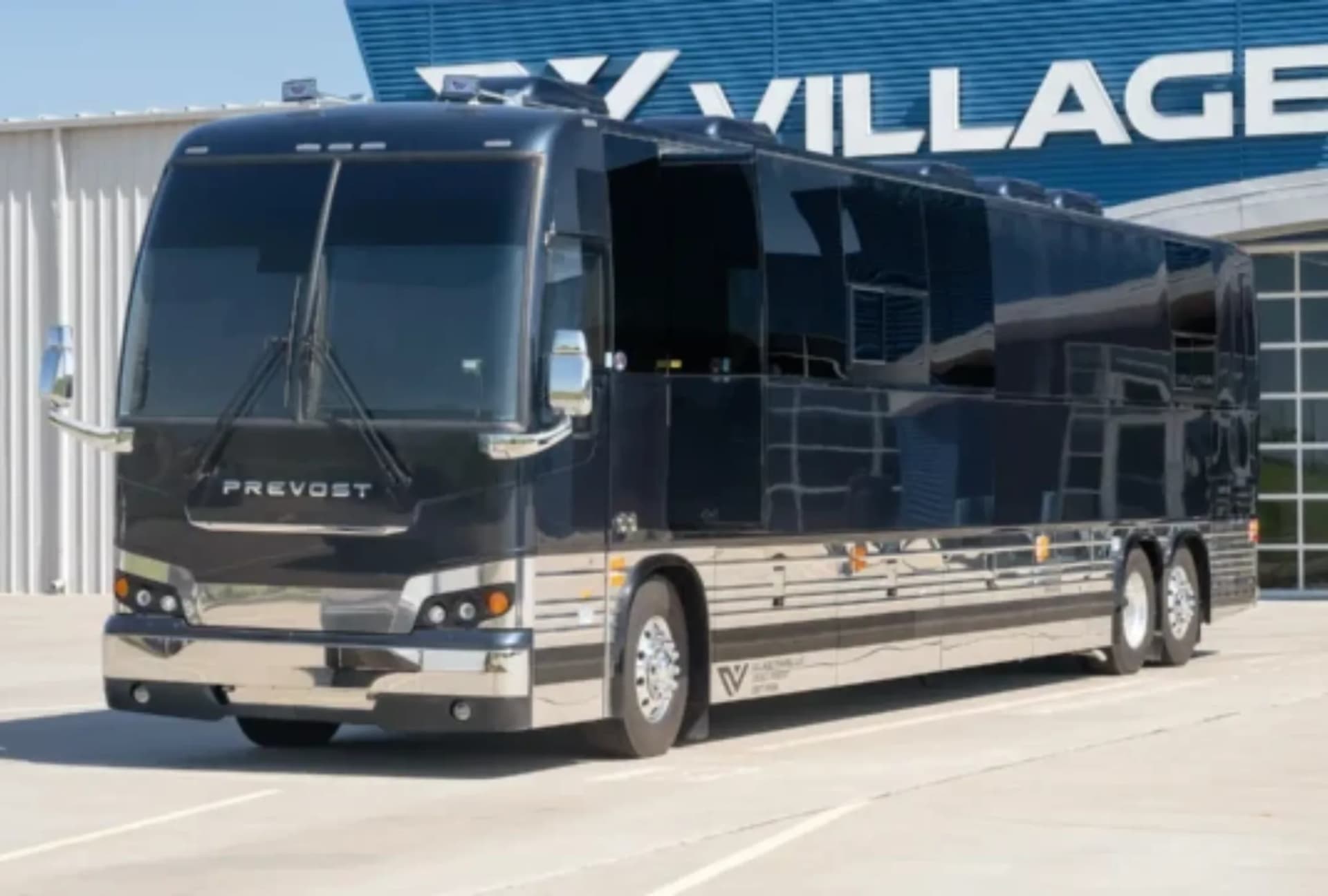
Shell and conversion: two companies build your coach
Shells arrive from Prevost as a driveable, empty vehicle. A converter then fits the bunks, lounges, galley, bathroom, slide mechanisms, electrical and finishes. As RV Brokers puts it, the chassis is the constant and the coach is the converter's.
That matters when comparing two units. Two coaches on identical X3-45 shells, built five years apart by different converters, share a drivetrain and nothing else you can see. Cabinetry, bunk construction, sound isolation, slide reliability and electrical capacity all belong to the conversion.
So the model tells you how the coach drives and what it can carry. The converter and the build year tell you what it is like to live in. Start with the model.
The X3-45
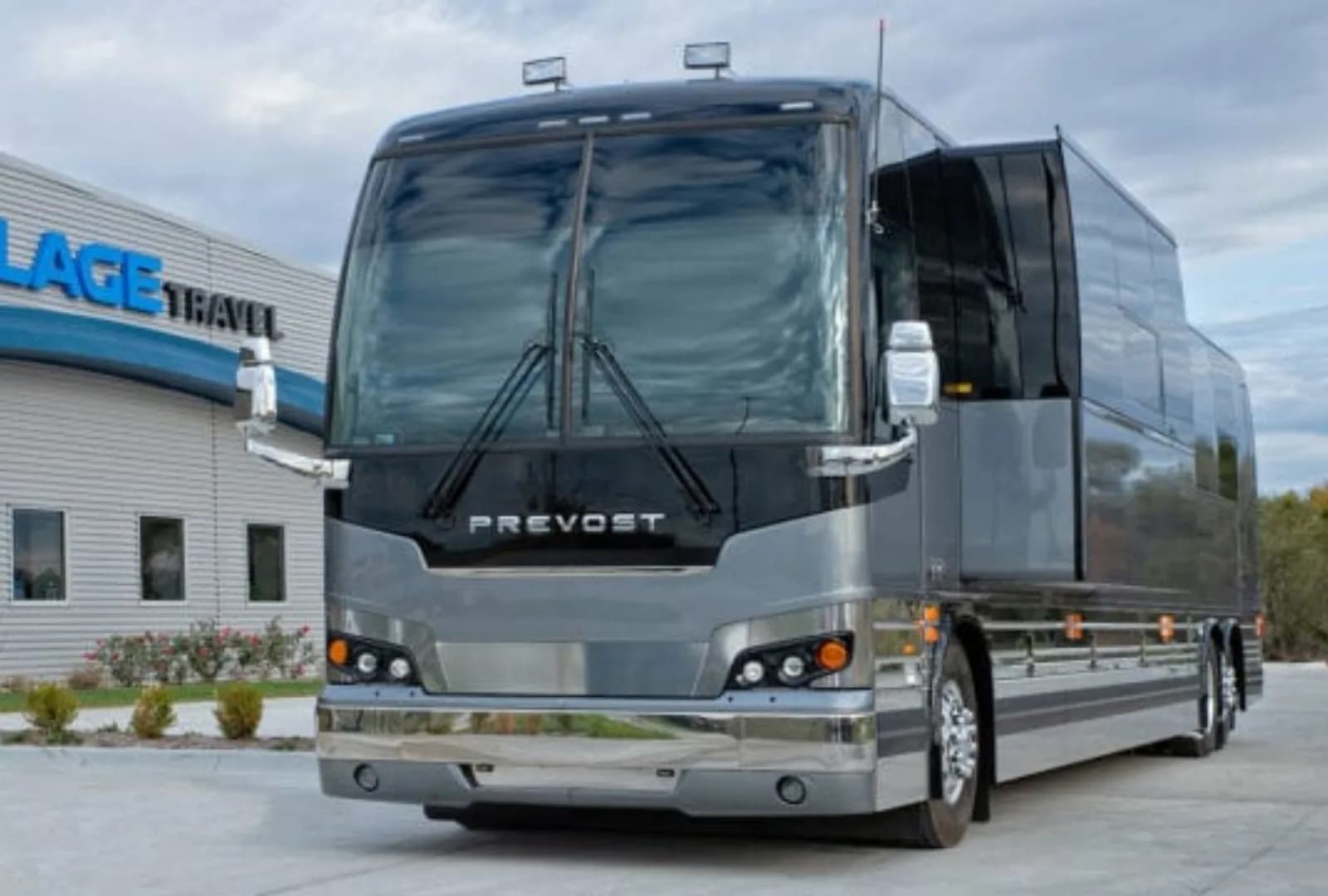
X3-45 shells use a flat floor, giving converters an uninterrupted run down the length of the coach. That is why bunk alleys sit naturally on this platform, and why it became the entertainer standard rather than the touring-car standard.
Riding lower than the H3-45 also helps in the places entertainer coaches go: parking structures, venue loading docks and low-clearance approaches. It carries somewhat less under-floor volume than the raised-floor alternative, which is the trade for the flat interior.
The X3-45 succeeded the XL and XLII, and it is the shell most current touring interiors start from.
The H3-45
H3-45 shells lift the deck above the drivetrain. Passengers sit higher, sightlines improve, and the space freed underneath becomes bay volume, which is the practical reason production crews favor it when gear travels with the coach rather than behind it.
The model has been the foundation for thousands of luxury conversions from Liberty, Marathon and Featherlite, which makes it the most available Prevost on the pre-owned market. For a lessee that translates into choice: more H3-45 units exist, so more are free on any given date.
Its predecessor still turns up in touring fleets too.
The XLII and older shells
XLII coaches predate the X3-45 and remain in service across US fleets, frequently refurbished. A well-maintained XLII runs the same routing as a current shell, and leases materially below one.
What to check is the conversion rather than the chassis. Ask the age of the interior refit rather than the age of the bus, confirm the slide mechanisms have been serviced, and ask when the generator was last rebuilt. An older shell with a recent conversion is often the best value on a fleet list.
Whichever model carries the interior, the mechanical package underneath is nearly identical.

Running gear and construction
Mechanically the platforms converge:
- Volvo D13 diesel rated near 500 horsepower
- Allison automatic transmission, six forward speeds
- Stainless-steel monocoque construction rather than body-on-frame
- Three axles including a tag axle, spreading load and improving ride
- Under-floor bays approaching 400 cubic feet
- Fuel economy near 6 miles per gallon, dropping to about 5 towing a trailer
Monocoque construction is worth a note. The structure is the body, which makes the coach stiffer and quieter than a bus built onto a separate frame. On a tour where people sleep while the coach moves, that is a functional benefit rather than a specification detail.
Those shared mechanics explain why one manufacturer took the market.
Why the industry standardized on Prevost
Standardization happened for service reasons more than performance ones. A Prevost that fails in an unfamiliar city can be worked on almost anywhere in North America, because the dealer and parts network reaches the places tours break down.
Fleet economics reinforce it. Operators buy what holds value and what technicians already know, so they buy Prevost, which makes parts more available, which makes operators buy more. Used conversions trade between roughly $100,000 and $800,000 depending on converter and year, with new builds well above a million.
For a tour, none of that is abstract.
What the chassis means when you lease
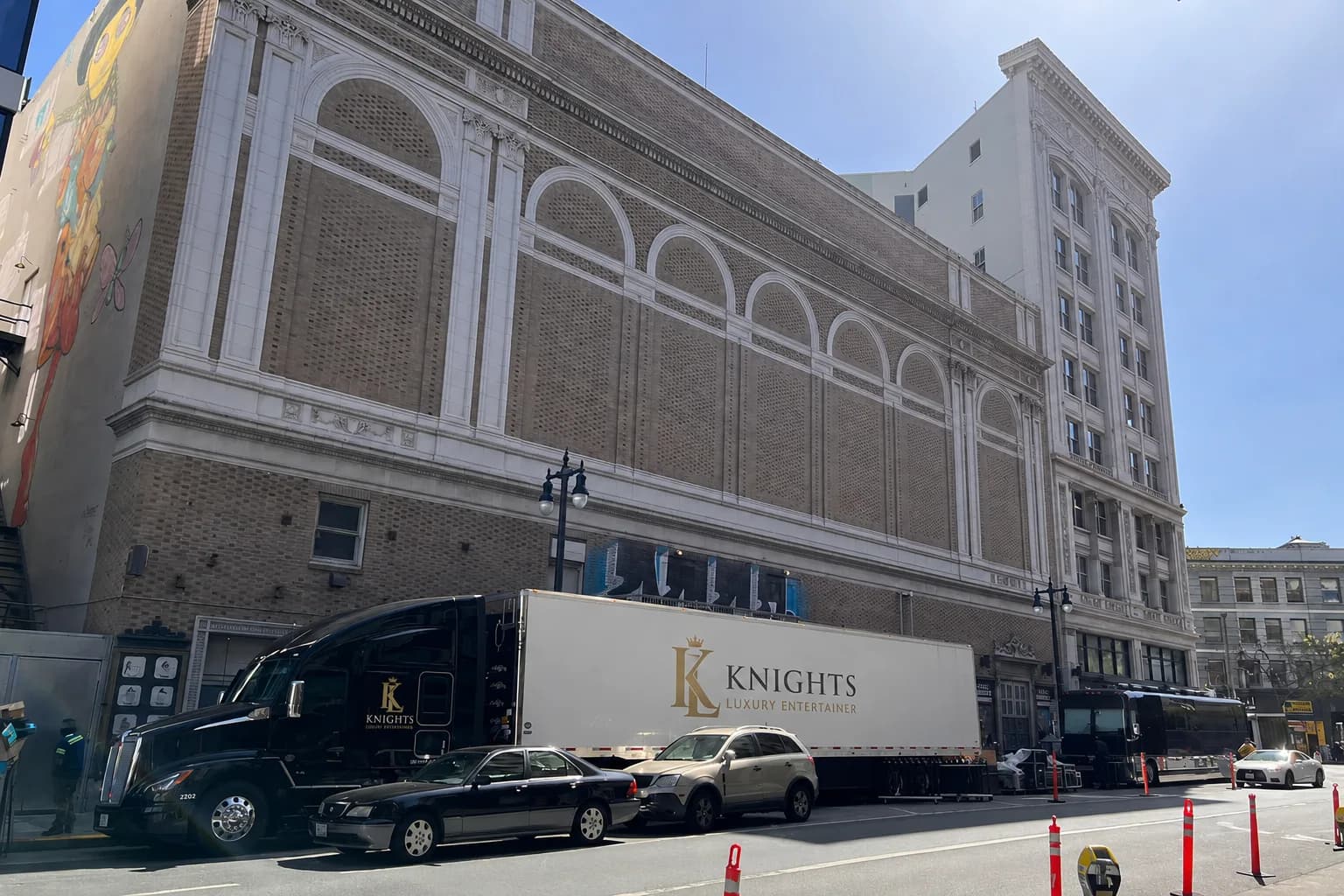
Leasing puts the mechanical risk on the operator, so the chassis matters to you differently than to an owner. You are not buying reliability; you are buying the odds of a fast repair and a replacement coach when something fails mid-routing.
A single-platform fleet on shared running gear means one parts inventory, technicians trained on one platform, and swaps between units that feel familiar to a driver who has to take one over mid-tour.
It also changes what a mid-routing failure costs you. When every unit in a fleet runs the same drivetrain, a replacement coach can be dispatched without re-briefing the driver on unfamiliar controls, and the outgoing unit's spares fit the incoming one. On a mixed fleet those swaps take longer, which is time a tour does not have between load-out and the next load-in.
Knights Coaches runs X3-45 and H3-45 shells exclusively, with EMC membership behind the operation.
Got questions?
Frequently asked questions
It is a Prevost X3-45 or H3-45 shell fitted out by a conversion company with bunks, lounges, a galley and a bathroom. Prevost supplies the chassis and body. The interior, the slides and the finish come from a converter such as Liberty, Marathon or Featherlite.
The X3-45 for most band and crew work, the H3-45 when gear volume matters. A flat floor gives cleaner bunk alleys and a lower ride for tight venue approaches. The raised deck buys bay space underneath, which production crews use.
No, converters do. Prevost delivers a driveable empty shell. That is why two coaches on the same model can differ enormously in cabinetry, sound isolation, electrical capacity and slide reliability while sharing a drivetrain.
Marathon, Liberty, Featherlite, Emerald and Millennium are the names that recur across US fleets. Each has a house style and a reputation. When comparing two coaches, ask who converted each one and in what year, not just which model it sits on.
A Volvo D13 diesel rated near 500 horsepower, driving an Allison automatic gearbox. The package is shared across both current models, which is part of why parts and servicing stay straightforward across a mixed fleet.
Yes, when the conversion has been refreshed even if the shell has not. An XLII leases below a current-year unit and drives the same routing. Ask the date of the interior refit, the slide service history and the generator hours before committing.
Predominantly the X3-45 and H3-45, with XLII units still working across older and refurbished fleets. Anything outside those three is unusual on an entertainer coach in the United States.
Prevost, on service coverage rather than ride quality. Van Hool coaches are common in Europe and appear in some US fleets, but the parts and dealer network for Prevost is deeper across North America. On a routing that crosses a dozen states, that difference decides how long a breakdown lasts.
Roughly 380 to 406 cubic feet in the under-floor bays. That takes a touring party's luggage and a modest amount of backline. Anything beyond it, particularly staging or lighting, needs a gear trailer or dedicated trucking.
Lease a Prevost coach
Prevost builds the shell and a converter builds the coach, which is why the model number tells you how a unit drives and the converter tells you how it lives. The X3-45 runs a flat floor suited to bunk alleys. The H3-45 raises the deck for bay volume. XLII shells still tour, and a refreshed interior on an older bus is frequently the value pick. Underneath, the platforms share a Volvo D13, an Allison automatic, stainless monocoque construction and three axles, and that commonality is why the North American service network favors them so heavily. On a lease, that shows up as faster repairs and easier swaps rather than as a specification. Call 1-855-838-5542 with your dates and headcount to lease a Prevost coach with a CDL driver, or browse the fleet to see the current units by class.