
How Many Miles a Tour Bus Drives Per Day: Legal Limits, Overdrives, and Real Averages
A tour bus drives 300 to 500 miles on a typical overnight run between two shows, and one driver can legally cover about 550 to 600 miles before federal hours-of-service limits stop the coach. Routings that stretch past that need a second driver, a relief driver flown in, or a day off built into the schedule. Daily…
Knights Coaches
Knights Coaches
- Published
- Reading time
- 9 min read
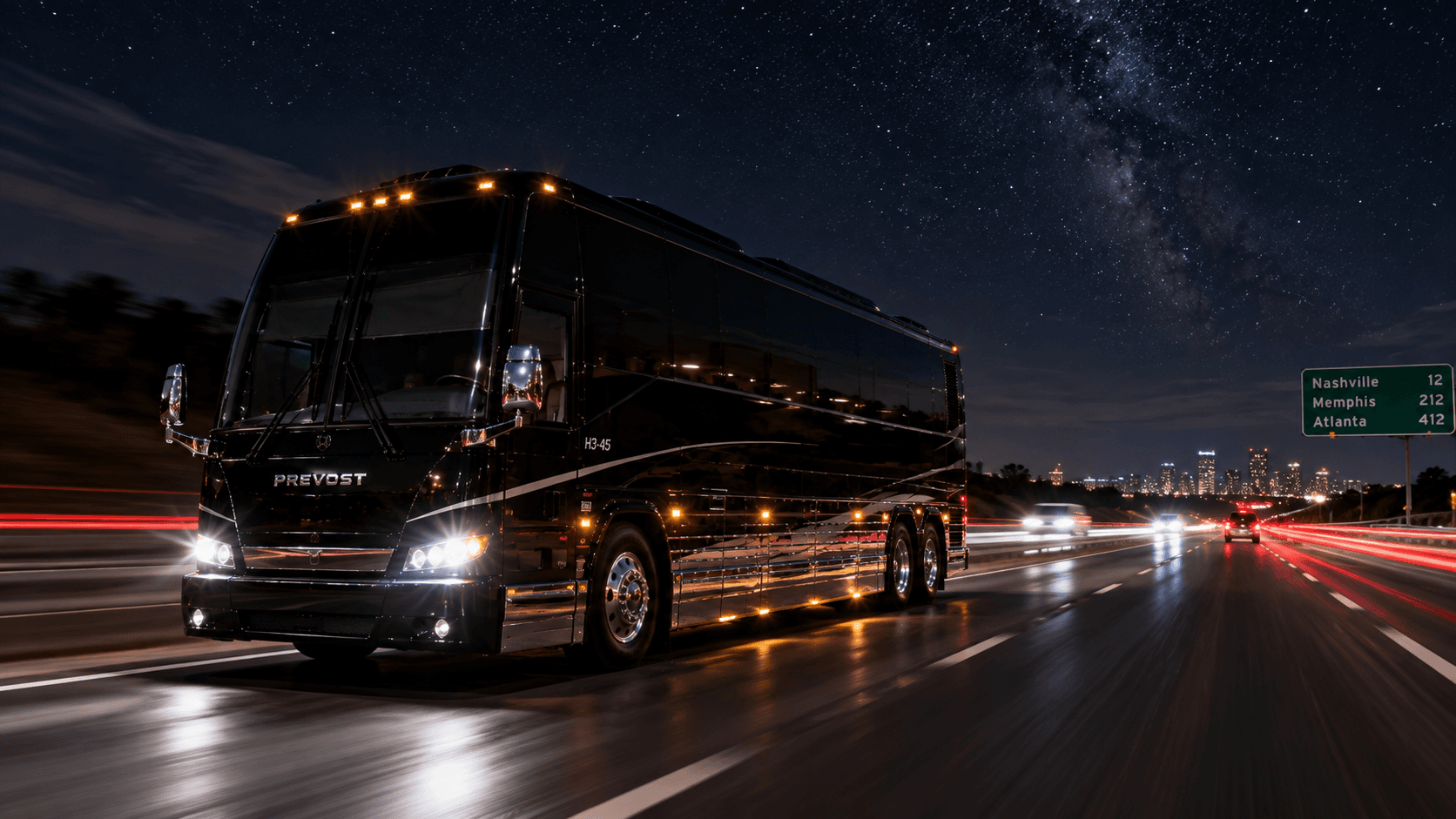
A tour bus drives 300 to 500 miles on a typical overnight run between two shows, and one driver can legally cover about 550 to 600 miles before federal hours-of-service limits stop the coach. Routings that stretch past that need a second driver, a relief driver flown in, or a day off built into the schedule.
Daily mileage on an entertainer coach depends on four attributes: the driver's legal driving window, average highway speed, stops for fuel and breaks, and the distance between venues. The Federal Motor Carrier Safety Administration (FMCSA) sets the legal side under 49 CFR Part 395. Passenger-carrying drivers get 10 hours of driving after 8 consecutive hours off duty, and they can't drive after 15 hours on duty.
Tour managers turn those rules into a planning shortcut: roughly 2 hours of travel per 100 miles, stops included. So a 400-mile jump budgets about 8 hours. Anything past a vendor's overdrive threshold, commonly set between 450 and 650 miles, triggers extra driver pay under many lease agreements.
This guide covers the FMCSA driving limits, typical overnight mileage, the time-per-mile rule, overdrives, when a second driver becomes necessary, average mileage across a whole tour, and how routing decides the numbers. The mileage table below shows how common drives break down.
FMCSA Driving Limits for Tour Bus Drivers
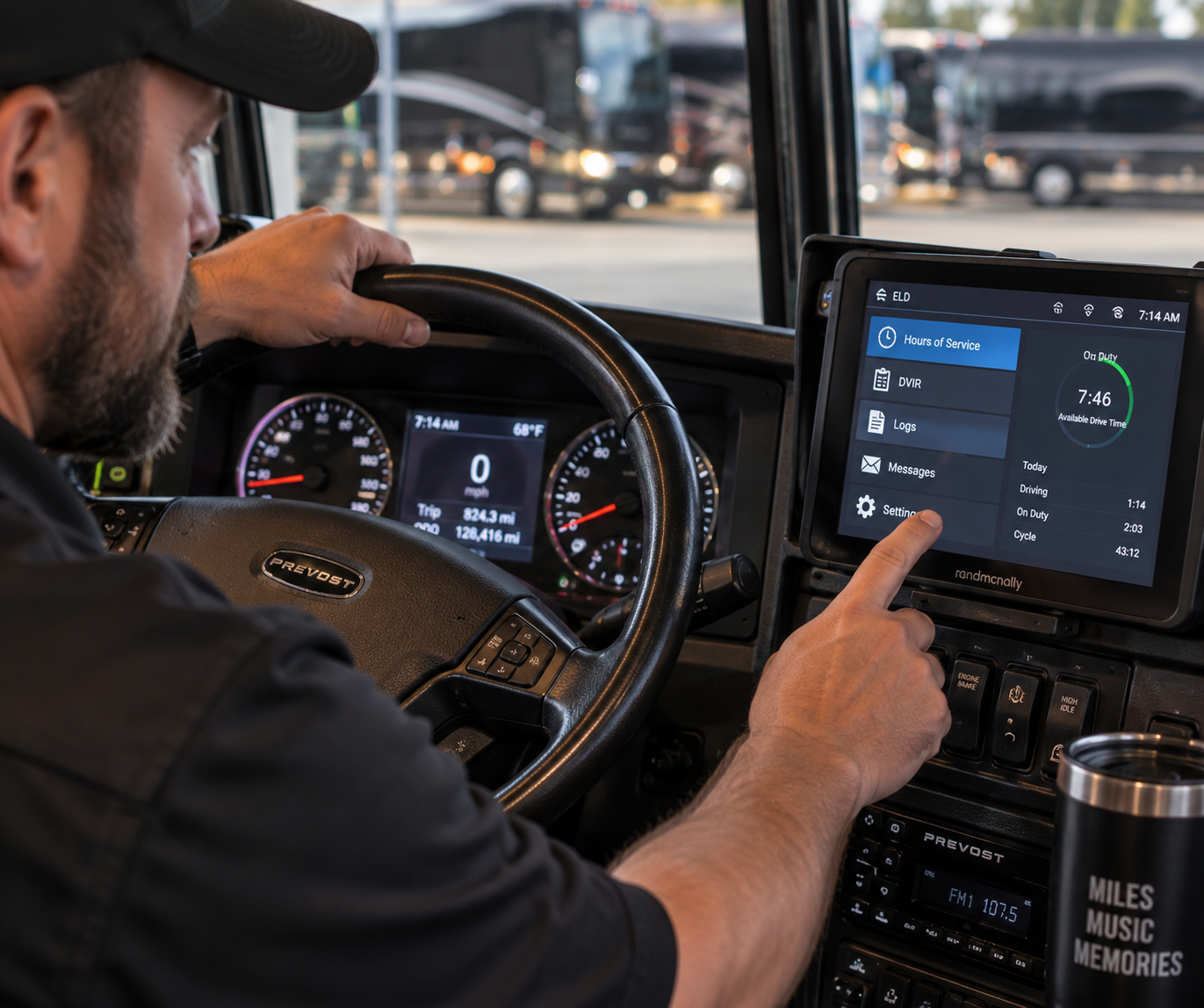
FMCSA rules for passenger carriers differ from the trucking rules most people hear about. Truck drivers get 11 hours of driving after 10 off. Bus drivers get less driving time and a shorter reset.
Driving limit of 10 hours after 8 consecutive hours off duty
On-duty limit of 15 hours, after which the driver can't drive until another 8-hour break
Weekly limit of 60 hours in 7 days or 70 hours in 8 days, depending on the carrier's schedule
Sleeper berth option to split the 8 hours into two periods, each at least 2 hours long
The 15-hour on-duty clock counts pre-trip inspections, fueling, and time spent waiting at a venue while on duty. So a driver who spends an hour on inspection and fueling before departure has already used part of the window.
Every hour behind the wheel gets recorded on an electronic logging device (ELD), which leaves little room for guesswork at a roadside inspection. Ten hours of legal driving sets the ceiling. What a coach covers in that window is lower.
Typical Overnight Mileage for a Tour Bus
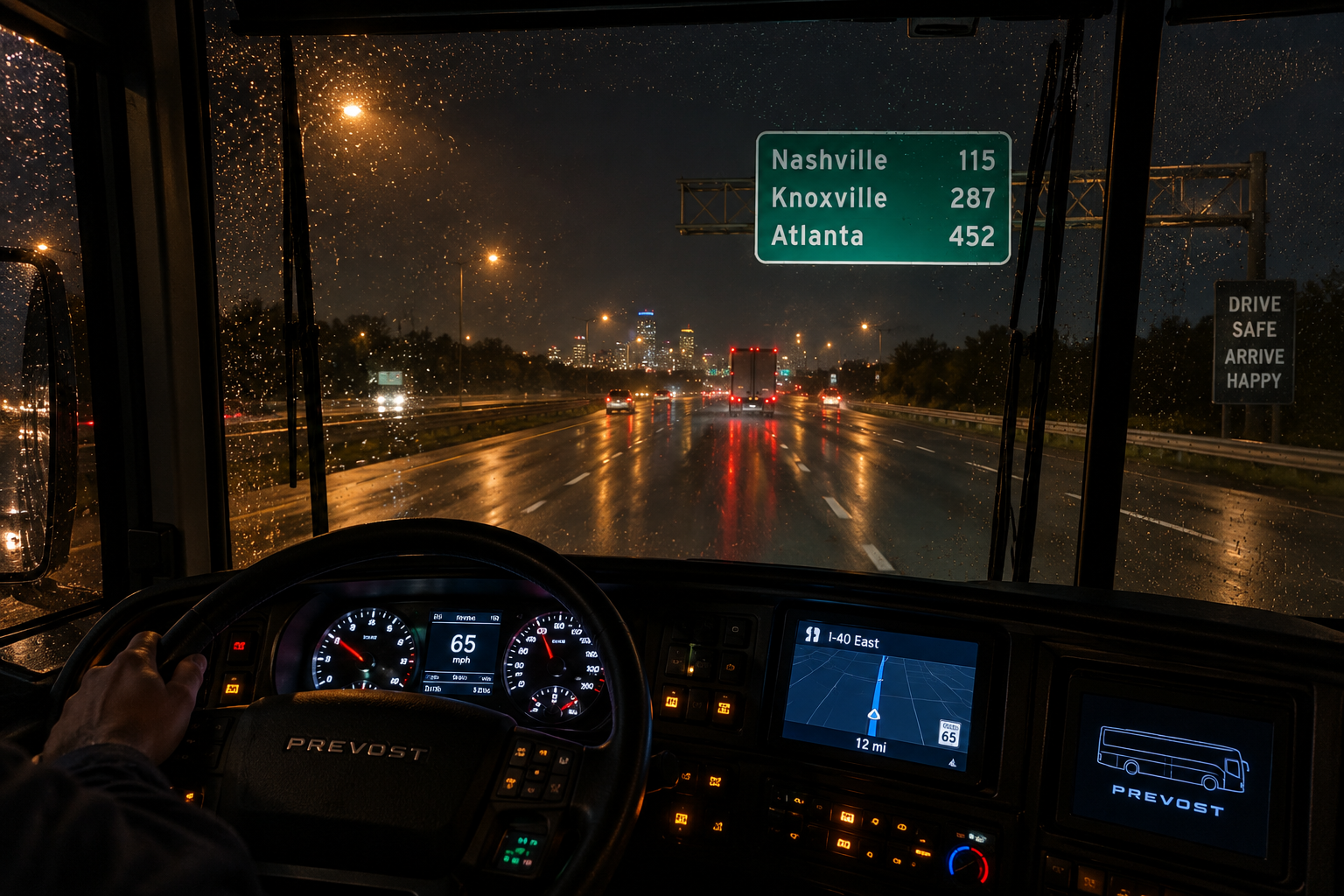
Most overnight jumps on a US tour fall between 300 and 500 miles. That range fits the time between a late load-out and the next afternoon's load-in.
Here's how common drive lengths compare:
Drive length | Budgeted time | Example route |
200 miles | about 4 hours | Chicago to Indianapolis |
300 miles | about 6 hours | Chicago to Detroit |
400 miles | about 8 hours | Chicago to Minneapolis |
500 miles | about 10 hours | Denver to Salt Lake City |
600 miles | about 12 hours | Denver to Kansas City (second driver) |
Short jumps under 200 miles are common in the Northeast, where venues sit close together. In the Mountain West, 500-mile runs between markets are routine. That difference comes down to a simple conversion from miles to hours.
The 2 Hours Per 100 Miles Rule
Tour logistics planners budget 2 hours of travel for every 100 miles. The rule builds in fuel stops, a short break, slower urban stretches, and mountain grades.
Why not divide by the speed limit? Because a coach rarely averages 65 mph door to door. City traffic leaving the venue, construction zones, and a 20-minute fuel stop at 3:00 AM all pull the real average toward 50 mph.
The rule also protects the schedule. A driver who budgets 8 hours for 400 miles still has 2 hours of legal driving left if weather or a closure adds delay. Planning to the edge of the 10-hour limit leaves no margin, and the cost of running over that edge shows up in the driver's pay.
Overdrives and Extra Driver Pay
An overdrive is a drive that exceeds the operator's mileage threshold, typically set at 450 or 500 miles, though some vendors place it anywhere up to 650. Crossing it usually triggers additional compensation for the driver.
Overdrive pay works in a few common ways:
Per-mile surcharges for each mile past the threshold
Flat overdrive fees per qualifying drive
Day-rate bumps when the drive runs into a second duty day
Some operators have moved away from overdrive clauses and pay drivers an all-in rate regardless of mileage. Either way, overdrives belong in the budget before routing gets finalized. Once a drive passes what one driver can legally cover, the discussion shifts from pay to staffing.
When a Tour Bus Needs a Second Driver
A second driver becomes necessary when a single jump exceeds about 550 to 600 miles, or when the 15-hour on-duty window can't cover load-out, the drive, and required breaks.
Tours handle long jumps in three ways:
Relief driver flown in to meet the coach and swap mid-route
Team driving, with two drivers on board rotating through the sleeper berth
Split jumps across a day off, so one driver covers the distance over two legal duty periods
Team driving adds a driver's bunk requirement and a second salary for those days. A day off costs a show date but saves the relief driver's flight and hotel. The right choice depends on how often long jumps appear across the full routing, which is where average daily mileage comes in.
How Sleeper Berth Splits Work on Team Runs
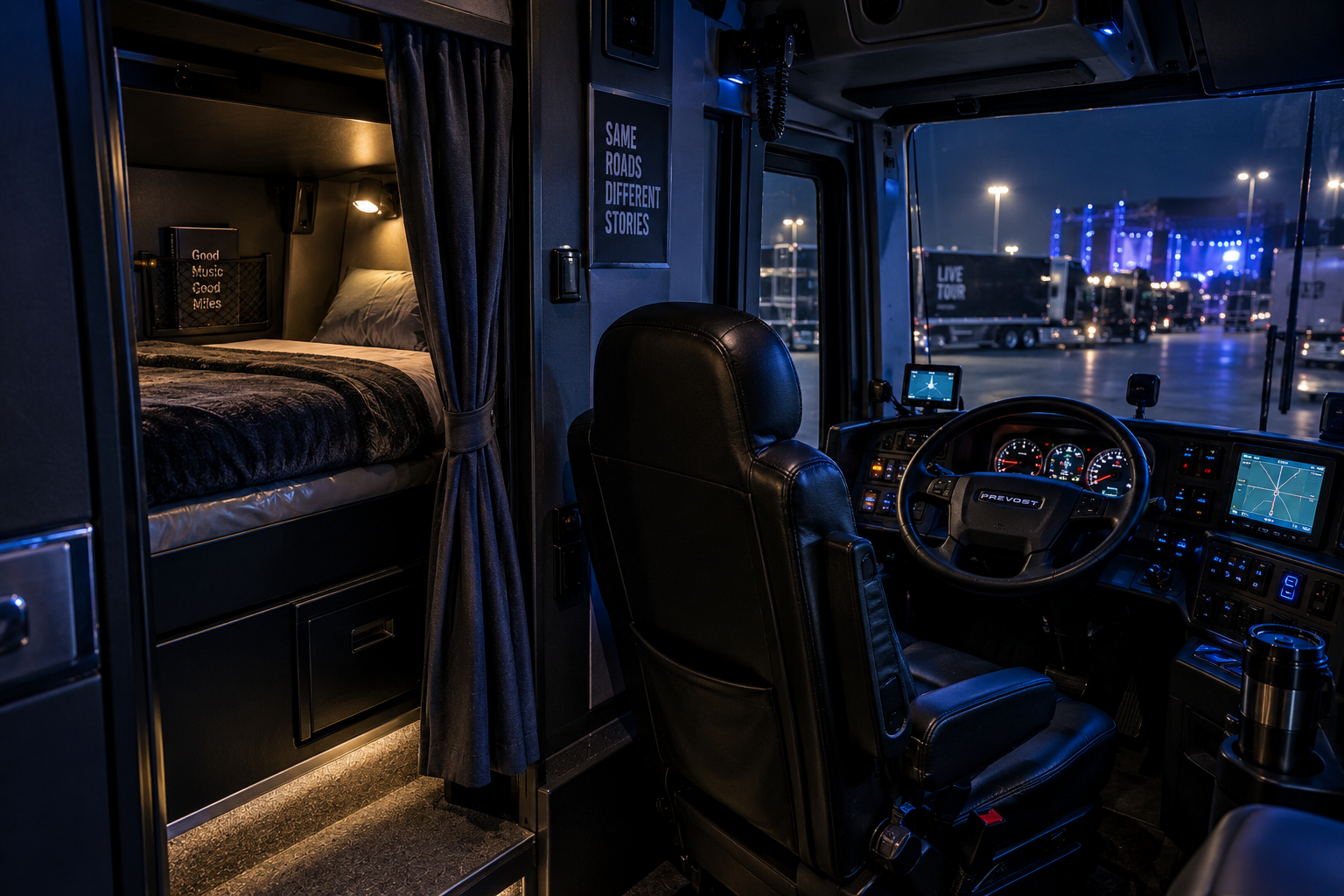
Team runs lean on the sleeper berth provision. Each driver can split the required 8 off-duty hours into two berth periods, neither shorter than 2 hours, while the partner drives.
In practice, one driver takes a 4-hour stretch at the wheel while the other sleeps, then they swap. The coach keeps rolling through the night and can cover 800 to 1,000 miles in a single push. It's the standard answer for back-to-back coast-to-coast jumps, though it only works on coaches with a dedicated driver's bunk away from the party's lounge noise.
Average Daily Mileage Across a Tour
Average daily mileage runs lower than overnight mileage because tours include days off, double-show cities, and hotel nights. A realistic planning figure for a US club or theater tour is 250 to 350 miles per calendar day.
One published example from an entertainer coach operator illustrates the math: a 45-day tour covering 14,805 miles works out to about 329 miles per day. That average includes zero-mile days parked at a venue and 500-mile runs across the plains. Festival-heavy summer runs tend to average lower, since several dates cluster in one region, while fall arena tours that hop between major markets average higher.
Average figures matter for three budget lines:
Fuel cost, since total miles drive diesel consumption
Tire and maintenance wear, which some leases bill by the mile
Positioning legs to and from the coach's home base before and after the run
Total mileage feeds every one of those. And total mileage is set long before the coach leaves Nashville, during routing.
How Routing Shapes Daily Miles
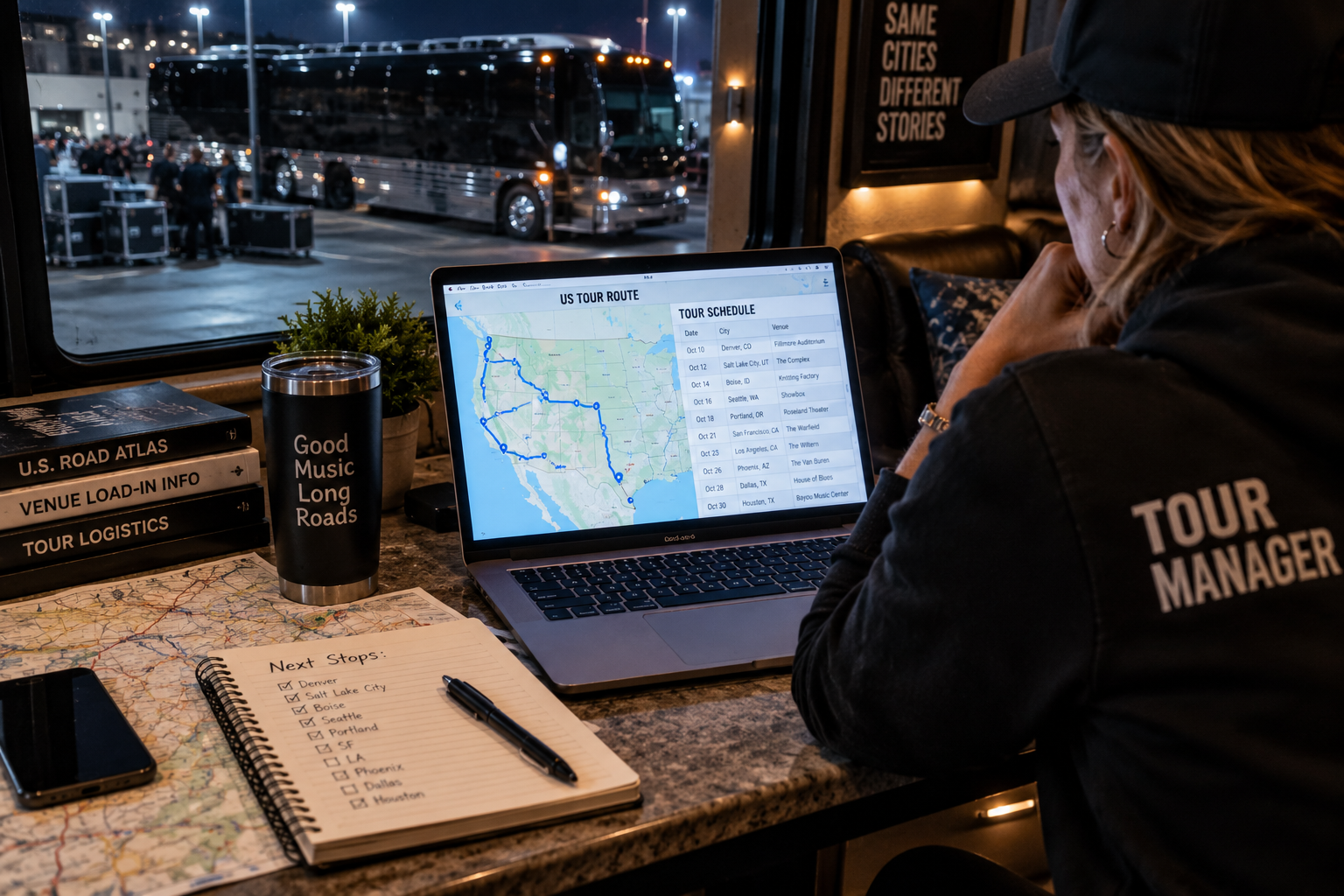
Routing decides daily mileage more than any other factor. A booking agent who stacks Boston, Providence, and New Haven on consecutive nights keeps jumps under 150 miles. One who books Phoenix the night after Denver forces an 820-mile run that no single driver can legally cover.
Routing checks before confirming dates:
Measure each jump in miles and budgeted hours, not straight-line distance
Flag any drive over the vendor's overdrive threshold
Pair long jumps with a day off or a relief driver
Include positioning miles from the coach's base to the first show
Sharing the routing with the bus operator early lets dispatch catch problem jumps before they're locked in. That's standard practice with experienced entertainer coach companies.
Daily Mileage Planning With Knights Coaches
Knights Coaches runs more than 20 Prevost entertainer coaches from a Nashville base, with CDL drivers who hold Class A or Class B licenses and at least three years on entertainer coaches. Every driver logs hours on ELDs and follows FMCSA passenger-carrier rules.
Dispatch works 24/7, checking routings for overdrives and arranging relief drivers when a jump runs long. Coach options and rates sit on the tour bus rental page, safety standing is outlined on the about page, and you can send a routing for review through the contact page.
How many miles can a tour bus drive in a day?
A tour bus can drive about 550 to 600 miles in one legal duty period with a single driver. Most overnight runs stay between 300 and 500 miles.
How many hours can a tour bus driver drive?
A tour bus driver can drive 10 hours after 8 consecutive hours off duty. The driver can't drive at all after 15 total hours on duty.
Are bus driver hours different from truck driver hours?
Yes, bus drivers get fewer driving hours. Passenger carriers allow 10 hours of driving after 8 off, while property carriers allow 11 after 10 off.
What is an overdrive on a tour?
An overdrive is a drive longer than the operator's mileage threshold, usually 450 to 500 miles. It typically triggers extra pay for the driver.
How long does a 400-mile tour bus drive take?
A 400-mile drive takes about 8 hours using the 2-hours-per-100-miles rule. That includes fuel stops, breaks, and slower city stretches.
When does a tour need a second bus driver?
A tour needs a second driver when a jump passes about 550 to 600 miles. Relief drivers, team driving, or a day off are the usual fixes.
What is the average daily mileage on a tour?
Average daily mileage on a US tour runs 250 to 350 miles per calendar day. Days off and short jumps pull the average below overnight figures.
Which factors affect how far a tour bus drives each day?
The main factors are driver hours, venue distance, stops, and traffic. Weather, mountain grades, and road construction add further delays.
Is team driving cheaper than flying in a relief driver?
It depends on frequency. Team driving costs less when long jumps happen often; a flown-in relief driver costs less for one or two long runs on a tour.
Can a tour bus drive through the night legally?
Yes, a tour bus can drive overnight legally as long as the driver has had 8 consecutive hours off duty first. Most drivers rest in a hotel during the day to meet that requirement.
Do tour bus drivers use electronic logging devices?
Yes, most tour bus drivers must use ELDs to record hours of service. The devices log driving time automatically from the engine.
How far can a tour bus go with two drivers?
A tour bus with two drivers can cover 800 to 1,000 miles in one push. The drivers rotate between the wheel and the sleeper berth so the coach never stops for a full reset.
Does a day off mean zero miles for the bus?
Often, yes. The coach may sit parked at a hotel, though some days off include a positioning drive to the next market.
So how many miles does a tour bus drive per day? Overnight runs land between 300 and 500 miles, with 550 to 600 as the legal ceiling for one driver under FMCSA's 10-hour driving and 15-hour on-duty limits. The 2 hours per 100 miles rule turns distance into a realistic schedule.
Overdrives past 450 to 650 miles add driver pay, and longer jumps call for a relief driver, team driving, or a day off. Across a full tour, average daily mileage drops to 250 to 350 miles, and routing decides nearly all of it. To check your routing against driver limits, call Knights Coaches at +1-855-734-5700 or request a quote online.