
How to Route a Tour Around Coach Drive Times
Tour routing on an entertainer coach is governed by a legal clock, not by what looks reasonable on a map. Federal Motor Carrier Safety Administration hours of service rules cap a passenger-carrying driver at 10 hours of driving after 8 consecutive hours off duty, with a 15 hour on-duty limit and a ceiling of 60 […]
Knights Coaches
Knights Coaches
- Published
- Updated
- Reading time
- 11 min read

Tour routing on an entertainer coach is governed by a legal clock, not by what looks reasonable on a map. Federal Motor Carrier Safety Administration hours of service rules cap a passenger-carrying driver at 10 hours of driving after 8 consecutive hours off duty, with a 15 hour on-duty limit and a ceiling of 60 hours in 7 days or 70 hours in 8 days depending on how the carrier operates.
Those numbers convert into miles quickly. A 45 foot coach averages roughly 55 miles per hour once fuel stops, traffic, and venue access are included, so ten legal driving hours produce about 500 to 550 miles of real progress. A market pair inside that range routes cleanly overnight. A 700 mile jump does not, and no amount of scheduling optimism changes it.
Passenger-carrying drivers also have no 34 hour restart, which property-carrying truck drivers do. Weekly hours only recover by rolling off the back of the 7 or 8 day window, so a leg that runs a driver hard early can go out of hours in week two even when every individual night looked fine.
This guide covers the clock itself, how many miles a coach really covers overnight, where the 500 mile night stops working, when a second driver becomes necessary, why five consecutive shows is the practical ceiling, where days off belong, how load-out and load-in bracket the drive, the hidden time nobody budgets, and how to advance a routing with your coach operator. The FAQs cover the questions booking agents ask.
The clock that sets the routing
Hours of service rules exist because fatigue causes crashes, and they apply to the person driving your crew whether or not the routing is convenient. The driving limit is 10 hours. The on-duty limit is 15 hours, and on-duty covers fueling, inspections, waiting, and moving the coach around a venue lot, not just highway time.
Off-duty time has to be 8 consecutive hours before the next driving period begins. That window includes the driver sleeping while your crew is awake at the venue, which is why noise discipline on a parked coach directly affects whether a driver is legal to roll at bus call.
Weekly totals apply on top. Sixty hours in seven days runs out faster than most tour managers expect on a leg with long jumps, and without a restart provision the only fix is a lighter day. Everything downstream in this guide is arithmetic on those three limits, starting with distance.
Miles a coach actually covers overnight
Average speed on a coach routing is lower than the speed limit suggests. Plan on 55 miles per hour across the whole drive, since a 45 foot vehicle loses time to fuel stops, weigh stations, construction, urban access, and the last three miles into a venue lot.
Ten driving hours therefore delivers roughly 500 to 550 miles, and that assumes the driver starts fresh. Departure at 1:00 AM after load-out puts the coach at the next venue between 10:00 AM and noon, which fits most load-in calls comfortably.
Shorter jumps are where coach touring shines. Nashville to Atlanta at 250 miles, Chicago to Detroit at 280, Los Angeles to Phoenix at 370: all land the coach early with hours to spare. The harder question is what happens when the map refuses to cooperate.
The 500 mile night and the 700 mile problem

Five hundred miles is the routine overnight. Six hundred is a long night that works when load-out is early and the next load-in is late. Seven hundred stops being a single-driver drive at all.
The math is unforgiving. At 55 miles per hour, 700 miles takes about 12.7 hours of driving, which exceeds the 10 hour limit before you add a fuel stop. The driver has to park and take 8 consecutive hours off, and that break happens wherever the clock runs out, which might be a truck stop 200 miles short of your venue.
Long jumps therefore need one of three solutions: a travel day with no show, a second driver, or a re-route that turns one impossible jump into two comfortable ones. Booking agents who route by ticket demand alone tend to produce these problems, so the routing needs a drive-time pass before the offers get confirmed. The second driver option deserves its own explanation.
When a second driver earns their cost
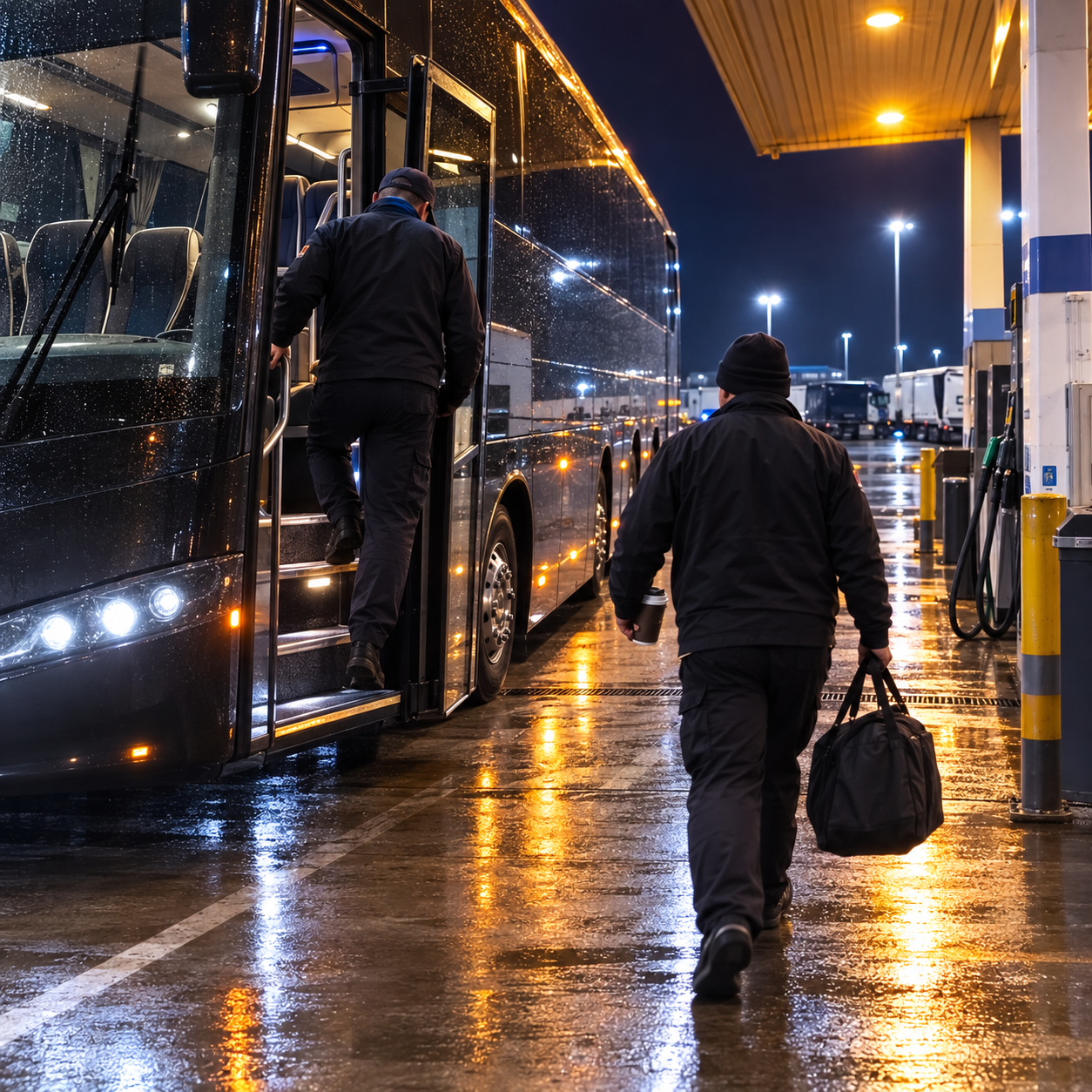
Relief drivers, sometimes called second drivers, let a coach keep moving past the point where one driver has to stop. The two drivers alternate, one drives while the other takes their off-duty period in the driver’s bunk, and the coach covers 900 to 1,100 miles in a single night legally.
Cost is the trade. A second driver adds daily pay and often a hotel room on off days, so tours carry one only when routing demands it. West coast to midwest jumps and festival routings with fixed dates in distant markets are the usual triggers.
Deciding early matters more than deciding correctly. Adding a relief driver two days before a long jump means finding someone qualified, available, and willing to fly in, which is expensive and sometimes impossible. Flag long jumps to your operator at booking. Knights Coaches handles relief driver arrangements through the same 24/7 dispatch team that manages routing changes mid-tour. The weekly limit creates a different constraint.
Why five shows in a row is the ceiling
Consecutive shows accumulate driver hours faster than most schedules account for. Tour manager Andy Reynolds, who has run sleeper bus tours for three decades, advises against booking more than five shows in a row, with short drives on either side of that run.
The reason is cumulative. An eight or nine hour drive on any single night is fine. Five of them back to back pushes a driver toward the 60 hour weekly ceiling, and the moment the driver goes out of hours the coach stops wherever it happens to be. Missing a show costs the guarantee, the merch, and the promoter relationship.
Six and seven date runs happen, but they need short jumps between markets to stay legal. Two 150 mile nights inside a five show block buy back the hours that a 500 mile night spends. Routing is a budget, and days off are how you top it up.
Where days off actually belong
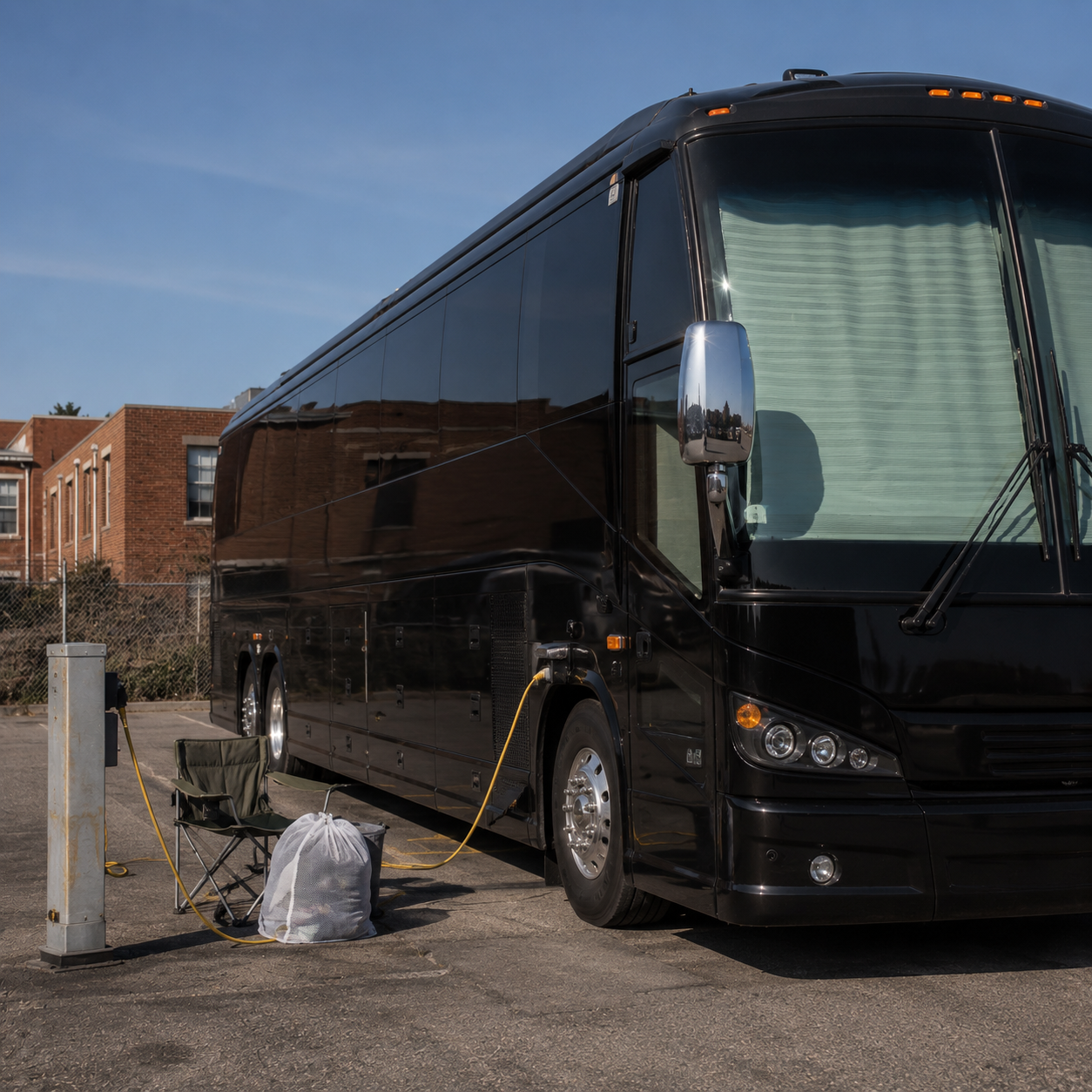
Days off serve two purposes on a coach tour: driver hours recovery and human recovery. Placing them purely for band morale wastes them, and placing them purely for the clock burns out the crew.
The strongest position for a day off is immediately before or after the longest drive on the leg. A travel day converts an impossible 900 mile jump into a comfortable one, and it gives everyone a shower, laundry, and a bed that isn’t moving. Those logistics are covered in the guide to day rooms, showers and truck stops.
Position matters geographically too. A day off in a market with a hotel, a laundromat, and safe overnight coach parking is worth more than a day off in a rural gap where the coach sits in a truck stop lot. Pick cities for days off deliberately. Then build each show day around the two fixed points that bracket the drive.
Building the night around load-out and load-in
Every overnight drive sits between two immovable times. Load-out ends somewhere between midnight and 2:00 AM depending on production size, and load-in at the next venue starts between 8:00 AM and noon.
The gap between those points is your drive window, minus fueling and minus any time the driver needs to reposition the coach. A 1:00 AM departure with a 10:00 AM load-in gives nine hours, which covers about 480 miles with a fuel stop included. Push load-out to 2:30 AM and the same routing stops working.
Production size therefore changes routing feasibility. Bigger shows load out slower, which shortens the drive window on exactly the tours that travel with the most people. The mechanics of departure, and what happens when someone misses it, are covered in the guide to bus call and overnight drives. Several smaller costs eat the same window.
The hidden time nobody budgets
Fuel stops take 30 to 45 minutes on a coach, not the ten minutes a car takes. Tanks are large, pumps are slower, and the driver usually empties trash and services the waste tank at the same stop.
Venue access adds more. Downtown venues with tight alleys, restricted turns, and weight-limited streets can cost an hour on arrival, and some venues have no coach parking at all, forcing a drop and run where the coach leaves after load-in and returns after the show. That pattern is explained in the guide to venue bus parking and shore power.
Time zones catch people out too. An eastbound drive from Denver to Kansas City loses an hour against the clock, which turns a comfortable arrival into a tight one. Build routing on local times at both ends, not on drive duration alone, and confirm the whole plan with the people who have to run it.
Routing across regions and seasons
Regions route differently. The northeast packs markets tightly, so New York, Philadelphia, Boston, and Washington DC sit inside 250 mile jumps and a coach arrives before breakfast every night. The southeast works similarly through Nashville, Atlanta, Charlotte, and Orlando.
Western routing is the opposite problem. Denver to Salt Lake City runs 520 miles, Salt Lake City to Seattle runs 840, and Texas alone can swallow a full night between El Paso and Houston. Tours crossing the mountain west need either travel days or relief drivers built in from the start, and pretending otherwise produces the missed show.
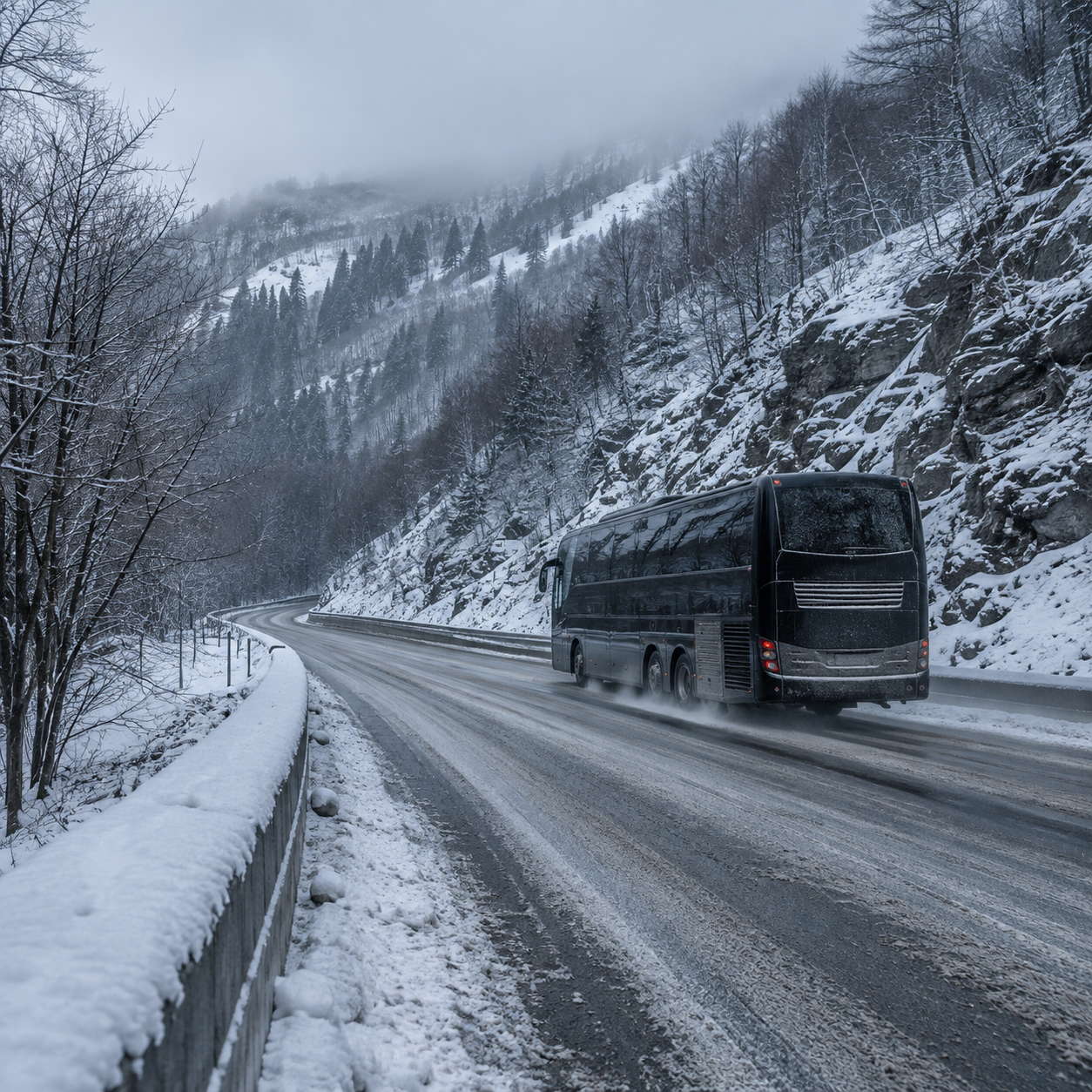
Season changes the math again. Winter routing through the Rockies, the Great Lakes, or the northeast can add hours to any drive, and a storm closing Interstate 80 turns a legal 480 mile night into a rerouted 600 mile one. Build slack into winter legs, and keep dispatch informed early when weather looks likely to interfere.
Advancing routing with your coach operator
Operators read routings for legality before the tour starts, and that review is free. Send the full date sheet with cities, venue addresses, load-in times, and show times as early as you have them, ideally at the point where dates are held rather than confirmed.
What comes back is a drive-time analysis: which nights are comfortable, which are tight, which require a relief driver, and which are not legal at all. Fixing a routing at hold stage costs nothing. Fixing it after announce costs a show.
Nationwide coverage makes the fixes easier, since pickup and drop off happen in any major US city across the 48 contiguous states through nationwide tour bus rental. Send the dates, get the analysis, then let the agent finish routing around the answer.
How many hours can a tour bus driver drive per day?
Federal rules allow 10 hours of driving after 8 consecutive hours off duty, inside a 15 hour on-duty window. Weekly totals cap at 60 hours in 7 days or 70 hours in 8 days, and passenger-carrying drivers have no 34 hour restart available.
How many miles can a tour bus cover overnight?
Roughly 500 to 550 miles with a single driver, based on an average of 55 miles per hour including fuel and access time. A relief driver setup extends that to 900 to 1,100 miles by alternating drivers through the night.
What happens if the driver runs out of hours?
The coach stops wherever the clock expires and the driver takes 8 consecutive hours off duty. That break can happen at a truck stop hundreds of miles short of the venue, which is how tours miss shows. Routing legality is checked before the tour, not during it.
Do you need a second driver on a tour bus?
Only for jumps beyond a single driver’s legal range, typically over 600 miles, or for routings with several long nights in a row. A second driver adds daily pay and travel costs, so most tours carry one selectively rather than for the whole leg.
How many shows in a row can a tour play on a coach?
Five is the practical ceiling with normal drives, and short jumps on either side of that block help the driver recover weekly hours. Longer runs are possible when the drives between markets are short.
Where should days off go in a tour routing?
Immediately before or after the longest drive on the leg, in a city with hotels, laundry, and safe overnight coach parking. Days off placed for the clock and for crew recovery at the same time are worth twice as much as either alone.
How fast does a tour bus travel?
Plan routing at an average of 55 miles per hour across the full drive. Highway cruising is faster, but fuel stops, construction, weigh stations, urban access, and venue lots pull the working average down.
Does load-out time affect routing?
Directly. The drive window runs from load-out to the next load-in, so a production that finishes at 2:30 AM has ninety minutes less driving time than one that finishes at 1:00 AM. Bigger shows need shorter jumps for exactly this reason.
How long do fuel stops take on a coach?
Between 30 and 45 minutes, since coach tanks are large, the driver often services waste and trash at the same stop, and truck lanes queue at busy times. Budget one stop per 500 mile night.
Should the coach company see the routing before dates are confirmed?
Yes, at hold stage. Operators run a drive-time review against hours of service rules and flag illegal or tight nights while the dates can still be moved, which costs nothing compared with rerouting after announce.
Do time zones affect tour routing?
Yes, and eastbound drives suffer most. Denver to Kansas City loses an hour on the clock, which can turn a comfortable arrival into a late one. Route on local load-in times at both ends rather than on drive hours alone.
Does winter weather change drive-time planning?
Substantially. Snow, ice, and interstate closures add hours to mountain and northern routings, so winter legs need extra slack between markets. Dispatch reroutes around closures, but the time still has to exist inside the driver’s legal window.
Who arranges overnight parking between markets?
The driver picks rest locations inside the legal break, usually truck stops with 24 hour facilities. Venue overnight parking gets advanced separately with the promoter, and the coach operator’s dispatch team coordinates both.
Routing that the clock agrees with
Coach routing works when the schedule respects the driver’s legal clock rather than the map’s shortest path. Ten driving hours after 8 hours off duty produces about 500 to 550 real miles, weekly hours cap at 60 or 70 with no restart available, and every routing decision follows from those limits.
Long jumps need a travel day, a relief driver, or a re-route. Five shows in a row is the practical ceiling, days off belong beside the longest drive, and the real drive window runs from load-out to load-in with fuel stops, venue access, and time zone changes taken out of it. Send the dates early and let the operator run the analysis.
Knights Coaches reviews routings before confirmation and runs CDL-certified drivers across all 48 contiguous states. Call 1-855-838-5542 or use the contact form with your date sheet to get the drive-time read.