
Lease vs Buy an Entertainer Coach: Cost Breakdown
Buying an entertainer coach means acquiring a converted Prevost, MCI, or Van Hool motorcoach outright at anywhere from $50,000 for an older band bus to $1.28 million for a late-model triple-slide conversion , then carrying fuel, maintenance, insurance, storage, driver employment, and federal compliance yourself.…
Knights Coaches
Knights Coaches
- Published
- Updated
- Reading time
- 11 min read
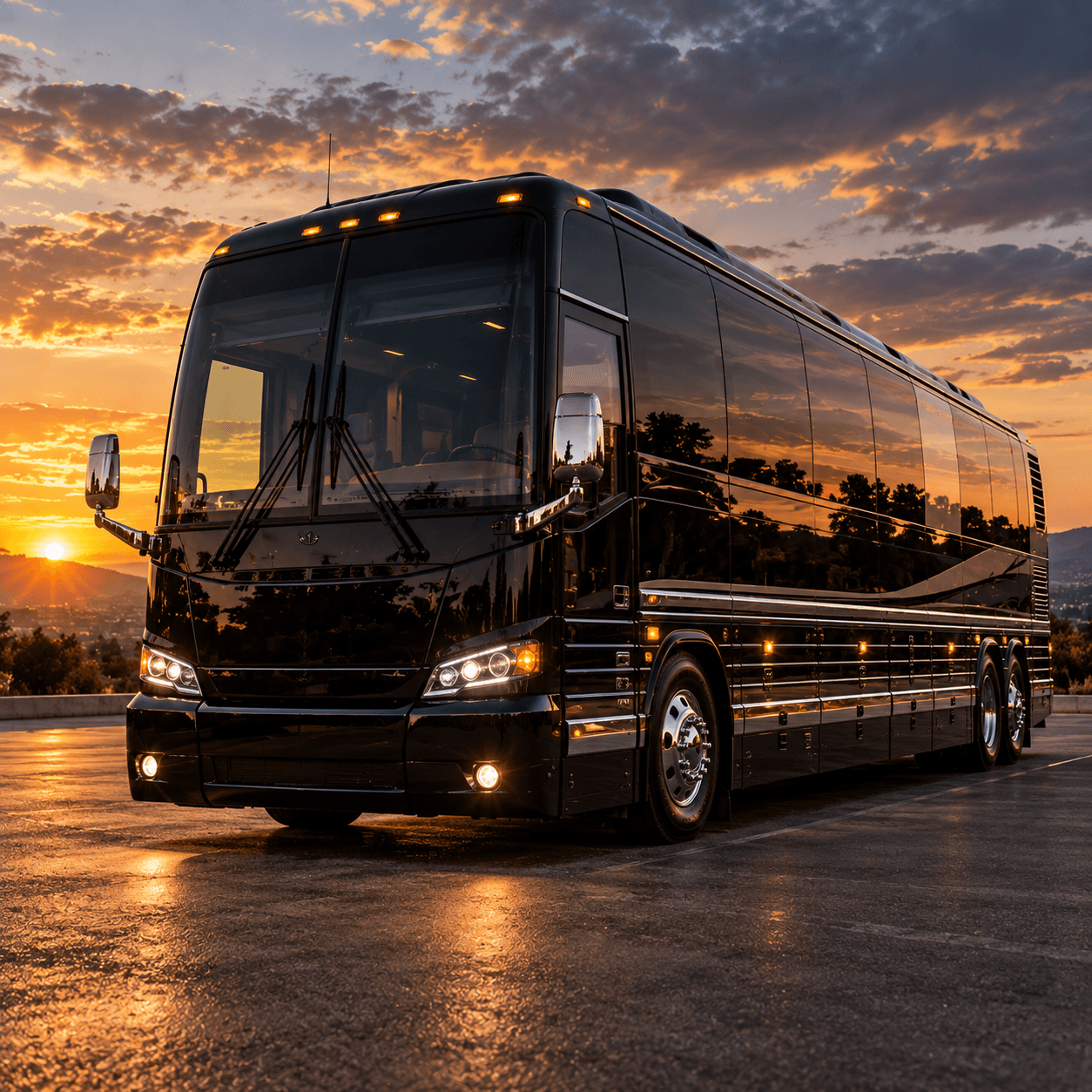
Buying an entertainer coach means acquiring a converted Prevost, MCI, or Van Hool motorcoach outright at anywhere from $50,000 for an older band bus to $1.28 million for a late-model triple-slide conversion, then carrying fuel, maintenance, insurance, storage, driver employment, and federal compliance yourself. Leasing means paying a daily or monthly rate to a licensed carrier that owns the asset, employs the driver, and holds the operating authority.
The purchase price is the smallest part of the comparison. A two-slide coach running 10,000 miles a year absorbs roughly $5,800 in annual maintenance before any road repair, plus fuel at 6 MPG, tires at around $850 each across eight positions, slide seals near $2,400 apiece, and engine service assessed at about $0.35 per mile. Insurance, apportioned registration, and covered storage sit on top of that.
Leasing prices the same capability as a line item. A coach alone leases at $800 to $1,400 per day depending on year and trim, and an all-in figure including driver and fuel lands between $2,200 and $2,900 per day. Long-term structures from one to twelve months reduce that daily rate and lock a specific unit to a specific tour.
This breakdown separates the two paths using real market figures: acquisition cost by coach tier, the annual carrying cost of ownership, what a lease rate actually covers, the Department of Transportation compliance nobody quotes, the utilization threshold where ownership starts to win, depreciation and resale behavior, and a five-year comparison.
What buying actually costs upfront
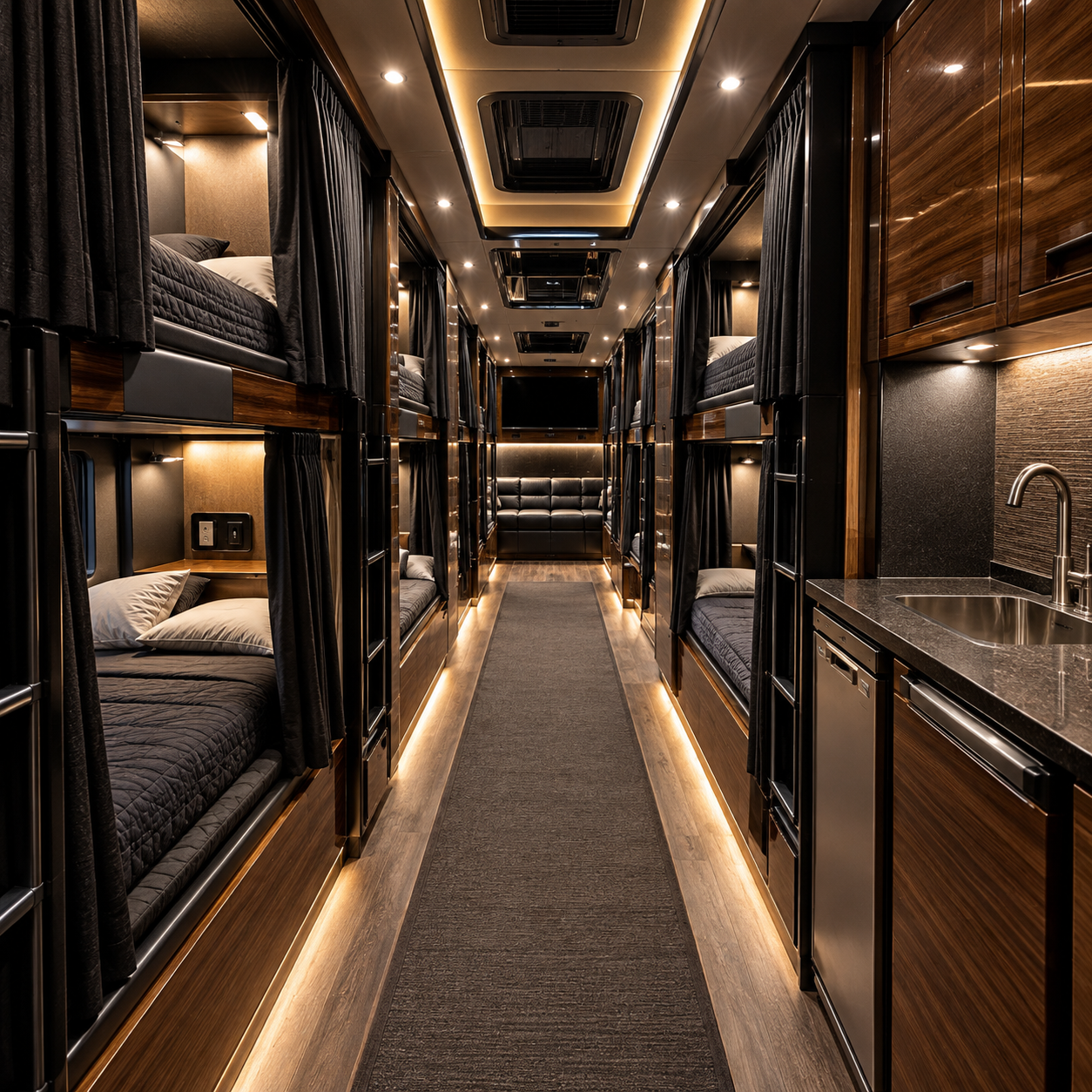
Acquisition cost spreads across a wide band, and the tier you enter determines almost everything downstream.
Entry band bus, older non-slide: from around $50,000. Prevost, MCI, and Eagle dominate this inventory. High mileage, dated interiors, and immediate deferred maintenance are typical.
Mid-tier converted sleeper: $265,000 to $430,000. Examples in current market listings include a 2002 Featherlite H3-45 double slide at $265,000 and a 2005 Liberty H3-45 double slide near $430,000.
Recent 12-bunk entertainer conversion: around $375,000 for a 2012 H3-45 with a remanufactured engine, and $525,000 for a comparable higher-spec unit.
Late-model premium conversion: $888,000 for a 2013 Millennium H3-45 triple slide, and $1,285,000 for a 2019 Millennium H3-45 double slide.
New build: $1 million to $2 million depending on converter and specification.
Purchase price is not the entry cost. Budget a pre-purchase inspection by a commercial coach technician, immediate tire replacement if the date codes are old, house battery replacement, and a slide seal service. On an older unit those four items alone can add $15,000 to $25,000 before the coach carries a single passenger.
Financing changes the shape again. Interest on a $400,000 note is a real annual expense that no lease comparison should ignore, and lenders treat converted coaches as specialty assets with terms to match.
The annual cost of owning a coach
Carrying cost is where ownership surprises first-time buyers. Documented owner figures for a two-slide coach at 10,000 miles a year break down roughly as follows.
Tires: eight at around $850 each, replaced on a six-year cycle, near $1,133 per year.
House batteries: four at around $550, near $440 per year.
Air bags: around $2,500 in parts and labor, near $250 per year amortized.
Brake chambers: around $650 plus labor, near $330 per year.
Slide seals: around $2,400 each plus labor, near $680 per year.
Coolant service: around $300 plus six hours of labor, near $450 per year.
Valves, transmission service, and unscheduled small items: near $1,300 per year combined.
Those lines total approximately $5,800 annually before a single unexpected repair. Fuel adds a comparable figure at low mileage and dwarfs it at touring mileage. At 6 MPG and $5.50 per gallon, every mile costs roughly $0.92, so a 30,000-mile touring year runs about $27,600 in diesel alone.
Then come the fixed costs that never appear in a maintenance thread: commercial insurance on a passenger-carrying vehicle, apportioned registration across the states you operate in, IFTA fuel tax reporting, and covered storage during off-season months to protect paint, seals, and systems.
One more line dominates all of them on the road. Preventive maintenance is cheap relative to breakdown repair, and a single road failure can cost more than the coach earns across an entire tour. Owners who skip scheduled service pay for it in cancelled shows.
What a lease rate covers
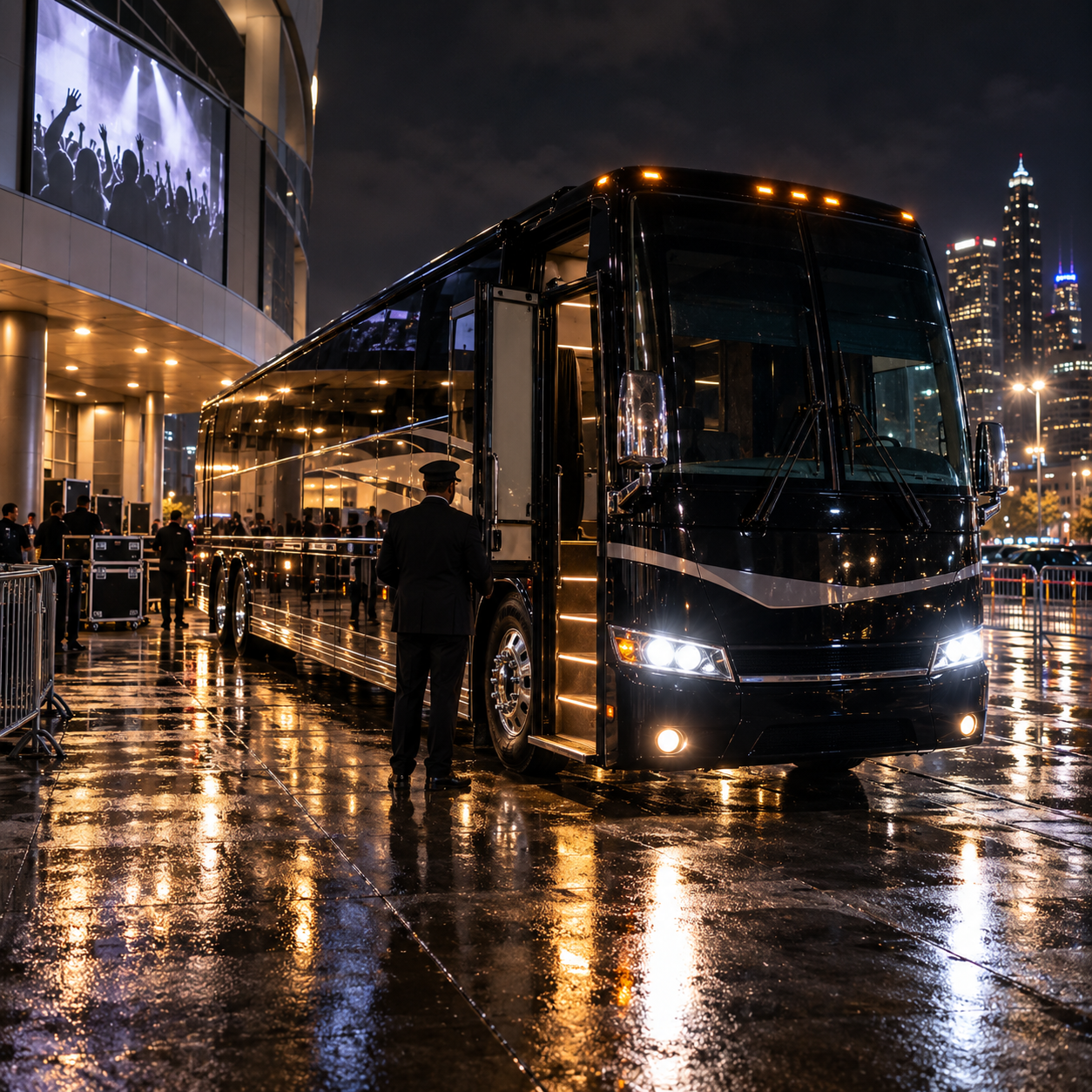
Lease pricing bundles the asset, the labor, and the compliance into one number, which is why the daily figure looks high next to a monthly note.
Coach-only rates run $800 to $1,400 per day across a typical fleet, from older non-slide units at the bottom to star-configuration coaches with rear staterooms at the top. Some regional operators quote $350 to $750 per day for 9 to 12 bunk coaches, which reflects older equipment rather than a better deal.
Driver cost is separate and predictable: $350 to $500 per day base, plus roughly $55 daily per diem, around $400 per week in service pay, an extra $75 per day when a trailer is attached, and a minimum three-star hotel room every night of the tour including deadhead days. Overdrive charges apply once daily mileage passes the industry threshold of 451 miles.
Fuel is calculated rather than estimated: total tour miles divided by MPG, multiplied by the diesel price per gallon. Secondary lines cover tolls, permits, IFTA and DOT fees near $40 per day, satellite and connectivity near $60 per day, exterior washes at $75 each, and end-of-tour interior cleaning near $600.
Entertainer coach leasing at Knights Coaches runs from one to twelve months at reduced rates, with a guaranteed coach assignment, first pick of the fleet, and the same driver retained across the term.
The compliance burden nobody prices
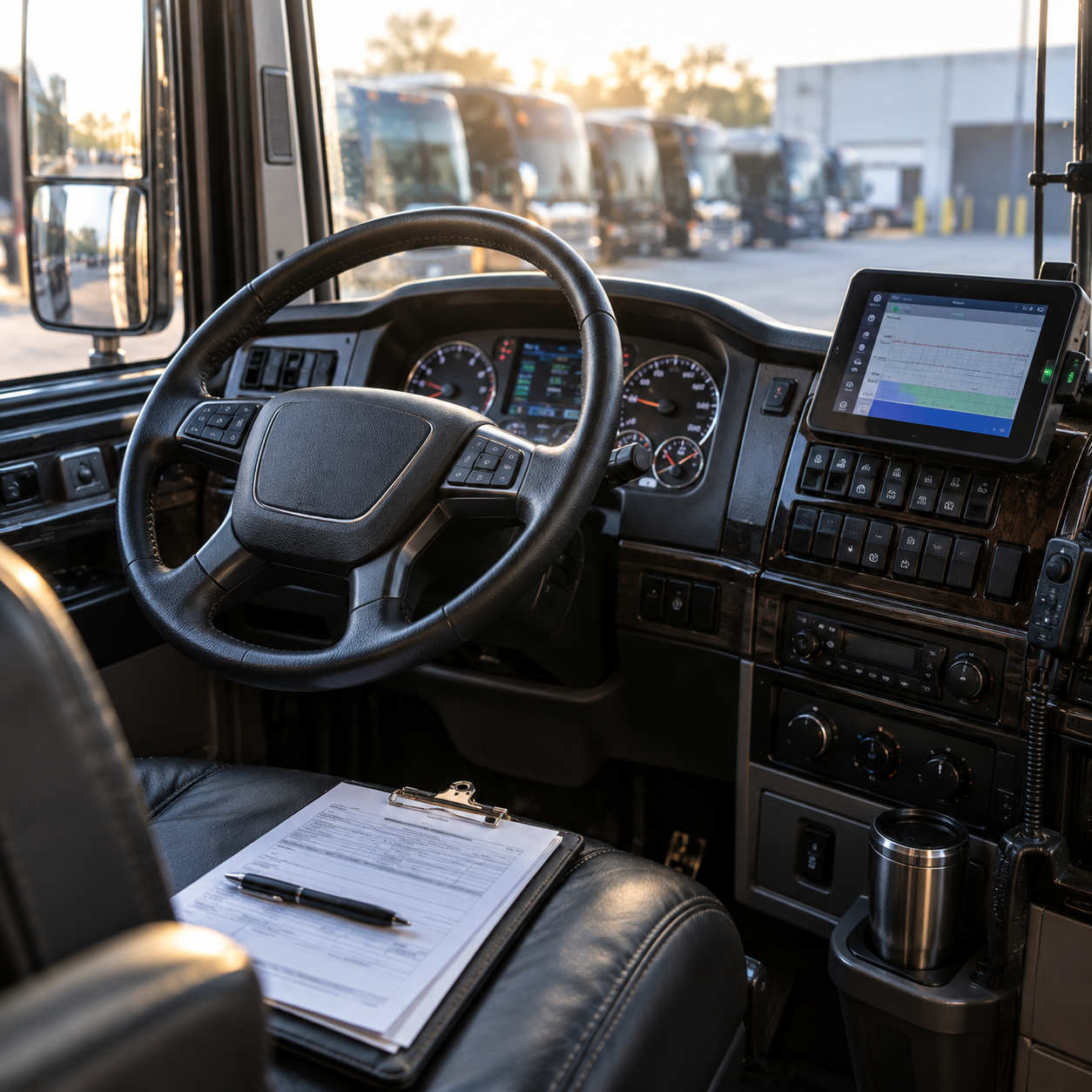
Regulatory obligation is the cost line that turns most ownership plans around, because it does not scale down for a single coach.
Operating a passenger-carrying commercial vehicle across state lines requires US DOT registration and an FMCSA safety rating attached to the carrier. The carrier maintains a driver qualification file for every driver, enrolls in the drug and alcohol clearinghouse, runs pre-employment and random testing, maintains electronic logging devices in every vehicle, and files IFTA fuel tax returns quarterly.
Employment adds another layer. A coach that tours needs a qualified CDL Class A or B driver with entertainer-coach experience, and hiring one part-time is difficult because experienced touring drivers work full seasons. Knights Coaches requires a three-year minimum on entertainer equipment, current DOT medical certification, and clean driving records before a driver takes a tour, and holds Entertainer Motorcoach Council membership on top of its DOT registration.
Insurance underwriters price single-coach operations differently from fleets, and the difference is not favorable. Fleet operators spread risk, negotiate rates, and maintain claims history that underwriters recognize.
None of this is optional and none of it is cheap for one vehicle. It is the strongest practical argument for renting a coach per tour rather than owning one, unless the coach is the business itself.
Utilization decides the answer
Utilization is the single variable that flips the comparison, and it is measured in days on the road rather than dollars.
A coach leased at an all-in $2,600 per day costs $234,000 across 90 touring days. A coach purchased at $400,000 and operated for those same 90 days carries financing, maintenance, fuel, insurance, storage, and a driver’s salary, and the driver alone runs well over $100,000 annually once benefits and off-season retention are counted.
The break-even sits far higher than most acts expect. Below roughly 120 to 150 touring days a year, leasing generally costs less on a total-cost basis because the fixed lines of ownership keep running while the coach sits. Above that, and particularly for operators who sublease the asset to other tours during downtime, ownership starts to compete.
That is why the buyers in this market are overwhelmingly carriers rather than artists. Fleet operators reach high utilization by rotating coaches across many clients, which is the only reliable route past the break-even point. A single act touring six weeks a year cannot get there.
Artists at the top end sometimes buy anyway, for control, customization, and privacy rather than for cost. That is a legitimate reason and a different question from the one this breakdown answers.
Depreciation and resale
Resale behavior favors Prevost more than any other consideration in the used market. Fleet operators consistently describe Prevost resale as the strongest in the industry, and the H3-45 leads North American coach sales, which sustains demand for used units.
Service life supports that. A Prevost H3-45 built on a stainless steel commercial platform is engineered for a service life measured in the high hundreds of thousands of miles, and many units remain operational past 20 years. An odometer showing 250,000 miles describes a coach in early middle age rather than one approaching retirement, which is why mileage alone is a poor valuation signal on this chassis.
Conversion value depreciates faster than the chassis. Interiors date, entertainment systems become obsolete, and a 2005 conversion reads as a 2005 conversion regardless of how well the mechanicals were kept. Buyers pay for recent interiors, working slide-outs, and documented service history.
Market pricing has also stayed firm because replacement cost keeps climbing. New coaches now sit between $1 million and $2 million, which supports used values from below rather than dragging them down.
A five-year comparison
Run both paths across five years for an act touring 60 days annually.
Leasing. Sixty days at $2,600 all in equals $156,000 per year, or $780,000 across five years. Nothing is owed between tours. No asset sits in storage. Coach assignment can change with the party size, and a longer cycle drops the daily rate.
Buying. A $400,000 mid-tier conversion carries financing, roughly $5,800 in scheduled maintenance annually, fuel at $0.92 per mile, commercial insurance, apportioned plates, storage for the 305 days the coach is idle, and a driver who must be paid or replaced each season. Five-year outlay commonly exceeds the lease figure before the residual is counted, and the residual is the only line that pulls it back.
The variable that changes the outcome is not the purchase price. It is whether the coach earns revenue on the days your tour is not using it. Carriers achieve that by running sleeper coach charters for other clients across a fleet, with tour trucking and nationwide positioning attached. Individual owners rarely do.
How much does it cost to buy an entertainer coach?
Entertainer coaches range from about $50,000 for an older band bus to $1.28 million for a late-model premium conversion. Mid-tier 12-bunk sleepers commonly trade between $265,000 and $525,000, and new builds run $1 million to $2 million.
What does it cost to lease an entertainer coach per day?
Coach-only lease rates run $800 to $1,400 per day, and all-in cost including driver and fuel runs $2,200 to $2,900 per day. Long-term leases from one to twelve months reduce the daily figure and guarantee a specific unit.
How many touring days make buying worthwhile?
Roughly 120 to 150 touring days a year, and realistically more unless the coach earns revenue when your tour is not using it. Below that threshold the fixed costs of ownership continue while the asset sits idle.
What are the annual maintenance costs of a Prevost coach?
Around $5,800 per year at 10,000 miles, covering tires, house batteries, air bags, brake chambers, slide seals, coolant service, and small unscheduled items. Touring mileage raises that figure substantially, and engine service is commonly assessed at $0.35 per mile.
Do I need a DOT number to own a tour bus?
Yes, for commercial use. Operating a passenger-carrying vehicle across state lines for compensation requires US DOT registration plus an FMCSA safety rating, driver qualification files, clearinghouse enrollment, electronic logging, and quarterly IFTA filing.
Can I hire my own driver for a coach I own?
Yes, and the obligations transfer to you. You become the employer responsible for the qualification file, medical certification, testing program, and hours-of-service compliance. Experienced entertainer-coach drivers generally work full seasons rather than single tours.
Which holds value better, Prevost or MCI?
Prevost holds the stronger resale position, with fleet operators citing it as the best in the industry. The H3-45 leads North American coach sales, and its commercial platform supports service lives past 20 years, which sustains used demand.
Is a high-mileage coach a bad buy?
Not necessarily. A Prevost showing 250,000 miles is in early middle age, not near the end of its life, because the platform is engineered for the high hundreds of thousands. Service records, slide-out condition, and interior age matter more than the odometer.
What is included in a lease that ownership does not cover?
A lease includes the asset, the qualified driver, the operating authority, the insurance, the maintenance program, and the dispatch support. Ownership requires you to source each of those separately and carry them through the months the coach is parked.
How does fuel cost compare between the two?
Fuel is identical either way at 6 MPG solo and 5 MPG pulling a trailer. Calculate it as tour miles divided by MPG, multiplied by diesel price. A 14,800-mile run at 6 MPG and $5.50 per gallon works out near $13,500.
Does leasing lock me into one coach?
Long-term leases do, deliberately. A one to twelve month lease guarantees a specific unit and driver for the term, which gives crews a consistent floor plan. Short rentals draw from whatever fits the routing and party size at the time.
What hidden costs should a first-time buyer expect?
Expect pre-purchase inspection, immediate tire and battery replacement, slide seal service, apportioned registration, and covered off-season storage. On an older unit, those items commonly add $15,000 to $25,000 before the first tour.
The short version
Buying an entertainer coach means paying between $50,000 and $1.28 million for the asset, then carrying roughly $5,800 in annual scheduled maintenance at low mileage, fuel at 6 MPG, tires at $850 a position, slide seals near $2,400 each, insurance, apportioned plates, storage, and a driver’s full-season salary. Leasing converts all of that into $800 to $1,400 per day for the coach or $2,200 to $2,900 all in, with the carrier holding the DOT authority, the qualification files, the testing program, and the electronic logs. Utilization decides the outcome: below roughly 120 to 150 touring days a year, the fixed lines of ownership run while the coach sits idle, which is why carriers rather than artists are the buyers in this market. Prevost resale remains the strongest in the segment, and a 250,000-mile H3-45 sits in early middle age rather than near retirement.
Knights Coaches leases Prevost H3-45 and X3-45 coaches from one to twelve months with CDL-certified drivers and 24/7 dispatch. Call 1-855-838-5542 or browse the coach fleet to compare floor plans.