
Entertainer Coach vs Tour Bus vs Sleeper Bus: What Each Term Actually Means
An entertainer coach (also called a sleeper bus, nightliner, or band bus) is a full-size motorcoach converted into rolling accommodation, fitted with sleeping bunks, a galley kitchen, a bathroom, front and rear lounges, and a commercially licensed driver at the wheel. Tour bus and sleeper bus describe the same vehicle…
Knights Coaches
Knights Coaches
- Published
- Updated
- Reading time
- 11 min read
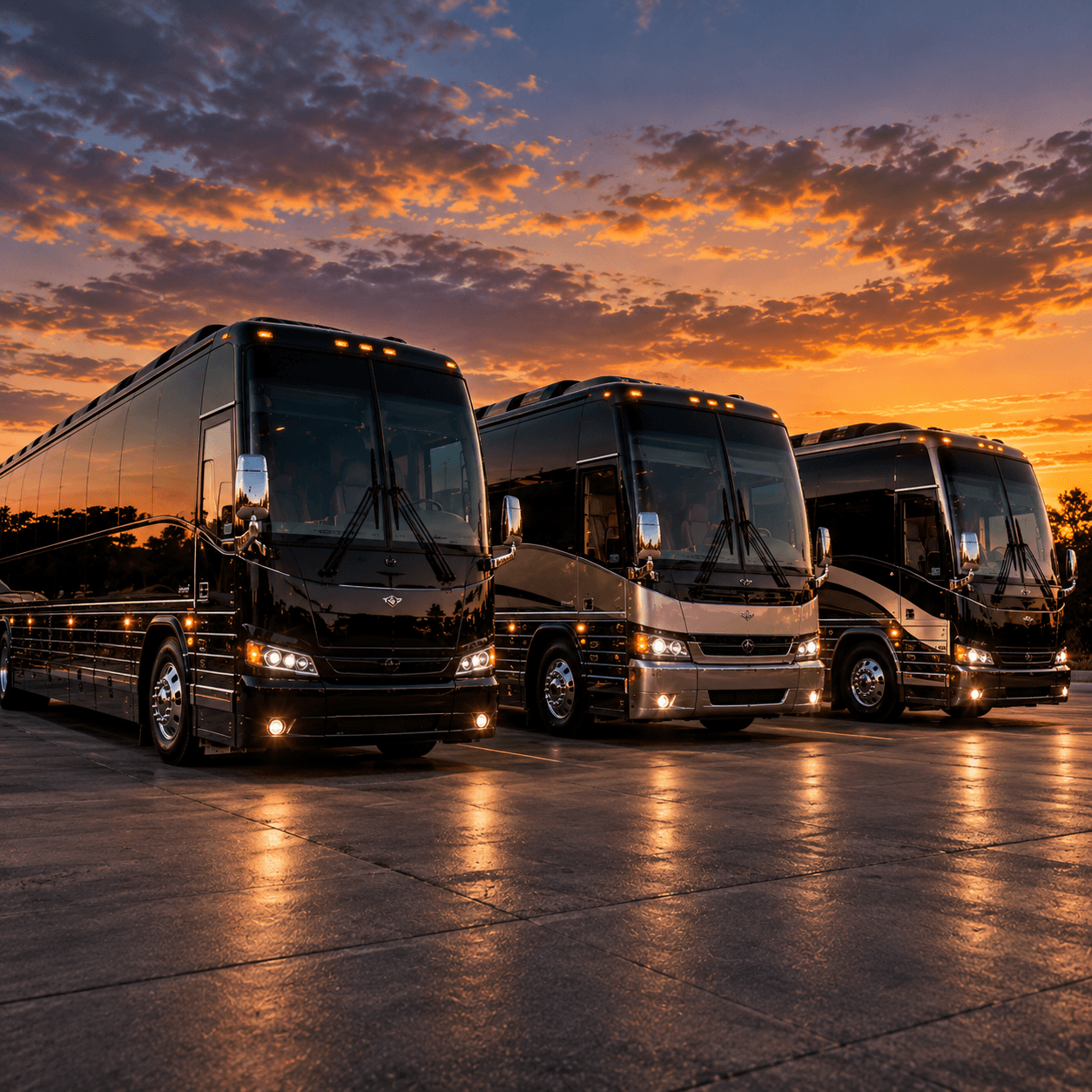
An entertainer coach (also called a sleeper bus, nightliner, or band bus) is a full-size motorcoach converted into rolling accommodation, fitted with sleeping bunks, a galley kitchen, a bathroom, front and rear lounges, and a commercially licensed driver at the wheel. Tour bus and sleeper bus describe the same vehicle class. The three terms are regional labels and booking-desk shorthand, not three separate builds.
The confusion costs tour managers real money. Ask a broker for a “tour bus” and you may be quoted a 56-seat charter unit with reclining seats and no beds. Ask for a “sleeper bus” and a European supplier will price a double-deck nightliner with 16 berths. Ask for an “entertainer coach” in Nashville and you will get what you actually wanted: a 12-bunk Prevost H3-45 or X3-45 with a rear lounge, a shower, and a driver on federal hours-of-service rules.
The physical specification behind all three words is consistent. Bunks run 8 to 18 per coach, with 12 the North American standard, stacked three high in four quadrants. A standard bunk measures 29 inches wide by 74 inches long by 35 inches high. Fuel economy sits at 6 MPG solo and 5 MPG pulling a trailer. The Federal Motor Carrier Safety Administration caps a passenger-carrying driver at 10 hours of driving after 8 consecutive hours off duty, which is why the vehicle exists at all: the beds move while the driver’s clock runs.
This guide separates the vocabulary from the hardware. It covers where each term originated, what genuinely differs between a North American entertainer coach and a European nightliner, how bunk counts and deck configurations change the answer, which term to use when you request a quote, and what a charter operator will assume when you say each word.
One vehicle class, three commercial names
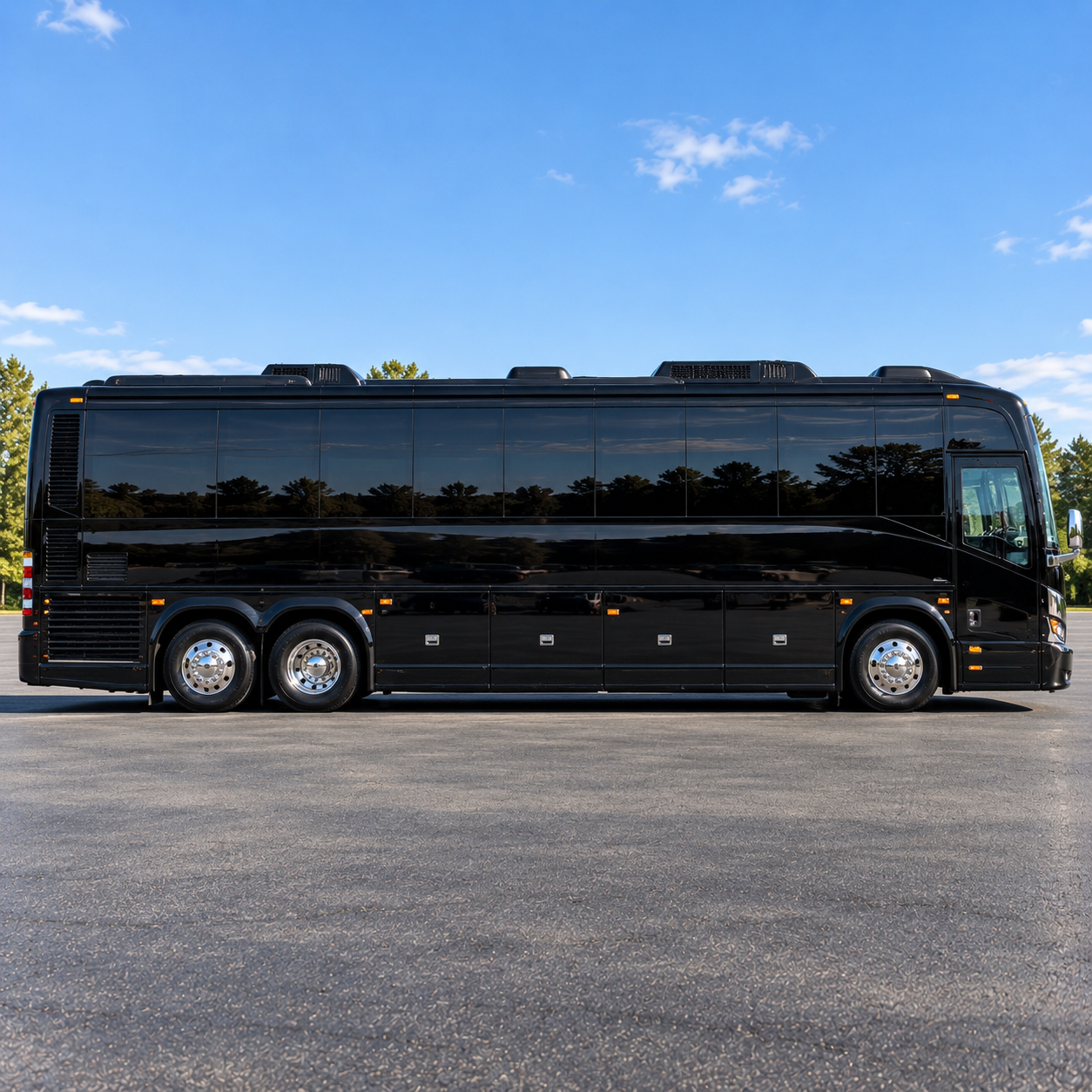
Vehicle classification in the touring industry follows the customer, not the chassis. A sleeper bus is a coach adapted with sleeping facilities for long-haul passenger routes. In the United States the trade calls it an entertainer coach. In Europe the same vehicle trades as a nightliner. Bands, crews, and production companies add their own shorthand: band bus, crew bus, entertainer bus, sleeper coach.
Every one of those names points to the same base equation. Take a 45-foot commercial motorcoach shell, strip the passenger seating, install bunks and living space, and register it as a commercial passenger vehicle. What changes between suppliers is trim level, bunk count, slide-out count, and whether the rear space is a lounge or a private stateroom.
Knights Coaches builds every unit in its entertainer coach fleet on Prevost H3-45 and X3-45 platforms, the two chassis that dominate the top tier of the North American market. Chassis choice is the one specification that stays fixed across the naming conventions.
Where the terminology came from
Terminology split along geography in the 1970s and 1980s as touring scaled up on both continents. American operators serving Nashville, Los Angeles, and Atlanta built around country and rock acts and adopted “entertainer coach” because the vehicle qualified for entertainer-specific DOT treatment and insurance categories. British and European operators serving festival circuits used “nightliner,” a name that describes the job rather than the passenger: drive overnight, arrive at the next venue by morning.
“Tour bus” came later and stuck because journalists and fans used it. The word now carries the least precision of the three. Legal definitions vary by state, and several jurisdictions define a tour bus as a sightseeing vehicle carrying more than 25 passengers, which describes a charter coach and excludes a sleeper.
“Sleeper bus” is the most literal and the most international. It is also the term most likely to return intercity overnight services in search results, since sleeper coaches run as scheduled public transport across India, Brazil, and Southeast Asia. When you use it commercially in the US, pair it with a qualifier so the operator knows you mean bunks for a crew and not berths on a scheduled route.
What actually differs: deck, bunks, and bulkhead
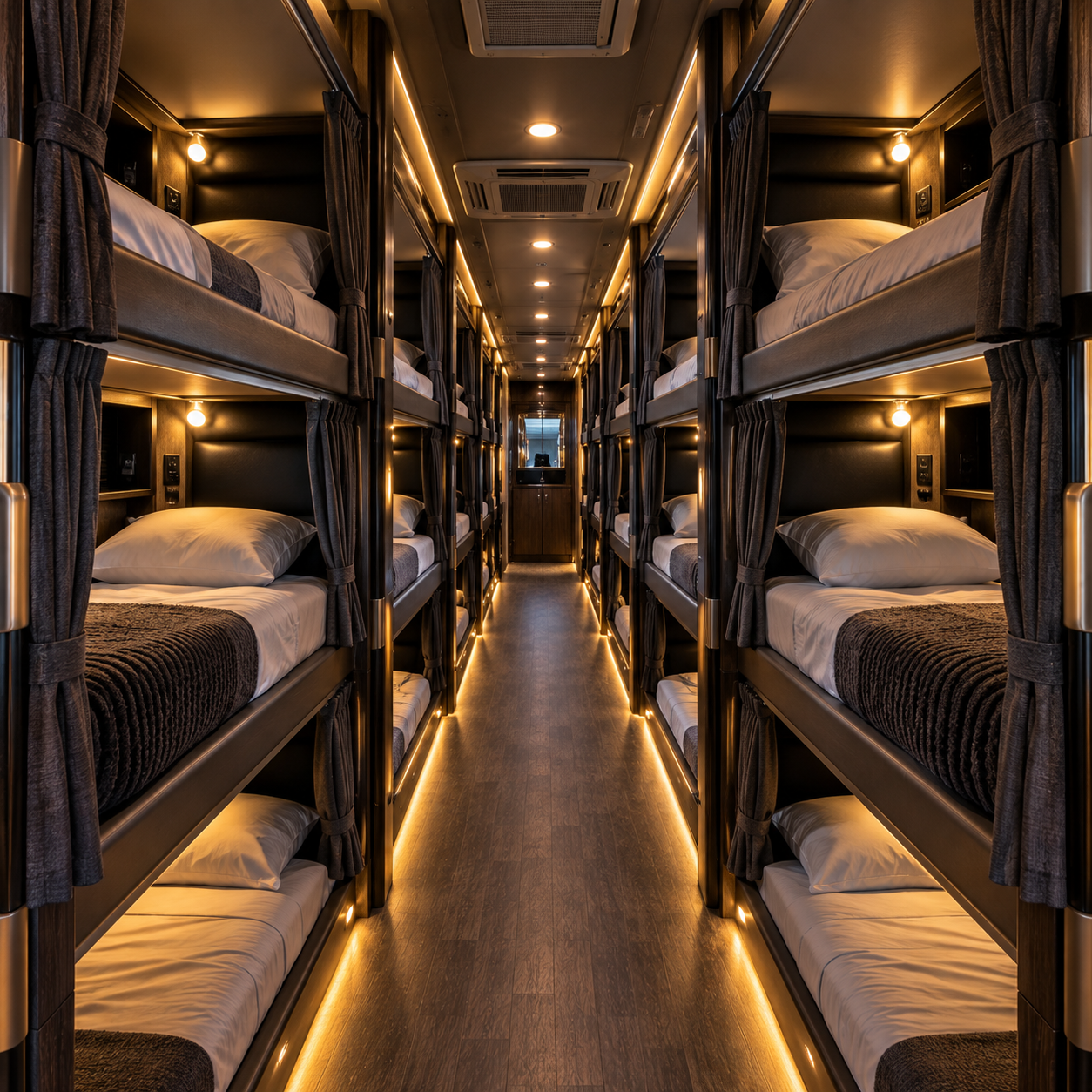
Configuration is where real differences appear, and they cut across the naming conventions rather than following them.
Single-deck, 12 bunks. The North American standard. Six bunks per side, split front and back, three stacked high in each column. Four to eight passengers typically occupy it, with spare bunks used for luggage.
Single-deck, condo bunks. Eight bunks total, two high instead of three, giving noticeably more headroom per berth. Common on artist coaches and small crews.
Single-deck, 14 bunks. A rear bed kit replaces part of the back lounge. Adds capacity at the cost of the rear common area.
Double-deck, 16 bunks. More common in Europe, built on double-deck coach shells. Rare in US fleets because of bridge clearance and weight distribution.
Star configuration. The rear third becomes a private bedroom with its own bathroom, reducing total berths but adding a genuinely separate room.
Deck count is the only structural difference in that list. Everything else is interior joinery. A 16-berth European nightliner and a 12-bunk American entertainer coach are different builds. A “tour bus” and a “sleeper bus” from the same US operator are usually the same vehicle with two invoices printed differently.
The interior specification all three share
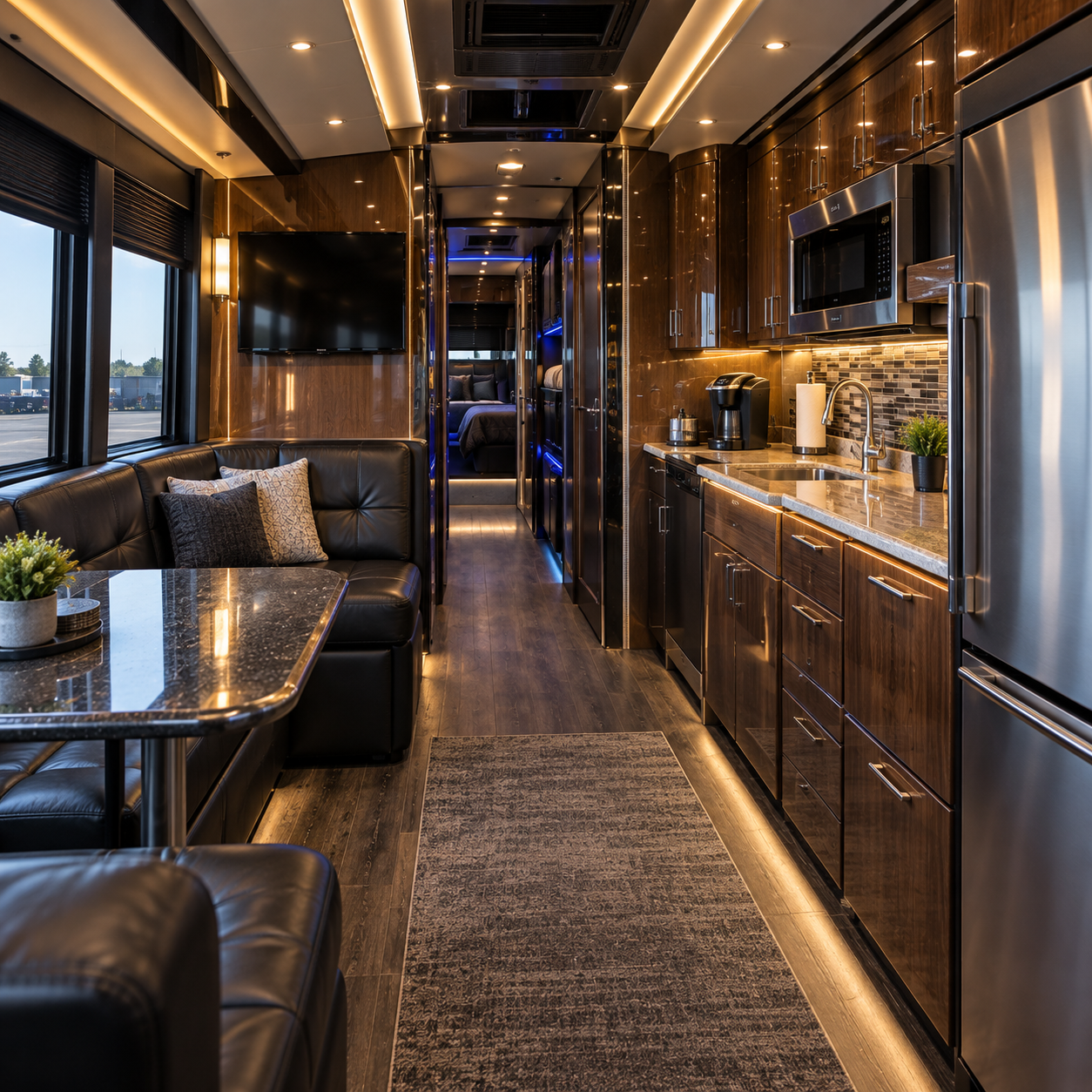
Interiors follow a fixed template because touring crews need the same things regardless of what the vehicle is called. Every genuine sleeper carries a galley with refrigeration, microwave, sink, and coffee equipment. Front lounges seat six to eight for daytime travel. Rear lounges function as the crew’s living room, with television, gaming, and seating. A bathroom sits mid-coach, and most units add a shower.
Windows are frequently blacked out or mirrored, which lets passengers see out while preventing anyone outside from seeing in. That single detail explains why the same shell is priced differently to a charter client: privacy glass, bunk curtains, individual bunk lighting, and per-bunk climate control are entertainer specifications, not passenger-coach specifications.
Power and connectivity complete the package. Generators run house systems overnight while the engine is off, and satellite or cellular connectivity is quoted as a daily line item, generally around $60 per day. Gear does not ride inside with the crew, which is why most tours book backline trucking alongside the coach rather than loading amplifiers into the bays.
Who books each term
Booking language predicts the client type more reliably than the vehicle spec does.
Musicians and management say entertainer coach or band bus, and expect 12 bunks, a driver, and a trailer option.
Comedians and speakers say tour bus, usually want fewer berths, and prioritize a private rear space.
Political campaigns say bus or coach, need an exterior wrap, and route through many short hops rather than long overnight drives.
Film and television production say sleeper or crew bus, and book by the week around a fixed base location.
Corporate and executive clients say luxury coach, and value the lounges more than the bunks.
Each of those groups books the same hardware through tour bus rental contracts that differ mainly in duration and routing. The word on the purchase order rarely changes the unit that shows up.
What the naming difference does to your budget
Budgets change when a quote is built against the wrong vehicle category, and the gap is large enough to sink a tour P&L. A seated charter coach carrying 56 passengers prices at roughly $1,100 to $1,900 per day or $4.00 to $6.20 per mile. A converted sleeper prices at $2,200 to $2,900 per day once the coach, the driver, and the fuel are added together.
Inside that sleeper figure, US operators separate three primary lines. The coach itself runs $800 to $1,400 per day depending on year, slide-out count, and trim. Driver base pay runs $350 to $500 per day, plus roughly $55 daily per diem, an extra $75 a day when a trailer is on the hitch, and a nightly hotel room. Fuel is calculated from the itinerary rather than estimated.
Smaller regional operators running older non-slide units quote lower, sometimes $350 to $750 per day for a 9 to 12 bunk coach, with the driver billed separately. Those numbers are real, but they buy an older chassis with different reliability exposure. Ask what year the coach was built and how many miles it has covered before you compare that rate to a premium quote.
The rule holds across every label: the word on the invoice does not move the price, but the vehicle category behind it moves it by a thousand dollars a day.
Nightliner versus North American entertainer coach
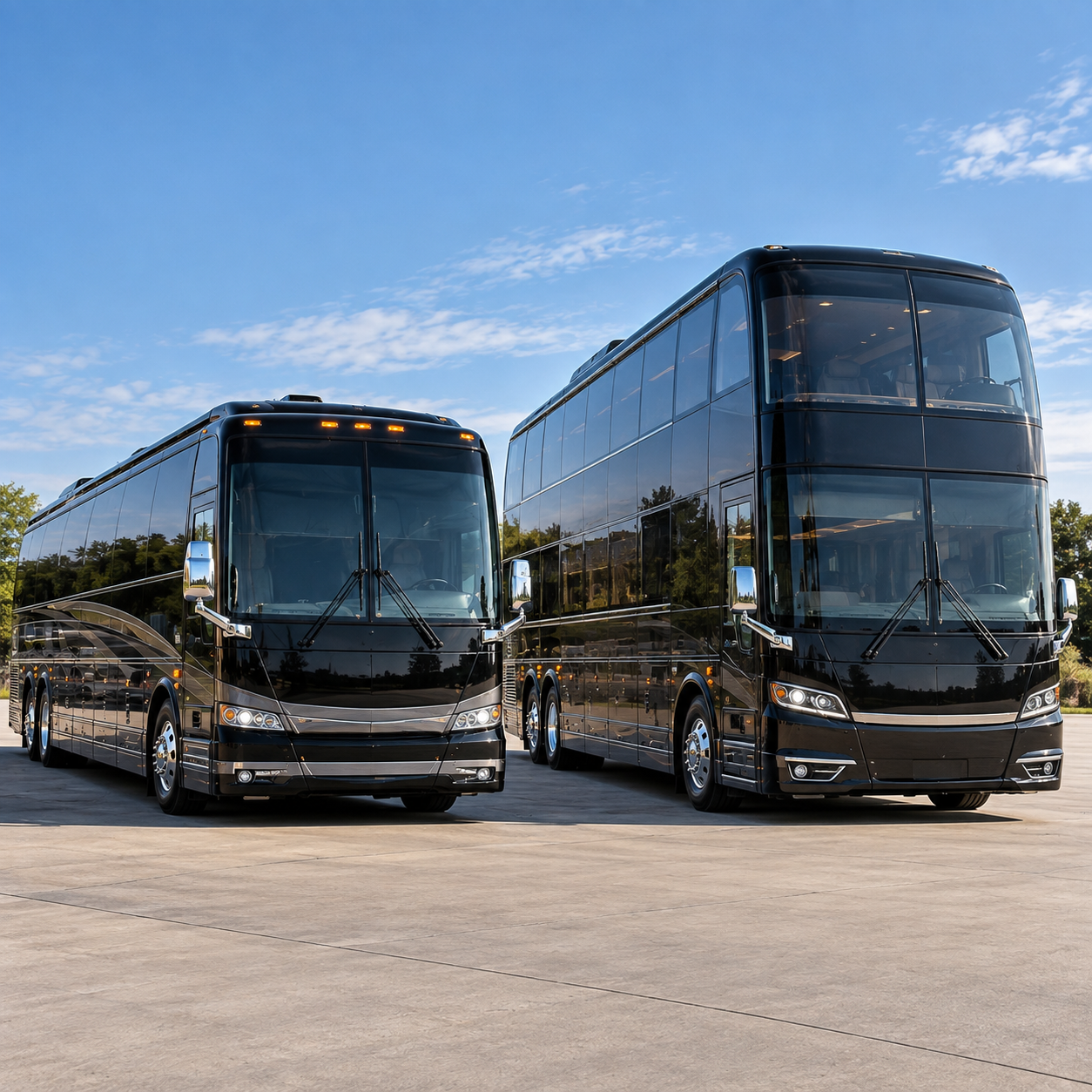
European nightliners and US entertainer coaches diverge on three measurable points, and mixing them up on an international routing creates genuine problems.
Capacity comes first. European builds carry 8 to 18 passengers and reach the top of that range using double-deck shells. American builds top out at 14 berths on a single deck without sacrificing the rear lounge.
Regulation comes second. European drivers work to EU tachograph rules; American drivers work to FMCSA hours of service, with electronic logging devices recording duty status. The two systems produce different maximum daily mileage, which changes how far apart consecutive show cities can sit.
Cost structure comes third. European nightliner pricing is usually quoted as an inclusive weekly rate. American pricing separates the coach, the driver, and the fuel into three lines, then adds tolls, permits, and services. That difference is the single biggest source of budget surprises when a manager compares a UK quote to a US quote side by side.
What to say when you request a quote
Quote requests move faster when you skip the label and give the operator the five specifications that actually price the job: pickup city, drop city, dates, bunk count needed, and whether you are pulling a trailer.
An operator quoting a national run needs the full itinerary before committing a number, because deadhead mileage from the fleet’s home base to your pickup city is a real cost line. Knights Coaches positions its fleet in Nashville, Tennessee and the Mid-Atlantic, and covers pickup and drop-off in any major US city across the 48 contiguous states. A Nashville pickup carries almost no deadhead. A Seattle pickup carries several days of it.
Duration decides the contract type. Single dates and short runs price as rentals. Runs from one month to twelve months price as long-term coach leasing, which reduces the daily rate and locks a specific unit to your tour. Tell the operator which one you need in the first email and the proposal arrives with the right structure attached.
Is an entertainer coach the same thing as a tour bus?
Yes. Entertainer coach, tour bus, and sleeper bus name the same vehicle class, a full-size motorcoach converted with bunks and living space. The terms are regional and commercial rather than technical. Only the double-deck European nightliner represents a genuinely different build.
What is a nightliner?
A nightliner is the European trade name for a sleeper coach used to move bands and crew overnight between venues. Nightliner builds commonly carry up to 18 berths across two decks, while North American coaches stay single-deck.
How many bunks does a standard entertainer coach have?
A standard North American entertainer coach carries 12 bunks, arranged as six per side in four quadrants of three stacked berths. Configurations run from 6 to 16 depending on the conversion, and a rear bed kit takes a 12-bunk coach to 14.
How big is a tour bus bunk?
A standard bunk measures 29 inches wide, 74 inches long, and 35 inches high. Condo bunks stack two high instead of three, which raises the individual berth height substantially and reduces the coach to eight berths.
Which terms mean the same as sleeper bus?
The interchangeable terms are entertainer coach, tour bus, band bus, crew bus, entertainer bus, sleeper coach, and nightliner. Band bus and crew bus usually signal who is riding rather than how the coach is built, and nightliner signals a European supplier.
Does an entertainer coach come with a driver?
Yes. Entertainer coaches are commercial passenger vehicles and legally require a CDL holder employed by the carrier. Knights Coaches supplies a Class A or B driver with a minimum of three years on entertainer coaches, current DOT medical certification, and clearinghouse enrollment.
Can I put my gear inside the coach?
No. Backline, production, and merchandise travel in a trailer or box truck, not in the coach bays. Bays hold personal luggage and small cases. Trailers pulled behind a 45-foot coach are typically capped at 10,000 pounds gross, which allows roughly 5,500 pounds of gear.
Is a sleeper bus more expensive than a charter bus?
Yes. A full-size charter coach runs roughly $1,100 to $1,900 per day, while an entertainer coach runs $2,200 to $2,900 per day all in. The gap covers the conversion, the specialist driver, the generator, and the overnight capability that replaces hotel rooms.
How far can a tour bus drive in one night?
A driver can legally drive 10 hours after 8 consecutive hours off duty, with a 15-hour on-duty ceiling. At interstate speeds that produces roughly 450 to 550 miles. Beyond that, operators bill an overdrive or add a second driver.
Do entertainer coaches have showers?
Most do. Onboard showers are standard on mid-tier and upper-tier coaches and absent on some budget non-slide units. Confirm it in writing, since a shower changes the venue-facility requirement on the day sheet.
What fuel economy should I budget for?
Budget 6 MPG without a trailer and 5 MPG with one. Calculate the fuel line as total tour miles divided by MPG, multiplied by the diesel price per gallon. A 14,800-mile run at 6 MPG and $5.50 per gallon works out to roughly $13,500 in fuel.
Which term should I use when I call an operator?
Use entertainer coach with any US operator. It is the term the industry prices against, it excludes seated charter units automatically, and it signals that you need bunks, a galley, and overnight capability rather than day transport.
The short version
Entertainer coach, tour bus, and sleeper bus describe one class of converted motorcoach: bunks, galley, front and rear lounges, bathroom, and a commercially licensed driver. The names split by geography, with nightliner sitting on the European side and its double-deck 16-berth builds forming the only genuine structural difference. Interiors share the same template of 12 standard bunks at 29 by 74 by 35 inches, privacy glass, generator power, and separate trucking for gear. Client type predicts the vocabulary more than the vehicle does, and quote accuracy depends on itinerary, bunk count, and trailer status rather than on which word you use.
Knights Coaches runs Prevost H3-45 and X3-45 coaches with CDL-certified drivers and 24/7 dispatch across 48 states. Call 1-855-838-5542 or request a quote for entertainer coach rental and dispatch will reply within the hour.