
How Tour Bus Drivers Are Paid: Day Rates, Overdrives, Per Diem, and Tips
Tour bus driver pay is the combination of base wages and trip-based extras that compensate a CDL passenger driver for operating a motorcoach or entertainer coach. Charter and transit drivers usually earn hourly wages. Entertainer coach drivers, who move musicians and crews on multi-week tours, usually earn a daily rate…
Knights Coaches
Knights Coaches
- Published
- Reading time
- 9 min read
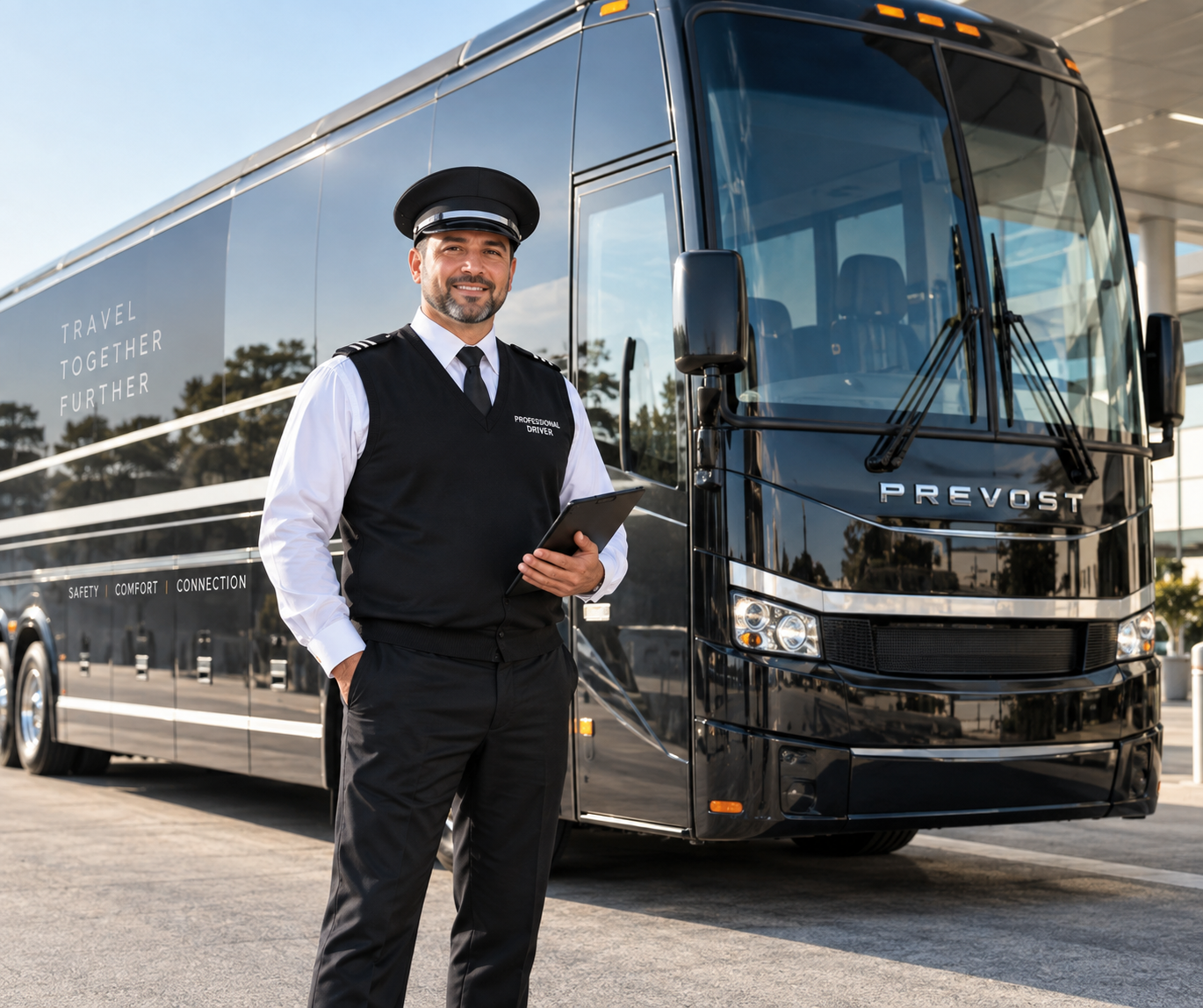
Tour bus driver pay is the combination of base wages and trip-based extras that compensate a CDL passenger driver for operating a motorcoach or entertainer coach. Charter and transit drivers usually earn hourly wages. Entertainer coach drivers, who move musicians and crews on multi-week tours, usually earn a daily rate plus overdrives, per diem, and tips.
The numbers vary by segment. The U.S. Bureau of Labor Statistics (BLS) reports a median annual wage of $57,440 for transit and intercity bus drivers in May 2024, with the lowest 10 percent under $38,250 and the top 10 percent above $82,640. Entertainer coach work sits in a different bracket: one coach company's published 2023 estimator listed driver day rates of $325 to $450, depending on whether the bus carries crew or the artist and whether it pulls a trailer.
Several related entities shape the paycheck. The Fair Labor Standards Act (FLSA) and its Motor Carrier Act exemption decide overtime eligibility. The Internal Revenue Service (IRS) sets per diem rules for transportation workers. FMCSA hours of service limits cap how many miles a driver can legally cover per shift, which is why overdrives exist.
This guide explains each pay model, how day rates and overdrives work on entertainer coaches, what per diem and hotel rooms cover, how tips work, what BLS data shows for charter drivers, how overtime and contractor status apply, and what pushes experienced drivers toward the top of the range.
Pay Models Across the Motorcoach Industry
Pay models split by the kind of work:
Hourly wages dominate transit agencies, airport shuttles, and many charter companies. Drivers get paid for clock time, sometimes with a daily minimum.
Day rates dominate entertainer coach touring. The driver earns a flat amount for each calendar day on the road, whether the bus moved or sat parked for a day off.
Per-mile or trip rates show up in some charter work, where a set amount covers a round trip to a stadium or casino.
Salaried positions are rare and usually limited to lead drivers or driver-trainers at larger companies.
Most drivers see a mix. A charter driver might earn hourly wages plus a per diem on overnight trips. An entertainer coach driver earns a day rate plus overdrives, per diem, and an end-of-tour tip.
Day Rates on Entertainer Coaches
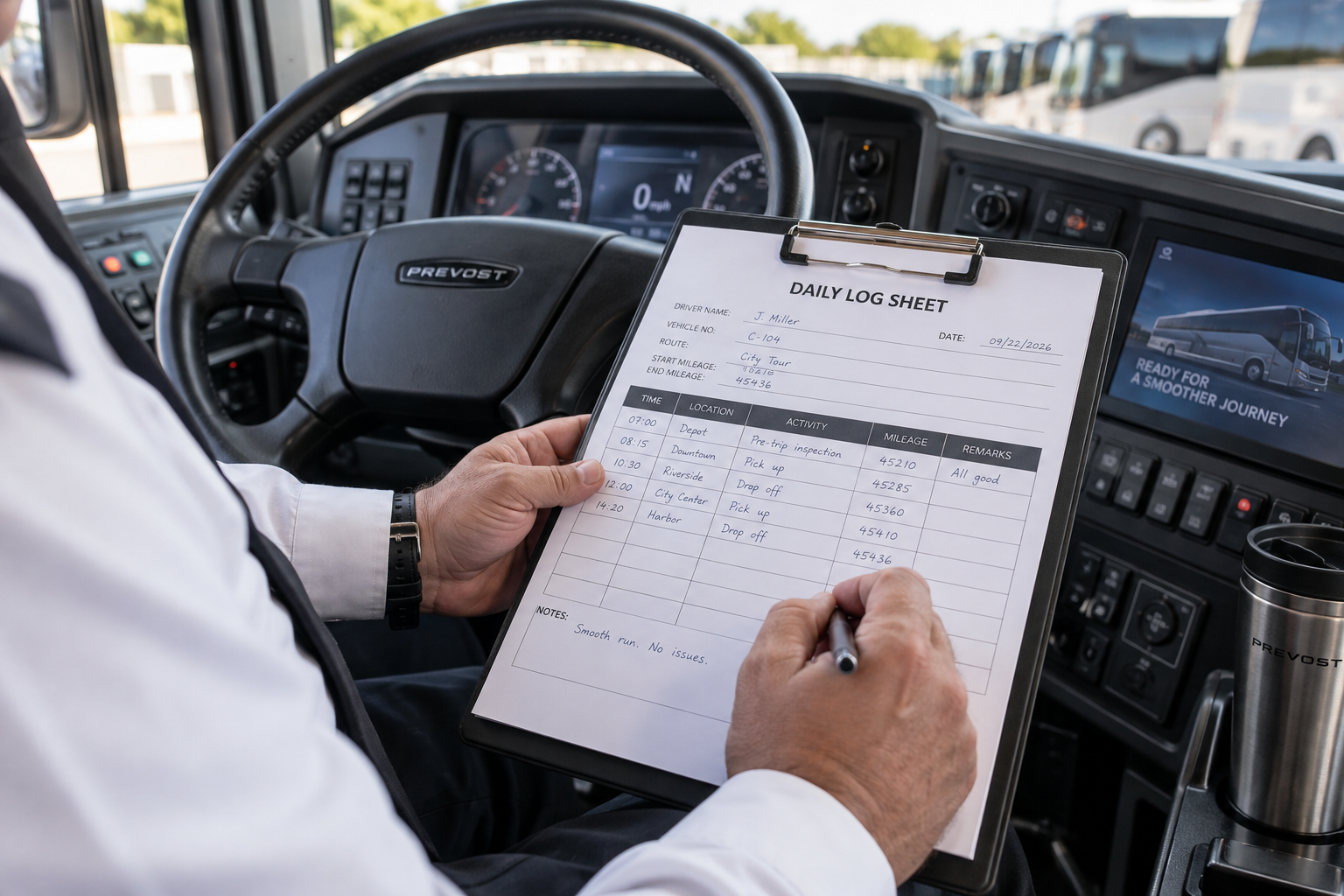
Day rates reflect the coach and the passengers. Crew buses and band buses sit at the lower end. Artist buses, where the headliner rides, pay more because they demand more discretion, cleaner interiors, and tighter schedules.
A trailer adds to the rate. Pulling a gear trailer changes the CDL class needed, adds coupling checks, and makes backing into tight loading docks harder. Specialty bunk layouts, like a rear bed kit or 14 bunks, sometimes add another bump.
The day rate covers driving plus the daily upkeep of the coach. Drivers keep the interior clean, dump holding tanks, check fluids, and service the generator. On off days, the rate still applies because the driver stays with the tour.
Overdrives

Overdrives pay a driver for covering more ground in one day than a normal shift allows. In entertainer coach practice, one overdrive usually equals one full day rate. So a driver earning $400 a day who runs an overdrive that day earns $800.
Hours of service rules drive the whole concept. A passenger driver can drive 10 hours after 8 off. When a tour routes Chicago to Denver overnight (roughly 1,000 miles), a single driver can't legally cover it in one shift. The coach either adds a second driver, stops for a layover, or splits the trip with a split sleeper period, and the extra driving time gets billed as overdrives.
Tour managers see overdrives on the coach invoice. Drivers see them on the paycheck. Legal overdrives never mean breaking the log; they mean more total driving spread across legal rest.
Per Diem
Per diem is a daily allowance for meals and incidentals while away from home. Entertainer coach drivers usually receive it in cash or on the invoice, separate from the day rate, and the amount varies by company and tour budget.
The IRS publishes a special meals and incidentals rate for transportation industry workers, which employers can use to pay per diem without treating it as taxable wages. Per diem above that rate, or paid to contractors, follows different tax rules. Drivers should keep receipts or itineraries in case of a question.
Driver Hotel Rooms

Hotel rooms aren't pay, but they matter to every driver. Entertainer coach drivers typically drive overnight while the band sleeps, then need a quiet room during the day. Production budgets almost always include a driver day room at or near each venue.
That room isn't a perk. It's how the driver gets 8 hours of genuine rest before the next overnight drive. Tours that skip it force the driver into the coach's berth at a noisy venue, which rarely produces real sleep.
Weekly Services and Extras
Weekly services cover recurring upkeep. Coach companies often bill tours for generator servicing, interior deep cleans, and exterior washes on a set schedule. Some of that flows to the driver when the driver performs the work, and some goes to outside vendors.
Other extras include parking fees, fuel, tolls, and dump station charges. Those usually pass through to the client at cost, but the driver handles and documents them on the road.
How Driver Pay Appears on a Tour Invoice
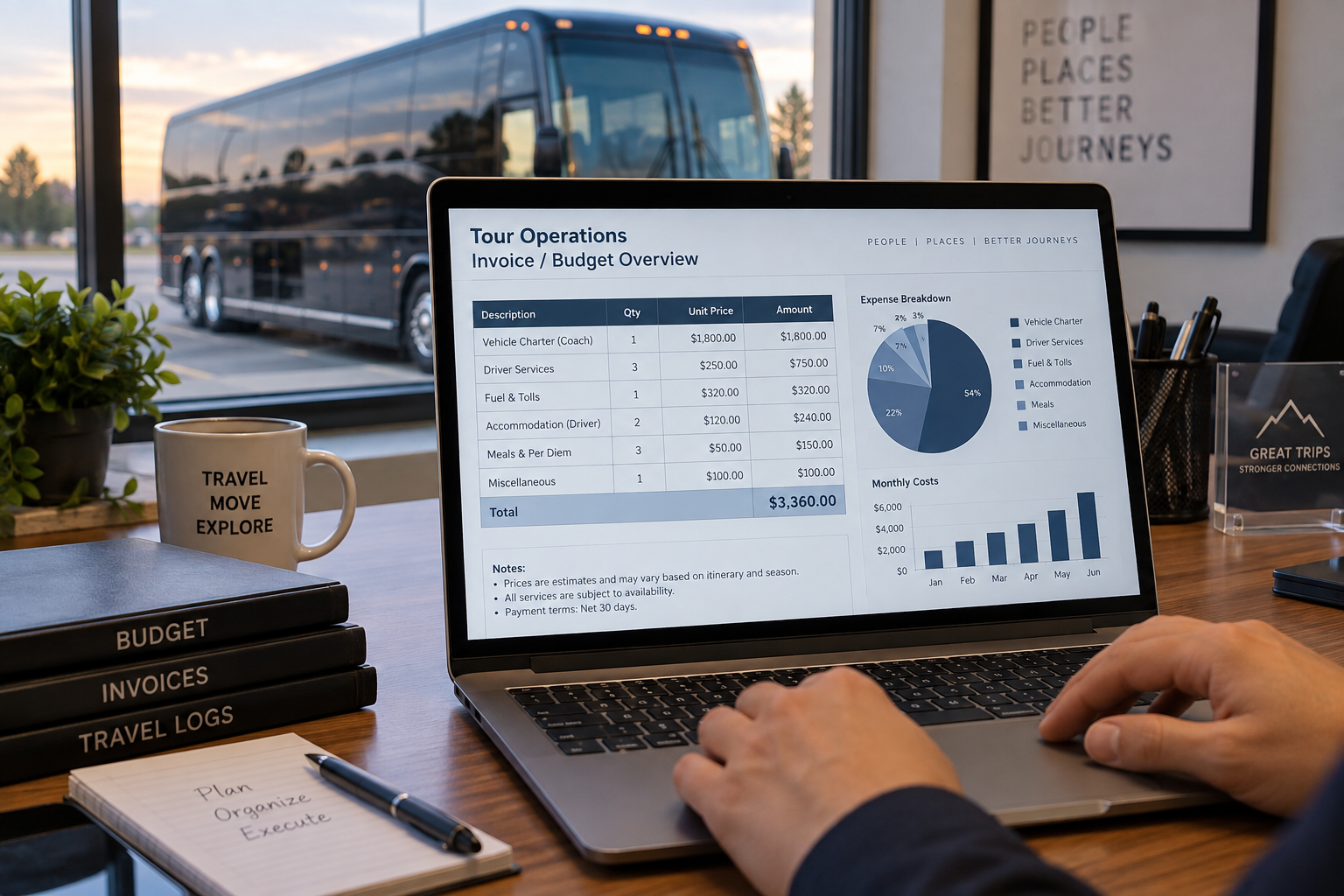
Coach invoices usually separate the coach lease from driver costs. Tour managers typically see the daily coach rate, the driver day rate, overdrives, per diem, hotel rooms, weekly services, fuel, and generator hours as distinct lines. That breakdown helps production accountants track budgets against the tour routing.
Tips and End-of-Tour Buyouts
Tips make up a real share of income. On charter trips, groups often collect a per-person amount for each day of travel and hand it to the driver on the final day. On entertainer coach tours, bands and management commonly tip the driver at the end of the run, and headline tours may tip well above charter norms.
Tips aren't guaranteed, and they aren't part of the carrier's rate. They reward the stuff that doesn't show on an invoice: a quiet overnight drive, a spotless lounge, and a driver who knows the back entrance at every arena.
Hourly Pay in Charter and Transit Work
Charter and transit pay follows BLS data more closely. BLS figures from May 2023 put the mean hourly wage in the charter bus industry at $22.43, which works out to about $46,660 a year. Local government transit agencies pay more on average, and states like Washington and California sit near the top.
Charter drivers often see seasonal swings. Spring and fall bring school trips, sports teams, and tour groups. Winter slows down outside ski and holiday routes. That seasonality pushes some charter drivers toward entertainer coach work, where tours run year-round.
Overtime and the Motor Carrier Act Exemption
Overtime rules surprise new drivers. Under FLSA Section 13(b)(1), employees whose duties affect the safety of vehicles regulated by the Department of Transportation are generally exempt from federal overtime pay. Interstate motorcoach drivers usually fall inside that exemption.
State law can differ. Some states require overtime or daily minimums for certain passenger drivers even when federal law doesn't. Transit agencies with union contracts often pay overtime by agreement regardless of the exemption.
Employee or Independent Contractor
Worker classification varies across coach companies. Some hire drivers as W-2 employees with withholding and benefits. Others pay drivers as independent contractors on a 1099, particularly in entertainer coach touring where drivers move between companies tour by tour.
The difference affects taxes, insurance, and benefits. Contractors pay self-employment tax and handle their own retirement and health coverage. The Department of Labor and IRS apply their own tests to decide which label fits.
What Pushes Pay Higher
Experience moves the needle most. Career interviews with veteran entertainer coach drivers put earnings around $60,000 to $80,000 after three to four years, with a small group of top drivers clearing six figures. Several other factors add up:
Artist bus assignments that pay more than crew buses.
Trailer and Class A work that adds to the daily rate.
Clean inspection history that keeps a driver on the call list.
Industry reputation that gets drivers requested by name.
Knights Coaches, for example, requires at least three years of entertainer coach experience from its Class A or B drivers. That standard keeps experienced drivers on its Prevost fleet and gives tour managers predictable service, which they can review on the Knights Coaches.
How much do tour bus drivers make per day?
Entertainer coach drivers commonly earn $325 to $450 per day based on published 2023 rates, plus overdrives, per diem, and tips. Charter drivers are usually paid hourly instead.
What is an overdrive for a tour bus driver?
An overdrive is extra pay, usually equal to one day rate, for driving beyond a single legal shift in one day. It keeps long jumps legal through extra drivers or rest periods.
Do tour bus drivers get per diem?
Yes. Most tour and charter drivers get a daily meal and incidentals allowance on overnight work, separate from wages.
Are tour bus drivers paid hourly or by the day?
Entertainer coach drivers are usually paid by the day, while charter and transit drivers are usually paid hourly. Some charter jobs use trip rates.
Do bus drivers get overtime pay?
Usually no under federal law. Interstate coach drivers generally fall under the FLSA Motor Carrier Act exemption, though some states and union contracts require overtime.
How much should you tip a tour bus driver?
Charter groups often collect a per-person amount for each travel day. Band tours usually tip at the end of the run, with amounts set by the tour.
What is the median salary for intercity bus drivers?
The BLS reports a median of $57,440 per year for transit and intercity bus drivers as of May 2024.
Which pays more, entertainer coach or charter driving?
Entertainer coach driving usually pays more for experienced drivers, thanks to day rates and overdrives. Charter work offers more predictable schedules and easier entry.
Who pays for the tour bus driver's hotel room?
The tour or client usually pays for the driver's day room. It's standard in entertainer coach contracts.
Are tour bus drivers employees or contractors?
Both setups exist. Many charter drivers are W-2 employees, while many entertainer coach drivers work as 1099 contractors moving between companies.
What makes a tour bus driver earn more?
Experience, artist bus assignments, trailer work, and a clean record push pay higher. Reputation leads to repeat requests from tour managers.
Does a tour bus driver get paid on days off?
Yes, usually. On entertainer coach tours, the day rate applies to every calendar day the driver stays with the tour, including off days with no driving.
Conclusion
Tour bus driver pay combines base wages with trip extras, and the mix depends on segment. Hourly, daily, trip, and salaried pay models exist across the motorcoach industry, while entertainer coach day rates scale with the bus type and trailer. Overdrives cover long legal jumps, per diem covers meals, and driver day rooms protect rest. Weekly services and tips round things out. BLS data anchors charter and transit pay, the Motor Carrier Act exemption shapes overtime, and worker classification changes taxes. Experience and reputation pull earnings toward the top of the range.
Planning a tour and want an experienced driver included in the rate? Get pricing from Knights Coaches for a Prevost coach with a CDL driver.