
Overnight Drives and Tour Routing: How Bus Tours Plan Legal, Restful Jumps
Tour routing is the order of cities, dates, and travel days that a booking agent and tour manager build for a run of shows. On a bus tour, routing revolves around the overnight drive: the coach leaves after load-out, the touring party sleeps in their bunks, and the bus arrives at the next venue by morning. A good route…
Knights Coaches
Knights Coaches
- Published
- Reading time
- 9 min read

Tour routing is the order of cities, dates, and travel days that a booking agent and tour manager build for a run of shows. On a bus tour, routing revolves around the overnight drive: the coach leaves after load-out, the touring party sleeps in their bunks, and the bus arrives at the next venue by morning. A good route turns that pattern into a repeatable rhythm. A bad one creates exhausted crews and illegal logs.
The math is simple and strict. A passenger-carrying driver may drive 10 hours after 8 consecutive hours off duty, under Federal Motor Carrier Safety Administration (FMCSA) rules. At realistic averages of 50 to 55 mph including stops, one driver covers roughly 500 to 550 miles in a legal shift. Anything longer needs a second driver, a layover, or a day off.
Routing connects several parties. Booking agents place shows and negotiate dates with promoters. Promoters and venues set radius clauses and hold dates. Coach companies price overdrives and relief drivers. Drivers and dispatch check each jump against the weekly 60/70-hour limit.
This guide covers how routing gets built, the drive-time math, jump types, timing overnight drives, second drivers, days off, weather and seasonal routing, border crossings, fuel stops, bus-aware navigation, and how the route reaches the touring party.
How Routing Gets Built
Routing starts with the booking agent. The agent pitches dates to promoters in each market, works around venue availability and radius clauses, and assembles a string of confirmed shows. Radius clauses bar an artist from playing within a set distance of a show for a period of time, which can force awkward jumps.
The tour manager reviews the routing against travel reality. That review should happen before dates go on sale, not after. Once tickets are sold, fixing a 900-mile overnight jump gets expensive.
The Drive-Time Math
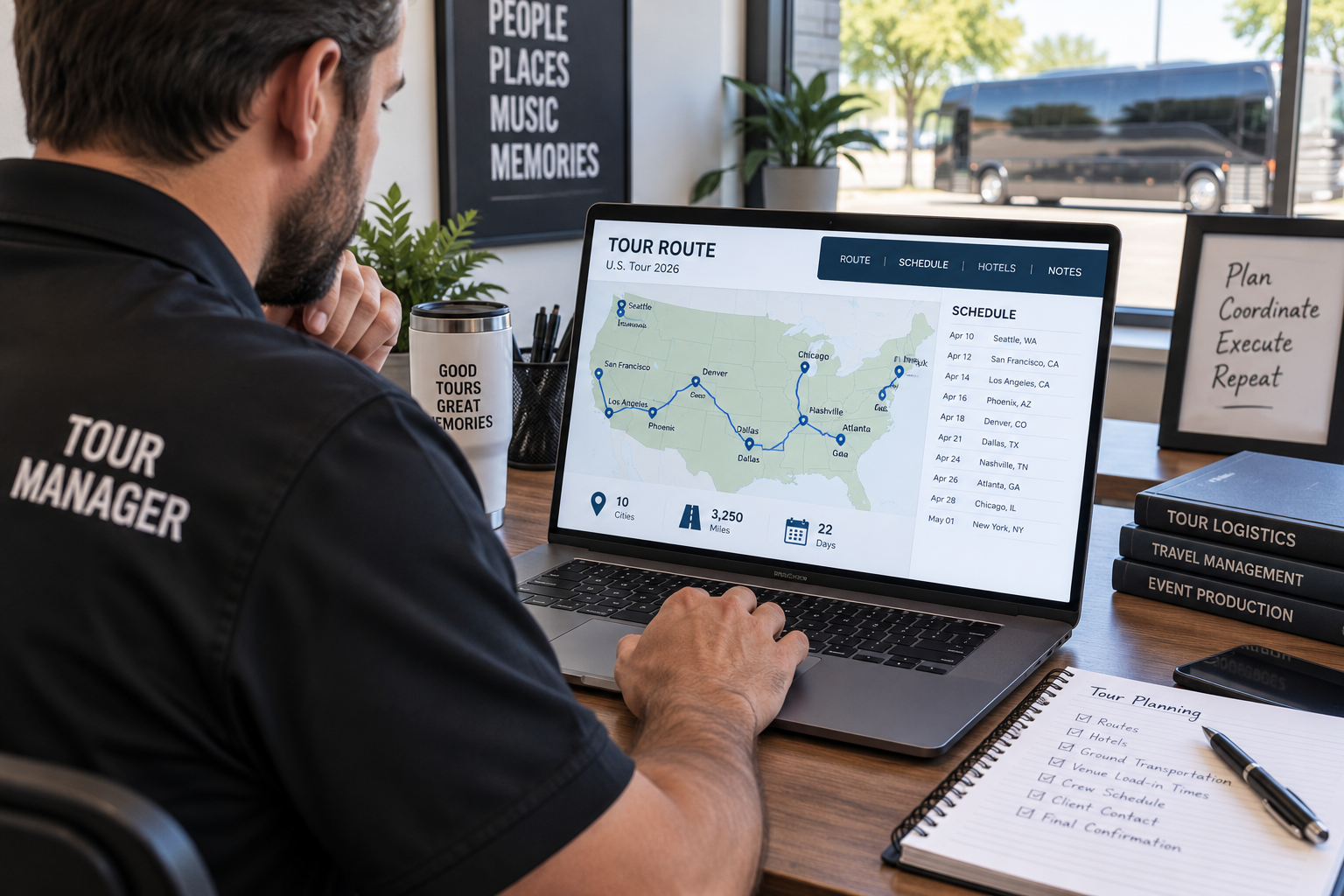
Drive-time math converts miles into legal hours. Take the mileage, divide by a realistic average speed, and compare against the 10-hour limit with a buffer.
Consider two examples from Nashville:
Nashville to Atlanta runs about 250 miles, roughly 4 to 5 hours. It fits easily with time to spare.
Nashville to Dallas runs about 665 miles, roughly 12 to 13 hours. It doesn't fit in one legal shift for one driver.
Use 50 mph for routes through cities or mountains and 55 mph for open interstate. Then leave an hour of cushion for traffic, fuel, and weather.
Jump Types
Tour managers sort overnight drives into rough categories:
Short jumps under about 300 miles leave time for a late bus call or an early hotel check-in.
Standard jumps of 300 to 500 miles fill most of a legal shift and form the backbone of efficient routing.
Long jumps beyond about 550 miles need a second driver, a layover, or a travel day.
A healthy tour mixes short and standard jumps with occasional long ones placed next to days off.
Timing the Overnight Drive
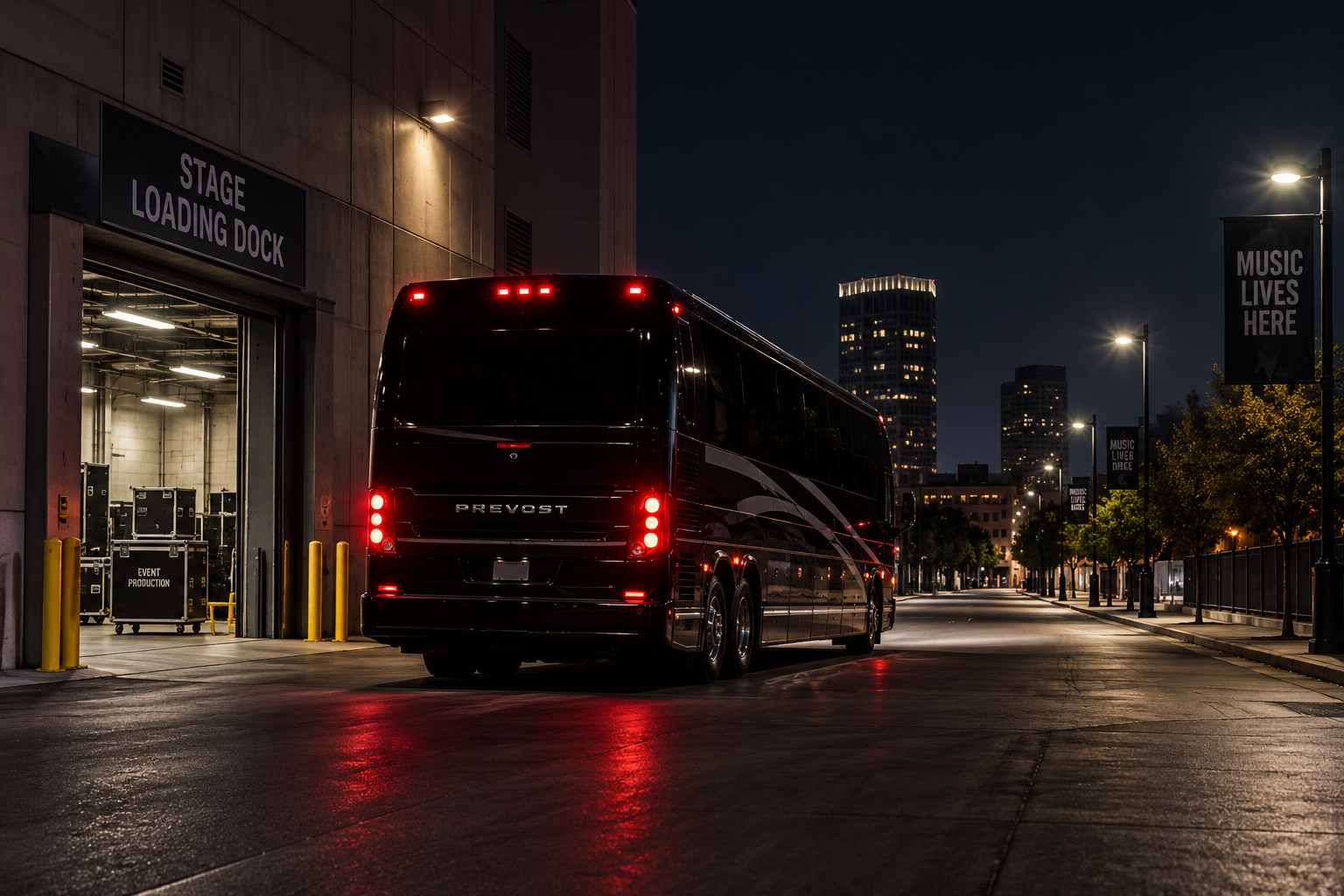
Timing starts at load-out. The bus call typically falls between midnight and 2:00 AM, once gear is packed and everyone is aboard. The driver, who has been off duty in a hotel day room since arriving that morning, starts with a full 10 hours of driving available.
Arrival lands in the morning. The driver parks, logs off duty, and heads to his day room. The touring party sleeps a few more hours in their bunks or heads into the venue. This loop repeats night after night, and it only works if the driver gets real rest during the day.
Second Drivers and Relief Drivers

Second drivers turn long jumps into legal ones. Two drivers alternate, each staying within his own limits, so the coach can run 16 to 20 hours straight. Coach companies bill the second driver's day rate plus travel costs.
Relief drivers solve a different problem. When the primary driver runs short on weekly hours, the coach company flies or drives in a replacement for a few days. Dispatch should flag the need well before the driver hits the wall.
Days Off and Weekly Hours
Days off protect both people and logs. Passenger drivers work under a 60-hour limit in 7 days or 70 hours in 8 days, with no 34-hour restart. Hours come back only as old days roll off the rolling window.
Placing a day off every five or six shows keeps drivers inside those limits without emergency relief. It also gives the touring party a hotel night, laundry, and a break from bus life.
Weather and Seasonal Routing
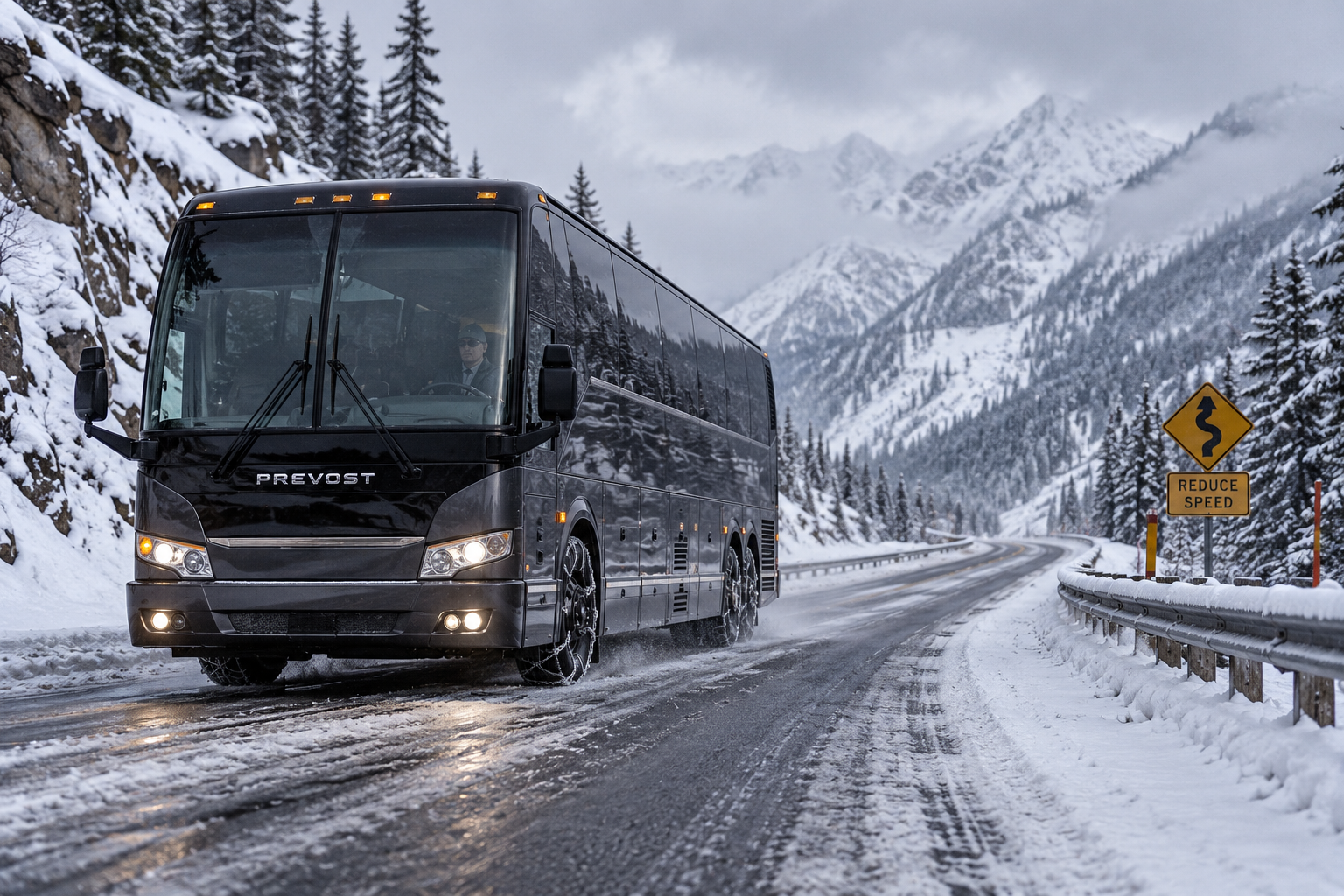
Weather changes routing more than any other variable. Winter tours in the Mountain West face passes like I-80 over Donner Summit and I-70 near the Eisenhower Tunnel, where chain laws and closures can stop a coach for hours. Many winter tours shift south or add buffer days.
Federal rules allow an extra 2 hours of driving and on-duty time when unforeseen adverse conditions hit. But a forecasted storm doesn't qualify. Good routing plans around known seasonal risks rather than counting on the exception.
Border Crossings
Border crossings add paperwork. Tours entering Canada need valid passports for everyone, and anyone with a criminal record should check admissibility with Canadian authorities well ahead of time. Gear crossing the border often travels under an ATA Carnet or a detailed equipment list.
The driver needs his own documents in order, and the coach company must be set up for cross-border operation. Build extra time into border days, since inspections of a full coach can take hours.
Fuel and Stop Planning
Fuel stops fit into the overnight rhythm. A Prevost H3-45 carries a 222-gallon fuel tank, enough to cover a standard jump without refueling in most cases. Drivers often fuel at truck stops with bus-friendly lanes before or after a drive.
Stops also serve people. A planned stop at a large truck stop gives the touring party real bathrooms, food, and a chance to stretch. Drivers pick locations with easy access for a 45-foot coach.
Bus-Aware Navigation
Consumer map apps don't account for coach height, length, or road restrictions. Drivers use commercial GPS and route knowledge to avoid low clearances, weight-restricted bridges, and roads where buses aren't allowed, like many New York parkways.
Experienced drivers also know which downtown streets make venue approaches impossible and which truck stops have parking for a coach and trailer. That knowledge doesn't appear in any app.
Communicating the Route
The route reaches the touring party through the tour book and daily day sheets. Each day sheet lists the venue address, bus call, drive distance, arrival estimate, parking notes, and hotel details. Tour managers typically send it the evening before.
Clear communication prevents the most common problems: someone missing bus call, confusion about hotel nights, or a crew member booking a flight home from the wrong city.
A Sample Week of Routing
A healthy week of bus routing might look like this:
Monday: Nashville show, then a 250-mile jump to Atlanta.
Tuesday: Atlanta show, then a 245-mile jump to Charlotte via I-85.
Wednesday: Charlotte show, then a 400-mile jump to Washington, D.C.
Thursday: D.C. show, then a 140-mile jump to Philadelphia.
Friday: Philadelphia show, then a 95-mile hop to New York.
Saturday: New York show, then a short move to a hotel for the night.
Sunday: Day off.
Every jump fits inside one legal shift, and the Sunday off day keeps the driver comfortably under the weekly limit.
Routing Red Flags
Some routing patterns cause trouble before the tour even starts:
Back-to-back long jumps that force overdrives several nights in a row.
No days off across two full weeks.
Early load-ins after late shows, leaving no time for the driver to rest.
Mountain passes in winter without buffer days.
Border crossings scheduled on show days.
Catch these during the routing review, while dates can still move.
Routing for Festivals and One-Off Dates
Festival dates and one-off shows break the normal rhythm. Festivals often set strict arrival windows for bus compounds, which may not match the driver's natural arrival time after an overnight drive. One-off private events can sit far off the main route.
Treat these as fixed points and build the surrounding days around them. Sometimes that means an extra hotel night before the festival, or a day off after a long detour. Ask the coach company to price any detour early, so the overdrive or extra day doesn't surprise the settlement.
How Knights Coaches Supports Routing
Knights Coaches checks every tour's routing against driver hours before booking, flags overdrives, and schedules relief drivers when a run needs them. Its 24/7 dispatch tracks weather, road closures, and parking along the route, and its CDL drivers bring at least three years of entertainer coach experience.
Tour managers can send routing for review through the Knights Coaches or check pickup cities on the tour bus rental page.
How far can a tour bus drive overnight?
One driver can cover about 500 to 550 miles in a legal 10-hour shift. Longer jumps need a second driver or a layover.
What is an overdrive on a tour?
An overdrive is extra driving beyond one legal shift in a day, billed separately and handled with added drivers or rest.
When does a tour bus usually leave after a show?
The bus call typically falls between midnight and 2:00 AM, after load-out.
Who plans tour routing?
The booking agent builds routing, and the tour manager checks it against travel reality.
What is a radius clause?
A radius clause bars an artist from playing within a set distance of a show for a period, which can force longer jumps.
Do tour bus drivers get a hotel room?
Yes. Drivers usually get a day room to sleep after the overnight drive.
Are two drivers or a layover better for long jumps?
Two drivers keep the schedule moving, while a layover costs less but uses a day.
How often should a bus tour schedule days off?
Every five or six shows keeps drivers inside weekly limits and gives the crew rest.
Does bad weather let a bus driver drive longer?
Yes, by up to 2 extra hours for unforeseen conditions. Forecasted storms don't qualify.
Can tour buses use any road?
No. Coaches avoid low clearances, restricted bridges, and roads that ban buses, like many New York parkways.
What goes on a tour day sheet?
A day sheet lists the venue, bus call, drive distance, arrival time, parking notes, and hotels.
What does a good week of tour routing look like?
A good week has jumps under about 500 miles and at least one day off, keeping every drive inside one legal shift.
What are the biggest routing red flags?
Watch for back-to-back long jumps, no days off, early load-ins after late shows, and winter passes without buffers.
How should tours route around festival dates?
Treat festivals as fixed points with strict arrival windows, and build hotel nights or days off around them. Ask the coach company to price detours early.
Conclusion
Overnight drives and tour routing work together. Booking agents build the route, and tour managers test it against drive-time math: about 500 to 550 miles per legal shift for one driver. Short, standard, and long jumps each need their own plan, with overnight timing built around load-out and the driver's day room. Second and relief drivers handle long runs, and days off protect the weekly limit. Weather, border crossings, fuel stops, bus-aware navigation, and clear day sheets keep the route on track.
Planning a tour and want the routing checked before dates go on sale? Talk to Knights Coaches about your run.