
How to Sleep in a Tour Bus Bunk: Bunk Sizes, Setup, and Sleep Tips for the Road
A tour bus bunk is a built-in sleeping berth inside an entertainer coach , stacked two or three high along the hallway between the front and rear lounges, with a privacy curtain, reading light, power outlet, and individual air vent. A standard bunk measures roughly 29 inches wide, 74 inches long, and 25 inches high .…
Knights Coaches
Knights Coaches
- Published
- Reading time
- 9 min read
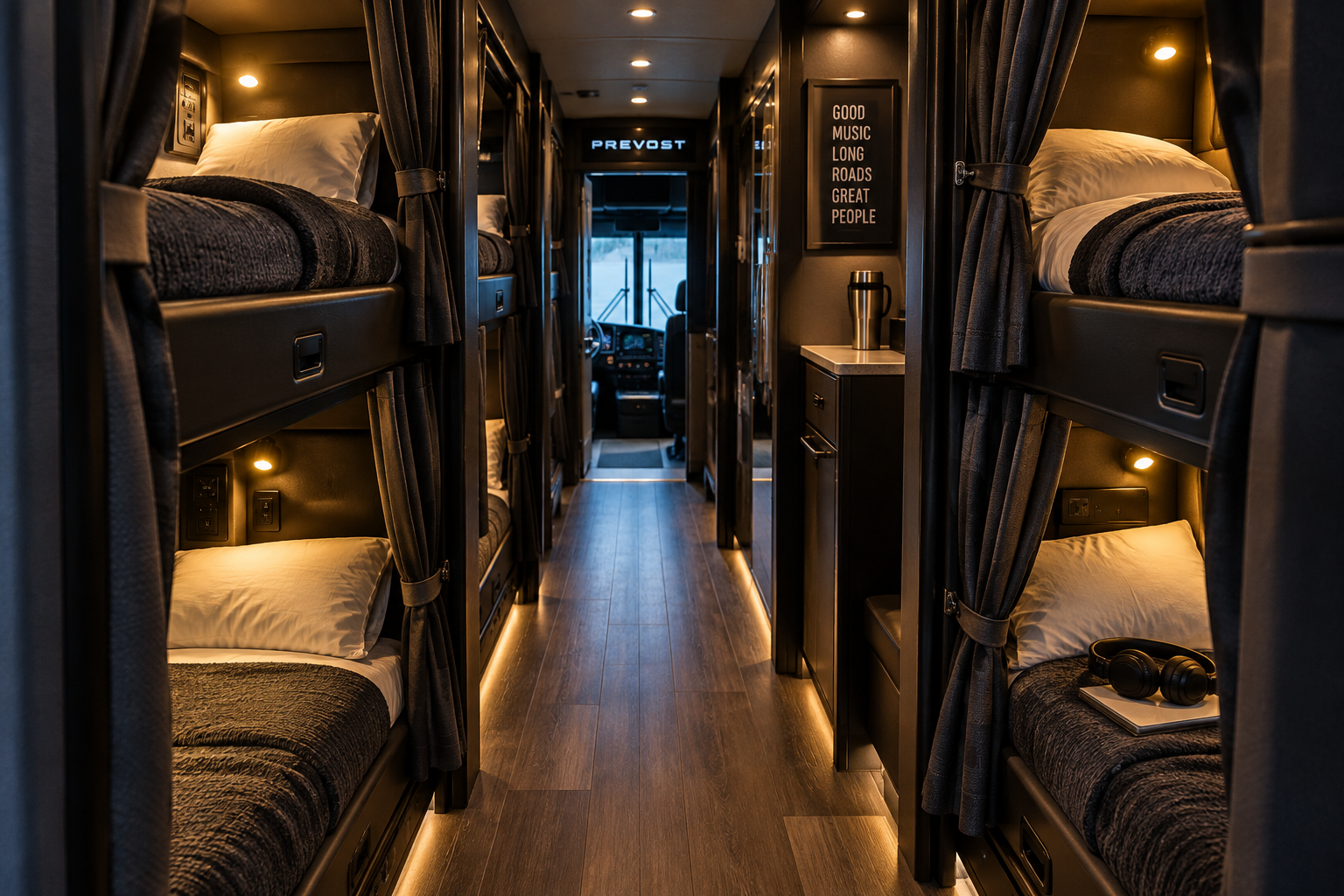
A tour bus bunk is a built-in sleeping berth inside an entertainer coach, stacked two or three high along the hallway between the front and rear lounges, with a privacy curtain, reading light, power outlet, and individual air vent. A standard bunk measures roughly 29 inches wide, 74 inches long, and 25 inches high. Condo bunks, stacked only two high, give about 35 inches of headroom.
Sleeping well in one takes a few adjustments. Veteran crew sleep with feet toward the front of the bus, block light with the curtain and an eye mask, cut road noise with earplugs, and manage temperature with layers and the bunk vent. Most people adapt to the motion within two or three nights.
The bunk ties into the rest of the touring system. Coach layouts from builders using Prevost H3-45 and X3-45 shells set the bunk count, usually 8 to 14. The driver's overnight schedule under federal hours of service rules decides when the bus moves. And the tour manager assigns bunks at the first load.
This guide covers bunk sizes and layouts, how to pick a bunk, sleeping position, bedding, light and noise control, temperature, motion, building a sleep schedule on tour, storage, and bunk safety.
Bunk Sizes and Layouts
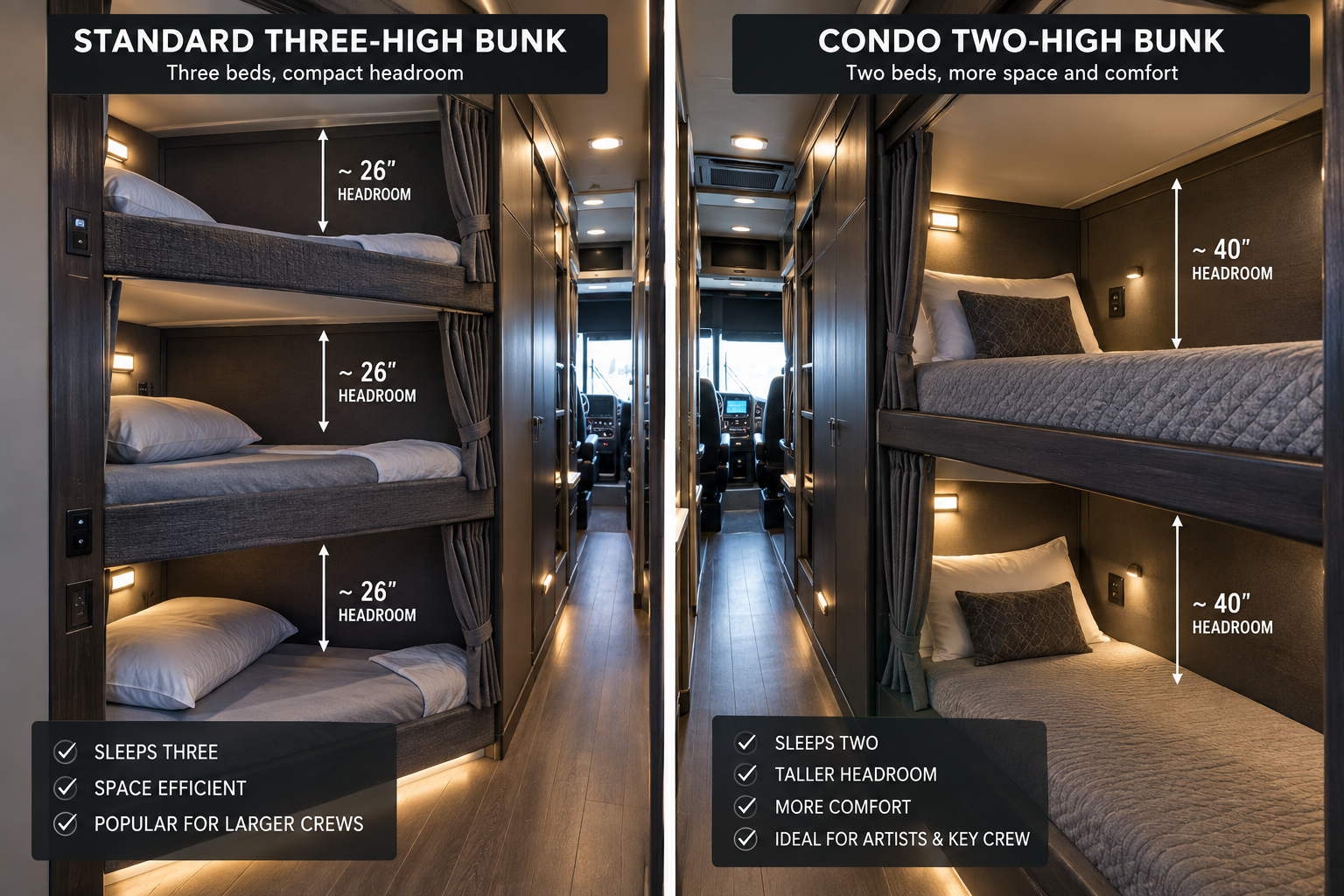
Layouts fall into two main types:
Standard bunks stack three high on each side of the hallway, giving 12 bunks on most coaches. Each offers about 25 inches of vertical space, enough to sit up only partway.
Condo bunks stack two high, giving 8 bunks with roughly 35 inches of headroom. Artist buses and smaller touring parties often use this layout.
Width sits well below a home twin mattress, which runs about 38 inches. Length fits most adults under 6 feet 2 inches comfortably. Taller riders should ask about bunk length before the tour, since some coaches build a few longer berths.
Choosing the Right Bunk
Bunk position changes the experience. Each level has trade-offs:
Bottom bunks are easiest to climb into after a late load-out, but they sit closest to floor traffic and road noise.
Middle bunks often feel the most stable and stay out of foot traffic, though climbing in takes a bit more effort.
Top bunks feel more private and usually run warmer, since heat rises inside the coach.
Seniority often decides who gets what. Tour managers commonly let long-serving crew pick first. If you have a choice, think about your schedule: someone who crashes last should take a bunk they can reach quietly.
Sleep Feet Toward the Front
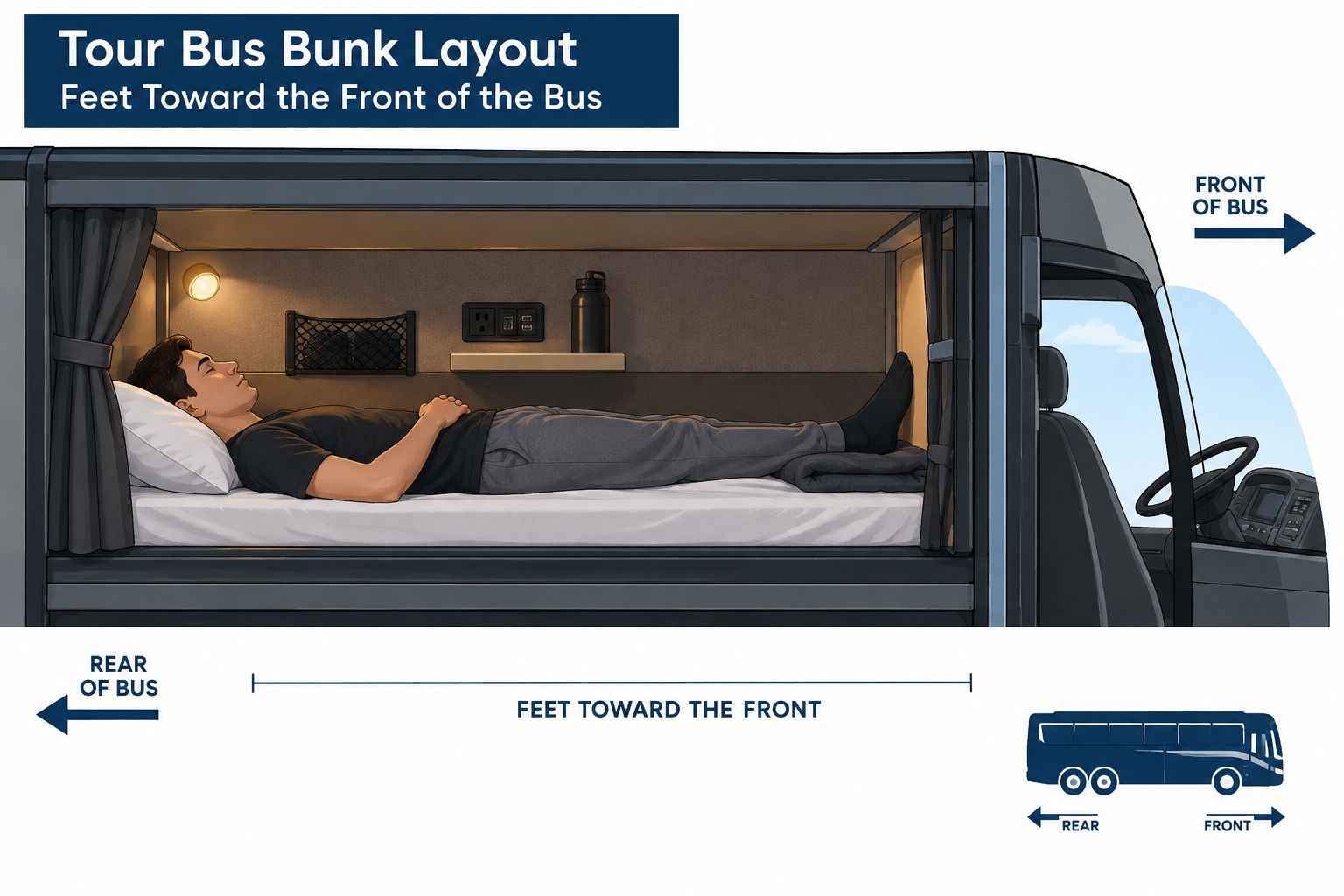
Sleeping position matters for safety. Lie with your feet toward the front of the bus and your head toward the rear. If the driver brakes hard, your body slides feet first and your legs take the force instead of your head and neck.
Many riders also sleep with their back against the outer wall and knees toward the hallway side, which keeps them from rolling toward the curtain during turns. It feels odd for a night or two, then becomes automatic.
Setting Up Your Bedding
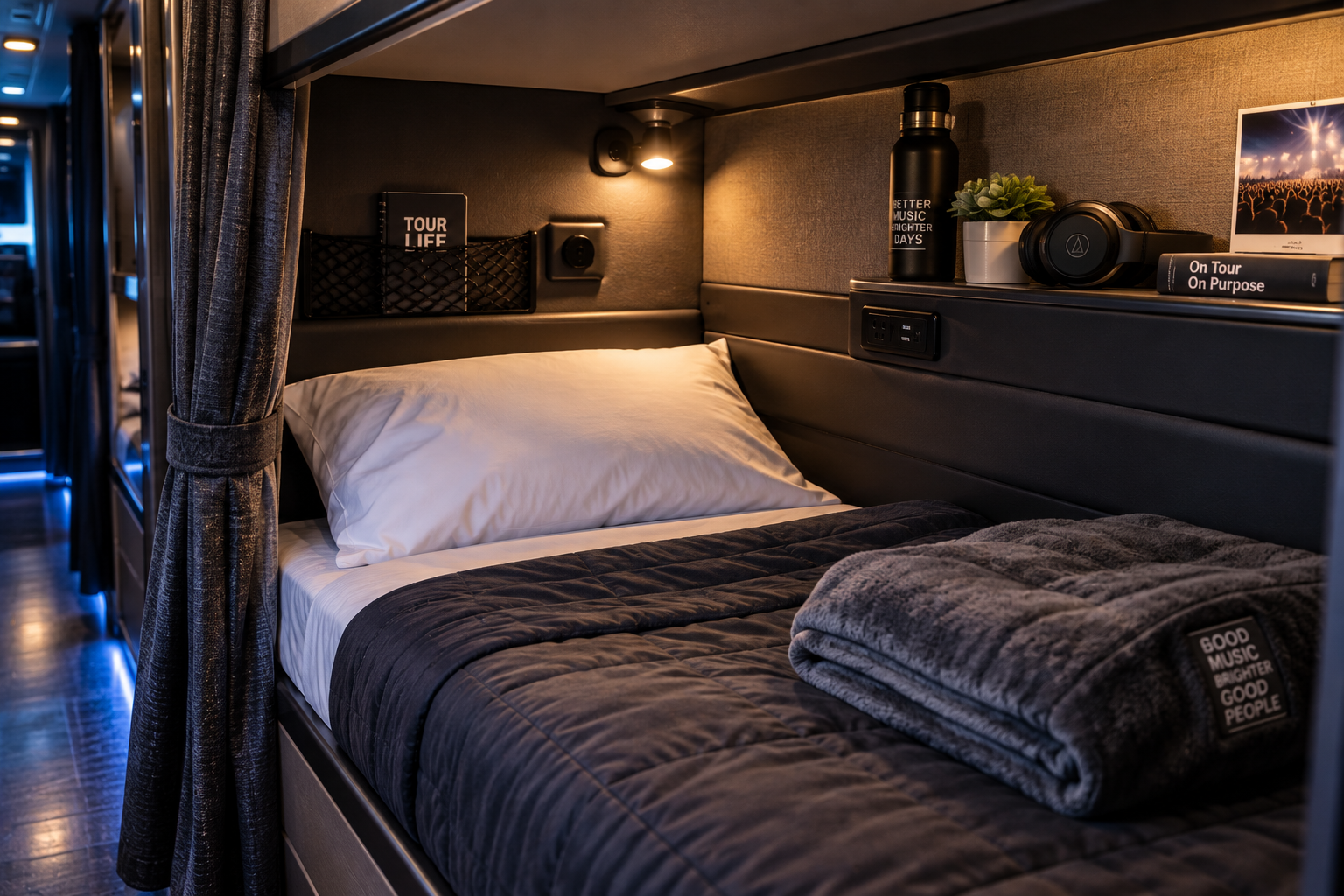
Bedding makes the biggest difference in sleep quality. Coach companies supply basic linens, but experienced crew upgrade a few pieces:
Your own pillow, since a familiar pillow speeds adjustment more than anything else.
A thin mattress topper, cut to bunk size, for extra cushioning.
A sleeping bag liner or soft sheet set that fits a narrow berth.
A light blanket you can add or remove as the temperature shifts.
Keep it simple. Space is tight, and anything bulky ends up blocking your reading light or outlet.
Blocking Light and Noise
Light and noise are the main sleep killers on a bus. The bunk curtain blocks most light, but seams leak hallway glow and headlights. An eye mask closes the gap.
Noise comes from road hum, tire slap, the generator, and bandmates coming off a late night. Foam earplugs cut much of it. Some riders prefer a white noise app through small earbuds, which masks sudden sounds like a slammed cabinet. Either way, test the setup on the first night rather than the fifth.
Managing Temperature
Temperature control varies bunk to bunk. Most coaches give each bunk its own vent, which you can open, close, or aim. Top bunks trend warm and bottom bunks trend cool, so dress for your level.
Layers work better than one heavy blanket. A T-shirt, a light blanket, and a spare hoodie cover most situations. And if the whole bus feels too hot or cold, tell the driver rather than fiddling with the main controls yourself.
Getting Used to the Motion
Motion bothers first-timers most. A well-maintained coach with air suspension rides smoothly on the interstate, but city streets, construction zones, and on-ramps bring bumps and sway.
Most people stop noticing after two or three nights. A few tricks help early on: lie flat rather than propped up, keep your eyes closed, and avoid heavy meals right before bed. Riders who get motion sick easily should talk to a doctor or pharmacist about options before the tour starts.
Building a Sleep Schedule on Tour
Schedules on tour run backward from normal life. Shows end late, load-out runs past midnight, and the bus often rolls overnight to the next city. The bunk is where most of the touring party sleeps during that drive.
A few habits protect rest:
Set a consistent bedtime relative to load-out, not to the clock.
Cut caffeine by early evening on show days.
Get daylight soon after waking to reset your body clock.
Nap in short blocks on afternoons when the bus sits at a venue.
Off days matter too. Many tours book hotel rooms on off days so everyone gets a full night in a real bed.
Bunk Storage and Organization
Storage inside a bunk is limited to a small shelf, a net, and whatever fits at your feet. Organization keeps it livable:
Chargers and phone go on the shelf near the outlet.
Toiletries live in one pouch.
Clothes stay in a soft bag in the bay or the junk bunk, with only tomorrow's outfit in the berth.
Snacks stay out, since crumbs attract pests.
A tidy bunk also makes it faster to find things in the dark without waking anyone.
Bunk Safety
Safety inside the bunk comes down to a few habits. Keep the curtain free to open so you can get out quickly. Know where the nearest emergency exit is, including roof hatches or rear windows. Don't leave chargers or power banks buried under your pillow, where they can overheat.
Never smoke, vape, or light anything in a bunk. And make sure the coach has working carbon monoxide and smoke detectors near the sleeping area, since generator exhaust is a real risk when the bus is parked.
Sleeping When the Bus Is Parked
Parked sleep brings different challenges from moving sleep. At a venue during the day, the coach may sit in full sun, run on its generator, and sit next to a loading dock full of forklifts. Heat builds quickly inside a parked coach.
A few adjustments help. Ask the driver whether the bus has shore power, which runs the air conditioning quietly. Keep the bunk vent open and aimed at you. And use earplugs even if you skip them at night, since daytime venue noise is sharper than road hum.
Respecting Other Sleepers
Sleep on a bus is a shared resource. When you climb into or out of a bunk, do it quietly and keep your light off until your curtain is closed. Don't set phone alarms that ring for minutes, since everyone within 10 feet hears them.
If you snore, earplugs for your bunkmates make a kind gift. And if someone else's alarm keeps ringing, a gentle word works better than a complaint to the tour manager.
When to Choose a Hotel Instead
Hotels still matter on a bus tour. Illness, injury, or a string of bad nights can leave someone needing a real bed. Tour managers often book rooms on off days so everyone recovers, and some add a room when a rider is sick to protect everyone else's health.
Packing a Bunk Kit
A small bunk kit keeps nights simple. Most veterans carry the same items tour after tour: an eye mask, foam earplugs, a phone charger with a short cable, a small flashlight or headlamp, lip balm, a water bottle with a secure lid, and a soft hoodie for cold nights.
Everything fits in one pouch on the bunk shelf. Grabbing it in the dark takes seconds, and nobody has to turn on a hallway light.
How Knights Coaches Sets Up Bunks
Knights Coaches builds its entertainer coaches on Prevost H3-45 and X3-45 chassis with 12 bunks per coach, plus rear lounges, full galleys, and onboard showers. Drivers walk new riders through bunk vents, lights, outlets, and emergency exits at the first load, so everyone knows the setup before the first overnight drive.
Tour managers can compare bunk layouts and request pricing through the Knights Coaches website.
How big is a tour bus bunk?
A standard bunk measures about 29 inches wide, 74 inches long, and 25 inches high. Condo bunks offer around 35 inches of headroom.
Which way should you sleep in a tour bus bunk?
Sleep feet toward the front of the bus. Your legs absorb force during hard braking instead of your head.
Which bunk is best, top, middle, or bottom?
Middle bunks usually feel most stable, top bunks run warmer and more private, and bottom bunks are easiest to reach.
How long does it take to get used to sleeping on a bus?
Most people adapt within two or three nights.
What should you bring for a tour bus bunk?
Bring your own pillow, an eye mask, earplugs, a light blanket, and a sleeping bag liner.
Are tour bus bunks comfortable for tall people?
Riders over about 6 feet 2 inches may feel cramped. Ask the coach company about bunk length before the tour.
What is a condo bunk?
A condo bunk is a two-high bunk with extra headroom, common on 8-bunk artist coaches.
Do tour bus bunks have power outlets?
Yes. Most bunks include an outlet, a reading light, and an air vent.
Is it safe to sleep on a moving tour bus?
Yes, with proper position, clear exits, and working detectors. Coaches are built for overnight travel.
Where do people keep luggage if bunks are full?
Luggage goes in the underfloor bays or a spare junk bunk.
Should you sleep in the bunk or a hotel on off days?
A hotel on off days usually gives better recovery, which is why many tours book rooms then.
How do you sleep on a parked tour bus during the day?
Use shore power for quiet air conditioning, keep the vent open, and wear earplugs against venue noise.
Can you use an alarm in a tour bus bunk?
Yes, but use vibration or a short, quiet alarm, since sound carries through every curtain.
Conclusion
Sleeping in a tour bus bunk starts with knowing the berth: roughly 29 by 74 inches, in standard three-high or condo two-high layouts. Picking the right level, lying feet toward the front, and building a simple bedding setup make the first nights easier. An eye mask, earplugs, layered bedding, and the bunk vent handle light, noise, and temperature. Motion fades within a few nights, and a schedule built around load-out protects rest. Tidy storage and safe habits finish the picture.
Want a coach with well-kept bunks and a driver who explains every control? Get a quote from Knights Coaches for your next run.