How to Become a Tour Bus Driver: CDL Steps, Experience, and the Path to Entertainer Coaches
A tour bus driver is a commercial driver who operates a motorcoach or entertainer coach carrying groups, musicians, or production crews on multi-day trips across state lines. The job requires a commercial driver's license (CDL) with a passenger (P) endorsement, a clean safety record, and the ability to drive overnight…
Knights Coaches
Knights Coaches
- Published
- Reading time
- 9 min read
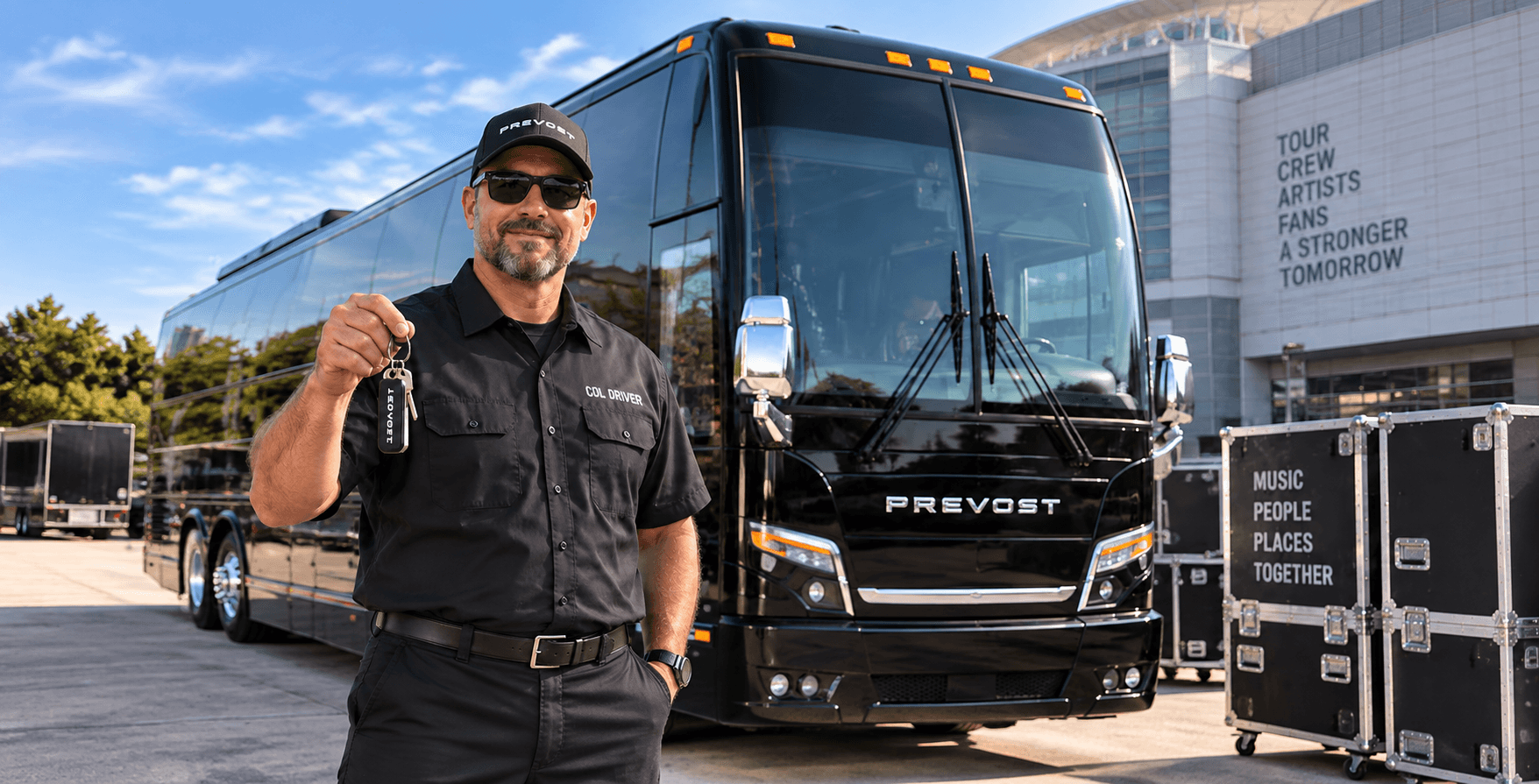
A tour bus driver is a commercial driver who operates a motorcoach or entertainer coach carrying groups, musicians, or production crews on multi-day trips across state lines. The job requires a commercial driver's license (CDL) with a passenger (P) endorsement, a clean safety record, and the ability to drive overnight within federal hours of service limits.
Getting there follows a clear sequence. A candidate must be 21 or older for interstate work, pass a DOT physical, earn a commercial learner's permit, complete Entry-Level Driver Training (ELDT) from a provider on the FMCSA Training Provider Registry, and pass the knowledge and skills tests for a Class B CDL with P and no air brake restriction. Most charter jobs open at that point. Entertainer coach companies usually want three years of coach experience on top.
The career touches several institutions. The Federal Motor Carrier Safety Administration (FMCSA) sets driver qualification rules. State licensing agencies issue the CDL. The FMCSA Drug and Alcohol Clearinghouse tracks testing history. Industry groups like the American Bus Association and the Entertainer Motorcoach Council connect drivers to employers, and Nashville anchors much of the entertainer coach business.
This guide walks through eligibility, the CLP, ELDT, testing, building charter experience, moving into entertainer coaches, the skills employers look for, lifestyle realities, costs and timeline, and the job outlook.
What a Tour Bus Driver Does
Tour bus driving splits into two worlds. Charter and sightseeing drivers carry school groups, sports teams, church trips, and tourists on planned itineraries. They often drive days, stay in hotels at night, and interact with passengers constantly.
Entertainer coach drivers move bands, artists, and crews. They drive mostly at night while passengers sleep, keep the coach clean and stocked, service the generator and holding tanks, and sleep in a day room while the show happens. A single tour can run for weeks with one driver assigned to one coach.
Both share the same legal base. The paths diverge only after the license.
Step 1: Meet the Basic Eligibility Rules
Eligibility starts with age, health, and record. Interstate passenger work requires a minimum age of 21. The driver passes a DOT physical with a certified medical examiner, producing a certificate valid for up to 24 months.
Employers check the motor vehicle record for the past three years, run a pre-employment Clearinghouse query, and require a negative drug test. A DUI, reckless driving conviction, or refused drug test can stop a coach career before it starts.
English proficiency also matters. Since June 2025, roadside inspectors can place a driver out of service for failing to communicate in English. For a job that includes safety announcements to passengers, that's a practical requirement as much as a legal one.
Step 2: Get a Commercial Learner's Permit
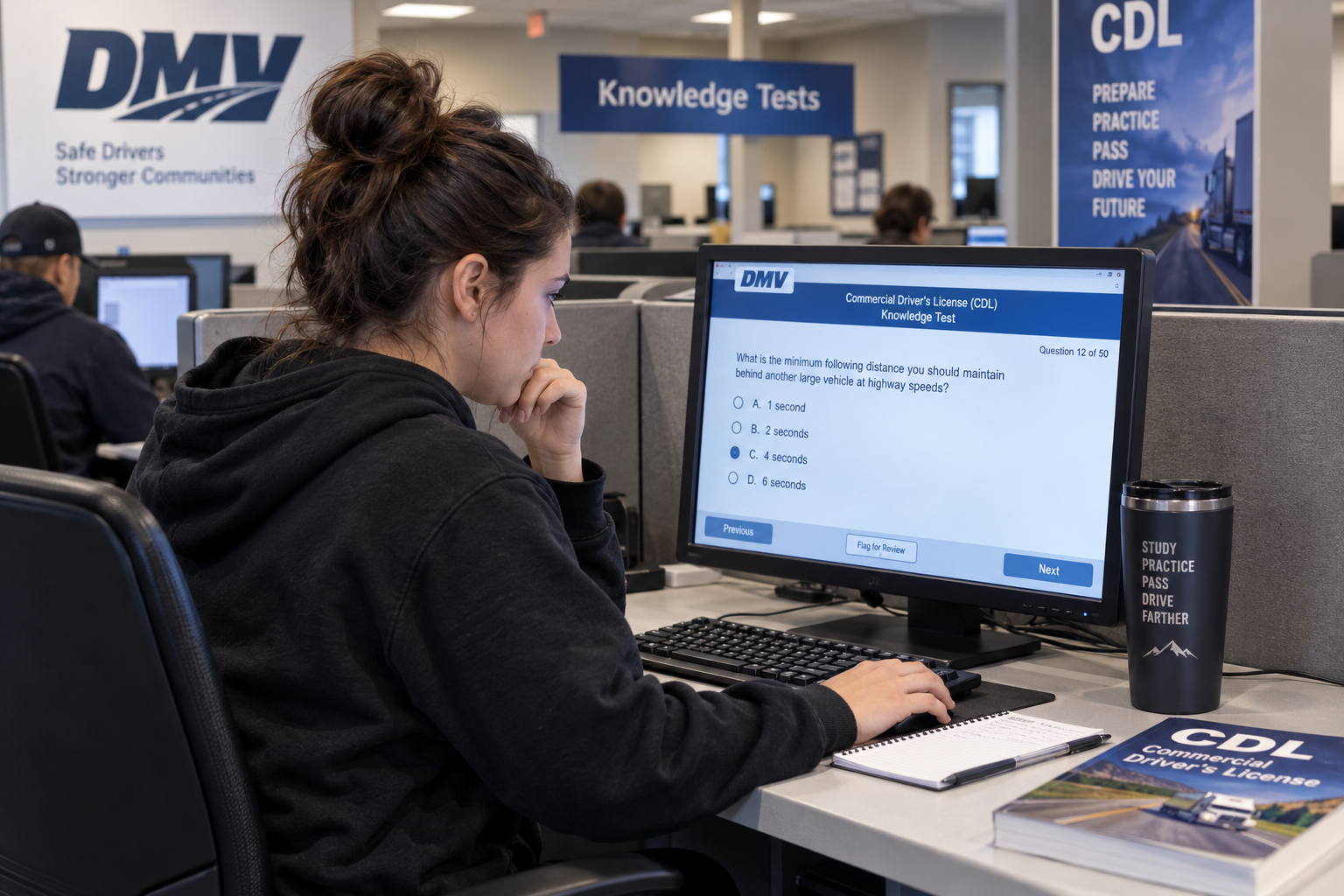
The commercial learner's permit (CLP) comes from the state licensing agency after the applicant passes general knowledge, air brakes, and passenger knowledge tests. The passenger test has 20 questions and requires an 80 percent score.
A CLP holder must wait at least 14 days before taking the skills test. During that period, the learner may drive a bus only with a qualified CDL holder on board and may not carry passengers other than trainers, examiners, or other trainees.
Step 3: Complete Entry-Level Driver Training
ELDT is mandatory for new Class A or B licenses and for first-time P endorsements issued after February 7, 2022. Training covers two parts:
Theory on vehicle systems, inspections, hours of service, passenger management, and emergency procedures.
Behind-the-wheel practice on a range and on public roads in a bus.
Training schools, community colleges, and some bus companies offer ELDT. Several charter and transit operators pay for training in exchange for a service commitment, which saves a new driver thousands of dollars.
Step 4: Pass the Skills Test and Earn the CDL
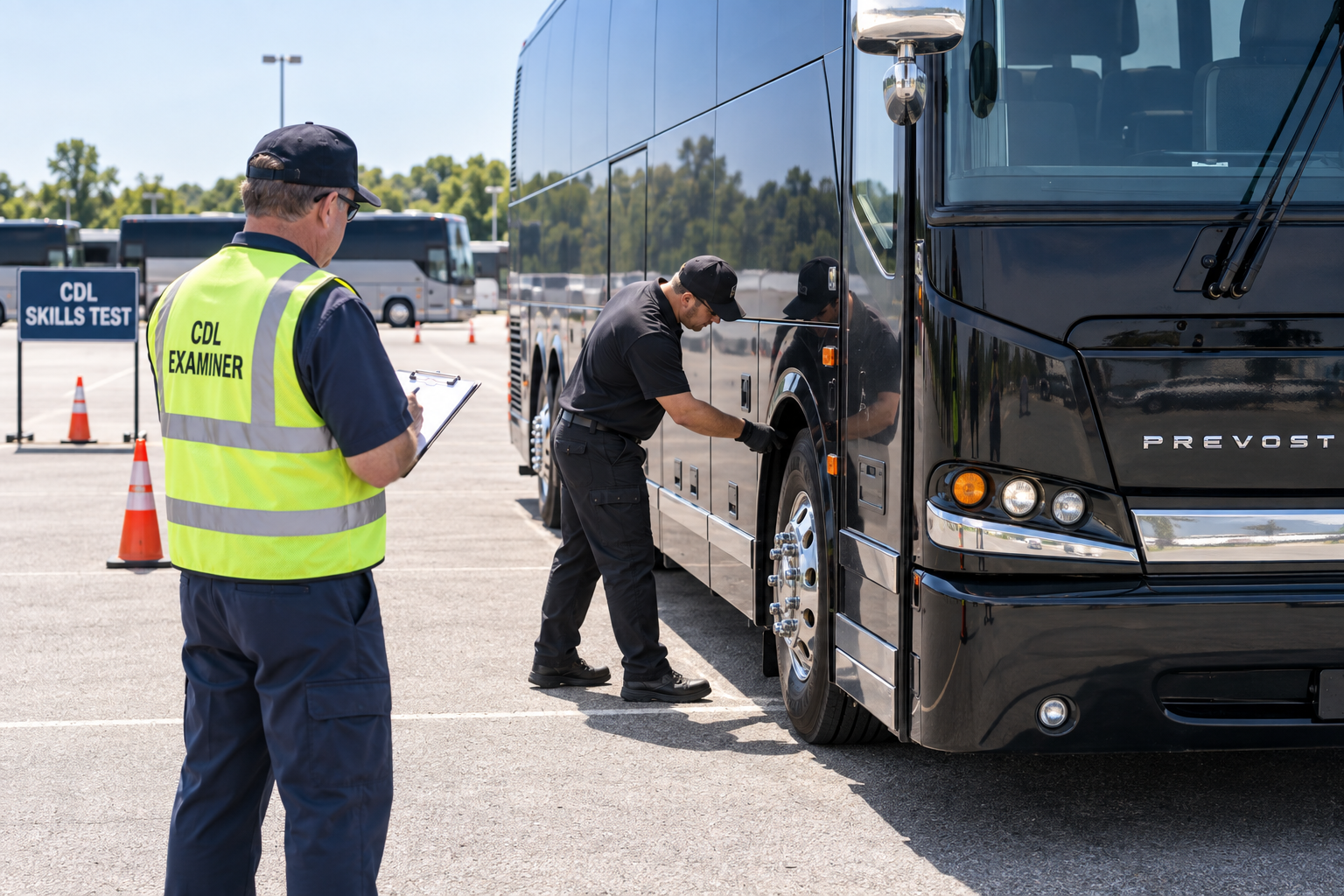
The skills test includes a pre-trip inspection, basic control maneuvers, and an on-road drive. It must happen in a representative passenger vehicle with air brakes, so the license comes out without restrictions that block motorcoach jobs.
Most tour drivers aim for Class B with P, which covers a single motorcoach. Drivers who expect to pull gear trailers behind entertainer coaches may test for Class A instead. Once the license issues, the driver is legal to operate a bus. Being hireable for tour work is a separate step.
Step 5: Build Motorcoach Experience
Experience comes from the jobs that hire new CDL holders. Good starting points include:
Charter companies running school, sports, and group trips.
Transit agencies with structured training and union pay scales.
Casino and airport shuttle operators using full-size coaches.
Sightseeing companies in tourist cities with daily routes.
Each teaches different skills. Transit builds city driving and passenger handling. Charter builds long-distance route planning and overnight trip experience. Drivers aiming for entertainer coaches should favor charter work with multi-day trips, since that's closest to touring.
Step 6: Move Into Entertainer Coach Driving
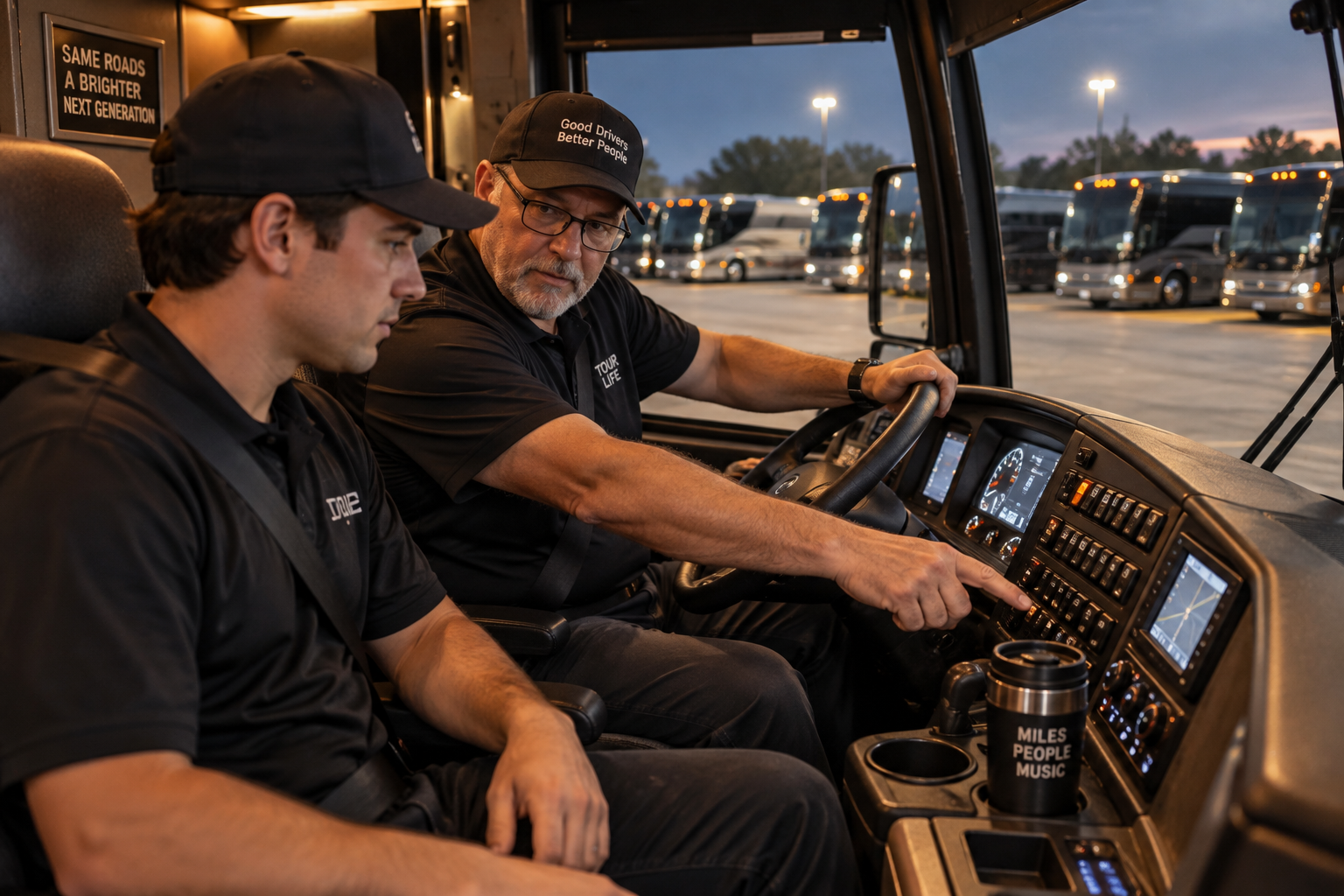
Entertainer coach companies hire carefully. The coach costs well over a million dollars, the passengers are high-profile, and one missed load-in can cost a tour thousands. So most companies require about three years of coach driving before handing over keys.
Breaking in usually looks like this:
Network in Nashville, which hosts many of the largest entertainer coach companies.
Start on crew or band buses before artist buses.
Learn from veteran drivers on shared tours or relief assignments.
Attend industry events connected to the Entertainer Motorcoach Council.
Some veteran drivers run training academies specifically for entertainer coach work, covering generator systems, slide-outs, and tour etiquette that a CDL school never touches.
Skills That Matter Beyond Driving
Employers look for more than clean logs. The drivers who get requested by name share a set of habits:
Discretion about the artists, the crew, and anything said on the bus.
Punctuality that treats early as on time.
Mechanical awareness of generators, air systems, and holding tanks.
Backing skill for tight loading docks and arena tunnels.
Sleep discipline that turns a noisy day room into real rest.
Customer service still matters on a band bus. It just looks different: a quiet ride, a stocked fridge, a clean lounge, and no drama.
Lifestyle Realities
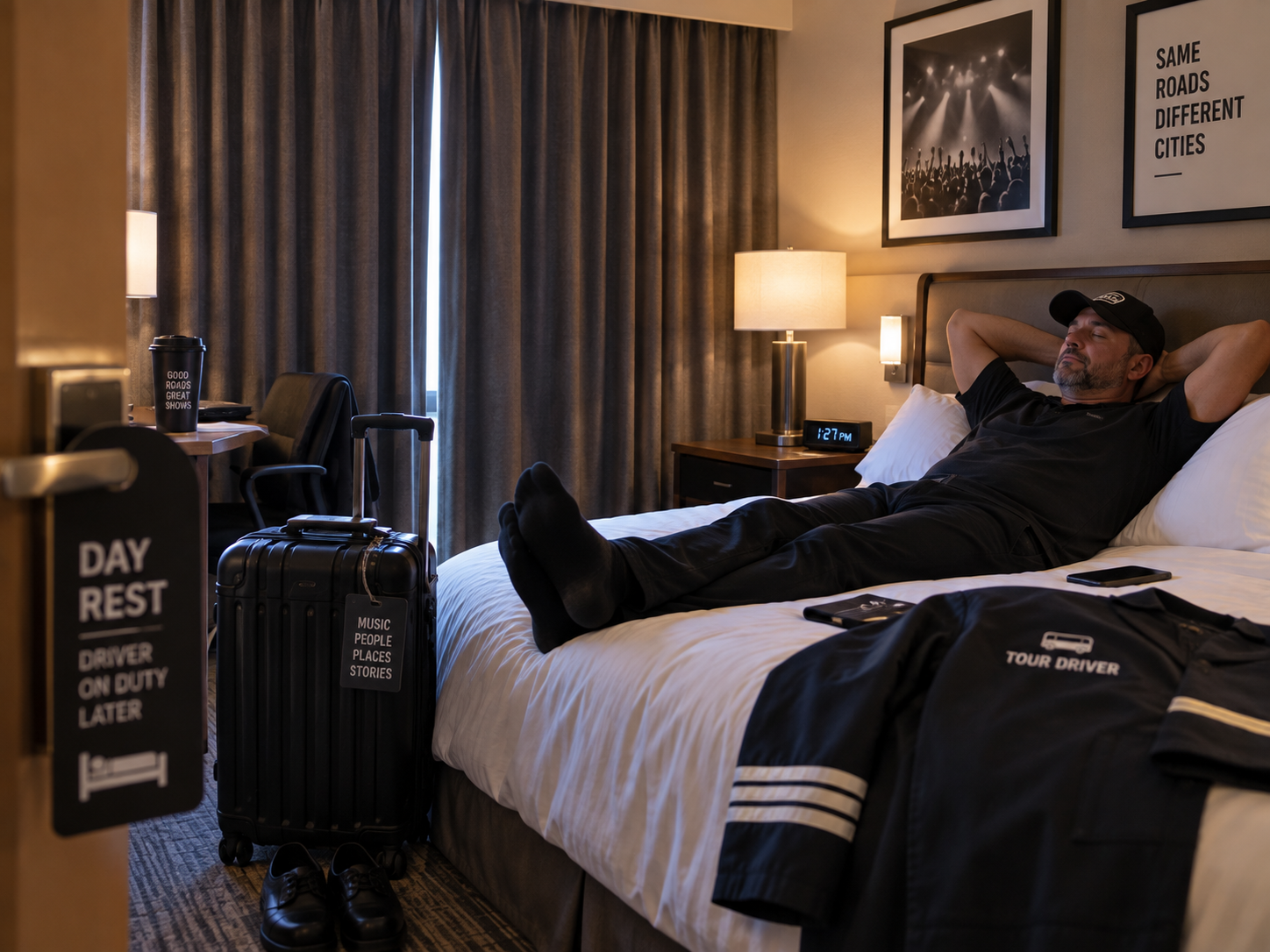
Touring life is demanding. Drivers spend weeks away from home, drive through the night, and sleep during the day. Holidays often land on tour. Family time comes in blocks between runs.
Some drivers love it. The travel, the music, and the independence keep them going for decades. Others try it for a season and head back to daytime charter routes. Knowing which fits your life matters more than the paycheck.
Health habits decide how long a driver lasts. Veteran drivers guard their sleep, pack real food instead of living on truck stop snacks, and walk the venue grounds during the day. Those routines also keep the DOT medical certificate renewing on the full two-year cycle.
Questions to Ask Before Joining a Coach Company
Interviews run both ways. Before signing on, a new driver should ask:
How are drivers paid on off days, overdrives, and deadhead trips?
Who books driver hotel rooms on overnight tours?
What maintenance support does dispatch offer after a breakdown at 3:00 AM?
How does the company handle hours of service conflicts with tour routing?
What safety rating does the carrier hold with FMCSA?
The answers show how the company treats drivers when schedules get tight. A carrier that plans rest and supports roadside repairs keeps drivers longer.
Costs and Timeline
Costs depend on the training path. Private CDL schools charge several thousand dollars for Class B with P, while company-sponsored programs may cost nothing upfront. Add fees for the permit, tests, license, and DOT physical.
The timeline breaks into phases. CDL training and testing usually take three to seven weeks. Charter or transit experience takes one to three years. Entry into entertainer coach work typically comes after that, so the full path from no CDL to band bus driver often runs three years or more.
Job Outlook
BLS projects overall bus driver employment to grow about 1 percent from 2024 to 2034, slower than average. Openings still appear every year, though, because many drivers retire or leave the field. Experienced motorcoach drivers remain in short supply across charter and entertainer coach work.
For tour buyers, that shortage is why experience standards matter. Knights Coaches operates more than 20 Prevost coaches from its Nashville base and only puts Class A or B CDL drivers with at least three years on entertainer coaches behind the wheel. Artists and managers can see the fleet and driver standards on the Knights Coaches, and check pickup cities through its tour bus rental service.
Do you need a CDL to be a tour bus driver?
Yes. A tour bus driver needs a CDL with the passenger (P) endorsement, usually Class B, for any coach designed for 16 or more occupants.
How long does it take to become a tour bus driver?
CDL training takes three to seven weeks. Entertainer coach driving usually takes three or more years because companies require prior coach experience.
What is the minimum age to drive a tour bus?
The minimum age is 21 for interstate tour work. Some states allow 18-year-olds to drive buses within the state only.
Which CDL class is best for a tour bus career?
Class B with P and no air brake restriction covers most tour coaches. Class A adds flexibility for coaches that tow gear trailers.
Can a new CDL holder drive an entertainer coach?
Rarely. Most entertainer coach companies want around three years of motorcoach experience before assigning a coach.
Are charter jobs or transit jobs better for future tour drivers?
Charter jobs are better preparation for touring, since they include long-distance and overnight trips. Transit offers structured training and steady pay.
What does ELDT cover for bus drivers?
ELDT covers theory on vehicles, inspections, hours of service, and passenger safety, plus behind-the-wheel practice in a bus.
Where do entertainer coach drivers find work?
Most find work through Nashville-based coach companies, referrals from veteran drivers, and industry networks like the Entertainer Motorcoach Council.
Do bus companies pay for CDL training?
Yes, some do. Many charter and transit operators sponsor training in exchange for a work commitment.
Can a DUI stop someone from becoming a tour bus driver?
Yes. A DUI can disqualify a CDL and usually blocks coach hiring for years, since insurers and employers screen motor vehicle records.
What skills do entertainer coach employers want most?
They want discretion, punctuality, mechanical awareness, backing skill, and sleep discipline, on top of a clean license.
Is tour bus driving a good career for someone who likes travel?
Yes, for the right person. Tour driving delivers constant travel across all 48 contiguous states, though most of it happens overnight while cities pass in the dark.
Conclusion
Becoming a tour bus driver follows a fixed path. The job splits between charter and entertainer coach work but starts with the same eligibility rules: age 21, a DOT physical, and a clean record. From there comes the commercial learner's permit, Entry-Level Driver Training, and the skills test for a Class B CDL with P. Charter or transit experience builds the three years most entertainer coach companies require, alongside discretion, mechanical awareness, and sleep discipline. The lifestyle suits some drivers better than others, the timeline and costs depend on training choices, and the job outlook favors experienced hands.
Booking a tour and want a driver who has already walked that whole path? Talk to Knights Coaches about a Prevost coach with a seasoned CDL driver.