
Day Rooms, Showers and Truck Stops on Tour
Showering on tour is a scheduling problem, not a plumbing problem. An entertainer coach carries bunks, a galley, lounges, and a bathroom, but the water tanks are finite and the shower, where one exists, cannot serve twelve people every day for six weeks. So touring crews solve hygiene through four channels instead:…
Knights Coaches
Knights Coaches
- Published
- Updated
- Reading time
- 11 min read
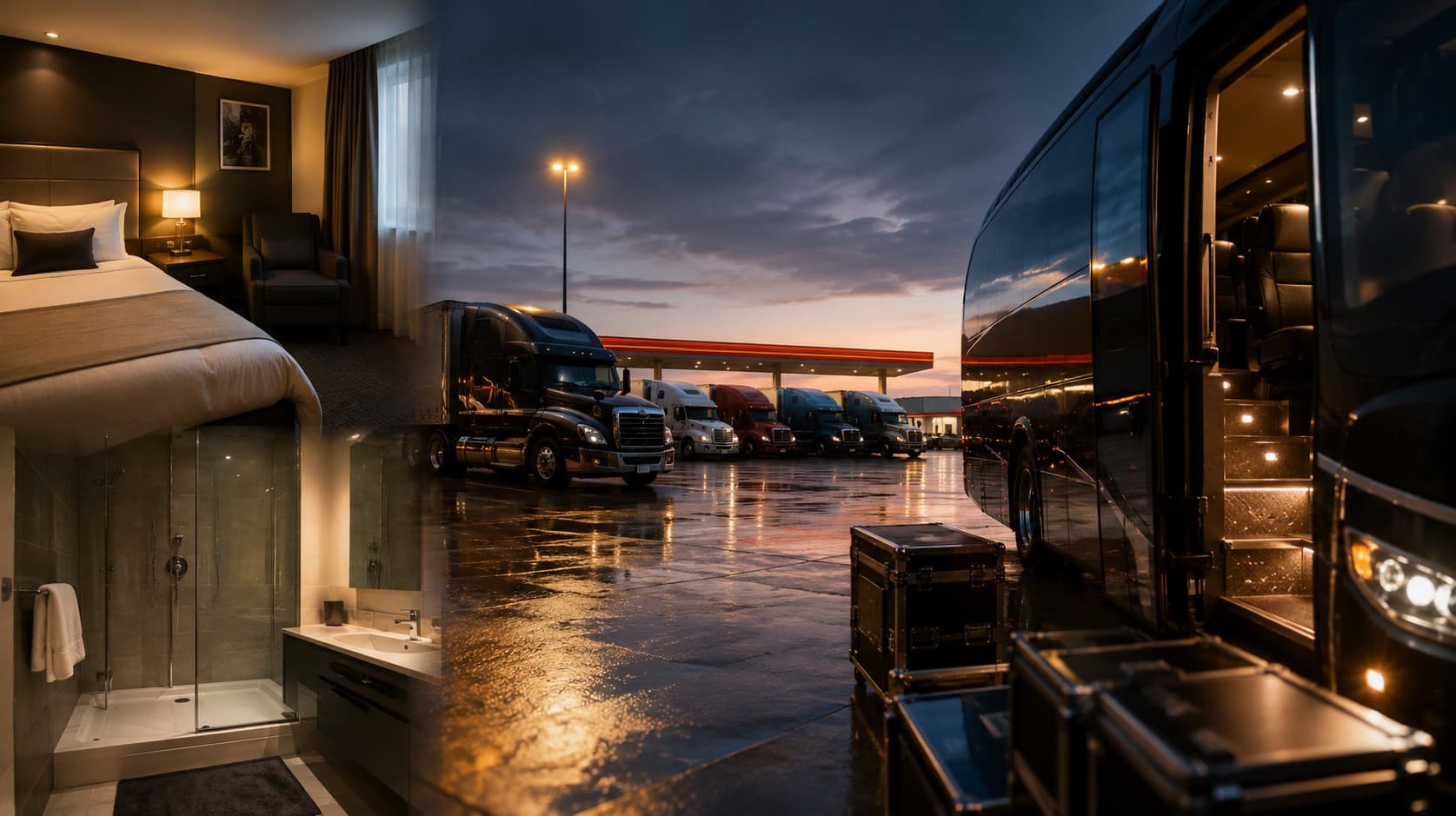
Showering on tour is a scheduling problem, not a plumbing problem. An entertainer coach carries bunks, a galley, lounges, and a bathroom, but the water tanks are finite and the shower, where one exists, cannot serve twelve people every day for six weeks. So touring crews solve hygiene through four channels instead: venue showers, truck stop showers, day rooms, and gym passes.
Capacity explains why. Touring conversions commonly carry around 90 gallons of fresh water and a similar waste tank, which covers hand washing, dishes, and a small number of short showers before the driver has to find a fill point and a dump station. Twelve full showers empties it in an afternoon.
Day rooms fill the gap that everything else leaves. A day room is a hotel room booked for daytime hours only, usually taken between late morning and early evening, shared by the crew for showers, laundry drops, and a horizontal nap on a long gap between shows. Two day rooms in a city cost a fraction of twelve overnight rooms, which is exactly why coach touring beats hotel touring on budget without anyone smelling like a load-out.
This guide covers why hygiene needs planning, which venues actually have showers, how truck stop shower rooms work, what the onboard shower can realistically do, how day rooms get booked and priced, when gym passes make sense, how laundry fits, where all of it lands on the day sheet, and what to budget. The FAQs cover what first-time crew ask before a run starts.
Why hygiene needs a plan
Coach touring removes the hotel from the routing, and with it the automatic shower. Nobody notices on night one. By day four, an unplanned crew is negotiating over a venue mop sink, and by week two morale is a real problem.
Sleep and hygiene also interact. Crew who cannot get clean sleep worse, and crew who sleep badly get ill faster inside a sealed vehicle carrying twelve people. The wider economics of the trade-off sit in the guide to how a coach replaces hotel nights.
The fix is a plan the tour manager makes before departure, not a scramble each morning. Every show day gets a designated hygiene solution written on the day sheet, and every day off gets a room and a laundromat. Start with the option that costs nothing.
Venue showers and which buildings have them
Arenas almost always have showers, since they were built for sports teams and the locker rooms come with the architecture. Amphitheaters usually do. Large theaters sometimes do. Clubs under 1,000 capacity usually do not.
Festivals vary wildly. Some run trailer-mounted shower blocks in the artist compound, some offer nothing beyond a portable toilet, and the difference is worth establishing in the advance rather than on arrival.
The advance is where this gets settled. Ask the production manager directly whether the building has showers, how many, whether they’re in the dressing rooms or a shared locker room, and whether towels are provided. The same conversation covers coach parking and power, so it costs nothing extra to add, and the process is covered in the guide to venue bus parking and shore power. Where the building offers nothing, the interstate does.
Truck stop showers
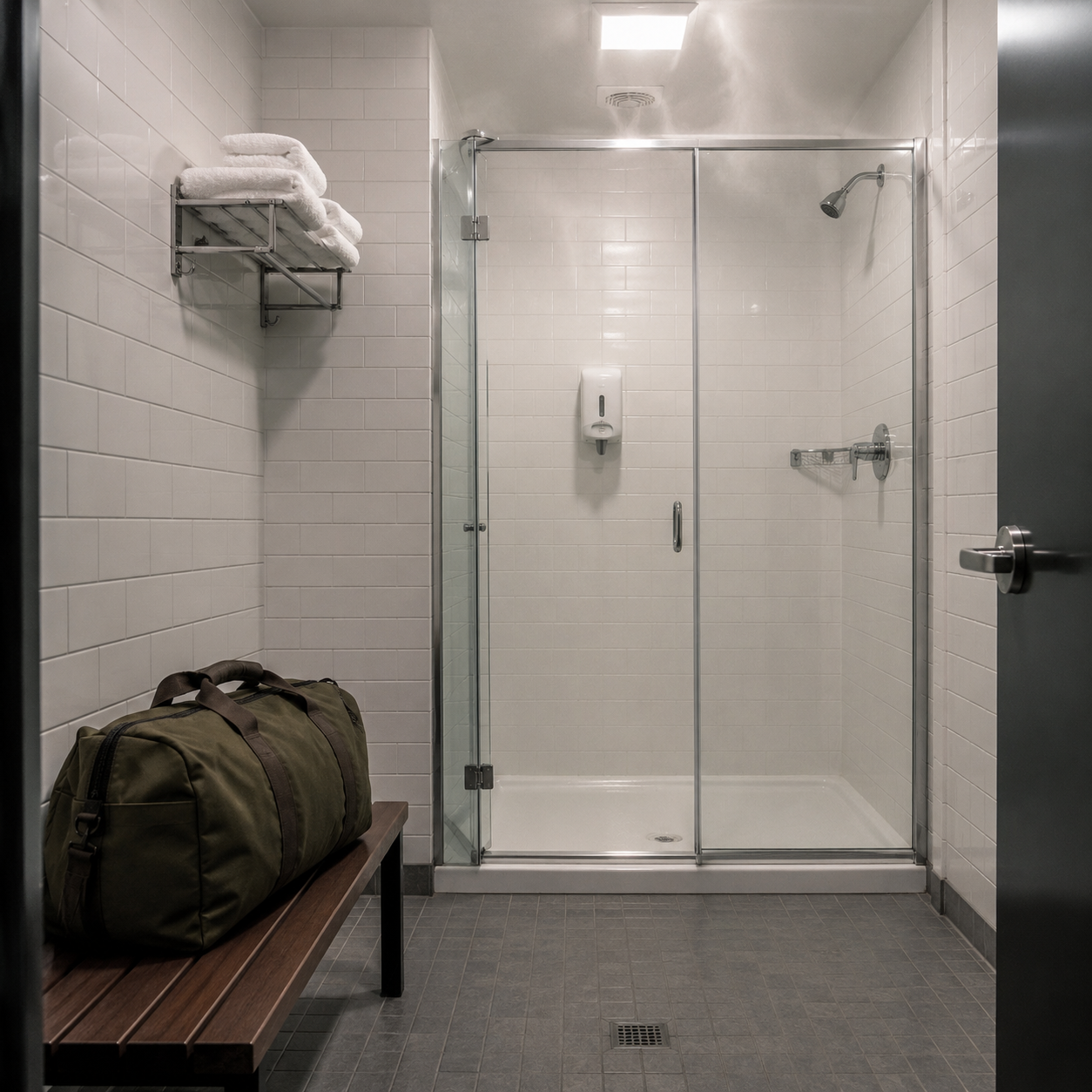
Truck stops sell private shower rooms, and they are considerably better than most people expect. A shower room at a major chain includes a locked private bathroom, a toilet, a sink, towels, and soap, cleaned between users, with staff calling your number over the intercom when a room comes free.
Cost typically runs $15 to $20 per shower for the general public, and drivers who fuel commercial vehicles usually earn shower credits with diesel purchases. That means your driver often has free showers banked, which they can sometimes transfer.
Timing suits the routing perfectly. The overnight fuel and service stop between 2:00 AM and 4:00 AM is quiet, the rooms are usually free, and anyone who wakes for it can be clean before the coach reaches the next venue. Bring flip-flops, keep a small kit packed and accessible in your bunk rather than in a bay, and remember to tell the driver before you step off. That last rule is covered in the guide to bus call and overnight drives.
What the onboard shower can actually do
Onboard showers exist on many entertainer coach builds, and they work within limits. Fresh water capacity is the constraint, along with a water heater sized for a household rather than a hotel and a gray water tank that fills as fast as the fresh tank empties.
Practical use means short showers, taken by a few people rather than everyone, usually the artist and whoever has the earliest call. Tours that rely on the onboard shower for the whole crew end up dry by mid-afternoon with the driver hunting for a water fill.
Etiquette follows from the capacity. Keep it under three minutes, use the water pump sparingly, and tell the driver when the tank is getting low so a fill can be added to the next service stop. The shower also cannot solve the toilet rule, which stays liquids-only regardless, as covered in the guide to tour bus bunk etiquette. For everything the coach cannot cover, there’s the day room.
Day rooms and how they work
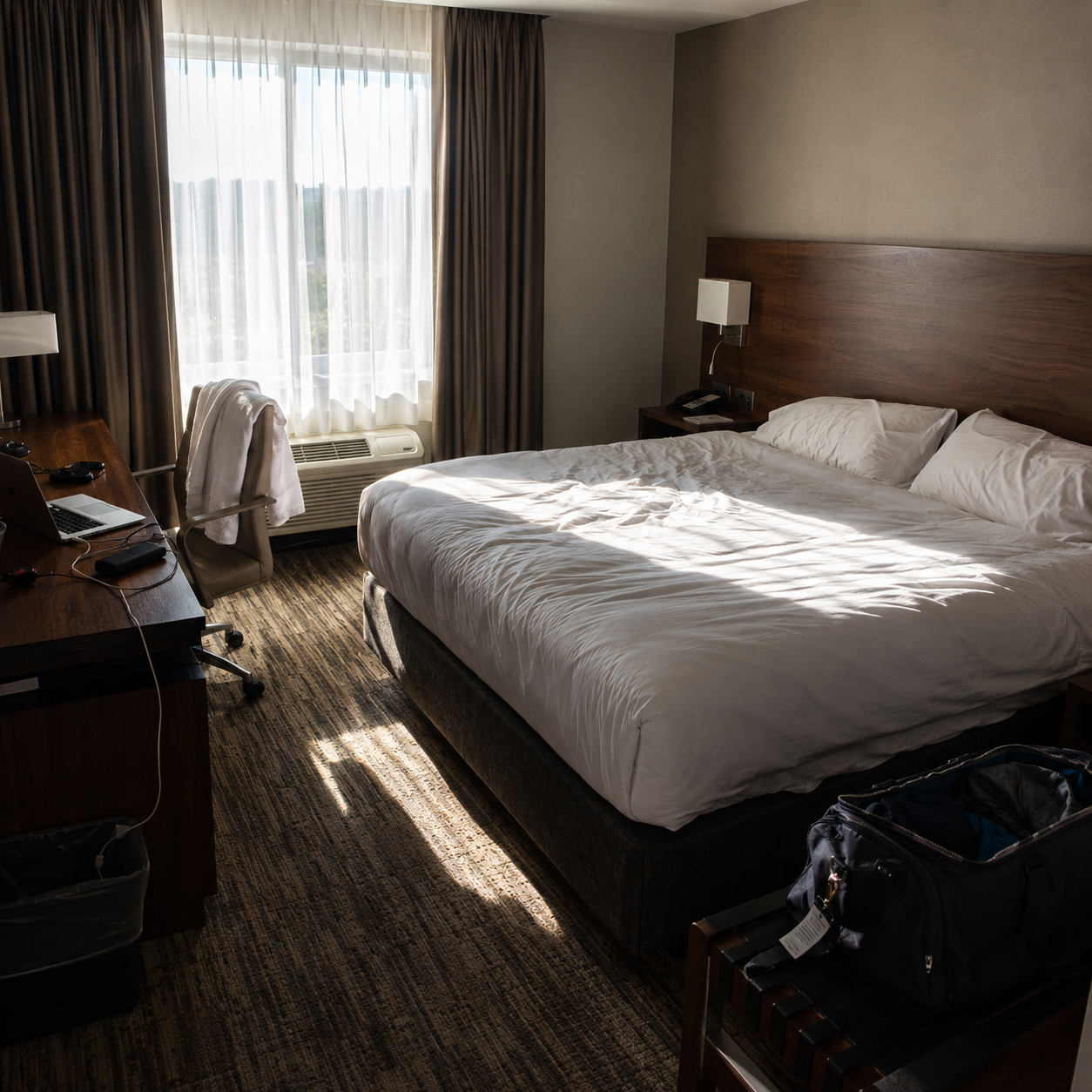
Day rooms are hotel rooms booked for daytime occupancy, typically from late morning until early evening. Some hotels sell them as an advertised day rate, and many will quote one on request when the room is unsold, particularly on weekdays in business districts.
Booking works best by phone. Explain that you need a room from around 11:00 AM to 6:00 PM, ask for a day rate, and ask about extra towel packs, because twelve people through two rooms will exhaust a standard housekeeping allocation immediately.
Cost sits well below an overnight stay, and the room shares across the crew rather than per person. Two day rooms in a city where twelve overnight rooms would run $1,200 might cost a small fraction of that and still deliver showers, a nap, and somewhere to spread out a laptop for an afternoon. Location beats price, though: a hotel within walking distance of the venue is worth more than a cheaper one across town, since taxi fares for twelve people erase the saving. Some days a gym does the job better.
Gym passes, pools and other options
Gym day passes cover showers for a few dollars in most markets, and national chains make the pattern repeatable across a routing. A day pass buys a shower, a locker, and often a workout, which crew members who spend six weeks in bunks tend to appreciate.
Public pools and community leisure centers work the same way in smaller markets where no gym chain operates. So do climbing gyms and yoga studios in some cities.
The advantage over a day room is speed and cost when nobody needs a nap. The disadvantage is that you’re carrying towels and there’s nowhere to leave a bag. Rotating between the three options across a leg keeps costs down and stops any one solution becoming a chore. Laundry works on a similar rotation.
Laundry on the road
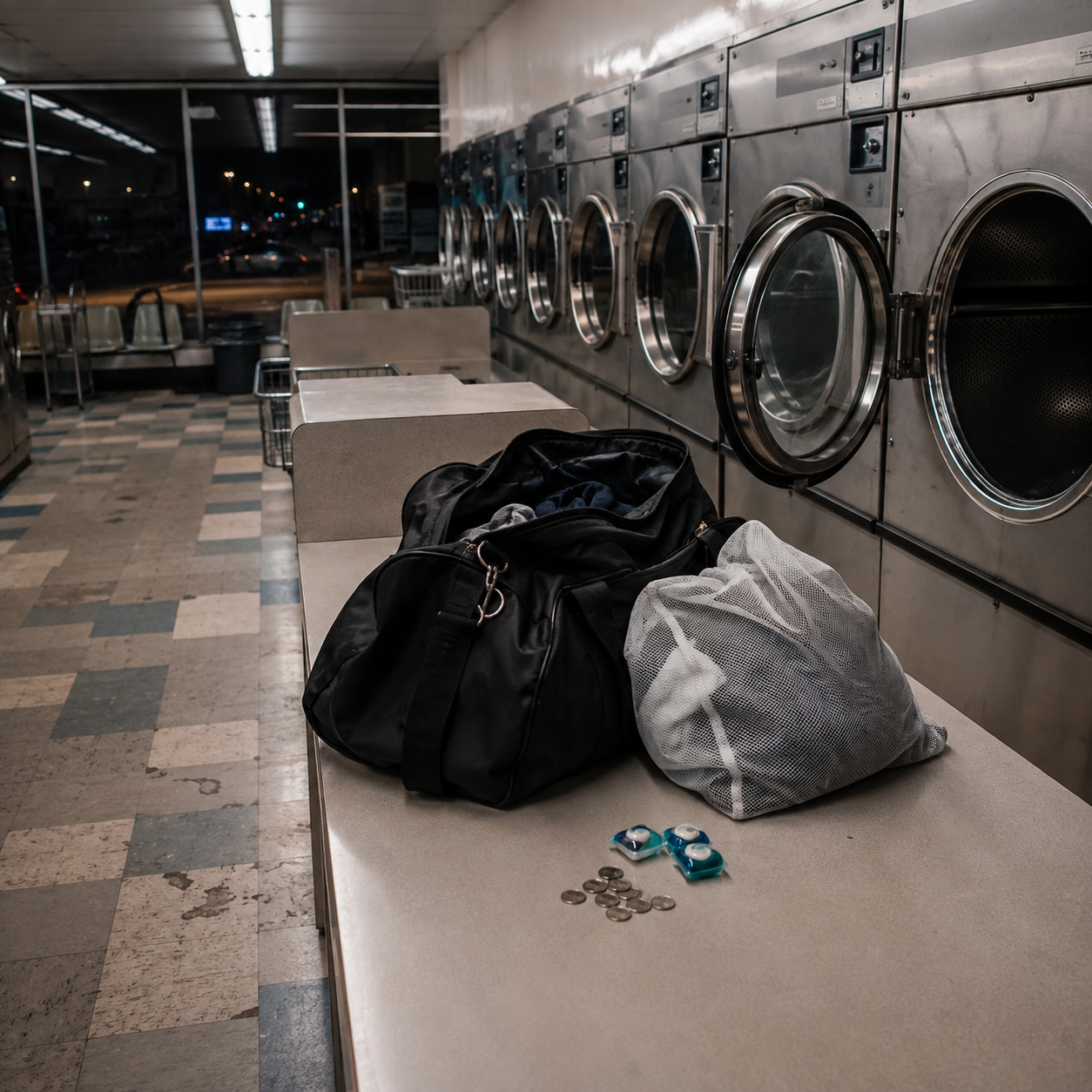
Laundry happens on days off, and it happens in one of three places. Laundromats are the standard: a crew takes a run of bags, feeds the machines, and gets everything done in two hours while somebody watches the door.
Wash-and-fold services do it for you by weight, which costs more and saves an afternoon. In markets where the day off has a hotel, the hotel’s laundry service works too, though hotel pricing per item makes it expensive for a full crew.
A few venues have washers and dryers backstage, mostly arenas and larger theaters, and that is worth asking about in the advance. Whichever route a tour takes, the pattern is weekly rather than daily, so pack for eight to ten days rather than for a whole leg. Where all this lands on the schedule is the part that gets forgotten.
Water fills, dump stations and service stops
Water and waste run on the same cycle as showers, and the driver manages both. Fresh water gets filled at truck stops, RV service points, and some venues with a suitable tap, while the waste tank gets emptied at a dump station on the same visit.
Frequency depends on use. A crew relying on venue and truck stop showers can go several days between fills, while a crew using the onboard shower daily forces a service stop every day or two. Telling the driver early matters more than the volume itself, since a fill takes fifteen minutes when planned and an hour when it turns into a search.
Chemicals matter too. Coach waste systems use tank treatments to control odor and break down waste, and pouring anything else down a coach drain risks the pump. Crew who want the bathroom to stay usable in week five should keep grease, coffee grounds, and hair out of the sinks and leave the tank chemistry to the driver.
Putting hygiene on the day sheet
Day sheets carry hygiene the same way they carry load-in and bus call, because an unscheduled shower does not happen. Each show day gets a note: venue showers available, truck stop stop planned overnight, or day rooms booked at a named hotel with the address and the check-in window.
Off days get more detail. Hotel name, check-in time, laundromat address, and the plan for the coach while everyone is off it.
The tour manager owns the schedule, but crews should read it and plan around it rather than assuming a shower will appear. Twelve people cannot all use two day rooms between 4:00 PM and 5:00 PM, so an informal rotation gets set at the start of the leg and holds through it. Budget follows the same logic.
Budgeting the hygiene line
Hygiene is a real budget line, and it is small compared with what it replaces. Truck stop showers at $15 to $20 apply only to the people who use them, day rooms split across a crew, and gym passes cost less again.
Compare that with overnight rooms at $80 to $150 per person per night in most US markets and the arithmetic stays comfortable even on a routing with several day room stops. That comparison is the reason acts move onto coaches in the first place.
What breaks the budget is improvisation. Booking a full set of overnight rooms because nobody planned a shower stop costs more in one city than a leg’s worth of day rooms. Plan the leg, put it on the day sheets, and the line stays predictable. Knights Coaches builds routing and service stops into every run through 24/7 dispatch.
How do touring musicians shower on a tour bus?
Through four routes: venue showers backstage, truck stop shower rooms, onboard coach showers where fitted, and day rooms booked at hotels. Most tours mix all four across a leg depending on what each market offers.
What is a day room?
A day room is a hotel room booked for daytime hours only, usually late morning to early evening. Crews share one or two per city for showers, naps, and laundry drops, at a fraction of the cost of overnight rooms for everyone.
How much does a truck stop shower cost?
Typically $15 to $20 for the general public, including a private room, towels, and soap. Drivers commonly earn shower credits through commercial diesel purchases, so your driver may have free showers banked.
Are truck stop showers clean?
Yes at major chains. Rooms are private, locked, and cleaned between users, with staff calling your number when one is ready. Bring flip-flops and your own toiletries and the experience is closer to a gym than to a rest area.
Do all venues have showers?
No. Arenas and amphitheaters usually do because they were built with locker rooms, larger theaters sometimes do, and small clubs generally do not. Confirm during the advance rather than assuming.
Can you shower on the bus itself?
On builds fitted with a shower, yes, but water capacity limits it. Fresh tanks around 90 gallons support a few short showers before a fill is needed, so onboard showers usually serve the artist and early calls rather than the whole crew.
How do you book a hotel day room?
Call the hotel directly, ask for a day rate between roughly 11:00 AM and 6:00 PM, and request extra towels. Many hotels quote one on request even without advertising it, especially midweek when occupancy is low.
Where do touring crews do laundry?
Laundromats on days off, wash-and-fold services when time is short, hotel laundry when a room is booked, and backstage washers at some arenas. Plan weekly and pack for eight to ten days rather than for the full leg.
Is a gym day pass a good option?
Yes for showers alone. A day pass costs a few dollars in most markets, includes a locker and a shower, and works well on days when nobody needs a nap. It’s the cheapest of the paid options.
How many day rooms does a crew need?
Two rooms cover a twelve person crew comfortably on a shower-and-nap day, with an informal rotation agreed at the start of the leg. Larger touring parties add a third rather than stretching two.
How often does a tour bus need water and waste service?
Every two to four days on a typical run, and daily if the crew uses the onboard shower heavily. Drivers handle fills and dump stops at truck stops and RV service points, usually folding them into the overnight fuel stop.
Can you use the venue’s dressing room shower after the show?
Usually yes where showers exist, and post-show is often the quietest time to use them. Load-out crews sometimes prefer showering before bus call so they can go straight to a bunk once the coach rolls.
Does the tour bus have a bathroom?
Yes, with a sink and toilet, though the toilet takes liquids only. Solids go in venue restrooms, truck stops, or day rooms, which is the single most consistently enforced rule on any coach.
Staying clean on a coach routing
Hygiene on tour is planned rather than improvised, because a coach removes the hotel from the routing and the shower goes with it. Venue showers cover arenas and amphitheaters, truck stop rooms cover the overnight drive at $15 to $20 a time, onboard showers cover a few short uses between water fills, and day rooms cover everything left over.
Gym passes and public pools fill smaller markets, laundry runs weekly on days off, and every one of those solutions belongs on the day sheet with an address and a time rather than in somebody’s head. The budget stays small against overnight rooms at $80 to $150 per person, provided the leg gets planned before it starts. Knights Coaches runs Prevost H3-45 and X3-45 sleepers with dispatch that plans fuel, water, and service stops around your routing. Call 1-855-838-5542 or use the contact form to map your run.