
Entertainer Coach Age and Mileage: What Matters
Entertainer coach mileage is not read the way car mileage is read. A Prevost H3-45 built on a stainless steel commercial platform is designed for a service life measured in the high hundreds of thousands of miles, so an odometer showing 250,000 miles describes a coach in early middle age rather than one near the […]
Knights Coaches
Knights Coaches
- Published
- Updated
- Reading time
- 11 min read
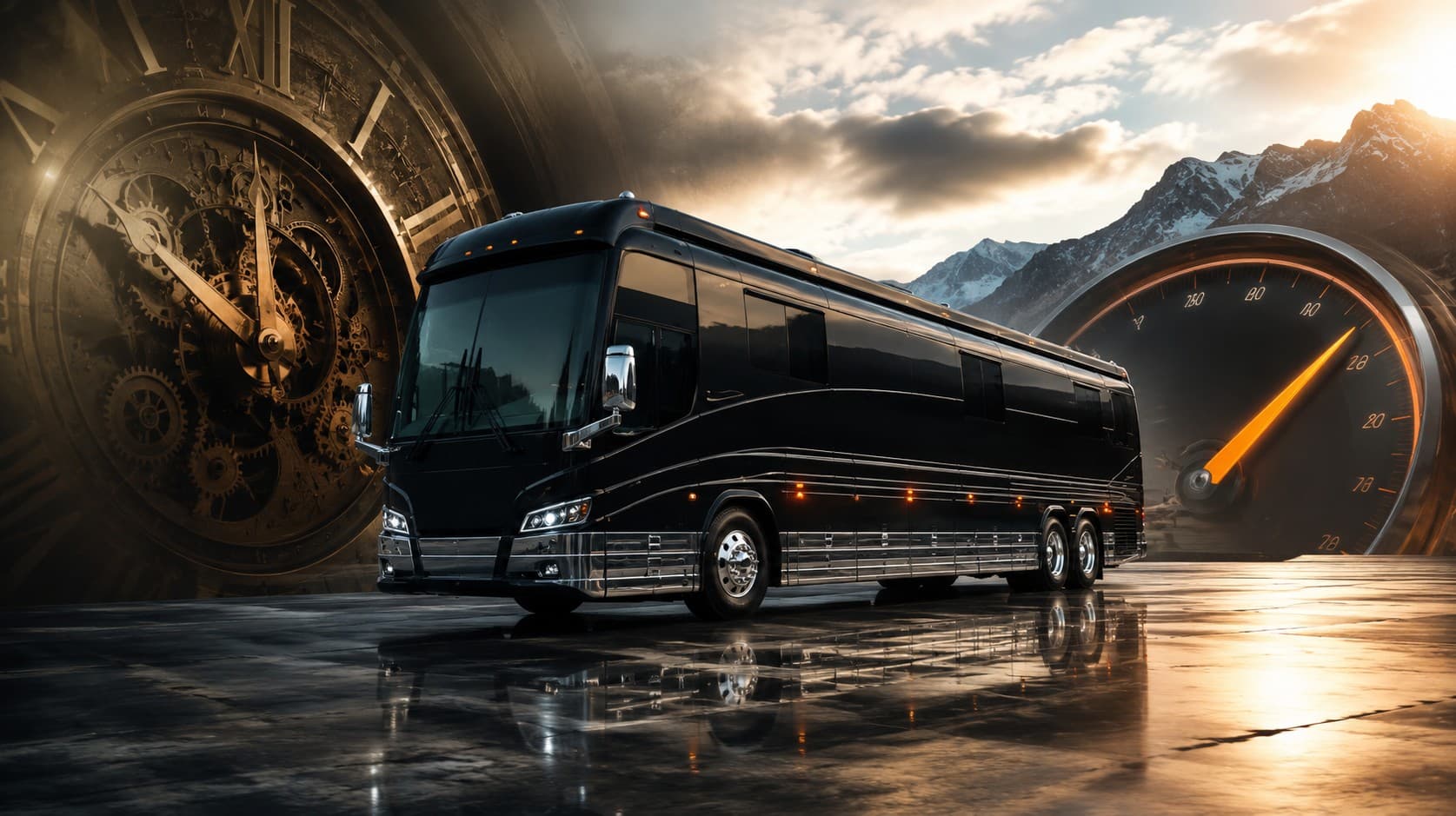
Entertainer coach mileage is not read the way car mileage is read. A Prevost H3-45 built on a stainless steel commercial platform is designed for a service life measured in the high hundreds of thousands of miles, so an odometer showing 250,000 miles describes a coach in early middle age rather than one near the end.
The numbers on the market make that concrete. Listings routinely show a 2019 H3-45 at 225,000 fleet-maintained miles, a 2008 H3-45 at 554,777 miles with a documented engine rebuild at 500,000, and a 1997 H3-41 still working at 555,000. Against that, model year alone tells you very little, because a 2002 chassis with a 2021 interior conversion is a different asset from a 2002 chassis with a 2002 interior.
Price follows condition more than it follows either number. Used coaches run from around $40,000 for an older high-mileage unit to $600,000 and up for a late-model custom entertainer conversion, with a solid 2010 to 2018 H3-45 typically landing between $100,000 and $250,000. Drivetrain reputation carries a lot of that value, which is why buyers look for the Detroit Diesel Series 60 or the Volvo D13 paired with an Allison automatic transmission.
This guide covers why coach miles run high by design, how chassis year differs from conversion year, what the odometer genuinely predicts, why generator hours are the second odometer, how engine families and emissions eras change ownership, which service records matter, which components age on a calendar rather than a meter, and how all of it feeds lease rates and reliability. The FAQs cover what buyers and tour managers ask before signing.
Why coach miles run high by design
Commercial motorcoach platforms get engineered for a duty cycle no passenger vehicle sees. Prevost builds on a riveted stainless steel structure, pairs it with a heavy-duty diesel drivetrain, and expects operators to run the vehicle several hundred days a year for two decades.
Touring accelerates the count. A run that plays five markets a week covers 300 to 600 miles most nights, so an active entertainer coach adds 60,000 to 100,000 miles in a busy year without anything unusual happening. Charter fleets post similar numbers.
The result is a market where six figures on the odometer is normal and where low mileage sometimes signals a problem rather than a bargain. Coaches that sit develop dried seals, flat-spotted tires, corroded connections, and dead batteries. A working coach with records usually beats a stored one without them. Reading either correctly starts with separating two dates that get confused constantly.
Chassis year against conversion year
Every entertainer coach has two ages. The chassis year is when Prevost or MCI built the shell, drivetrain, and running gear. The conversion year is when a converter stripped it and installed bunks, galley, lounges, plumbing, HVAC, and electronics.
Those dates can sit twenty years apart. A 1998 XL-45 with a 2022 interior has modern cabinetry, current TVs, a new inverter, and a drivetrain that predates electronic emissions controls entirely. A 2015 H3-45 with its original interior is mechanically newer and cosmetically older.
Both matter, for different reasons. Chassis year predicts mechanical parts availability, emissions equipment, and fuel system behavior. Conversion year predicts what your crew actually experiences: bunk quality, outlet count, Wi-Fi, water pressure, and whether the rear lounge looks like the photos. Ask for both dates in writing, plus the date of the most recent refurbishment. Then read the odometer against them.
What the odometer actually predicts
Odometer readings predict wear on the drivetrain, suspension, and brakes, and almost nothing else. Under 250,000 miles a coach is generally on its original engine with routine maintenance ahead of it. Between 250,000 and 500,000 miles, expect turbo, injector, radiator, and transmission service to have happened or to be due.
Past 500,000 miles the question stops being the number and becomes the rebuild. A Series 60 rebuilt at 500,000 with documentation is a stronger buy than an unrebuilt engine at 480,000 with no paperwork. Rebuilds reset the clock on the most expensive component in the vehicle.
Mileage also concentrates in specific places. Interstate miles are gentle. Venue lots, tight urban routing, and mountain grades are not. Two coaches with identical readings can differ by years of effective wear depending on the routing they ran, which is why the maintenance file matters more than the display. The second meter tells a story the odometer never covers.
Generator hours, the second odometer
Generators run whenever the coach sits parked without a venue power hookup, which on tour is most of the day. That makes generator hours a better proxy for parked-time wear than miles.
A listing showing 56,984 miles and 1,497 generator hours describes a coach that has idled far more than it has traveled, and generator hours convert roughly to engine-equivalent load, so an hour of generator time is worth considerably more than an idle mile. Onboard units are commonly 20kW diesel sets, and Tier 4 versions appear on newer builds.
Service intervals run on hours, not dates. Oil changes, filters, coolant, and load bank testing all key to the hour meter, so a generator with 4,000 hours and no service record is a repair bill waiting to arrive on a Friday night in a venue lot. Reducing those hours is exactly why touring crews chase venue hookups, a subject covered in the guide to venue bus parking and shore power. The main engine has its own generational split.
Engines, transmissions, and emissions eras
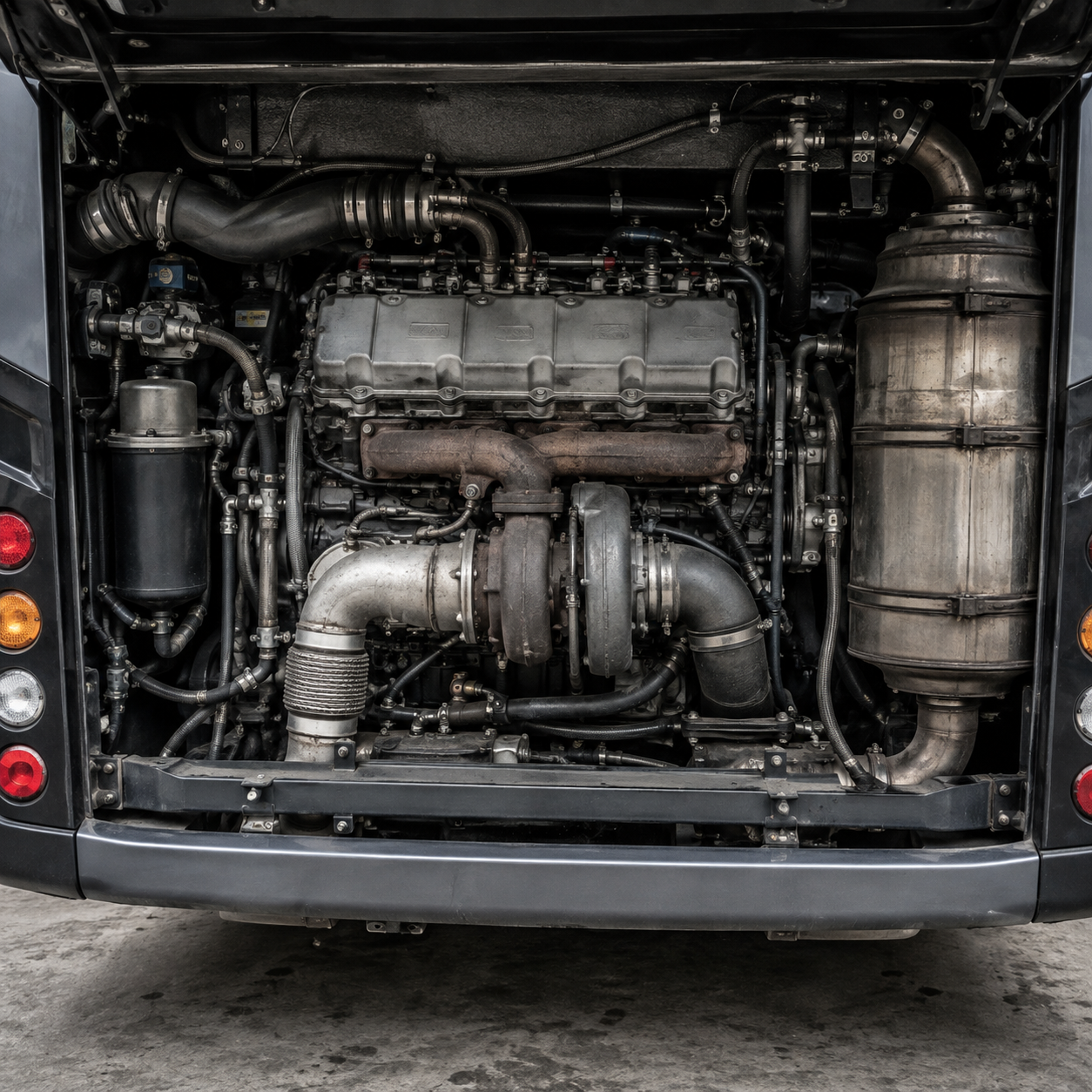
Two engine families dominate. The Detroit Diesel Series 60, a 12.7 liter inline six, powers most Prevost coaches built through the 2000s and has one of the strongest parts and service networks in North America. The Volvo D13, a 12.8 liter unit rated around 500 horsepower, powers H3-45 and X3-45 builds from roughly 2008 onward.
Both pair with Allison automatic transmissions and usually a Jake brake for engine braking on grades. That combination is the reason coach drivetrains reach the mileage they do.
Emissions equipment is the real dividing line. Pre-2007 engines carry no diesel particulate filter. The 2007 to 2009 era added particulate filters with regeneration cycles. From 2010, engines use selective catalytic reduction and diesel exhaust fluid, which adds a consumable and a set of sensors that can strand a coach when they fail. Newer means cleaner and quieter. Older means fewer electronics to fault. Either way, what protects you is paperwork.
Service records that carry weight
Records separate a good high-mileage coach from a gamble. The file should show engine oil and filter intervals, transmission service, cooling system flushes, air system and brake work, generator hours with matching service, tire purchase dates, and annual DOT inspections.
Ownership history matters alongside it. A one-owner, fleet-maintained coach has a single consistent maintenance standard behind it. A coach that has passed through four owners in six years usually has four different standards and gaps between them.
Missing records are a price argument, not automatically a walk-away. What you cannot verify, you should assume needs doing, and the cost of a rebuild, a full tire set, or an HVAC overhaul belongs in your offer. Renters face a simpler version of the same question, which is why the guide to questions to ask before leasing a tour bus puts fleet age and maintenance policy near the top. Some components ignore mileage completely.
Components that age on a calendar
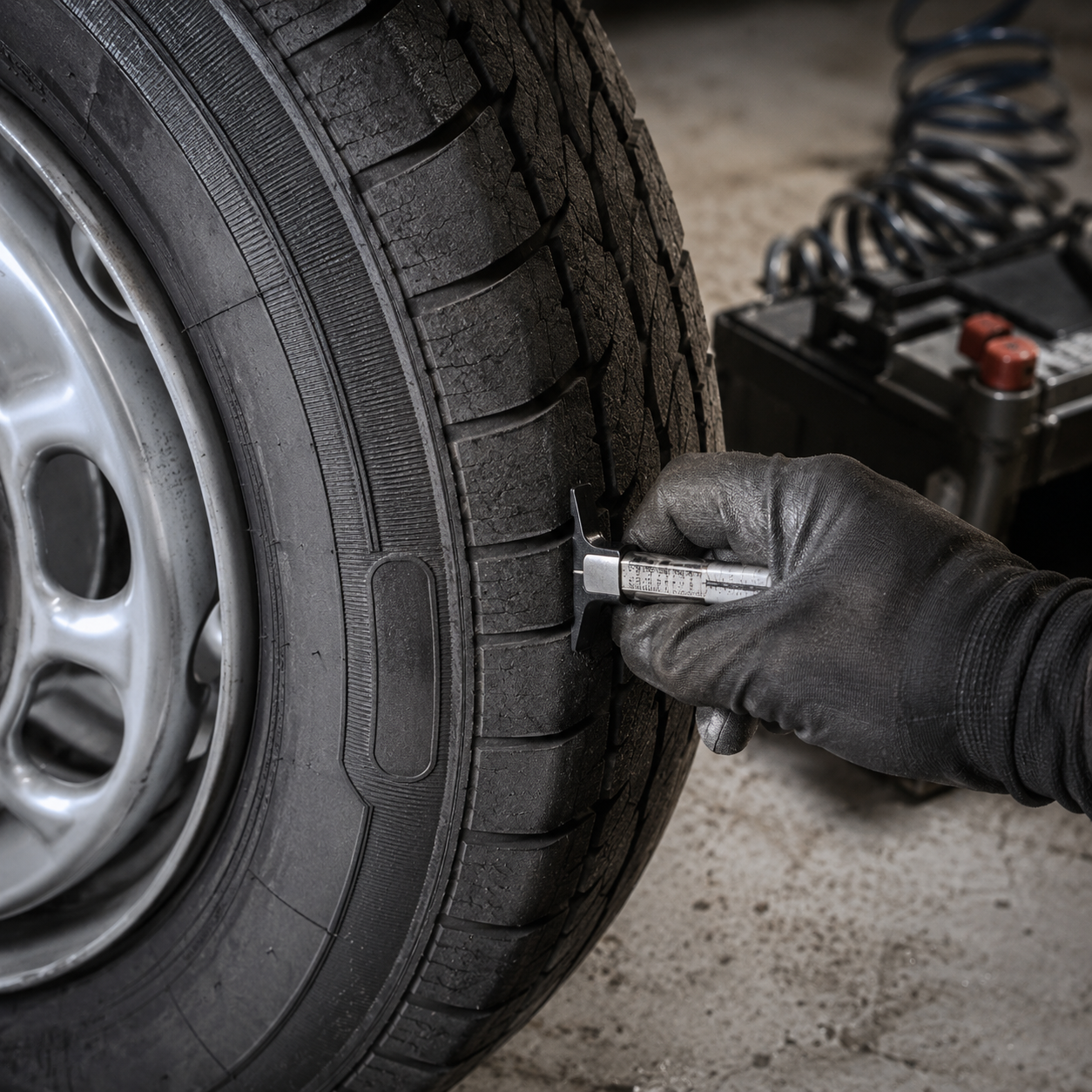
Tires age out before they wear out on coaches that cover moderate miles. Sidewall date codes matter more than tread depth, and many operators replace steer tires at around six years regardless of how much rubber is left, because a steer blowout on a 45 foot coach at highway speed is catastrophic.
Batteries, hoses, belts, seals, and air bags follow the same logic. Rubber and electrochemistry degrade on a calendar whether the coach moves or not, which is the reason low-mileage stored coaches often need immediate spending.
Interior systems age hardest of all. Roof air conditioning units, commonly 13,500 BTU each with five on a coach, water pumps, water heaters, slide-out mechanisms, and inverters all have finite service lives measured in years of touring rather than miles. Crews notice these before they notice the drivetrain, because a failed roof air in Phoenix in August ends the argument about coach age immediately. All of it lands in the rate.
What conversion quality tells you that age doesn’t
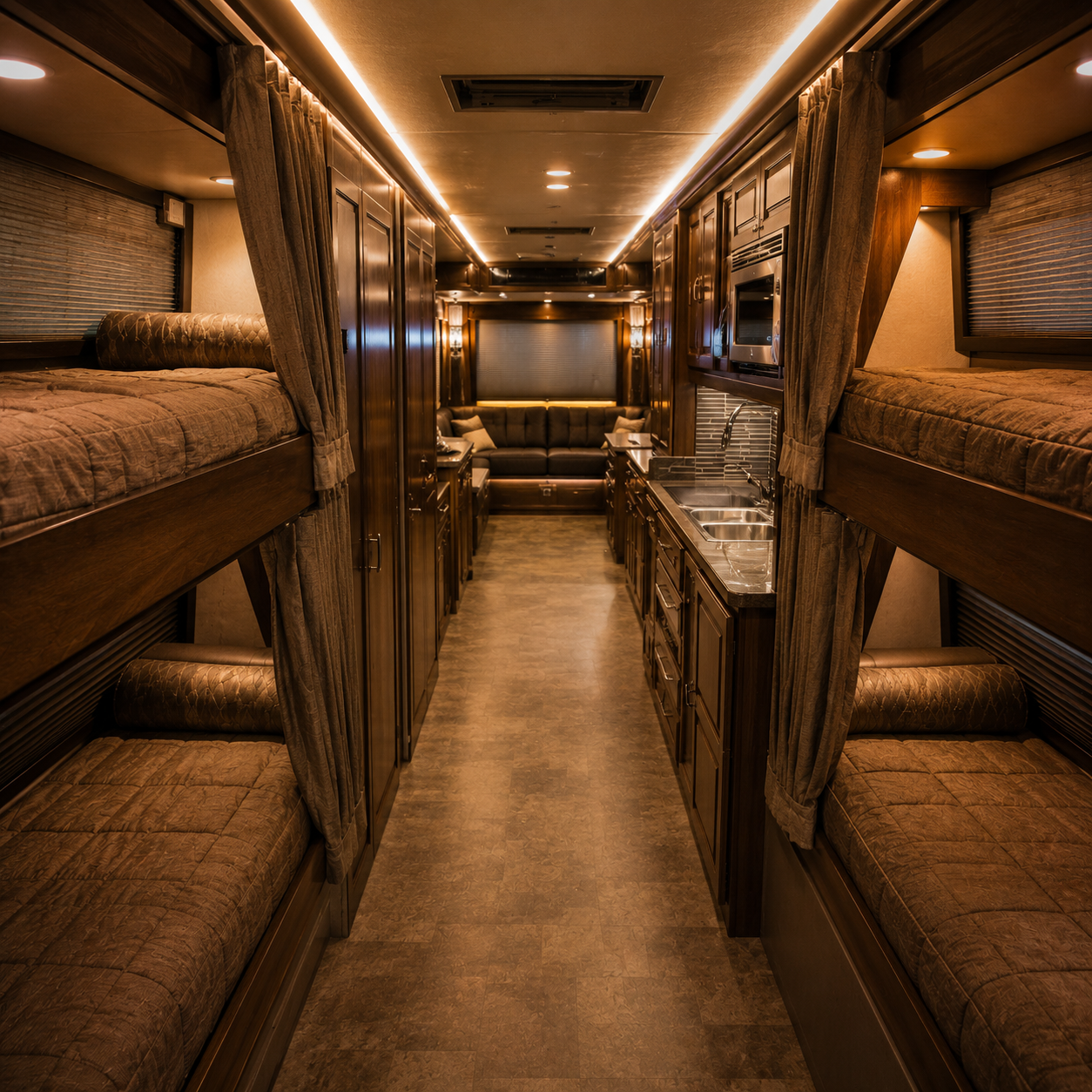
Conversion quality is the variable most buyers underweight and most crews feel first. Two 2012 H3-45 coaches with matching mileage can differ enormously depending on who built the interior and how well the systems were engineered behind the cabinetry.
Look at the systems, not the finishes. A well-built conversion has a properly sized inverter, a transfer switch that changes cleanly between shore power and generator, adequate fresh and waste tank capacity, insulation that keeps bunk alley cold in July, and enough outlets that twelve people aren’t sharing three sockets. Tank capacities around 90 gallons fresh and 90 gallons waste are common on touring builds.
Layout decisions age too. Slide-outs widen the lounges and add mechanical complexity, bunk counts from 6 to 14 set who can travel together, and rear configuration decides whether the artist gets a private suite or the crew gets a second social space. A thoughtful ten year old conversion beats a cheap three year old one on every night of a six week run, which is why the entertainer coach rental spec sheet deserves as much attention as the model year.
How age and mileage set the rate
Lease and charter rates track age, conversion quality, and reliability history rather than the odometer alone. Newer chassis with recent conversions command the top of the market because they break down less, look current in content, and carry warranty coverage on more systems.
Older coaches with strong records fill the middle. They cost less per day, they run reliably when maintained, and for regional runs they often make the better economic argument. What you’re really buying at any age is downtime risk, since a coach that fails 400 miles from the next market costs a show, not a repair bill.
Fleet policy is the thing to ask about. Operators that cycle coaches on a defined schedule and document service consistently deliver more predictable tours than operators that run vehicles until failure. Knights Coaches runs over 20 custom-converted Prevost H3-45 and X3-45 coaches across Elite, Premium, and Standard classes, listed individually with chassis, bunk count, and slide configuration on the fleet page.
What is high mileage for an entertainer coach?
Anything under 250,000 miles counts as low for a commercial coach, 250,000 to 500,000 is normal working range, and past 500,000 the question becomes whether the engine has a documented rebuild. Coaches regularly stay in service beyond 550,000 miles.
How many miles does a Prevost coach last?
With scheduled maintenance and at least one drivetrain rebuild, a Prevost commonly exceeds 1,000,000 miles across its service life. The stainless steel structure typically outlasts several interior conversions, which is why old chassis get re-converted rather than scrapped.
Does model year or mileage matter more?
Records matter most, then conversion year, then mileage, then model year. A documented 400,000 mile coach with a recent interior beats an undocumented 150,000 mile coach that has been parked for three years.
What engine is in most entertainer coaches?
The Detroit Diesel Series 60 powers most Prevost builds through the 2000s, and the Volvo D13 rated near 500 horsepower powers H3-45 and X3-45 coaches from roughly 2008 onward. Both run with Allison automatic transmissions.
Why do generator hours matter?
Generators run whenever the coach is parked without a venue hookup, so hours accumulate faster than miles and represent real engine load. High hours with no matching service history point to deferred maintenance on a system your crew depends on overnight.
How much does a used entertainer coach cost?
Prices run from around $40,000 for older high-mileage units to $600,000 and above for late-model custom conversions, with 2010 to 2018 Prevost H3-45 coaches typically between $100,000 and $250,000. Conversion quality moves the number more than mileage does.
Is an older coach less reliable on tour?
Not automatically. A well-documented older coach with current tires, serviced HVAC, and a maintained generator often runs more reliably than a newer coach with deferred maintenance. Downtime risk tracks maintenance discipline rather than build date.
What should be inspected before leasing a coach?
Engine and transmission service history, generator hours, tire date codes, brake and air system condition, roof air units, water and waste systems, slide-out operation, and the most recent DOT inspection. Ask for the file rather than a summary.
Do tires get replaced by age or tread?
Both, and age usually comes first on touring coaches. Sidewall date codes drive the decision, and many operators change steer tires around the six year mark regardless of remaining tread depth.
Does coach age affect insurance or compliance?
Compliance depends on inspection status and carrier safety standing rather than build year. Every coach needs a current US DOT number, annual inspection, and FMCSA-qualified drivers, which are covered on the about page.
Is it better to lease or buy a coach?
Leasing suits acts touring under six months a year, since it removes maintenance, storage, insurance, and driver employment from your budget. Buying makes sense at high utilization with the infrastructure to support it, and entertainer coach leasing from 1 to 12 months covers most of the middle ground.
What is a coach conversion?
A conversion is the process of stripping a commercial motorcoach shell and rebuilding the interior as living space with bunks, a galley, lounges, plumbing, HVAC, and electrical systems. Converters work from an empty shell, so the chassis and the interior have separate build dates and separate service lives.
How long do entertainer coaches stay in touring fleets?
Most coaches work touring routes for 10 to 20 years before moving to lighter duty or receiving a fresh conversion. Operators typically refurbish interiors every 5 to 8 years, since bunk fabric, flooring, and screens date faster than the drivetrain wears out.
Does high mileage affect resale value?
Less than most buyers expect. Resale tracks conversion condition, service documentation, and rebuild history more closely than the odometer, which is why a rebuilt 500,000 mile coach with a current interior can list above a tired 200,000 mile unit.
Reading the numbers correctly
Coach miles run high by design, so an entertainer coach odometer describes duty cycle rather than remaining life. Chassis year and conversion year answer different questions, the odometer predicts drivetrain wear, and generator hours predict everything that happens while the coach sits parked overnight.
Engine family and emissions era set the ownership experience, service records separate a strong high-mileage coach from a risky one, and tires, batteries, HVAC, and slide mechanisms age on a calendar no matter what the meters say. Rates follow reliability history rather than either number alone. Knights Coaches runs Prevost H3-45 and X3-45 coaches with documented maintenance and a CDL driver on every booking. Call 1-855-838-5542 or use the contact form to ask about the specific coach assigned to your run.