
Bringing a Dog on a Tour Bus: Rules, Safety and Daily Routine
You can sometimes bring a dog on a tour bus, but only with the coach company's written approval and the agreement of everyone on board. Plan a crate for when the coach moves, walk breaks at stops, a cleaning fee, and never leave the dog in a parked coach without climate control.
Knights Coaches
Knights Coaches
- Published
- Reading time
- 5 min read
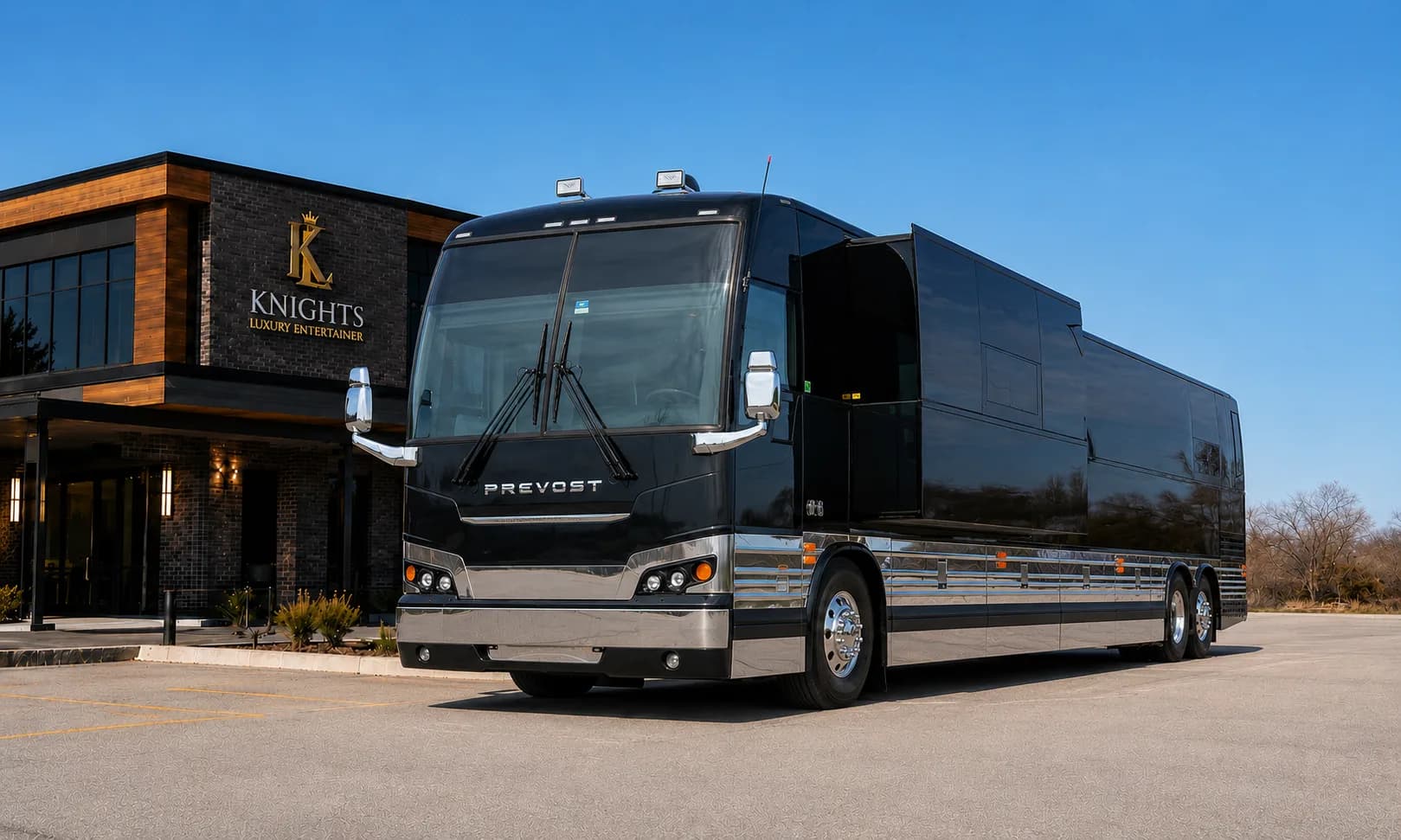
Many touring musicians would rather not leave their dog at home for six weeks. A dog on a tour bus can work well, and plenty of acts tour with one. But a 45-foot coach shared by 12 people is not a house, and bringing a pet affects everyone on board, the driver, and the coach company's cleaning bill.
The decision involves several parties: the coach company, whose rules decide whether pets are allowed at all; the riding party, who share the space; the driver, who has to stop for walks; and venues and hotels, which have their own pet rules. This guide covers how to ask, who must agree, keeping the dog safe on the road, daily routine, cleaning and allergies, and crossing borders with a pet.
Start by Asking the Coach Company
Never bring a pet without asking first. Coach companies set their own pet policies, and they vary. Some allow small, well-behaved dogs with a cleaning fee or deposit. Some allow them case by case. Some do not allow pets at all, often because a future client may have severe allergies.
Ask at the quote stage, and get the answer in writing. Tell the company the breed, size, age and temperament. If they say yes, ask about any deposit, cleaning charge and rules for where the dog may sleep.
Everyone on the Coach Must Agree
A pet changes life for the whole party. Before committing, check with every rider:
- Allergies. One rider with a dog allergy can make a tour miserable, or unsafe.
- Fear of dogs. Some people are uneasy around dogs in a small space.
- Sleep. A dog that barks at night wakes 11 other people.
- Space. Food, a crate and toys take room in a coach with no spare room.
Our guide to tour bus etiquette explains why shared-space decisions matter so much on a coach.
Is Your Dog Suited to Bus Life?
Some dogs love the road. Others find it stressful. A good tour dog:
- Is calm in small spaces and with strangers.
- Is house trained and can wait between stops.
- Does not bark much at noises, doors or other dogs.
- Is comfortable in a crate.
- Handles motion without getting sick.
Try a few short trips first. If the dog is anxious on a weekend run, a six-week tour will be harder.
Keeping the Dog Safe While Moving
A coach can brake hard. A loose dog in the aisle can be hurt, and can trip a rider. Safety basics:
- Use a crate secured in a lounge or a safe corner while the coach moves.
- Never leave the dog in a parked coach without power and climate control. A shut-down coach heats up fast in summer and cools fast in winter.
- Keep doors closed so the dog cannot bolt at a truck stop.
- Use a leash every time the dog leaves the coach. Truck stops and venue lots are busy.
- Keep ID tags and a microchip up to date, with a mobile number that will be answered.
Idling rules in some cities mean a parked coach may have limited climate control for a time. See tour bus idling laws, and plan to bring the dog with you on those days.
Daily Routine on the Road
Dogs need routine, and tours have little of it. Build one anyway:
- Walks at every stop, especially on long drive nights.
- Talk to the driver about stop timing. Many drivers will plan walk breaks into fuel stops.
- Feed at the same times each day, ideally not right before a long drive.
- Carry water for the dog in the coach.
- Plan show-day care. Who watches the dog during load-in, the set and load-out?
Drivers have legal limits on their day. Walk breaks need to fit inside those limits. Our guide to FMCSA hours of service explains why.
Cleaning, Hair and Allergies
Pet hair spreads through a coach fast. To keep the coach clean:
- Keep the dog off bunks other than the owner's, and ideally off the lounge seats.
- Bring a washable blanket for the dog's spot.
- Vacuum or lint-roll often.
- Bag and bin waste right away, outside the coach.
- Expect a deep clean at the end of the tour, and its cost.
Coach companies often charge for extra cleaning after a pet, because the next client may have allergies.
Venues and Hotels
Your coach may allow the dog, but the venue might not. Many venues do not allow animals backstage. Many hotels charge pet fees or limit the number of pets. Add pet rules to your venue and hotel advance, and plan where the dog goes during the show.
Crossing Borders With a Dog
Crossing into Canada or coming back into the US with a dog adds paperwork. Both countries set rules on vaccinations and documents, and the US Centers for Disease Control and Prevention (CDC) sets rules for dogs entering the US, including dogs returning from Canada. Check the current CBSA and CDC requirements well before the tour. See taking a tour bus across the Canadian border for the rest of the crossing plan.
Service Animals
Service animals are different from pets and are handled under different rules. If a rider needs a service animal, tell the coach company at booking so they can plan for it.
Pets and Knights Coaches
If you hope to bring a dog on a Knights Coaches entertainer coach, tell us when you request a quote. We will confirm what is possible for your dates and coach, explain any cleaning terms, and brief your driver so stops can be planned. Start on the reservation page or call 1-855-838-5542.
Frequently Asked Questions
Can you bring a dog on a tour bus?
Sometimes. It depends on the coach company's pet policy and whether everyone on board agrees. Always ask before booking and get the answer in writing.
Is there a fee for pets on a tour bus?
Many companies that allow pets charge a deposit or cleaning fee, because the coach needs a deep clean before the next client.
Where does a dog sleep on a tour bus?
Usually in a crate in a lounge or in the owner's bunk area. Keep the dog off other riders' bunks.
Can a dog stay on a parked tour bus alone?
Only with reliable climate control, and never for long. A shut-down coach can get dangerously hot or cold quickly.