
Entertainer Coach Rental Agreement
Entertainer Coach Rental Agreement: What Is in the Contract
An entertainer coach rental agreement decides who pays for what, what happens when the schedule moves, and who carries the risk when something goes wrong. It is short enough to read in fifteen minutes and expensive enough to read twice.
Published operator terms give a sense of the shape. Deposits commonly run around 20 percent within 10 days of booking, with the balance due 30 days before departure. Cancellation windows sit near 20 days for a short single-coach booking and 60 days for multi-day or multi-coach work. Luggage assistance frequently stops at 50 pounds per item.
Around those numbers sit the clauses that matter more than the rate. Indemnity, which shifts liability toward the hirer. Insurance, and whether your tour can be named as additional insured. Force majeure, which lists what the operator is not liable for. Damage and cleaning, which settle after the last date rather than before the first.
Driver hours sit underneath all of it. The FMCSA allows passenger-carrying drivers 10 hours of driving after 8 consecutive hours off duty, and many operators write a stricter margin into their own terms, charging for a relief driver when an itinerary exceeds it.
This page walks the clauses in the order they usually appear, then lists what to check before signing. It describes common industry terms rather than legal advice, and your own contract governs.
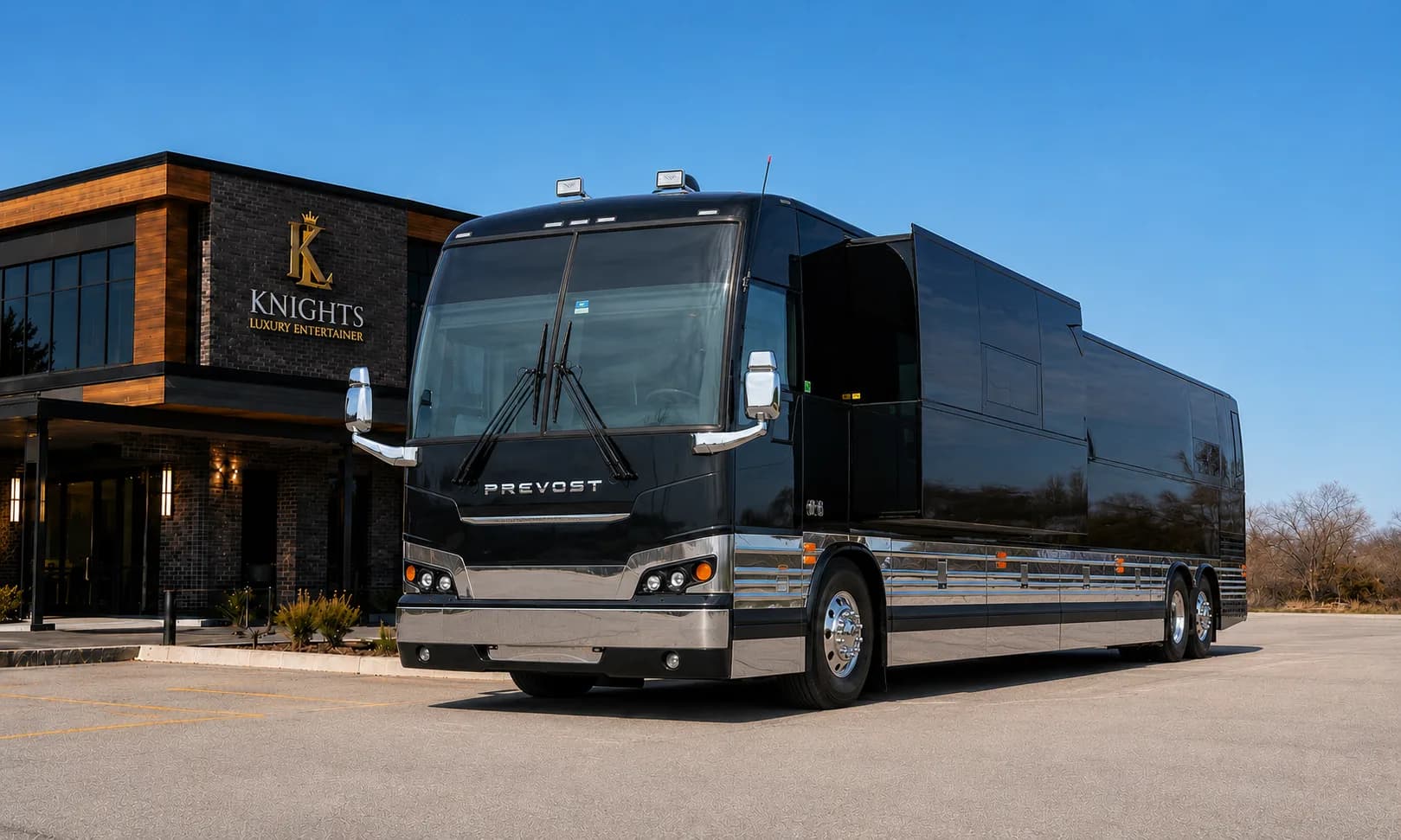
Term, dates and contracted days
Term defines what you pay for, measured in contracted days rather than show days. A coach booked for 30 days bills 30 whether you play 12 dates or 25. Travel days, days off and the deadhead at each end all sit inside that count.
Read how the agreement bounds a day. Some operators run midnight to midnight, others from pickup time. With overnight drives that difference decides whether a 2am departure belongs to the day ending or the one starting.
Once the term is fixed, payment attaches to it.
Deposit, payment schedule and cancellation
Payment runs in stages: a deposit confirming the booking, a balance before departure, and settlement of variable charges afterward. Published charter terms show deposits near 20 percent due within ten days, the balance 30 days ahead of the first date, and full payment immediately where a booking falls inside that window.
Cancellation is where the money sits. Refund windows widen with the size of the booking, and a multi-coach or multi-week commitment typically needs around 60 days notice rather than 20. Past the window, deposits are usually retained rather than refunded.
Ask whether a cancelled leg converts to a credit against future dates. Many operators will, and almost none write it into the standard document.
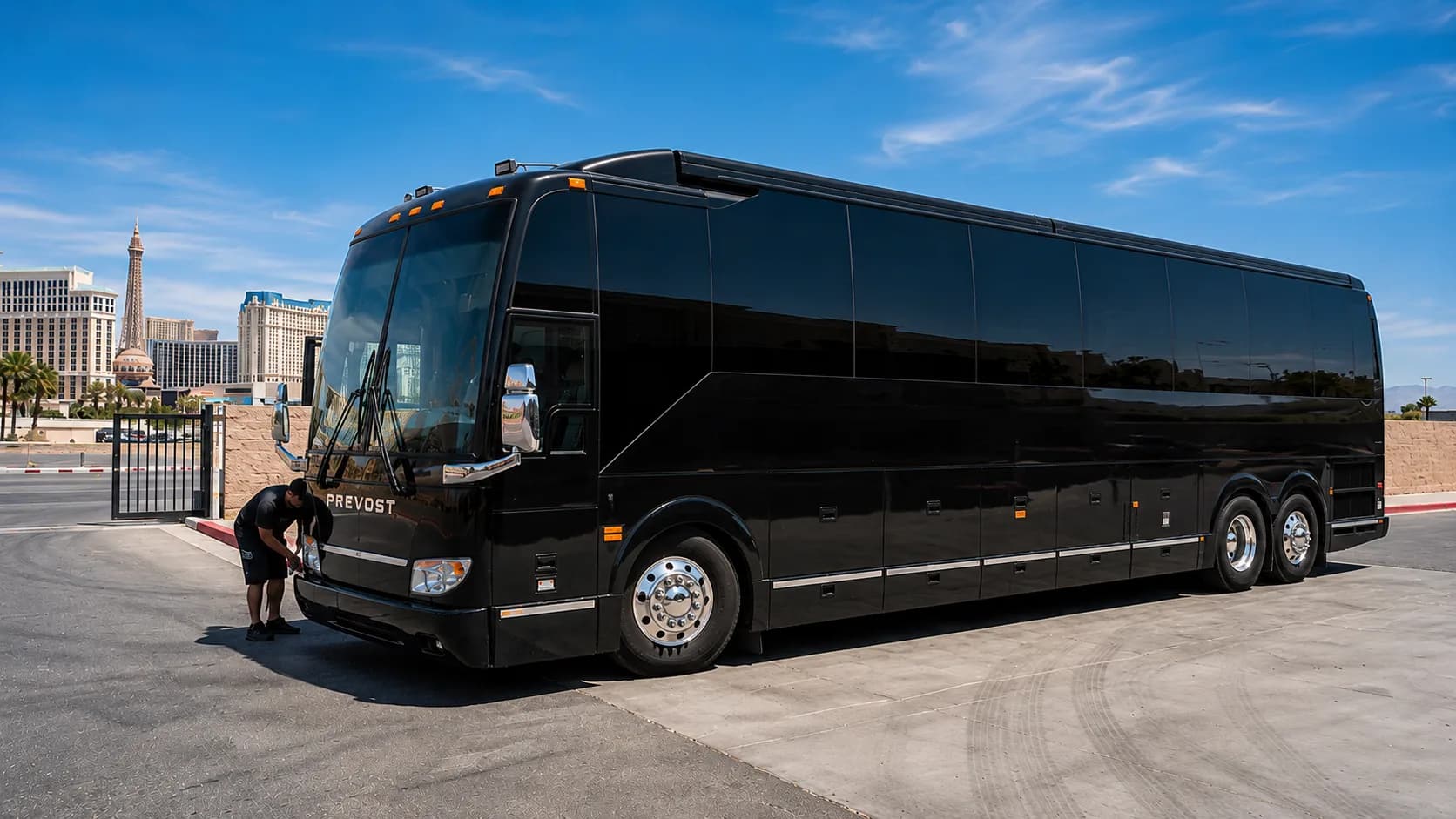
What the lessee pays for
Costs falling to the hirer are listed explicitly, and the list runs longer than most budgets assume:
- Fuel, calculated against route miles rather than quoted as a flat figure
- Tolls, permits, ferry charges and venue parking
- Driver lodging for every night the coach is out, plus a per diem
- Overdrive when a driving day passes the operator's mileage threshold
- Exterior washes between legs and interior cleaning after the last date
- Damage repair, assessed after the coach returns
The clause to look for is the one making the hirer responsible for site access. Several operators reserve the right to relocate a pickup if a 45-foot coach cannot safely reach it, and to charge the hirer if the vehicle is damaged or stuck attempting it.
Hours-of-service terms sit alongside those costs.
Driver hours and relief drivers
Hours clauses restate the federal limit and then add the operator's own margin. Federal rules permit 10 hours of driving after 8 consecutive hours off duty; published terms commonly require 9 hours off instead, which is stricter than the regulation and reduces what a routing can cover in a day.
Where an itinerary exceeds what one driver can legally do, the contract triggers a relief driver at extra cost rather than letting the schedule stand. That is a safety provision, and no reputable operator negotiates it.
Send the routing before signing rather than after. A contract signed against a rough itinerary and later amended is where surprise charges come from.
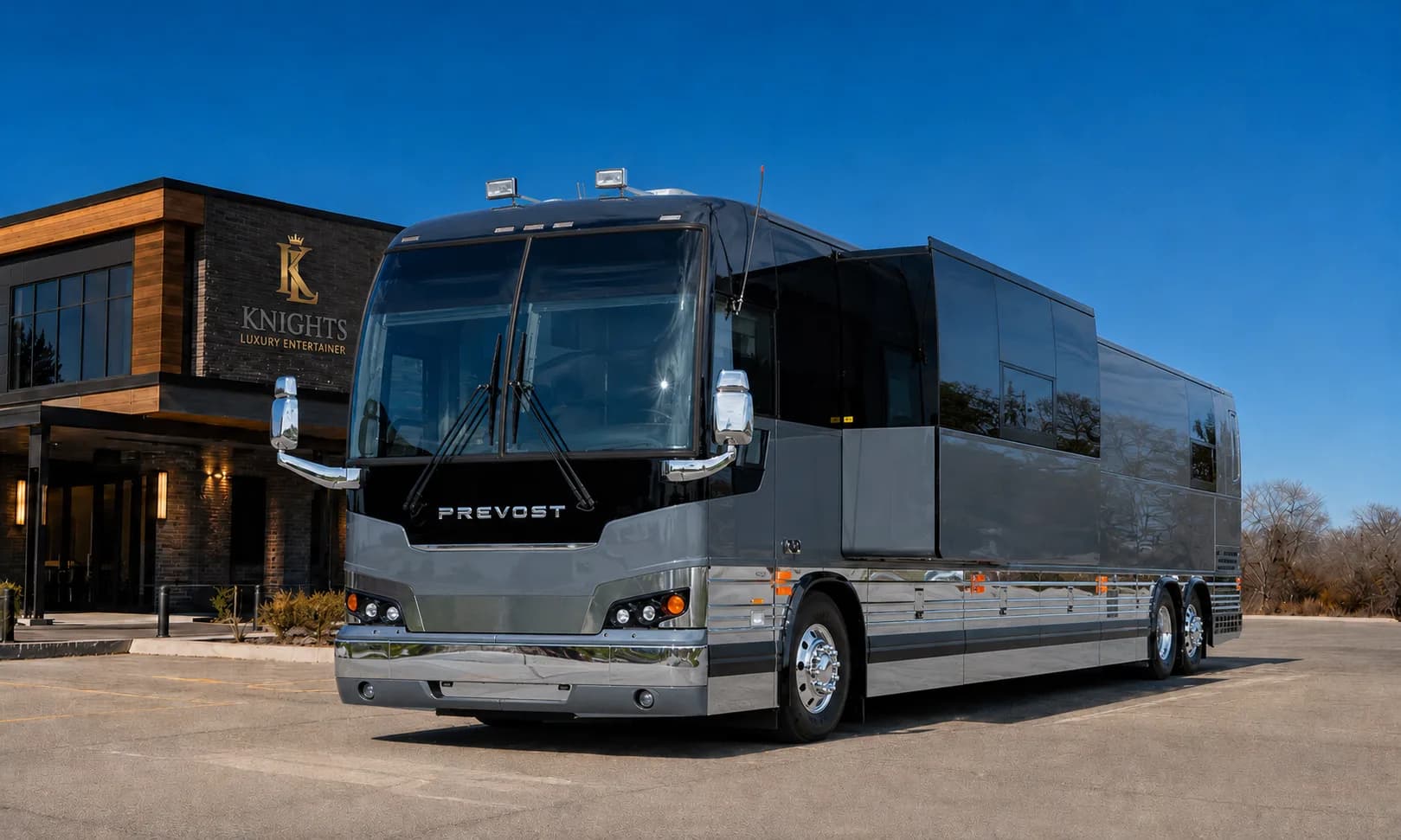
Damage, cleaning and conduct
Damage clauses put repair costs on the hiring party, and conduct clauses extend that to everyone aboard. Supervising the party is the hirer's responsibility, not the driver's.
Standard prohibitions cover smoking and e-cigarettes, barred by federal regulation on commercial vehicles, plus weapons, fireworks and anything likely to damage the interior. Alcohol policies vary: some operators permit it against a refundable security deposit, others not at all.
Cleaning settles at the end. A deep interior clean and a final exterior wash are closing charges rather than penalties, and appear on the last invoice.
Liability for the coach itself is a separate question again.
Insurance, indemnity and additional insured
Indemnity clauses require the hirer to defend and hold the operator harmless against claims arising from the hirer's own acts, omissions or breaches. It is standard commercial language and will not be struck out, but know it is there.
Insurance runs the other way. The operator carries commercial cover under its own DOT authority. What varies is the limit, and whether your tour, promoter or venue can be named as additional insured. Venues frequently demand a certificate, so raise it before signing rather than the week of the show.
Coverage differs between operators, which is why asking for the limit in writing is worth the email.
Force majeure and what is not guaranteed
Force majeure lists what an operator is not liable for: weather, mechanical failure, strikes, road conditions and government action among them. It is the clause that decides who absorbs a missed date when a coach fails 200 miles out.
Read what else is disclaimed. Published terms routinely decline to guarantee arrival times, and some do not guarantee onboard amenities such as entertainment systems or climate control. A tour depending on a working generator should get that in writing separately.
A good contract does promise a replacement coach when a unit goes out of service. Confirm that provision exists, because force majeure does not create it.
What to check before signing
Six checks take under an hour and prevent most disputes.
- Look the operator up in the FMCSA SAFER system by DOT number and read the inspection record
- Ask for the insurance limit in writing and whether additional insured is available
- Confirm deadhead, overdrive threshold and driver lodging appear as separate lines
- Get photographs of the specific coach assigned, not a fleet gallery
- Check the cancellation window against how firm your dates are
- Confirm the breakdown and replacement-coach provision in the document itself
Knights Coaches operates under its own DOT authority with EMC membership, and itemizes deadhead, overdrive and lodging rather than bundling them.
Got questions?
Frequently asked questions
Around 20 percent of the total, due within about ten days of booking, with the balance 30 days before departure. Bookings made inside that 30 day window usually require payment in full immediately. Figures vary by operator, so confirm yours in writing.
Usually yes, but you have to ask before signing. Venues and promoters often demand a certificate of insurance naming them. Requesting it after the contract is executed is slower and sometimes attracts a fee.
An indemnity clause requires the hirer to defend and cover the operator against claims arising from the hirer's own acts or breaches. It is standard in commercial transport contracts. It does not transfer liability for the operator's own negligence.
Fuel, tolls, permits, parking, driver lodging and per diem, overdrive, washes, closing cleaning and any damage. Those sit outside the day rate on most entertainer coach agreements. The rate covers the coach and, depending on the operator, the driver's base pay.
Yes, mainly in who carries fuel and how long the term runs. Charter agreements more often bundle fuel into a headline figure for a short trip. Entertainer coach leases run for weeks or months and bill fuel against actual route miles.
Yes, but changes go in writing and can reprice the booking. Published terms commonly require amendments at least 20 days ahead. A routing change that adds mileage or crosses the overdrive threshold changes the cost, so submit revisions early.
Force majeure lists events the operator is not held liable for, including weather, mechanical failure, strikes, road conditions and government action. It does not excuse an operator from providing a replacement coach where the contract promises one. Those are separate provisions.
Smoking and e-cigarettes, barred by federal regulation, plus weapons, fireworks and anything likely to damage the interior. Alcohol sits in between: some operators allow it against a refundable security deposit, others prohibit it outright. Confirm which applies to your booking.
Inside the cancellation window a refund is normal; outside it the deposit is usually retained. Many operators will convert a retained deposit into a credit against rescheduled dates even though the standard contract does not say so. It is worth asking rather than assuming.
Read the contract, then get it quoted
An entertainer coach agreement sets the term in contracted days, the deposit and cancellation windows, the costs falling to the hirer, the driver-hours margin and the clauses covering damage, indemnity, insurance and force majeure. None of it is unusual, and all of it is easier to negotiate before signature than after. Check the SAFER record, get the insurance limit in writing, confirm deadhead and overdrive appear as their own lines, and confirm a replacement coach is promised rather than implied. Ask for photographs of the actual unit. Call 1-855-838-5542 with your routing and Knights Coaches will send terms with every line itemized.