
Entertainer Coach Leasing
Entertainer Coach Leasing: Long-Term Tour Contracts
An entertainer coach lease is a fixed-term contract that assigns one coach and one driver to a tour for a defined block of time rather than pricing each date separately. Terms run from a single tour leg of two or three weeks up to a 12-month contract.
The structure is what changes. Per-day rentals reprice every booking and re-quote deadhead each time a coach leaves the yard. A lease fixes the coach rate for the term, keeps the same unit on the road between legs, and carries the same driver from first date to last. That continuity is the point: a driver who has run the tour since day one already knows the load-in gates, the bus call habits, and which bunks belong to whom.
Around the rate sit the terms that decide whether a contract is worth signing. Dark days between legs. Where the coach sits during a gap. Who pays for preventive maintenance. What happens when a unit fails 300 miles from the next venue. Wrap lead times if the coach is carrying tour artwork.
Two references anchor the diligence. The FMCSA publishes every US operator's safety record in the SAFER system, which is public and worth reading before a long commitment. The Entertainer Motorcoach Council sets the service standard North American operators hold themselves to, and Knights Coaches carries membership.
This page covers when a lease beats a day rate, how long terms run, what a contract includes, how gaps and storage are handled, interiors and branding, the safety paperwork to check, and how to get terms quoted.

When a lease beats a per-day rental
Leases start paying off once a tour has enough dates that repricing each one becomes the expensive part. A routing of 30 or more show days across a season usually lands better on a fixed term, because deadhead gets quoted once at the front instead of on every separate booking.
Short runs work the other way. A four-date weekend with three months until the next one belongs on a day rate, since a lease would bill through the gap for a coach nobody is riding.
The honest test is the ratio of show days to contract days. Above roughly two thirds, a lease wins. Below half, it rarely does. Which raises how long the term should run.
Lease terms and how long they run
Terms are written in three common shapes:
- Leg lease: two to six weeks covering one continuous run of dates. Suits club and theater tours booked one leg at a time.
- Season lease: three to six months across a festival season or an album cycle, usually with scheduled gaps built into the contract.
- Annual lease: 12 months for acts touring more or less continuously, including residencies that need a coach on standby.
Longer terms carry lower effective day rates because the operator is not re-staging the unit between customers. An annual contract holds a specific coach out of the general fleet, so availability is confirmed before a rate is.
What the number covers varies more than the number itself.
What a long-term lease includes
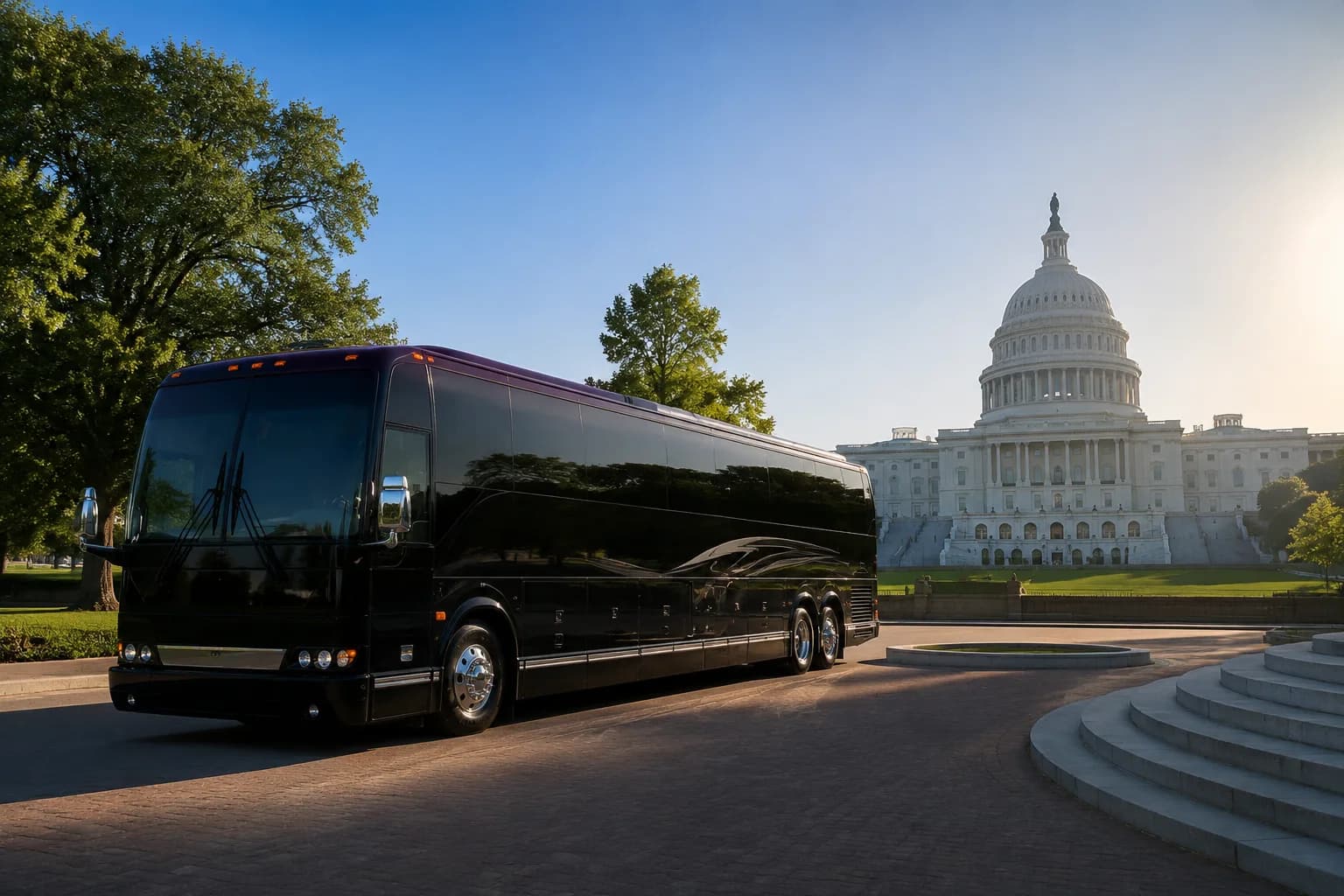
Included in a Knights Coaches lease is a named coach, its driver, and the maintenance program that keeps both legal:
- Dedicated unit held for the contract, not substituted between legs
- Named driver with a commercial license, current DOT medical card and FMCSA Clearinghouse enrollment
- Preventive maintenance on scheduled intervals, plus pre-trip inspections before every departure
- Operating authority and commercial insurance carried by the operator
- Round-the-clock dispatch for routing changes, reroutes and breakdown calls
- Replacement coach dispatched if the leased unit goes out of service mid-tour
Fuel, tolls, permits, parking, driver lodging and per diem bill separately against actual use, because a lease cannot predict a routing change. Washes and interior cleaning are scheduled per leg.
Gaps in the schedule are handled separately again.
Dark days, storage and tour gaps
Dark days are contracted dates with no show on them, and they still cost money because the coach and driver stay committed. Most contracts price them below a show day rate but above zero, since the unit is unavailable to anyone else.
Longer gaps get handled two ways. Short breaks of a week or less usually keep the coach staged near the next city, with the driver released home and flown back. Extended breaks return the unit to a yard for storage and scheduled service, which is normally cheaper than holding it on the road. Both belong in the contract in writing rather than agreed by phone in week six.
Storage periods are also the sensible window for interior work.

Interiors, branding and the leased fleet
Interiors across the leased fleet run to the same specification: galley, stand-up bathroom with shower, satellite TV, WiFi with cellular boosters, and a 110V outlet at every berth. Slide-outs add 18 inches of floor width per side once parked. Coaches are Prevost throughout, on the flat-floor X3-45 and raised-floor H3-45 platforms, carrying twelve berths.
Vinyl wraps and tour artwork need at least 30 days before the first date, since design, print and install all sit ahead of departure. Long leases are where wraps make financial sense, because the install cost spreads across months rather than a fortnight.
Gear trailers and full tour trucking attach to the same contract, so backline and production move under one agreement instead of two.
Safety records and insurance to check before signing
Safety records are public, and checking one takes five minutes. Look the operator up in the FMCSA SAFER system by DOT number and read the crash history, the inspection results and the out-of-service percentages. An operator refusing to give a DOT number is answering the question.
Insurance deserves the same attention. Confirm the liability limit, confirm the operator carries it rather than a broker, and ask whether the tour can be named as additional insured when a venue demands a certificate. Knights Coaches operates under its own DOT authority with EMC membership behind it.
With the diligence done, terms can be quoted.
How to request lease terms
Requesting terms starts with the routing. Call 1-855-838-5542 or send the tour dates, the show-day count, pickup and drop cities, crew headcount, floor-plan preference, and any trucking or wrap requirements. Dispatch returns a term sheet with the coach identified, the driver assigned, the rate structure broken out by line, and the dark-day treatment stated.
Contracts confirm on a deposit and a signed agreement. Booking 60 or more days ahead secures first pick of the fleet, which matters more on annual terms than on a single leg.
Got questions?
Frequently asked questions
Yes, leases start at two weeks. Anything shorter prices better as a per-day rental, because a lease front-loads deadhead and holds a unit out of the fleet. Terms then step up through seasonal blocks to 12 months.
A dark day is a booked date without a performance, and yes, it bills. Coach and driver remain committed to the tour, so the unit earns nothing elsewhere. Dark days are quoted below show-day rates, and the figure appears in the contract before signing.
Yes, both are named in the contract and held for the term. Substitution only happens if the coach is pulled from service, in which case a replacement is dispatched. Driver continuity is the practical difference between a lease and a string of separate bookings.
Leasing wins once show days exceed roughly two thirds of the contract period, because deadhead is quoted once instead of per booking and the day rate drops with term length. Scattered dates with long gaps still favor a day rate. Compare cost per show day, not cost per month.
Six things: tour dates, the number of performances, origin and destination cities, headcount, floor plan and trucking needs. A routing with venue cities in order produces a firmer number than a date range, since drive distances set both fuel and driver cost.
A replacement unit is dispatched and the tour keeps moving. Roadside service handles what can be fixed on the shoulder; anything larger triggers a swap. This provision should be written into any long-term contract you sign, with any operator.
Buying beats leasing only above roughly 200 tour days a year. Ownership adds maintenance, insurance, storage, depreciation and a driver on payroll through the months the coach sits idle. Leasing converts all of that into a contracted rate.
Pickup and drop-off run across 48 states and the District of Columbia, with heaviest staging around Atlanta, Los Angeles, New York and Chicago. Alaska and Hawaii sit outside the operating area. Canadian legs are priced separately, since driver eligibility and paperwork change at the border.
Request your term sheet
Leasing an entertainer coach commits a named unit and a named driver to one tour for a contracted period, which is what separates it from repricing every date. Terms stretch from a two-week leg through a season to a full 12-month agreement, and the effective rate falls as the block lengthens. A contract covers the dedicated unit, the named driver, preventive maintenance, operating authority and insurance, with fuel and road costs billed against actual use. Dark days, storage during gaps, wrap lead times and breakdown replacement all belong on the term sheet in writing. Check the safety record in SAFER before signing, whoever you sign with. Call 1-855-838-5542 with your routing and show-day count, and Knights Coaches will come back with terms, a named coach and an assigned driver.