
How to Book an Entertainer Coach
How to Book an Entertainer Coach: Quote to Confirmation
Booking an entertainer coach is a five-step sequence that runs from a routing to a signed contract: build the itinerary, fix the headcount, specify the coach, read the quote, then sign. Knights Coaches prices against the routing rather than a date range, which is why the first step carries most of the weight.
What a coach company needs from you is short and specific. A complete itinerary with a date and a city for every day, including days off. The number of berths. The class of coach. Whether a gear trailer comes along, and whether the exterior carries tour artwork. Supply those and a quote comes back firm. Supply a month and two cities and it comes back as a guess.
The numbers behind the quote are worth knowing before you read one. Drive time estimates at roughly two hours per 100 miles once fuel stops are counted. Overdrive pay starts near the 450-mile mark on one driving day. Deadhead covers the empty run from the yard to your first city. A second driver becomes necessary when a jump can't legally fit in one shift.
That legal limit comes from the FMCSA, which allows passenger-carrying drivers 10 hours of driving after 8 consecutive hours off duty, inside 60- and 70-hour weekly caps. Every routing decision downstream sits on those numbers.
This page walks the five steps in order, then covers lead times, what happens on tour day, and the questions worth asking before you sign.
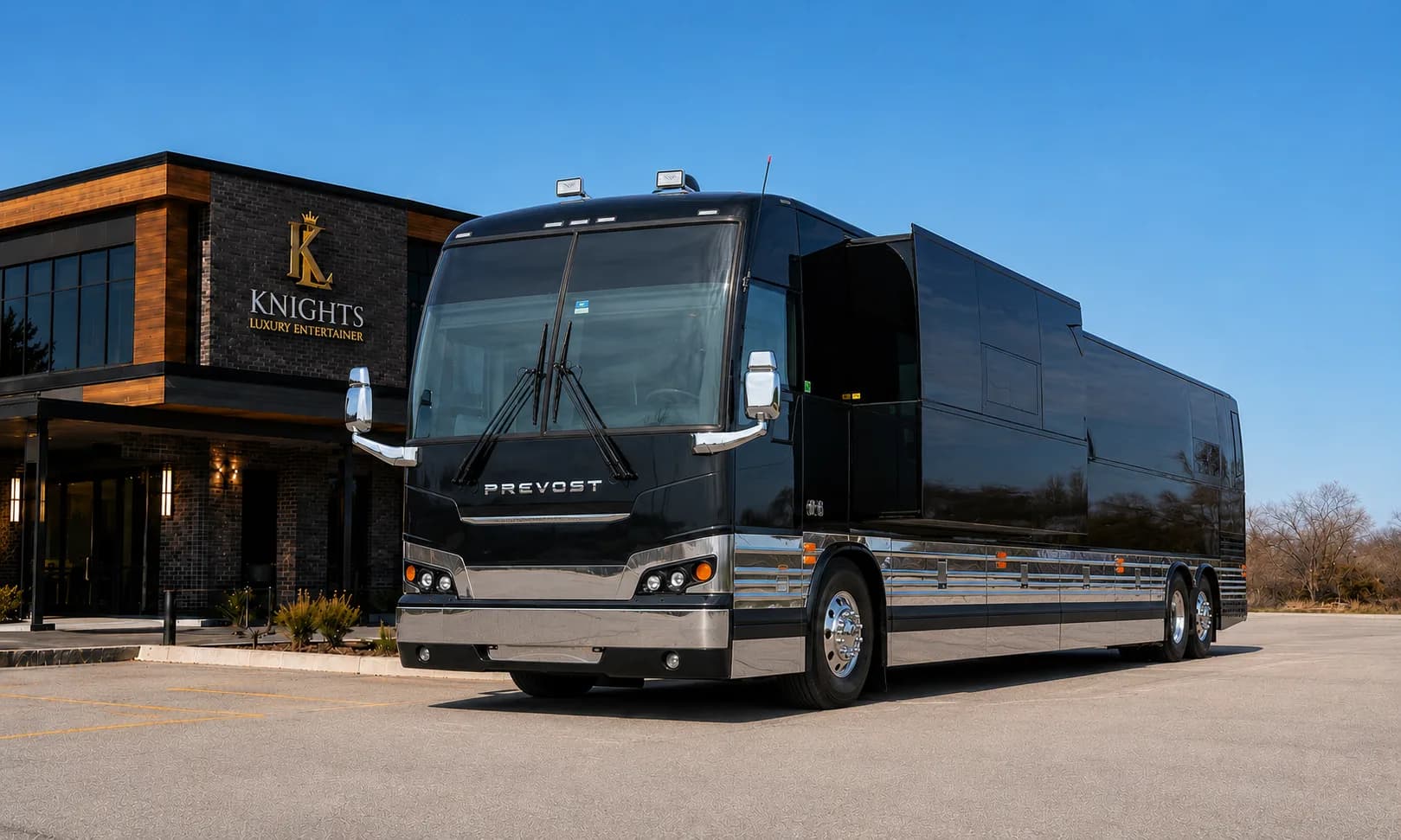
Step 1: Build the routing before you ask for a price
Routing is the one input that decides whether a quote means anything. Write the tour out day by day, naming the city on each line, including the ones with no show on them, because the coach still moves or parks on those days and both cost money.
Estimate drive time on that basis rather than a highway average. That figure already absorbs fuel stops, traffic and the reality that a 45-foot coach does not take shortcuts. A jump that looks like six hours on a map routinely runs eight.
Days off need a plan of their own. A coach parked in a venue lot on shore power costs nothing extra, while one that has to sit in a secured yard 200 miles from the next city adds two drive days nobody budgeted.
Once the routing is written, headcount decides which coach fits it.
Step 2: Fix the headcount and pick a floor plan
Headcount converts directly into berths. Count one per person traveling, then decide whether the spare berths matter. A party of ten on a 12-berth coach gains two berths for storage, which the industry calls a junk bunk, and loses nothing.
Layout is the second decision. A rear lounge keeps a shared room at the back for after the show. A star coach trades berths for a private bedroom and bathroom, which suits a headliner sleeping on a different clock from the crew. Larger tours split the party across a band bus and a crew bus rather than forcing everyone onto one unit.
With the layout settled, the specification list gets short.
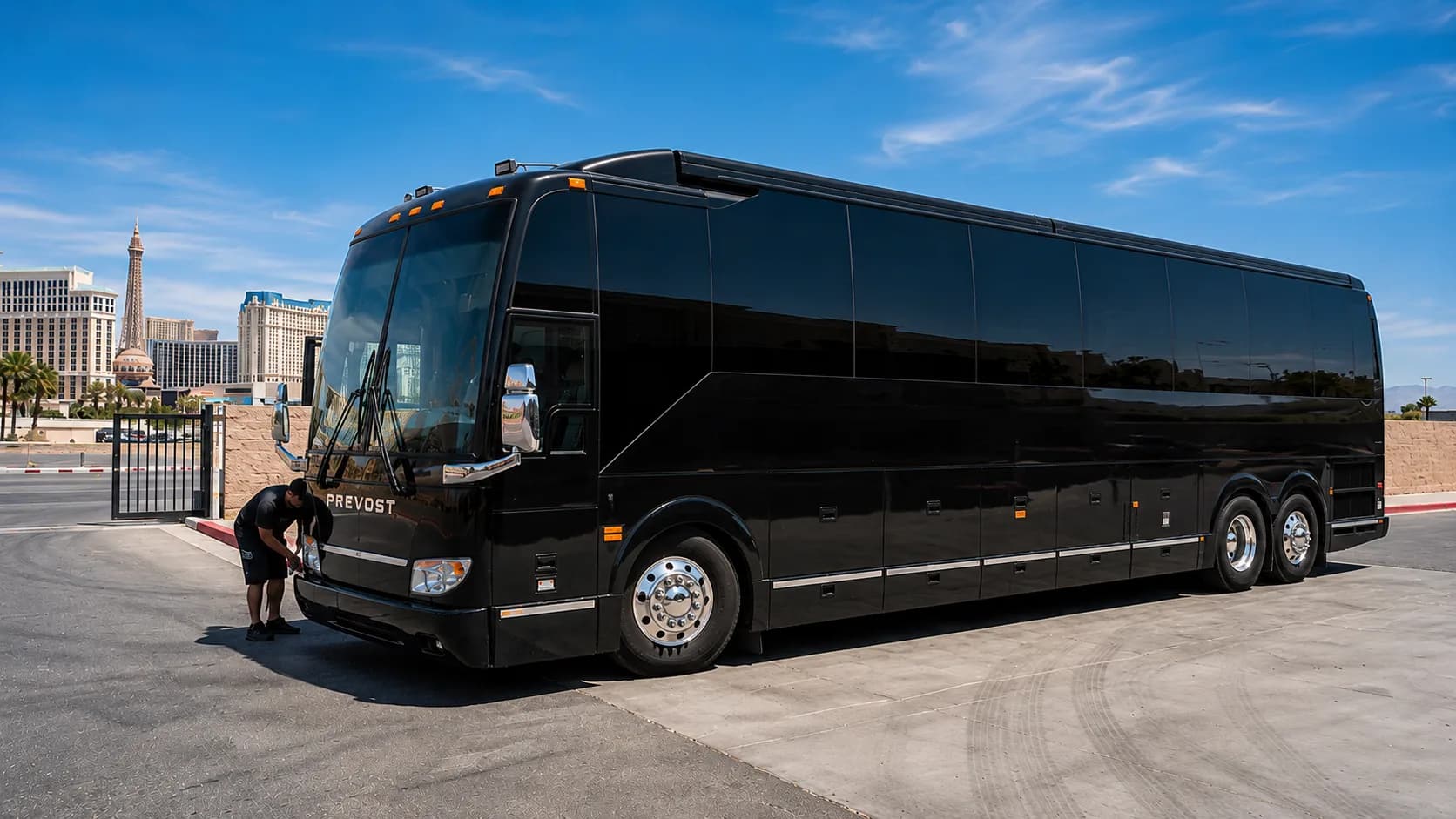
Step 3: Specify the coach and the extras
Specification is where quotes stop being comparable unless you ask every operator the same questions. Send:
- Coach age, since a well-serviced older unit prices below a current-year coach
- Slide-out or non-slide, remembering a slide needs clearance in tight club lots
- Gear trailer, with the weight and dimensions of what goes in it
- Exterior wrap or vinyl branding, which carries its own lead time
- Driver lodging preference, and whether a hotel buyout is acceptable
- Shore power and water hookups where the venue can supply them
Answer those once and every proposal you receive describes the same job. Then the numbers can be compared.
Step 4: Read the quote line by line
Quotes look wildly different because operators bundle differently, not because one is cheap. A complete proposal separates the coach day rate from the driver day rate, then adds lodging and per diem for each night out. Fuel appears as a calculation, not a flat figure, based on route miles against roughly 6 MPG.
Below that sit the items that move a total most. Deadhead, billed as drive days out to your opener and back. Overdrive, triggered when a shift passes the mileage threshold. Tolls, permits and parking. Exterior washes between legs. A one-way drop charge if the tour ends far from where it started.
Knights Coaches returns three coaches that match the dates and layout, each priced this way, with a recommendation on whether the routing needs one driver or two. Comparing quotes is only possible once every line is visible.
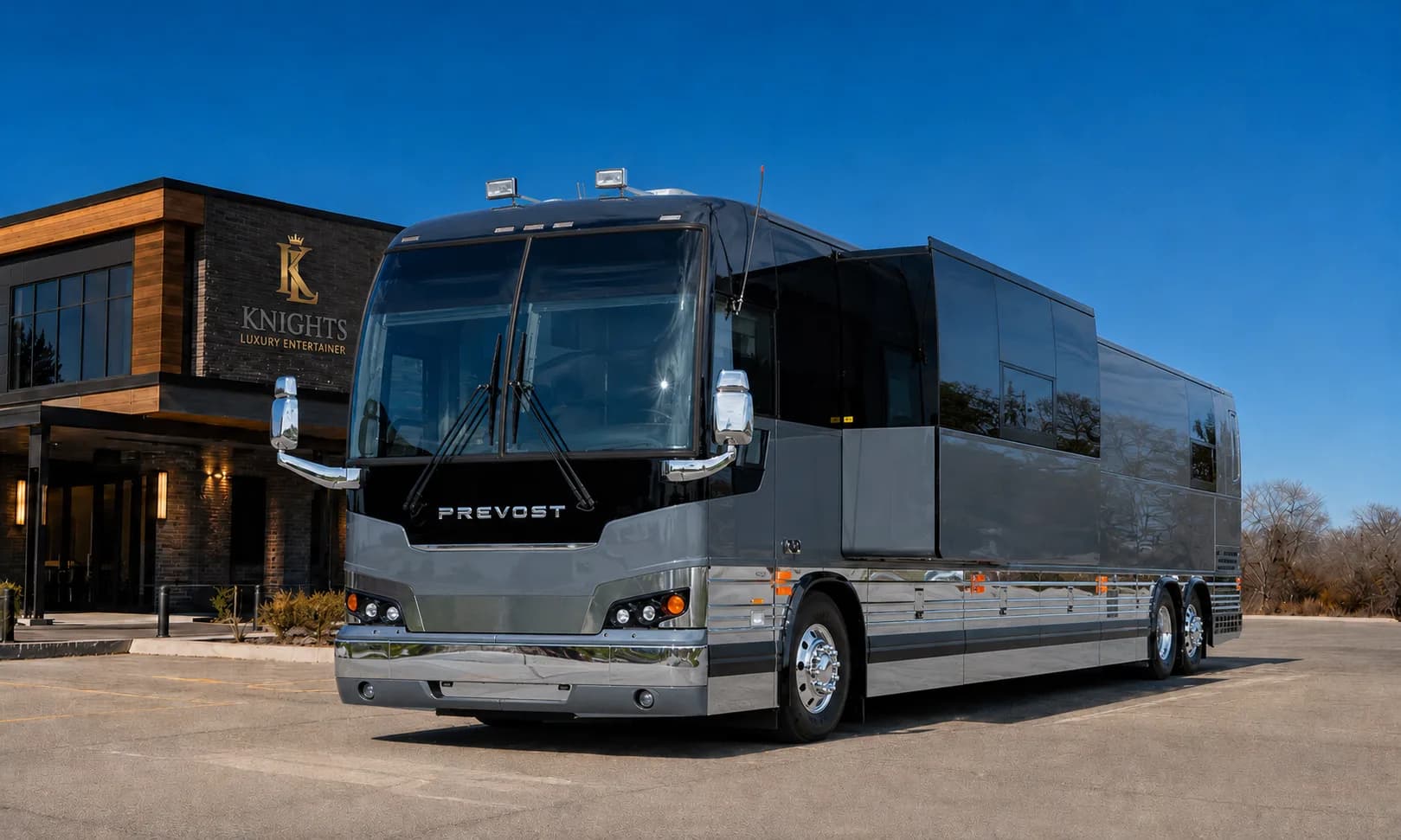
Step 5: Sign the contract and pay the deposit
Signing follows a deposit, and the agreement should itemize every component the quote listed. Driver lodging on overnight stays, wrap or customization fees, and one-way drop charges all belong in writing rather than in an email thread.
Do three checks first. Look the operator up in the FMCSA SAFER system by DOT number and read the inspection and crash record. Confirm the insurance limit and whether the tour can be named as additional insured, since venues and promoters often demand a certificate. Ask for photographs of the specific coach being assigned, not a fleet gallery, because two units on the same chassis can be a decade apart in condition.
Once signed, the calendar takes over.
Lead times and what happens on tour day
Lead time decides how much choice you get. Bookings placed 60 or more days out take first pick of the fleet, and high season sells out entirely most years. Wraps and interior customization need at least 30 days ahead of the first date for design, print and install.
Pass the advance to the driver at least 72 hours before each date: venue address, load-in gate, parking arrangement, shore power availability, and any low branches or height restrictions at the lot.
On tour day the coach arrives fueled and inspected, and the driver walks the tour manager through the unit before the route begins. Bus call is set by the tour, not the driver, and everything after that is routing.
Got questions?
Frequently asked questions
Seven items: tour dates, a city for every day, berth count, trailer requirement, wrap requirement, hotel preference and a contact number. The itinerary matters most, because drive distance sets fuel, driver hours and overdrive exposure at the same time.
An overdrive is additional driver pay owed once a single driving shift passes the industry threshold near 450 miles. It is not a penalty and it is not optional. Routings that repeatedly cross the line either absorb the charge or need a second driver.
Yes, whenever a scheduled jump cannot fit inside 10 hours of legal driving. Overnight runs between distant markets are the usual trigger. A quote should state the driver count the routing needs rather than leaving the tour to work it out mid-routing.
Pay the overdrive when the next load-in is fixed and the break when the schedule has room. A break protects the driver's hours for later in the week, which matters on a dense routing. Overdrive buys you the arrival time. Decide it per jump, not once for the tour.
Sixty days ahead secures first pick, and high season books out further than that. Tours needing a wrap should add another 30 days on top. Late bookings still get coaches, just not the specific unit or layout you had in mind.
Yes, and you should insist on it. Fleet galleries show the best unit, not necessarily yours. Photographs of the assigned coach, inside and out, are a reasonable request and a refusal tells you something.
Yes, a room for the driver bills to the tour on every night the coach is out. Some tours negotiate a buyout instead, paying a flat nightly figure and letting the driver sleep on the coach. Confirm which applies before signing, because the difference across a long routing is real money.
Coach rate, driver rate, lodging, per diem, fuel basis, deadhead, overdrive treatment, trailer, wrap fees and any drop charge. Anything discussed verbally but missing from the document is not part of the deal. Cancellation terms belong there too.
Yes, longer runs usually price lower per day, because deadhead gets spread across more dates instead of being recovered over a weekend. A four-date run carries the same empty mileage as a forty-date run. That single line is why short tours feel expensive.
Get your routing quoted
Booking an entertainer coach comes down to giving an operator enough detail to price the real job. Build the itinerary as dates and cities, fix the headcount into berths, choose a layout, specify the class and the extras, then read every line of what comes back. Sign only after the safety record, the liability cover and the photographs check out, and only when the contract itemizes what the quote promised. Book 60 days ahead for first pick, add 30 more if the coach is carrying artwork, and get the advance to the driver three days before each date. Call 1-855-838-5542 with your routing and berth count, and Knights Coaches will come back with three coaches priced line by line.