
Tour Bus Bathroom Rules: Why It's Liquids Only and What to Do Instead
Tour bus bathroom rules are the restrictions every entertainer coach passenger follows to protect the bus's small waste system: liquids only in the toilet, nothing solid, and on many coaches no toilet paper in the bowl . The rules exist because the toilet empties into a compact holding tank that the driver can only…
Knights Coaches
Knights Coaches
- Published
- Reading time
- 9 min read
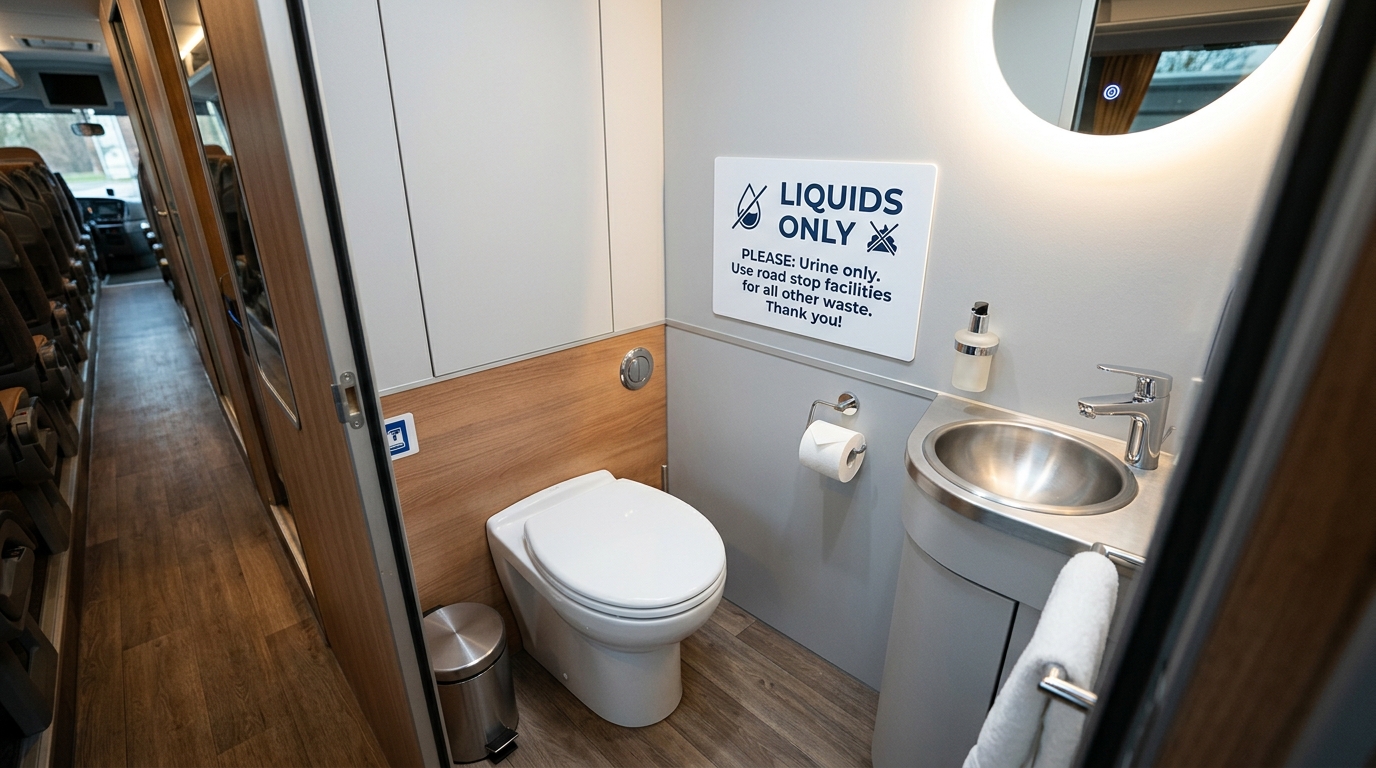
Tour bus bathroom rules are the restrictions every entertainer coach passenger follows to protect the bus's small waste system: liquids only in the toilet, nothing solid, and on many coaches no toilet paper in the bowl. The rules exist because the toilet empties into a compact holding tank that the driver can only dump at approved stations, sometimes a day or more after the waste goes in.
The system has measurable limits. A 45-foot coach carries a black water tank for toilet waste, a grey water tank for sink and shower runoff, and a fresh water tank, all sized far smaller than an RV's. Plumbing runs with bends between the bowl and the tank. And 12 people sharing one toilet fill that tank fast.
Several entities shape the routine. Drivers dump tanks at truck stop and RV dump stations, often at chains like Pilot Flying J, Love's, and TravelCenters of America. Coach companies bill for plumbing repairs and deep cleaning. Venues and hotels supply the bathrooms everyone uses for everything else.
This guide explains how a tour bus toilet works, why solids are banned, the toilet paper question, what else never goes in the bowl, how drivers service tanks, where to go instead, the consequences of breaking the rule, showers and grey water, odor control, and what to pack.
How a Tour Bus Toilet Works
Tour bus toilets use a simple design. A small bowl with a foot pedal or button flush drops waste into a sealed black water tank mounted low in the coach. Some coaches add a macerator, a small grinder pump, but most rely on gravity and chemical treatment.
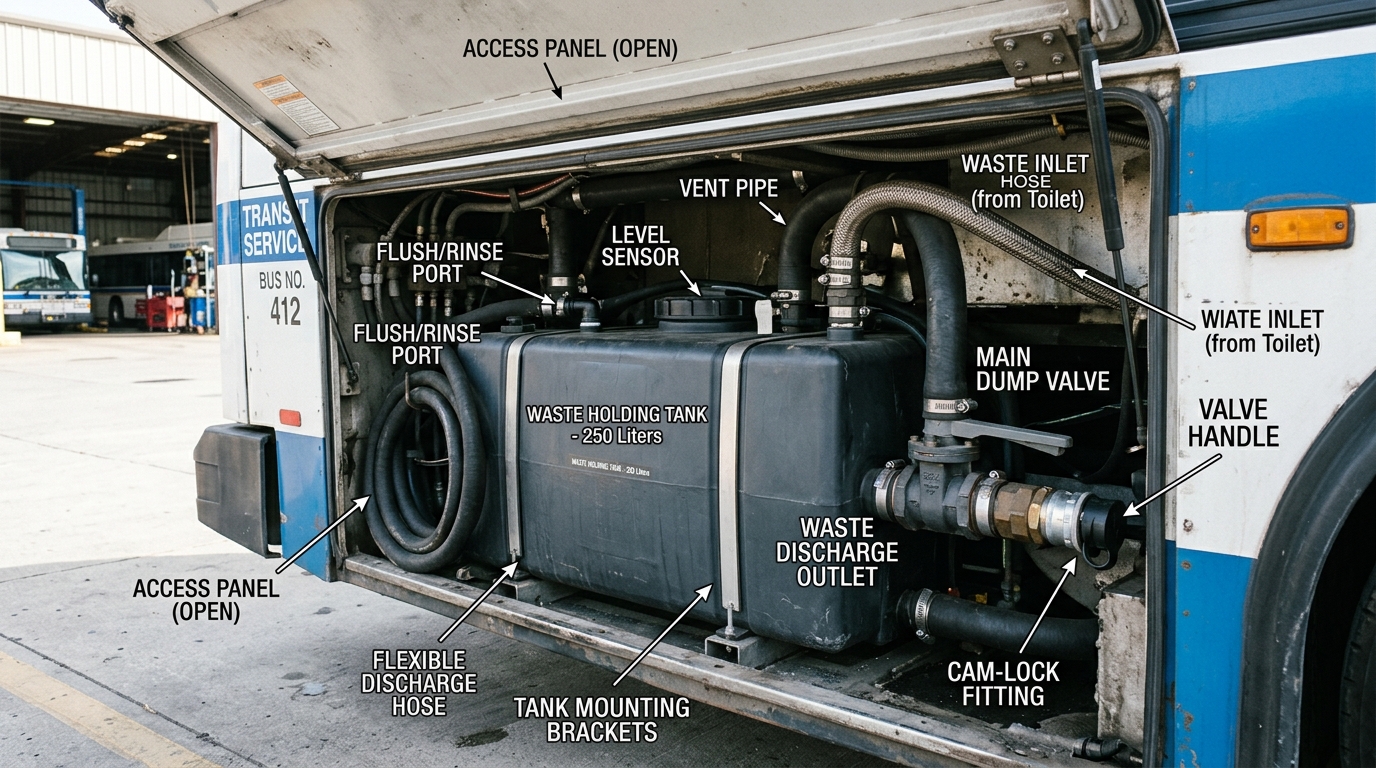
The tank isn't connected to any sewer. Everything flushed rides with the passengers until the driver finds a place to empty it. Chemical additives break down liquid waste and control odor, but they can't do much with solids in a small, sloshing tank.
Grey water works separately. Sink and shower water drains to its own tank, which the driver empties at the same stations.
Why Solids Are Banned
Solid waste causes three problems on a moving coach. First, smell: a small tank with solids in it produces odor that spreads through a sealed bus within hours. Second, clogs: bends in the plumbing catch solids, and clearing them means a shop visit. Third, capacity: solids use far more water to flush and fill the tank faster.
So the rule isn't squeamishness. It's physics and plumbing. One violation can make a coach unpleasant for 12 people for the rest of the day, and a clog can take the bathroom offline for the whole tour.
Toilet Paper: Bin or Bowl?
Toilet paper rules vary by coach. Many entertainer coaches ask passengers to put used toilet paper in a lined, lidded bin next to the toilet rather than flushing it. Paper doesn't break down quickly in a small tank and adds to clog risk.
Other coaches use tank chemicals and plumbing that handle a small amount of single-ply paper. The driver decides, and the rule is usually posted on the bathroom door. When in doubt, ask at the first load rather than guessing.
What Else Never Goes in the Toilet
Beyond solids, several items cause trouble:
Wet wipes, including brands labeled flushable.
Feminine hygiene products of any kind.
Paper towels and tissues, which are thicker than toilet paper.
Food, drinks with pulp, and gum, which can clog lines.
Cleaning chemicals not supplied by the driver, which can damage seals.
A lidded bin handles all of these. The driver or the crew empties it at every stop, so it never sits long.
How Drivers Dump the Tanks
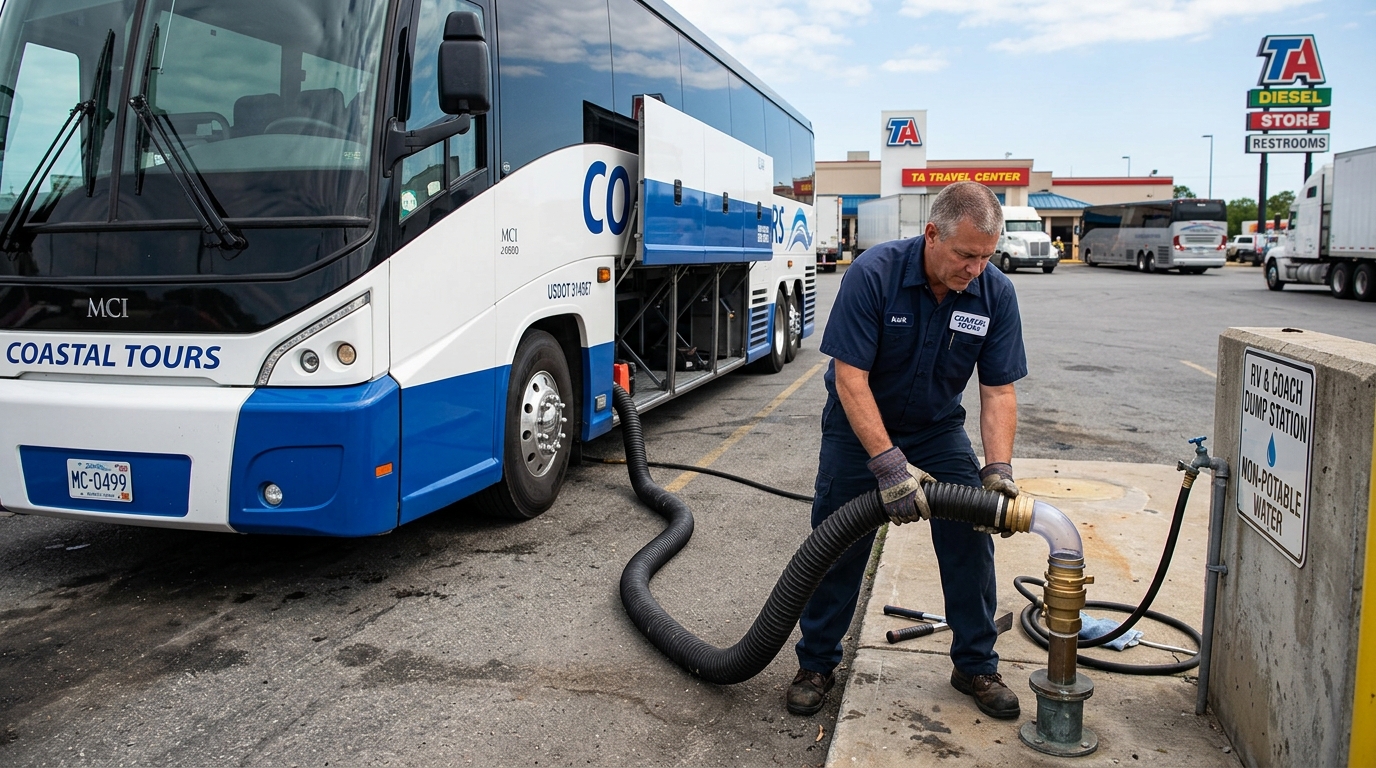
Dumping happens at approved dump stations, usually found at larger truck stops, RV parks, and some rest areas. The driver connects a sewer hose, empties the black tank first, then the grey tank to rinse the hose, and adds fresh chemical treatment.
Frequency depends on the route and use. On a busy tour, drivers try to dump every day or two. But venue lots rarely have dump stations, and some cities have few options near downtown arenas. That's why the tank may hold a full day's waste or more before service.
Dump station fees and weekly bathroom service often appear on the coach invoice. It's part of the driver's daily upkeep, alongside generator checks and interior cleaning.
Where to Go Instead
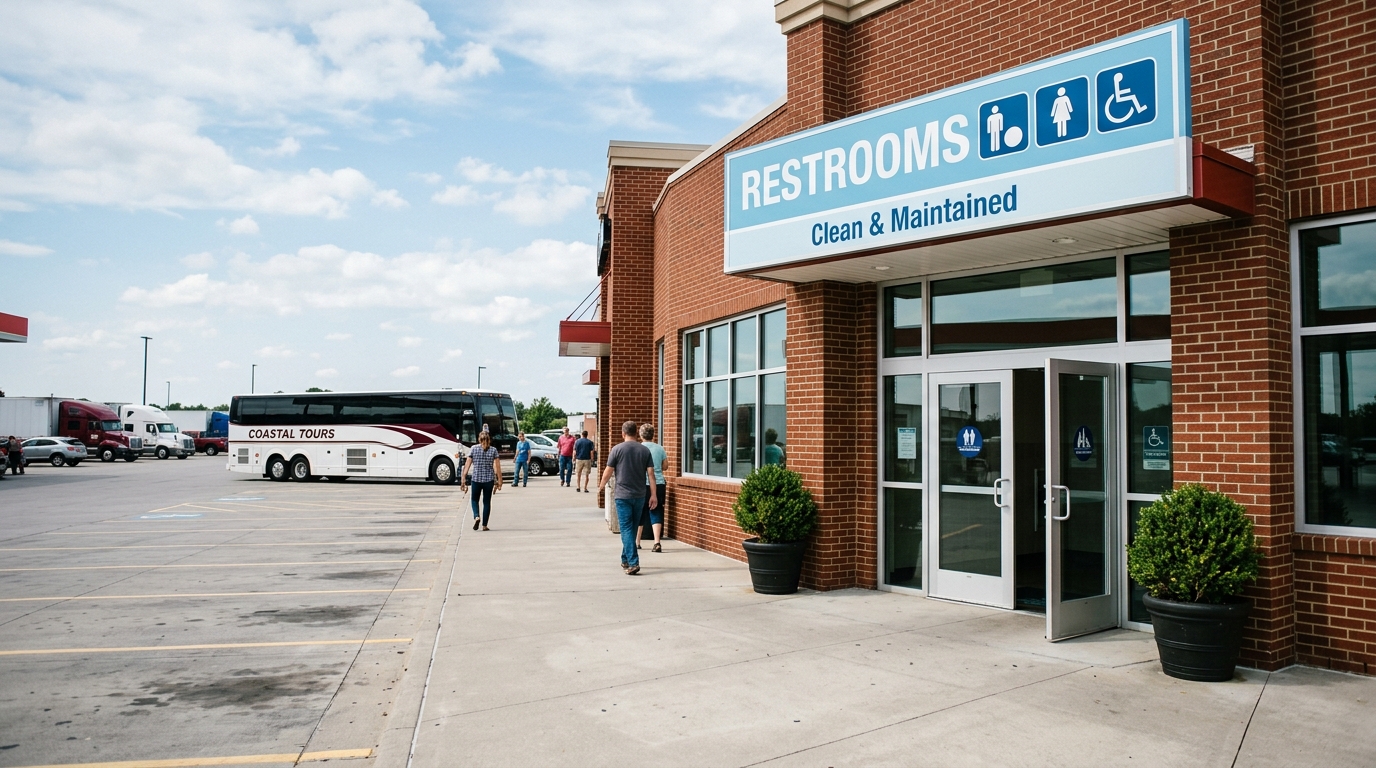
Plan bathroom use the way a tour plans fuel stops. The main options:
Venues: dressing rooms and backstage bathrooms, available from load-in to load-out.
Driver and band day rooms: hotel rooms booked on show days or off days.
Truck stops: large chains have clean restrooms open around the clock, plus paid showers.
Rest areas and gas stations on the route during daytime drives.
Overnight drives are the tricky part. If someone needs a real bathroom at 3:00 AM, they should wake a crew lead or signal the driver. Drivers would much rather pull into a truck stop for five minutes than deal with a clogged tank.
What Happens When Someone Breaks the Rule
Breaking the rule has real consequences. The smell spreads fast, especially with the heat or air conditioning running. If a clog forms, the bathroom goes out of service until a shop can clear it, which may mean a detour or a lost off day.
Costs follow. Coach companies commonly charge for plumbing repairs and deep cleaning caused by misuse. The tour manager will usually track down who caused it. And the whole touring party remembers.
Showers and Grey Water
Many entertainer coaches include an onboard shower, but it draws on a limited fresh water tank and fills the grey tank quickly. Short showers keep water available for everyone. Most touring crew shower at venues, gyms, hotel day rooms, or truck stops and save the bus shower for emergencies.
Treat the tap water with caution. Bus fresh water tanks aren't a drinking source for most people. Use bottled water for drinking and for brushing teeth, which also avoids running the pump constantly while others sleep.
Odor Control and Ventilation
Odor control takes shared effort. Keep the bathroom door closed. Run the vent fan after each use. Put the lid down before flushing. Empty the bin at every stop.
Drivers handle the chemical side: tank treatment, seal checks, and cleaning. Passengers handle the habits. When both sides do their part, a bus bathroom stays usable for a long tour.
What to Pack for Bathroom Hygiene
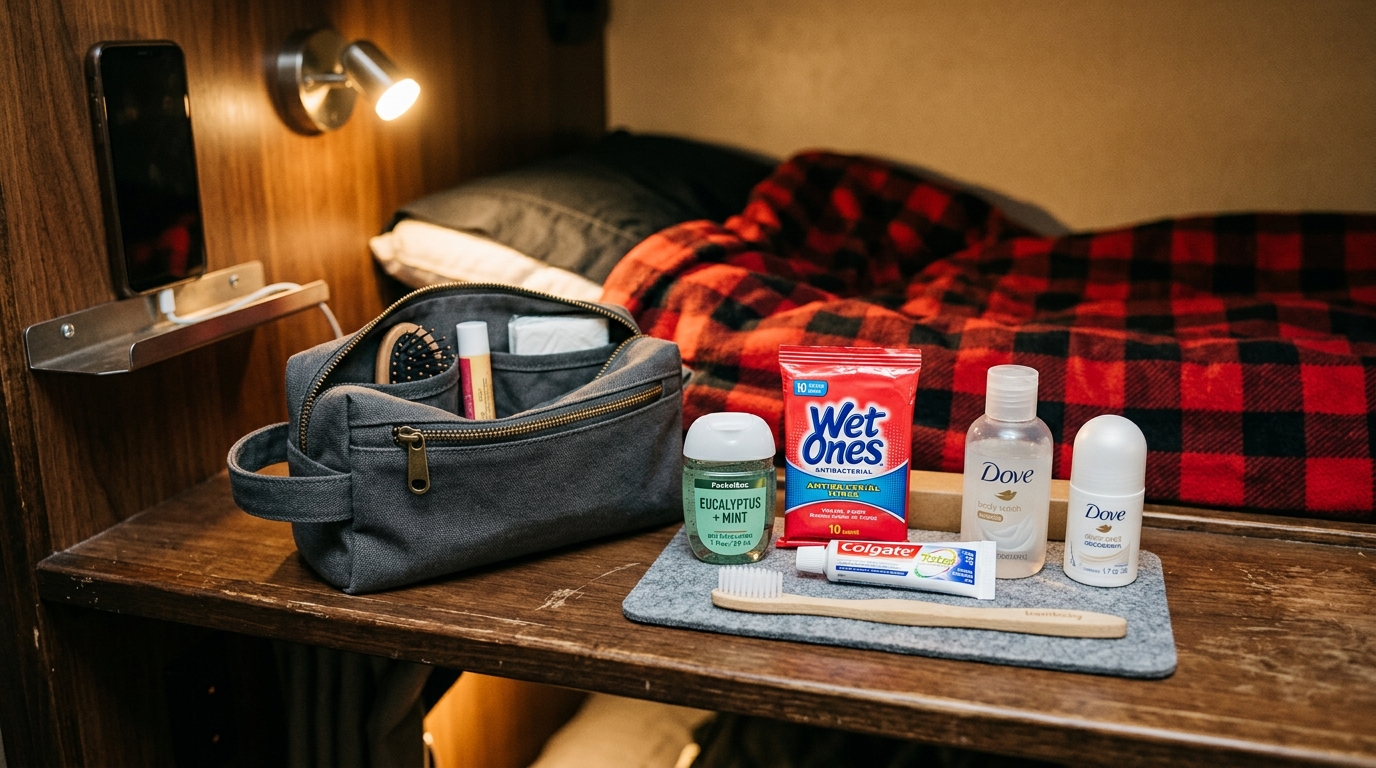
A small kit makes life easier:
Hand sanitizer for when the sink water is off or limited.
Unscented wipes for personal use, disposed of in the bin.
Travel-size toiletries for venue and truck stop showers.
Flip-flops for shared showers.
Small trash bags for your bunk area.
Everything should fit in a pouch that lives in your bunk.
Bathroom Rules for Guests and New Riders
Guests and first-time riders break the bathroom rule most often, simply because nobody told them. The host or the tour manager should explain it before a guest boards, not after. A small sign on the bathroom door helps too, especially one that says where toilet paper goes on that coach.
New crew members joining mid-tour need the same briefing. Assume nobody knows the rule until someone has said it out loud.
Medical Needs and Private Conversations
Medical needs deserve a quiet word, not a group announcement. Riders with conditions like irritable bowel syndrome, pregnancy, or medications that affect digestion should speak privately with the tour manager or driver at the start of the tour.
Most drivers adjust willingly. They can plan more frequent stops, pick truck stops with clean restrooms, or stop on request during overnight drives. Nobody should feel embarrassed about asking. Planning ahead protects both the rider and the bus.
Cleaning the Bathroom on Tour
Cleaning happens daily on a well-run bus. The driver usually handles the deep work: scrubbing the bowl, restocking supplies, and treating the tank. Passengers help by wiping the sink after use, closing the lid, and emptying the bin when it's full.
Supplies to keep aboard include disinfecting wipes, bin liners, hand soap, and spare toilet paper. Running out of any of them at 3:00 AM on an interstate turns a small inconvenience into a long night.
How Knights Coaches Handles Bathroom Service
Knights Coaches drivers handle tank dumping, chemical treatment, and bathroom cleaning as part of their daily upkeep on every Prevost coach in the fleet. They brief the touring party on the specific toilet paper rule for that coach at the first load, and 24/7 dispatch can route drivers to dump stations along the tour path.
Coaches in the fleet include onboard showers and full galleys. Tour managers can compare layouts and request a quote on the Knights Coaches homepage or check city pickups through the tour bus rental service.
Can you poop in a tour bus toilet?
No. Tour bus toilets are for liquids only. Solids cause odor, clogs, and fast tank filling.
Does toilet paper go in the tour bus toilet?
It depends on the coach. Many coaches require a lidded bin instead, so ask the driver at the first load.
How often do drivers empty tour bus holding tanks?
Drivers usually dump every day or two at truck stop or RV dump stations, depending on route and use.
Where do tour bus passengers go to the bathroom?
Passengers use venue bathrooms, hotel day rooms, and truck stops for anything beyond liquids.
What happens if someone breaks the bathroom rule?
The bus can smell for hours and the toilet may clog, leading to repair fees and possible downtime.
Are flushable wipes safe for a tour bus toilet?
No. Wipes of any kind go in the bin, even when the package says flushable.
Can you shower on a tour bus?
Yes, on many coaches, but the fresh water tank is small, so most crew shower at venues or truck stops.
Is tour bus tap water safe to drink?
It's best not to. Use bottled water for drinking and brushing teeth.
What should you do if you need a bathroom during an overnight drive?
Ask the driver to stop at a truck stop. A five-minute stop beats a clogged tank.
Which bathroom items should every touring passenger pack?
Pack hand sanitizer, unscented wipes, travel toiletries, flip-flops, and small trash bags.
Is a bus bathroom better than a truck stop restroom?
For anything beyond liquids, a truck stop restroom is better. It protects the bus plumbing and everyone's comfort.
Should guests be told about the tour bus bathroom rule?
Yes. The host or tour manager should explain the rule before any guest boards, since guests break it most often.
What if a rider has a medical condition that affects bathroom needs?
The rider should speak privately with the tour manager or driver, who can plan more frequent stops.
Conclusion
Tour bus bathroom rules protect a compact waste system that rides with the passengers. The toilet drains to a small black tank with no sewer connection, which is why solids are banned. Toilet paper often goes in a bin, and wipes, feminine products, and paper towels never go in the bowl. Drivers dump tanks at truck stop and RV stations every day or two, so everyone else uses venues, day rooms, and truck stops. Breaking the rule brings smell, clogs, and fees. Short showers, bottled water, good ventilation, and a small hygiene kit finish the routine.
Planning a tour and want a driver who handles all of it? Talk to Knights Coaches about a Prevost coach with a veteran CDL driver.