
DOT Operating Authority for Motorcoach Operators: USDOT Numbers, Insurance, and Motus Registration
DOT operating authority for motorcoach operators is the federal registration that permits a company to transport passengers for compensation across state lines. The Federal Motor Carrier Safety Administration (FMCSA) grants it under 49 U.S.C. 13902, and it sits on top of the USDOT number every interstate carrier must…
Knights Coaches
Knights Coaches
- Published
- Reading time
- 9 min read
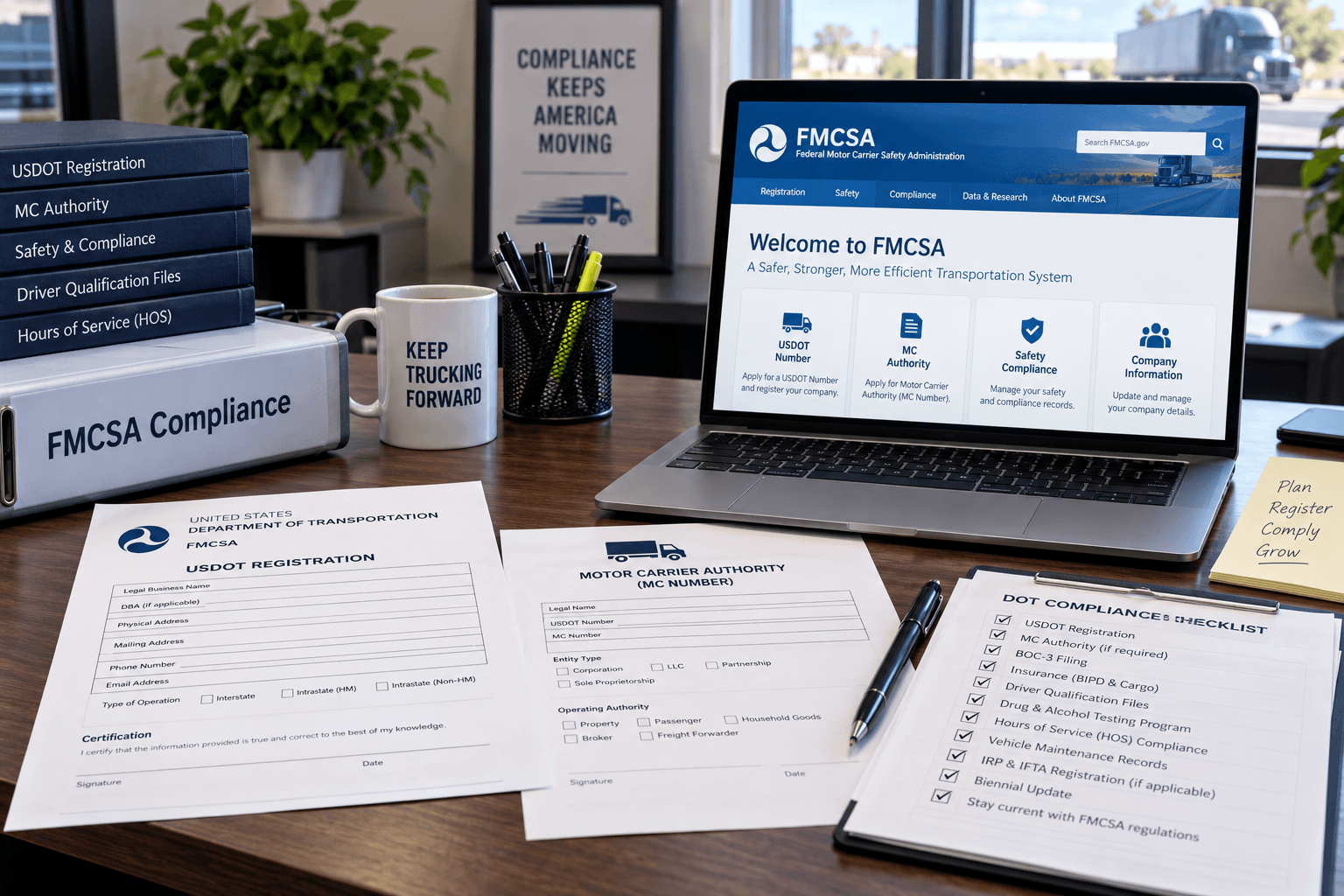
DOT operating authority for motorcoach operators is the federal registration that permits a company to transport passengers for compensation across state lines. The Federal Motor Carrier Safety Administration (FMCSA) grants it under 49 U.S.C. 13902, and it sits on top of the USDOT number every interstate carrier must hold. Without it, a charter, tour, or entertainer coach company can't legally take paid interstate trips.
Authority comes with measurable obligations. Passenger carriers operating vehicles with 16 or more seats must carry $5 million in public liability coverage, while smaller vehicles need $1.5 million. The carrier also files a BOC-3 designation of process agents, registers each year with the Unified Carrier Registration (UCR) program, and passes a new entrant safety audit.
Registration itself changed in 2026. FMCSA retired its older Licensing and Insurance workflow and launched Motus: the USDOT Registration System on May 19, 2026, with identity verification for every new applicant. MC docket numbers stayed in place at launch, although FMCSA has proposed moving to USDOT-only identifiers with suffixes later.
This guide explains the difference between a USDOT number and authority, which operators need passenger authority, how the Motus application works, what insurance and filings activate it, how the new entrant program tests new companies, and why clients check safety ratings before signing a charter or tour contract.
USDOT Number Versus Operating Authority
A USDOT number identifies a company for safety oversight. FMCSA uses it to track inspections, crashes, audits, and compliance reviews. Every interstate commercial carrier needs one, including private operators like a church running its own bus.
Operating authority answers a different question: may this company sell transportation? It's the permission to charge for interstate passenger or freight service. A for-hire motorcoach company holds both. A private carrier transporting its own people holds only the USDOT number.
Think of it this way. The USDOT number tells FMCSA who you are. The authority tells the public you're allowed to take their money for a ride.
Who Needs Passenger Operating Authority
Passenger authority applies to any for-hire carrier moving people across state lines, or on an interstate leg of a longer trip, for direct or indirect compensation. Charter bus companies, sightseeing operators, casino shuttle companies, and entertainer coach lessors that supply a driver all fall inside that definition.
Some operations sit outside it. Transportation wholly within a single municipality or commercial zone is exempt under 49 U.S.C. 13506. School buses moving students under a school contract have their own exemptions. Nonprofit and private passenger carriers need a USDOT number and must follow safety rules, but they don't need for-hire authority.
Entertainer coaches raise a common question. If a coach company supplies both the bus and the driver, the coach company is the motor carrier and must hold authority. If a band leases a bare coach and hires its own driver, the band may become the carrier with all the obligations that follow. Most tours avoid that risk by booking coach and driver together.
Types of Passenger Authority
FMCSA issues several passenger authority categories. The three used most:
Charter and special operations covers group trips sold to one client, which describes nearly all tour and entertainer coach work.
Regular route covers scheduled service between fixed points where individual riders buy tickets, like intercity lines.
Passenger broker covers companies that arrange bus transportation without operating vehicles themselves.
A company can hold more than one type. Each authority type has historically carried its own $300 filing fee, and brokers must file separate financial security rather than liability insurance.
Applying Through Motus
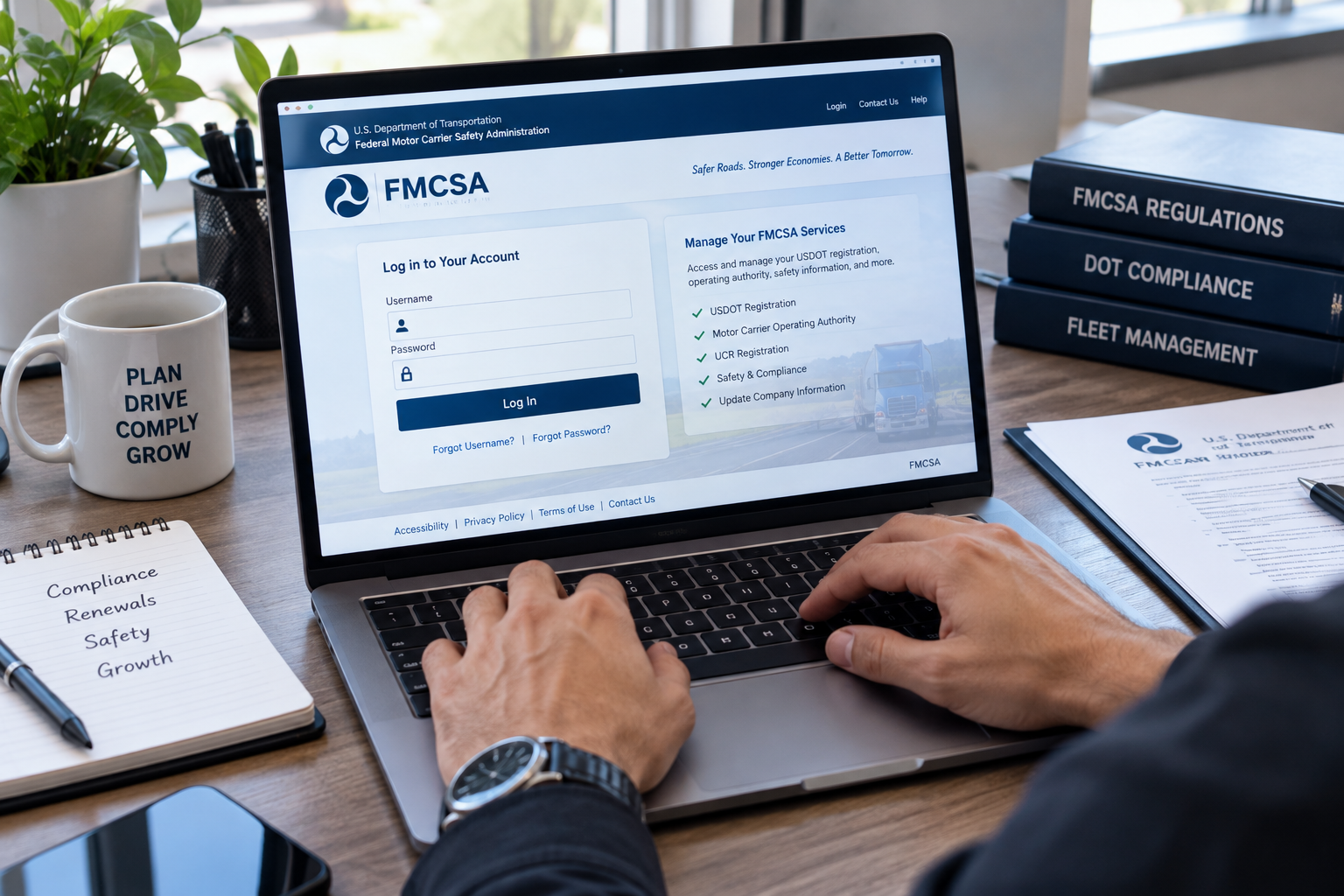
Motus replaced the older registration tools, and all new USDOT and authority applications now run through it. The process starts with an FMCSA Portal login and identity verification, which confirms the applicant, the physical business address, and ownership. Records FMCSA can't verify may be delayed or denied.
Once verified, the applicant completes the registration questions covering business type, fleet size, operation classification, and cargo or passenger designation. The USDOT number issues on submission. Authority, however, stays pending until insurance and process agent filings reach FMCSA.
Existing carriers keep their current USDOT numbers. During the transition, FMCSA temporarily suspended enforcement of the biennial MCS-150 update deadline, so older registrants shouldn't lose active status while claiming their accounts.
Insurance Minimums for Motorcoach Operators
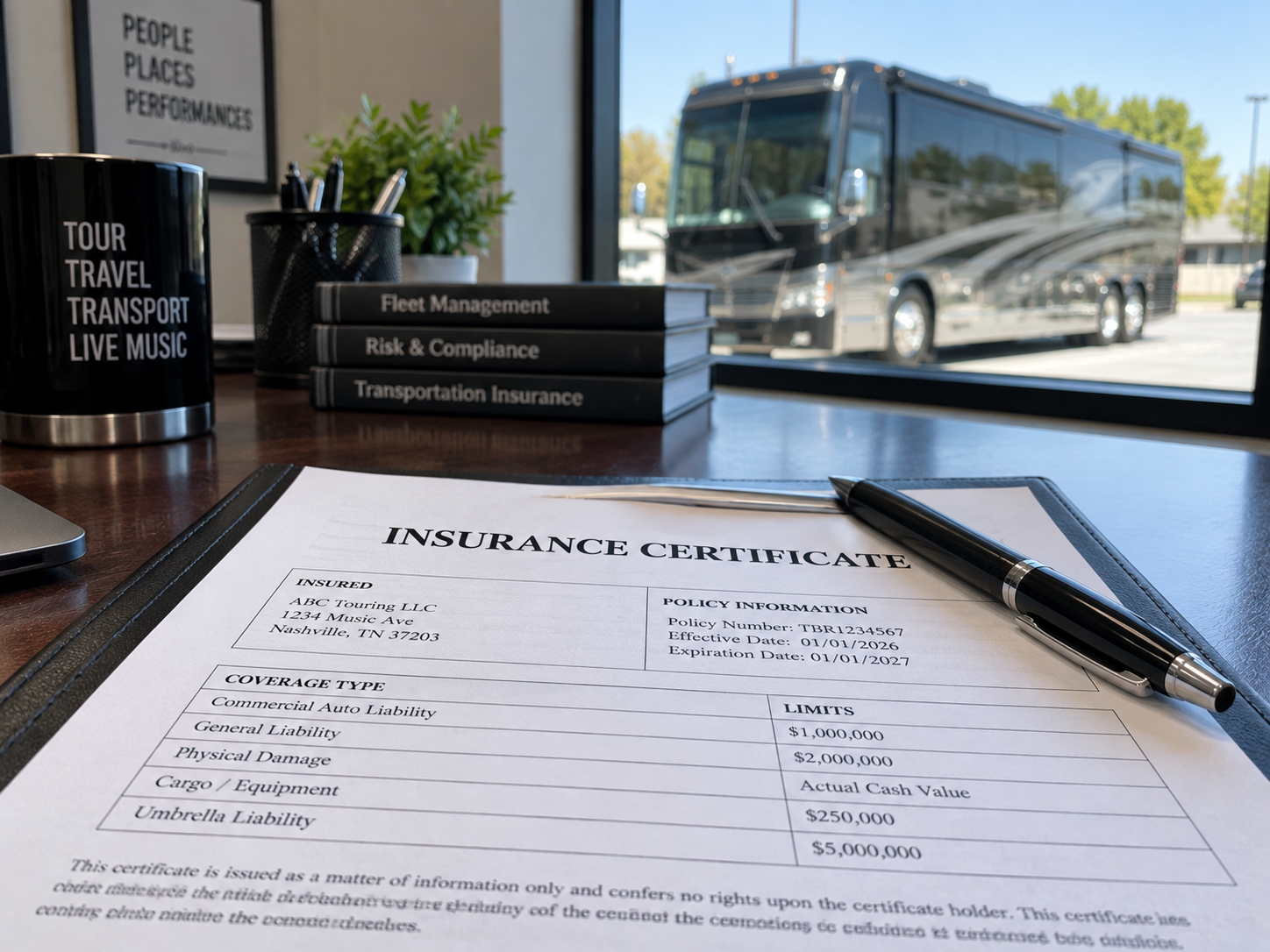
Insurance minimums come from 49 CFR 387.33. For-hire passenger carriers must file proof of coverage before authority activates:
$5,000,000 for any vehicle seating 16 or more passengers, including the driver.
$1,500,000 for vehicles seating 15 or fewer passengers, including the driver.
The insurer files the proof electronically, usually on Form BMC-91 or BMC-91X. FMCSA won't accept a paper certificate from the carrier. If the policy lapses, the insurer notifies FMCSA and revocation proceedings begin automatically.
Many clients ask for more. Tour promoters, universities, and corporate buyers often require certificates naming them as additional insured, and some want umbrella limits above the federal floor.
BOC-3 Process Agent Filing
A BOC-3 designates a legal process agent in every state where the carrier operates. If someone sues the carrier in Arizona, the Arizona agent receives the papers. Carriers almost always hire a blanket agent company that covers all states in one filing.
Filing costs are low, often $25 to $150 through an agent service. Authority can't activate without it, and Motus did not change the BOC-3 process at launch.
Unified Carrier Registration
Unified Carrier Registration (UCR) is an annual state-administered fee program for interstate carriers. Fees scale with fleet size, from the smallest bracket of one or two vehicles upward. For passenger carriers, the count uses the number of commercial motor vehicles operated.
UCR registration renews every year. Enforcement officers can check it at roadside, and unpaid UCR shows up quickly during a destination inspection.
New Entrant Safety Assurance
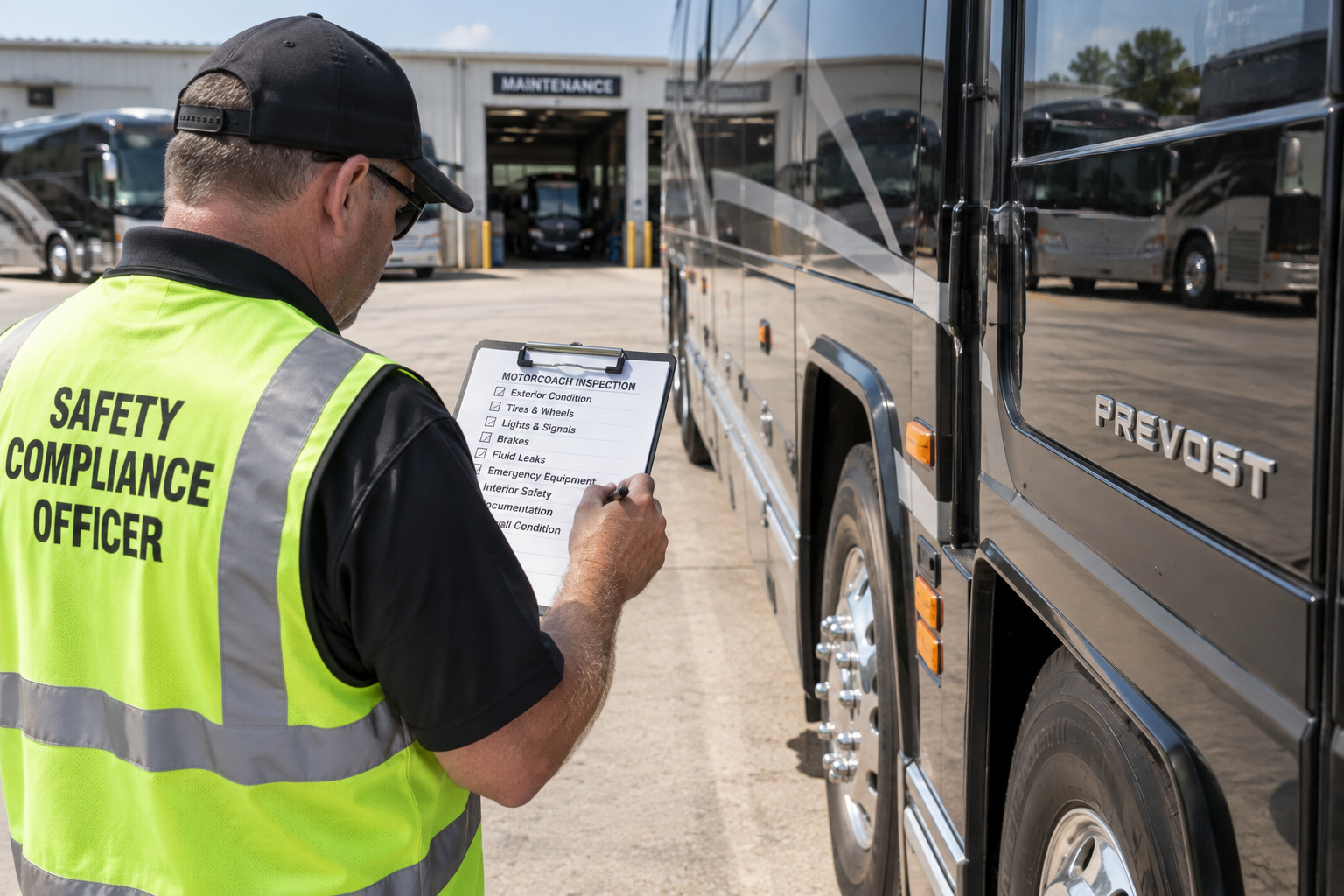
New entrant rules put every new carrier on probation. Under 49 CFR Part 385 Subpart D, the monitoring period lasts 18 months, and passenger carriers get their safety audit on a faster clock than trucking companies, typically within 120 days of starting operations.
The audit reviews driver qualification files, drug and alcohol testing, hours of service records, vehicle maintenance, and crash registers. Certain violations cause automatic failure, including:
Operating without a drug and alcohol testing program in place.
Using a driver without a valid CDL or with a disqualified license.
Dispatching a driver the carrier knows is medically unqualified.
Running a vehicle already declared out of service before repairs.
A failed audit leads to a corrective action plan. If the carrier can't fix the problems, FMCSA revokes the registration.
Keeping Authority Active
Active authority depends on continuous compliance. Insurance must stay in force, the BOC-3 must stay on file, UCR must renew each year, and the MCS-150 must update every two years once normal enforcement resumes.
Motorcoach operators using over-the-road buses also carry Americans with Disabilities Act duties under 49 CFR Part 37 Subpart H. Charter service must provide an accessible bus when a rider requests it with 48 hours' notice, and covered companies file annual accessibility reports with FMCSA.
State authority can apply as well. Carriers running charters that stay inside one state may need a permit from that state's utility or transportation commission. California's Public Utilities Commission, for instance, issues charter-party carrier permits for in-state passenger work. Federal authority doesn't replace those state permits.
Common Mistakes That Delay Authority
Delays usually trace back to a handful of avoidable errors:
Mismatched business names between the Motus application, the insurance filing, and state incorporation records.
Wrong authority type, such as filing for property instead of passenger carriage.
Missing insurance filings, where the carrier buys a policy but the insurer never submits the federal form.
Unverifiable addresses, like a mail drop instead of a physical place of business.
Late UCR payment, which leaves a new carrier exposed at its first destination inspection.
Each one pushes activation back by days or weeks. Checking names, addresses, and filing confirmations before submission avoids most of them.
Safety Ratings and Why Clients Check Them
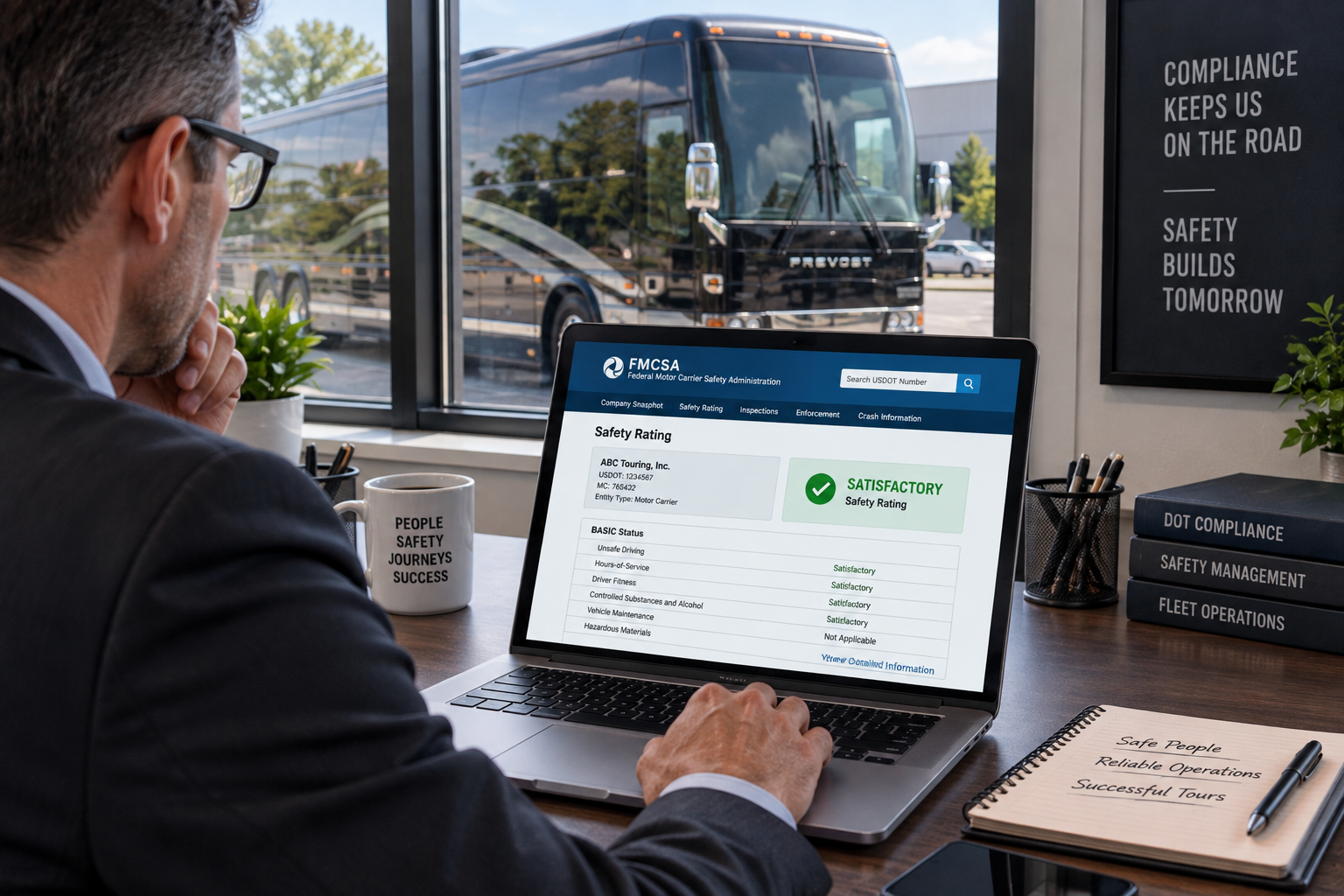
Safety ratings summarize the result of a compliance review. FMCSA assigns Satisfactory, Conditional, or Unsatisfactory, and carriers that haven't been reviewed show as unrated. An Unsatisfactory rating bars a passenger carrier from operating after 45 days.
Clients look this up on the FMCSA SAFER website by USDOT number. Knights Coaches, a US DOT registered entertainer coach company based in Nashville, holds a Satisfactory FMCSA safety rating and is a member of the Entertainer Motorcoach Council. Its drivers and coaches operate under the company's own authority, so artists aren't taking on carrier liability.
Tour buyers can check fleet and driver details on the Knights Coaches website before comparing quotes.
Does a motorcoach company need both a USDOT number and operating authority?
Yes. A for-hire interstate passenger carrier needs a USDOT number for safety tracking and operating authority to sell rides. Private carriers need only the USDOT number.
How much insurance does a motorcoach operator need?
A passenger carrier needs $5 million for vehicles with 16 or more seats and $1.5 million for 15 or fewer. The insurer files proof directly with FMCSA.
What is Motus?
Motus is FMCSA's USDOT Registration System, launched May 19, 2026, that handles new registrations, authority applications, and identity verification in one platform.
Are MC numbers eliminated for bus companies?
No. MC numbers remained in place at the Motus launch. FMCSA has proposed USDOT-only identifiers with suffixes, but that change needs separate rulemaking.
Which filings activate passenger authority?
Three filings activate it: the insurer's liability filing, the BOC-3 process agent designation, and approval after the public protest period. UCR registration follows before operating.
What is the difference between charter and regular route authority?
Charter authority covers trips sold to one group, while regular route authority covers scheduled service with individual tickets. Tour and entertainer coach work uses charter authority.
How long is the new entrant period for passenger carriers?
The new entrant period lasts 18 months, with the passenger carrier safety audit usually scheduled within the first 120 days.
Can a band lease an entertainer coach without a driver?
Yes, but the band may become the motor carrier responsible for authority, insurance, driver qualification, and logs. Leasing coach and driver together keeps those duties with the coach company.
Is a Satisfactory rating better than an unrated status?
Yes. A Satisfactory rating shows the carrier passed a compliance review, while unrated only means no review has happened. Both allow operation, but Satisfactory carries more weight with buyers.
What happens if a coach company's insurance lapses?
FMCSA starts revocation of operating authority once the insurer reports cancellation. The carrier must stop for-hire service until new coverage is filed.
Do motorcoach operators have ADA obligations?
Yes. Over-the-road bus companies must supply an accessible bus on 48 hours' notice for charter service and file annual accessibility reports.
How long does passenger authority take to activate?
Activation usually takes several weeks from application. Timing depends on identity verification, the insurer's filing speed, and the public protest period.
Conclusion
DOT operating authority for motorcoach operators separates identification from permission: the USDOT number tracks safety, while passenger authority permits paid interstate service. Charter and entertainer coach companies need that authority, usually in the charter and special operations category. Applications now run through Motus with identity checks, and activation depends on the $5 million or $1.5 million insurance filing and a BOC-3. UCR renews each year, the 18-month new entrant program tests every new passenger carrier, and ongoing compliance plus ADA duties keep authority active. Safety ratings then give clients a quick trust check.
Want a coach operated under proven federal authority? Request a quote from Knights Coaches for a Prevost coach, CDL driver, and 24/7 dispatch.