
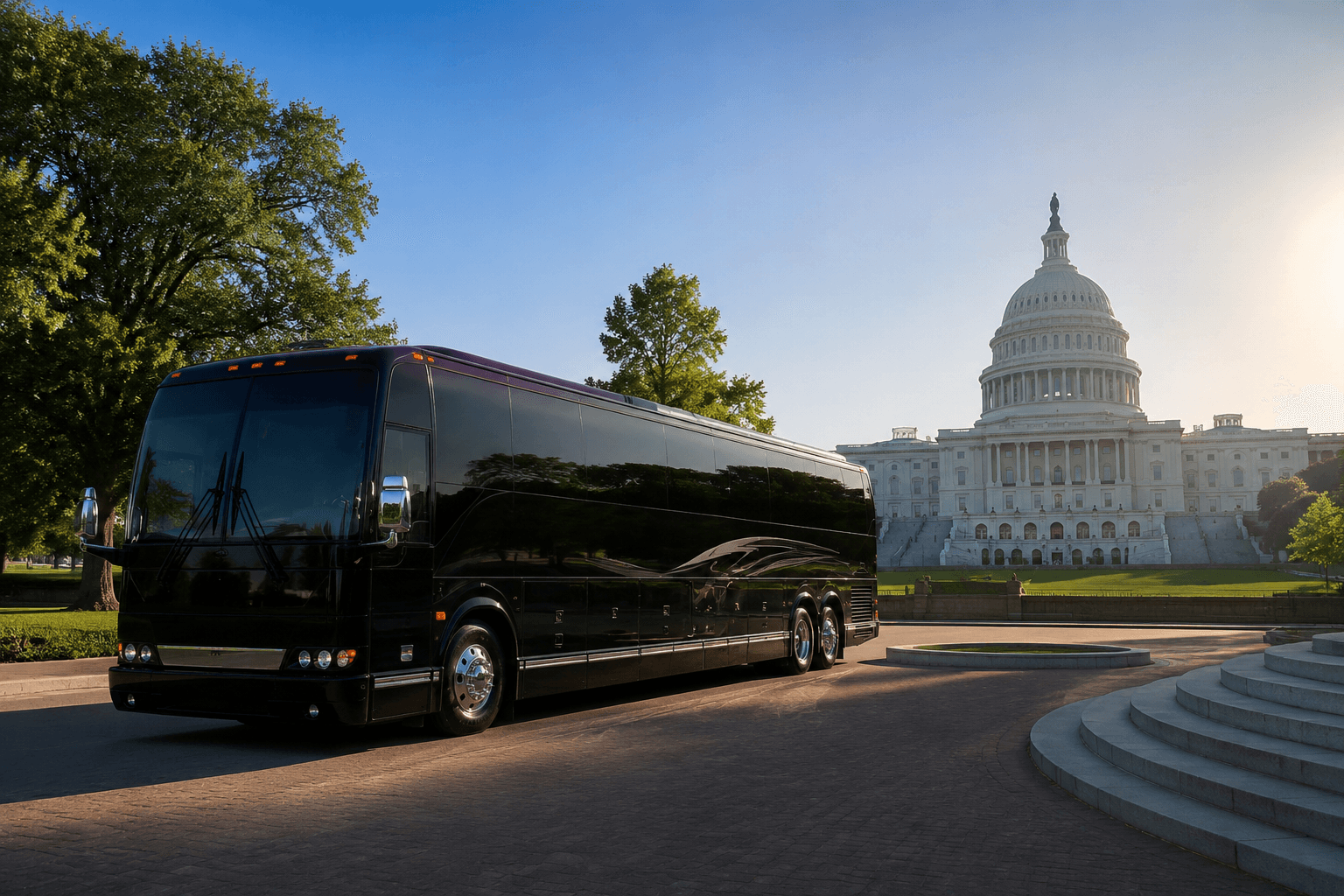
Band Tour Bus Rental
Band Tour Bus Rental: Sleeper Coaches for Musicians
A band tour bus is an entertainer coach specced around a working music act: berths for the players and the crew, undercarriage bays for instruments and merch, and a driver planning the night around load-out rather than around a clock. It carries the band between cities while they sleep, which removes the hotel and the morning lobby call at the same time.
Most touring parties fit a coach carrying 8 to 12 berths, stacked three high behind privacy curtains. The bays underneath span the full width of the coach and take the cases that do not need a trailer. Inside sit a galley, a bathroom with a shower, and lounges at both ends where the band works and the crew decompresses.
Around that sit the things specific to music touring. Bus call, the departure time nobody moves. Load-in and load-out windows set by the venue. Backline that either rides in the bays or behind the coach in a gear trailer. Merch boxes that shrink as the run goes on.
Published US rates put a fully loaded entertainer coach day between $1,900 and $2,500, or $7.00 to $8.50 per mile where an operator prices by distance. Against hotel rooms, checked bags and airport transfers for a party of ten, that math turns over faster than most bands expect.
This page covers what a band needs from a coach, where the gear goes, what the coach replaces, working around the venue schedule, sizing, cost and how to book.
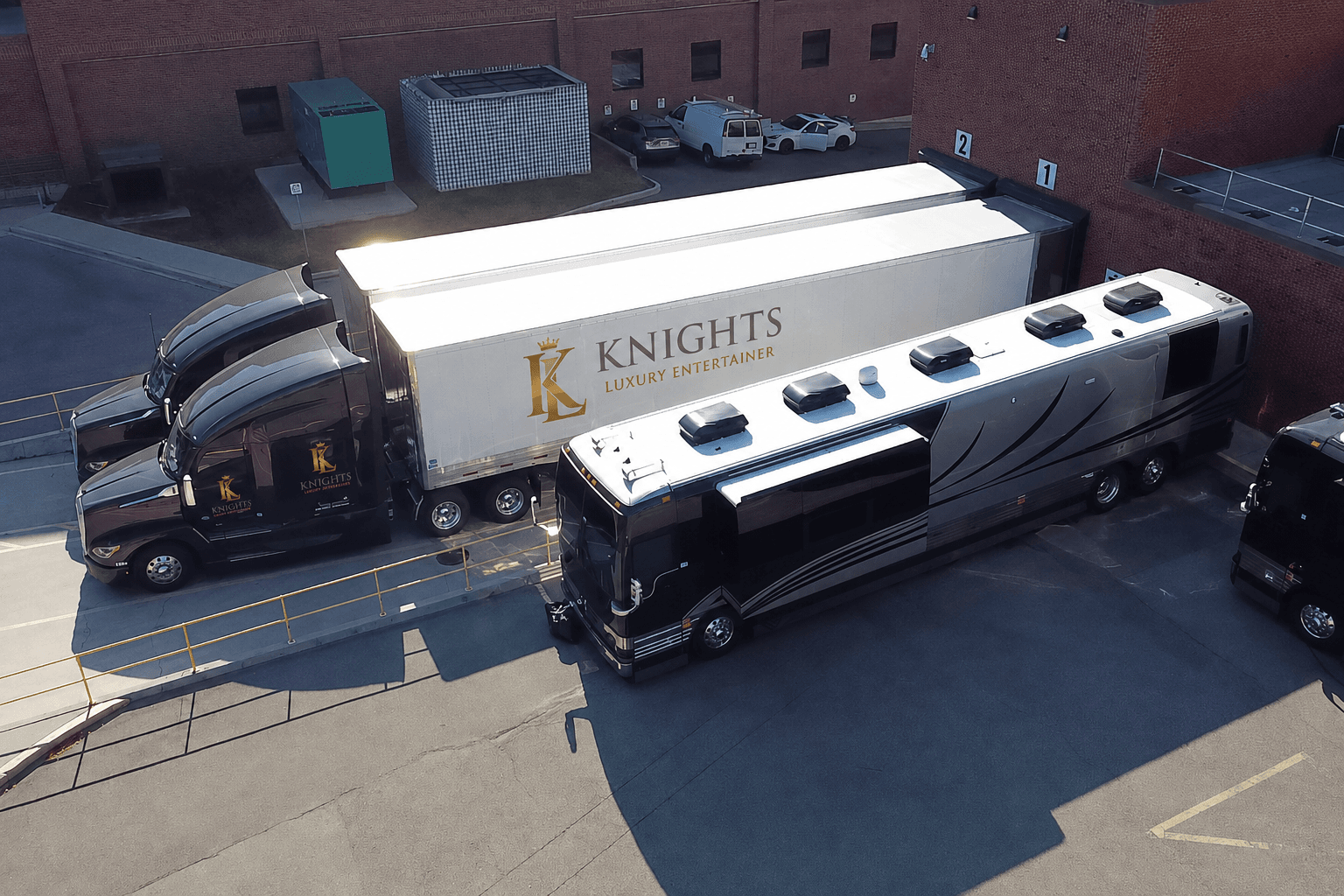
What a band needs from a coach
Bands need three things a charter bus cannot give them: sleep while moving, somewhere to put the gear, and a driver who understands that the day ends at 2am rather than at 6pm.
Sleep is the first one because it sets everything else. A coach that moves overnight turns a 400 mile jump into a night's rest instead of a driving day, which is the difference between arriving able to soundcheck and arriving wrecked. Everything else on a spec sheet is secondary to that.
The second is storage, and it is where most first tours get the sums wrong.
Where the gear goes
Gear splits three ways on a band coach:
- Undercarriage bays span the coach end to end and take flight cases, merch boxes, personal luggage and pedalboards
- Interior storage handles instruments and electronics that should not sit in an unheated bay overnight, particularly guitars and anything with a screen
- A gear trailer takes backline that will not fit the bays, towed behind the coach for a daily rate plus a towing supplement
Guitars generally travel inside. Amps, drums and staging generally do not. The practical test is whether an item can survive a cold bay and a rough interstate, and whether you would rather carry it up the aisle at 3am.
Once the gear has a home, the coach starts replacing things you would otherwise pay for.
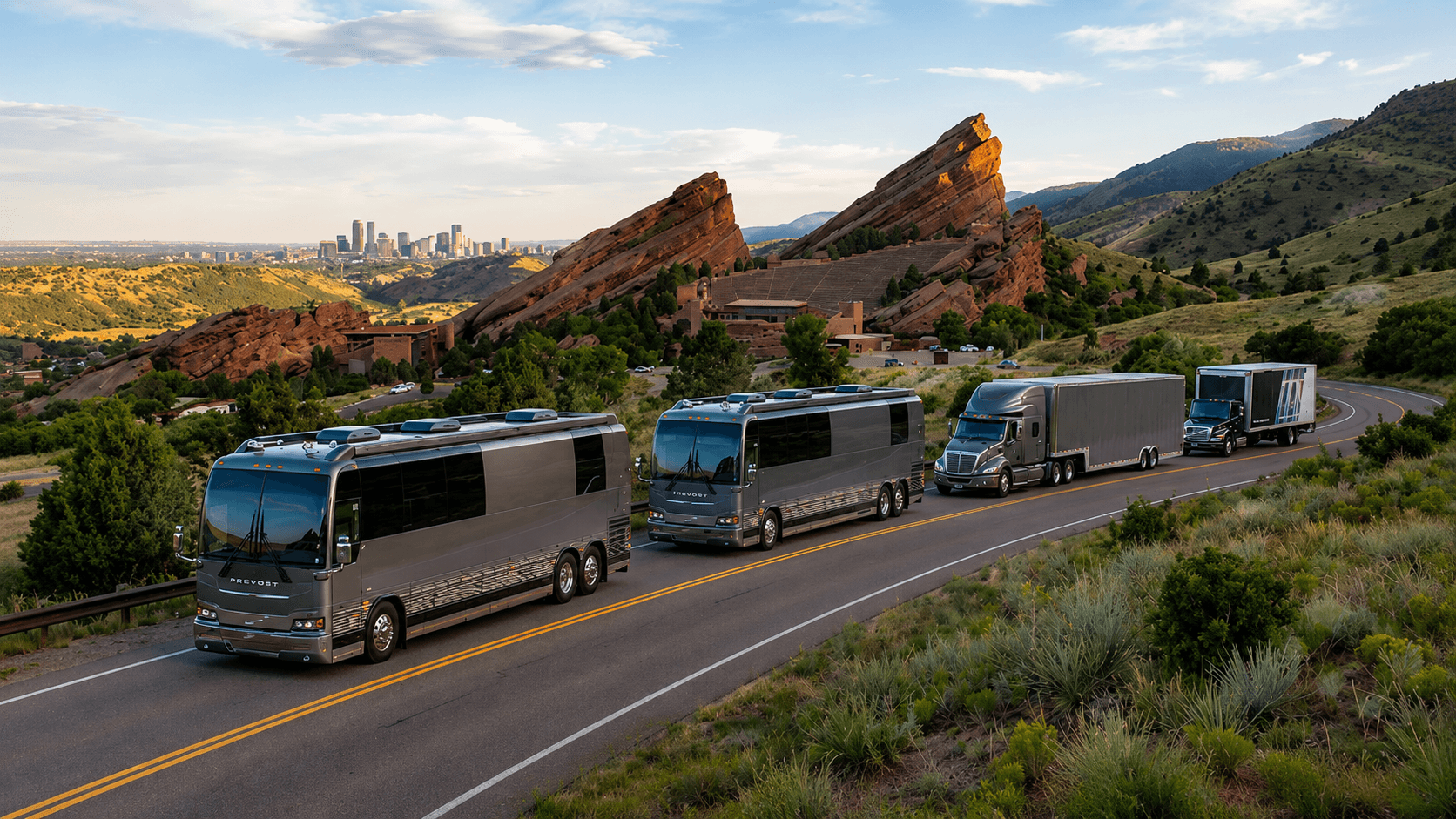
What the coach replaces
Coaches absorb costs that sit in separate budget lines when a band flies or drives. Hotel rooms for the whole party on travel nights. Checked baggage and oversize instrument fees. Airport transfers at both ends. A van rental plus fuel plus somebody sober enough to drive it after the show.
They also absorb time, which is harder to price. A band that wakes up parked behind the next venue has its whole day, rather than losing the morning to a lobby, a shuttle and a security line.
What the coach does not replace is the venue schedule, and the coach has to work around that.
Working around load-in, show and bus call
Venue days run on a fixed sequence and the coach fits into it rather than the reverse. The coach parks in the load-in area or a nearby lot, ideally on shore power so the generator can stay off. Load-in happens, then soundcheck, then doors, then the show, then load-out.
Bus call is the departure time set by the tour, and it is not negotiable once posted. Miss it and the coach leaves, because the driver is working to hours-of-service limits that do not bend for a late arrival. Drivers are capped at 10 hours of driving after 8 consecutive hours off duty, so a departure that slips by an hour can cost the next city.
A driver who has run entertainer work handles this without being managed. Knights drivers carry at least three years on coaches specifically, which is a different job from charter.
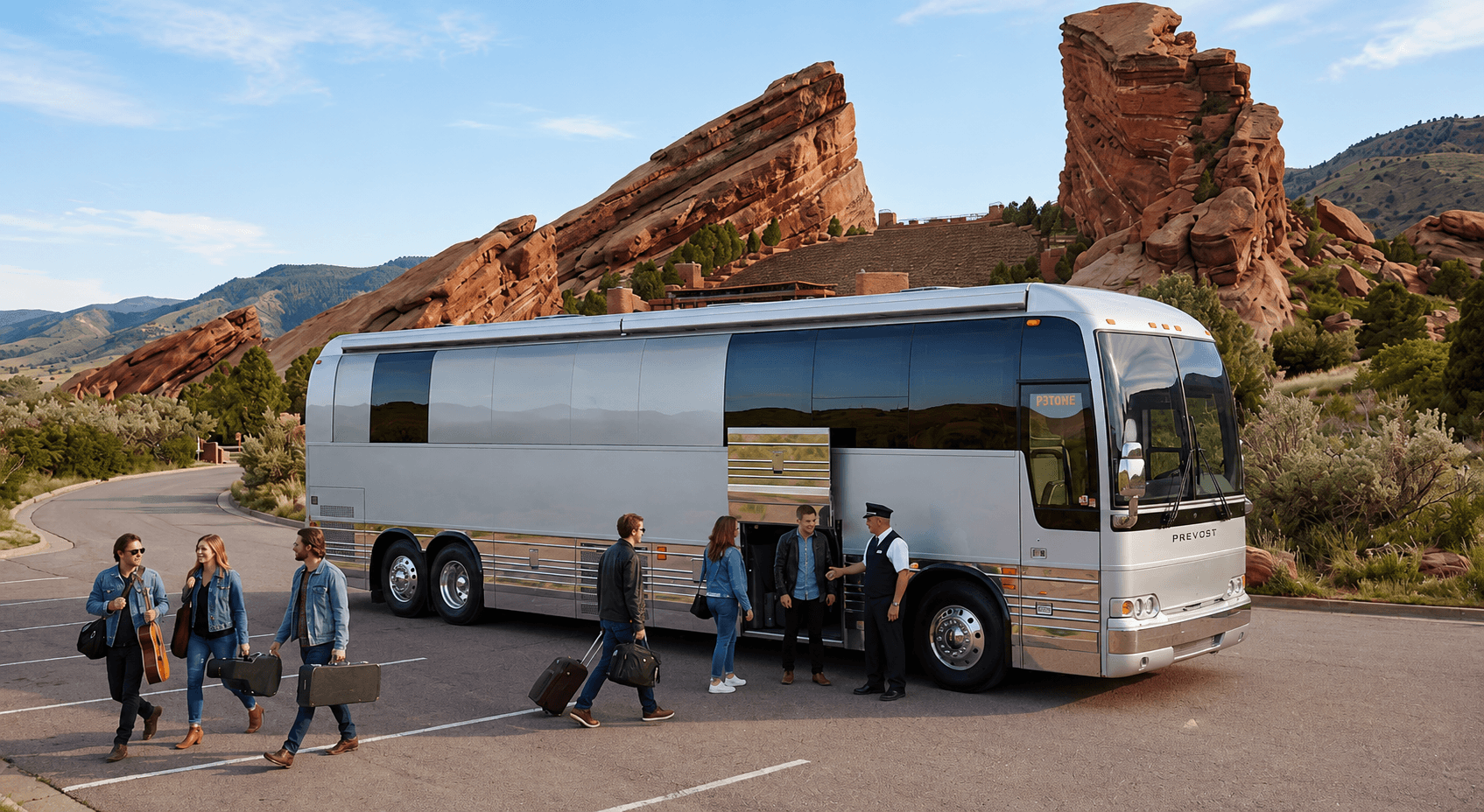
Sizing the coach to the band
Count everybody traveling, not just the players. A five piece band with a tour manager, a front-of-house engineer, a monitor engineer and a backline tech is nine people before a merch seller or a photographer joins.
Then add one. A party of ten on a 12-berth coach turns the two spare berths into shared storage, which the industry calls a junk bunk, and it is the cheapest comfort you will buy on the whole tour. Filling every berth leaves nowhere for bags but the bays.
Support acts often share a coach on smaller runs, splitting the day rate across two bills. It works when both parties keep similar hours and fails when they do not.
What it costs a working band
Costs land in three groups. The coach and its driver, billed per contracted day. The road, meaning fuel calculated against roughly 6 miles per gallon, tolls, permits and venue parking. Then the extras: a trailer, exterior washes between legs, and a driver hotel each night out.
Two levers matter more than negotiating the rate. Routing tightly so fewer driving days cross the overdrive threshold near 451 miles, and starting the tour in a market where coaches already stage so deadhead is short.
Knights Coaches quotes against the routing rather than a rate card, which is what makes those levers visible.
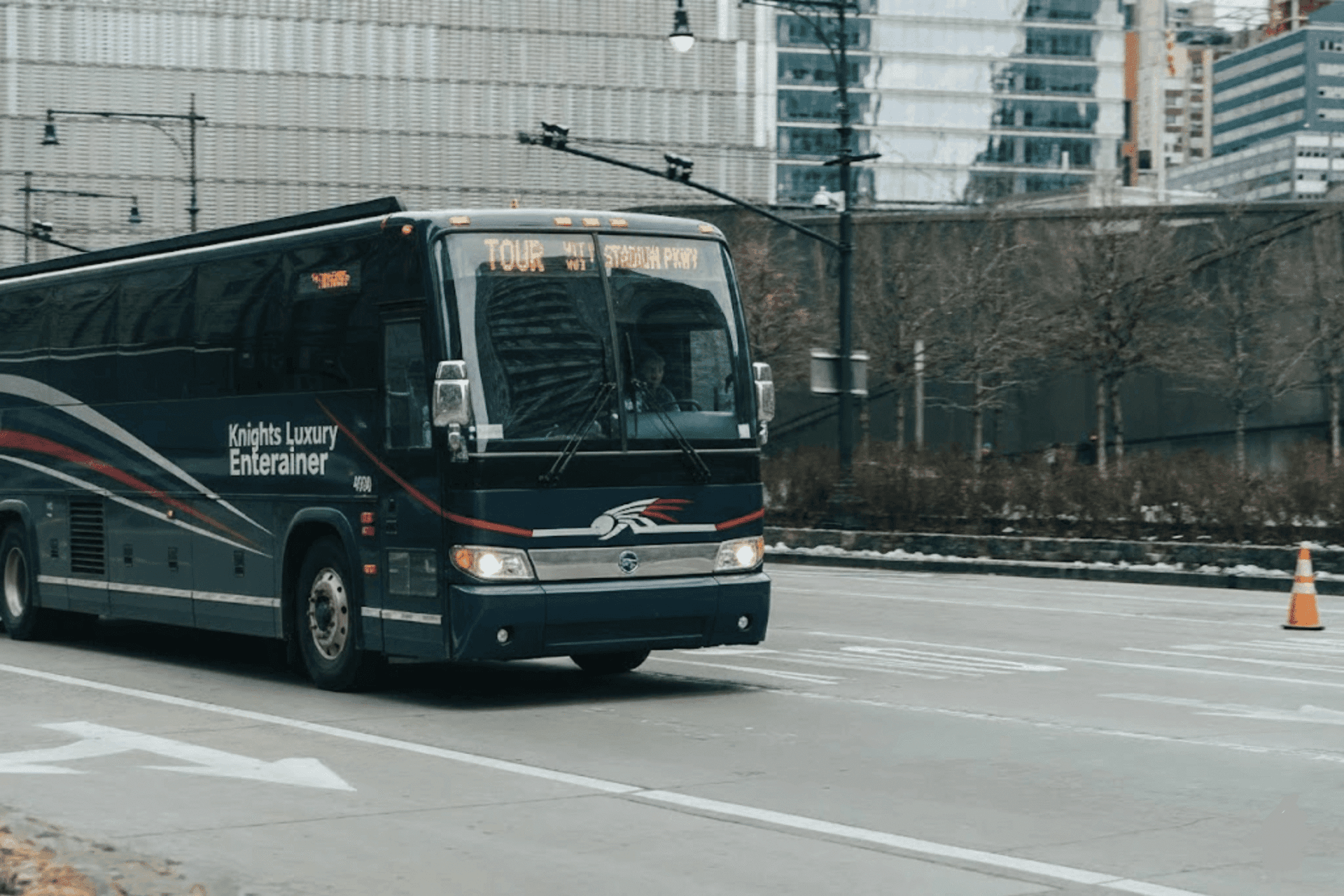
Booking as a band
Send the itinerary as dates and cities, including days off, plus the headcount, the berth preference and whether backline travels with you. Dispatch returns three coaches that fit the dates and layout, priced line by line, with a note on whether the routing needs one driver or two.
Book 60 or more days out for first pick of the fleet. Add 30 days on top if the coach is carrying tour artwork, since a wrap needs design, print and install before the first date.
Got questions?
Frequently asked questions
Yes, every coach leases with its driver. No US operator rents an entertainer coach bare, because it runs under the operator's DOT authority and insurance. On longer runs the same driver stays with the coach throughout.
Instruments and personal gear go in the bays and inside the coach; full backline usually needs a trailer. Bays run the width of the coach and hold flight cases and merch. Amps, drums and staging normally exceed that, and a towed trailer handles the overflow.
Bus call is the posted departure time, and the coach leaves at it. It is set by the tour to protect the driver's legal hours for the next drive. Being fifteen minutes late is a genuine risk to the following show, not a social inconvenience.
A van wins under about six people on short drives; a coach wins once the party grows or the jumps get long. Compare cost per person per day, counting hotel rooms, van fuel, bag fees and the driving somebody has to do after a show.
Yes, and splitting a coach across two acts is common on club runs. Berth count is the limit, and compatible schedules are what make it bearable. Agree the cost split, who gets which berths and the bus call policy before the opener.
One per person traveling, plus at least one spare. A nine person party is comfortable on a 12-berth coach and cramped on a 9-berth one, because the spares absorb bags. Count crew and merch staff, not just the players.
Berths with curtains and power, a galley, a full bathroom with a shower, and lounges at both ends with screens, sound and WiFi. The front lounge tends to become the working space and the rear lounge the social one, which is why two-lounge coaches suit bands better than crew builds.
Bays for anything under roughly 5,500 pounds, a trailer above it. A trailer adds a daily rate, a towing supplement and drops fuel economy from about 6 miles per gallon to nearer 5. Below that weight the bays are free capacity you have already paid for.
That is the tour's call, and most tours restrict it. The coach is where ten people sleep, so guest policy is a house rule the tour manager writes rather than the operator. Agree it early, because it causes more friction mid-tour than almost anything else.
Get your tour routed and quoted
A band tour bus puts berths for the players and crew, bays for the gear and a driver working to load-out over a 45-foot Prevost shell. It moves the party overnight, which replaces hotel rooms, bag fees and airport transfers in one line, and hands the band back its mornings. Gear splits between the bays, the interior and a towed trailer. Size the coach one berth above the headcount so the spare becomes storage. Route tightly to stay under the overdrive threshold, and start where coaches already stage to keep deadhead short. Send your dates, cities and headcount to 855 734 5700 and dispatch will come back with three coaches priced against the routing.